Loading...
Empress Dowager Xiao vs Muhammad bin Tughluq
Empress Dowager Xiao leads by 16.0 pts · 2 figures compared
…
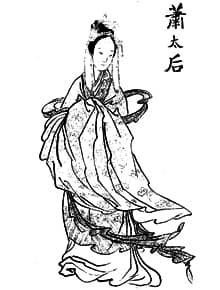
Empress Dowager Xiao
Emperor · Medieval
64.4Total
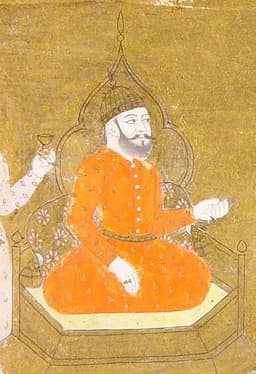
Muhammad bin Tughluq
Emperor · Medieval
48.4Total
Basic Information
Born
932
1290
Died
1009
1351
Era
Medieval
Medieval
Nationality
Khitan Empire
India
Occupation
Emperor
Emperor
Civilization
Eastern
Indian
Score Comparison
Military (10%)
80.0
20.0
Political (20%)
72.0
40.8
Influence (20%)
56.7
57.2
Legacy (20%)
52.0
47.5
Leadership (15%)
78.0
65.0
Strategy (15%)
67.2
43.3
TOTAL
64.4
48.4
Empress Dowager Xiao — Complete Timeline
982 AD
Regency for Yelu LongxuPolitical Action
Empress Dowager Xiao became regent for her young son, Yelu Longxu, after the death of her husband, Yelu Xian. She effectively ruled the Liao dynasty for over 20 years, directing military campaigns and administrative reforms.
Liao dynastyRegencyFemale ruler
Impact: regional
990 AD
Implementation of Administrative ReformsReform◆ Major
Empress Dowager Xiao implemented administrative reforms that strengthened the Liao bureaucracy, including the promotion of Chinese-style governance and the integration of Khitan and Chinese officials. These reforms improved state efficiency and stability.
Liao dynastyReformAdministration
Impact: regionalconstructive
1004 AD
Leadership in the Liao-Song WarWar◆ Major
Empress Dowager Xiao personally led Liao forces in a major invasion of Song territory, reaching the outskirts of the Song capital. The campaign ended with the Treaty of Shanyuan, which she negotiated, securing Liao's dominance in the north.
Liao-Song warMilitary campaignTreaty
Impact: regional
Muhammad bin Tughluq — Complete Timeline
1325 AD
Accession to the Delhi SultanatePolitical Action
Muhammad bin Tughluq succeeded his father Ghiyas-ud-din Tughluq as sultan of Delhi. He inherited a vast empire but soon embarked on ambitious and often controversial policies that would define his reign.
Delhi SultanateTughluqSuccession
Impact: regional
1327 AD
Transfer of Capital to DaulatabadPolitical Action◆ Major
Muhammad bin Tughluq ordered the transfer of the capital from Delhi to Daulatabad in the Deccan, forcing the entire population and administration to move. The plan failed due to water scarcity and logistical issues, and the capital was later moved back to Delhi.
Capital TransferDaulatabadFailed Reform
Impact: regionaldestructive
1329 AD
Introduction of Token CurrencyReform◆ Major
Muhammad bin Tughluq introduced a token currency made of copper and brass, intended to replace silver coins. The government failed to prevent counterfeiting, leading to economic chaos and the eventual withdrawal of the currency at great loss.
Token CurrencyEconomic ReformFailure
Impact: regionaldestructive
1330 AD
Campaign in the Deccan and South IndiaWar◆ Major
Muhammad bin Tughluq led military campaigns into the Deccan and southern India, attempting to consolidate control over the region. He faced rebellions from local rulers, including the Hoysala and Kakatiya, and the campaigns drained the treasury.
DeccanSouthern IndiaRebellion
Impact: regional
1335 AD
Revolt of the Nobility and Provincial GovernorsPolitical Action◆ Major
Muhammad bin Tughluq faced multiple revolts from nobles and provincial governors, including in Bengal, Gujarat, and the Deccan. These rebellions weakened the central authority and led to the fragmentation of the Delhi Sultanate, with the rise of independent states like the Bahmani Sultanate.
RevoltNobilityFragmentation
Impact: regionaldestructive
1340 AD
Famine in Northern IndiaOther◆ Major
A severe famine struck northern India during Muhammad bin Tughluq's reign, exacerbated by his failed economic policies and military campaigns. The famine caused widespread suffering and depopulation, further destabilizing the empire.
FamineEconomic CrisisDepopulation
Impact: regionaltragic
Expert Analysis
Origins
Empress Dowager Xiao (c. 932–1009) was born into the Xiao clan, a powerful Khitan noble family of the Liao dynasty. She married Emperor Yelu Xian and became empress. After his death, she ruled as regent for her young son, Yelu Longxu, from 982. Her early life was shaped by the nomadic Khitan culture and Chinese administrative influences.
Muhammad bin Tughluq (c. 1290–1351) was the son of Ghiyas-ud-din Tughluq, founder of the Tughluq dynasty in the Delhi Sultanate. He received a broad education in Islamic theology, philosophy, and military tactics. His father's conquests gave him a vast empire to inherit, but his upbringing in the court exposed him to ambitious ideas.
Rise to Power
Empress Dowager Xiao's rise came through her husband's death. As regent for her son from 982, she consolidated power by eliminating rivals, including members of the imperial family. She maintained control through a network of loyal officials and military commanders. Her key turning point was the Liao-Song War (1004–1005), where she personally led forces to the outskirts of the Song capital, Kaifeng, resulting in the Treaty of Chanyuan that secured Liao dominance.
Muhammad bin Tughluq ascended the throne in 1325 after his father's death under mysterious circumstances—some claim Muhammad orchestrated it. He inherited a stable empire but quickly implemented radical reforms. His initial campaigns into the Deccan (1326–1327) were successful, but his controversial decisions soon sparked unrest.
Leadership & Governance
Empress Dowager Xiao governed with a blend of Khitan military tradition and Chinese bureaucratic methods. She promoted Chinese-style governance, including a civil service examination system, and strengthened the Liao administration. Her leadership was pragmatic: she maintained Khitan tribal structures while adopting Chinese tax systems. She scored 78.0 in leadership and 72.0 in political skill, reflecting her ability to balance competing interests.
Muhammad bin Tughluq's governance was marked by grandiose but poorly executed reforms. He ordered the transfer of the capital from Delhi to Daulatabad in 1327, forcing the entire population and administration to move—a logistical disaster that caused immense suffering and was later reversed. He also introduced a token currency made of copper and brass in 1329, but counterfeiters quickly exploited it, leading to economic chaos. His political score of 40.8 reflects his poor judgment and inability to implement effective policies.
Triumph & Tragedy
Empress Dowager Xiao's greatest triumph was the Treaty of Chanyuan (1005), which ended the Liao-Song War on favorable terms, securing annual tribute from the Song and establishing peace for over a century. Her administrative reforms also strengthened Liao's bureaucracy. Her tragedy was the eventual decline of Liao after her death, as later rulers failed to maintain her policies. She scored 80.0 in military, reflecting her successful campaigns.
Muhammad bin Tughluq's triumphs include his early military campaigns that expanded the Delhi Sultanate's reach into the Deccan and South India. However, his tragedies are numerous: the capital transfer caused massive disruption, the token currency experiment failed, and he faced constant rebellions from nobles in Bengal, Gujarat, and the Deccan. His military score of 20.0 reflects his inability to suppress these revolts effectively.
Character & Destiny
Empress Dowager Xiao was pragmatic, patient, and politically astute. She understood the need to balance Khitan traditions with Chinese governance, which allowed her to rule effectively for decades. Her character shaped a stable regency that preserved Liao power.
Muhammad bin Tughluq was intelligent but erratic, visionary yet impractical. His decision-making was often contradictory—he could be generous and cruel. His character led to a series of failed experiments that weakened the sultanate and sowed the seeds of its eventual decline. Historians note his high intelligence but poor execution.
Legacy
Empress Dowager Xiao is remembered as one of the most effective rulers of the Liao dynasty. Her policies laid the foundation for Liao's stability and prosperity. She is a symbol of female power in Chinese and Khitan history, though her legacy is often overshadowed by later dynasties. She scores 56.7 in influence and 52.0 in legacy.
Muhammad bin Tughluq's legacy is mixed. He is often cited as a ruler whose ambitious reforms failed due to poor planning. His token currency experiment is a classic example of economic mismanagement. However, his campaigns did extend Delhi's reach into the Deccan, influencing later sultanates. He scores 57.2 in influence and 47.5 in legacy, slightly higher than Xiao in influence due to the scale of his empire and historical documentation.
Conclusion
Empress Dowager Xiao had a greater impact as a ruler. Her military score of 80.0 and political score of 72.0 demonstrate effective governance, while Muhammad bin Tughluq's military score of 20.0 and political score of 40.8 show his failures. Although his influence score (57.2) edges hers (56.7), his legacy is one of cautionary tales, whereas Xiao's legacy is of successful statecraft. The total score difference of 16.0 points (64.4 vs 48.4) reflects her superior leadership and strategic ability. Empress Dowager Xiao achieved lasting peace and stability, while Muhammad bin Tughluq's reign was marked by chaos and decline. Thus, Empress Dowager Xiao is the more effective and impactful ruler.
Rankings
🥇
Empress Dowager XiaoLeader
Mil: 80.0Pol: 72.0Inf: 56.7
64.4
🥈
Muhammad bin Tughluq
Mil: 20.0Pol: 40.8Inf: 57.2
48.4
+16.0 behind
How This Comparison Works
Algorithm
Each figure is scored on 6 dimensions (0—100 scale) based on structured historical data: Military (10%), Political (20%), Influence (20%), Legacy (20%), Leadership (15%), Strategy (15%). The weighted total produces the final ranking.
Data Sources
Scores are computed from structured sub-indicators in the database. Scale factors adjust for era (Ancient ×0.85, Modern ×1.0) and civilization size (Eastern ×1.05, Other ×0.80) to account for differences in population and military scale.
Maximum 3 Figures
Comparisons are limited to 2—3 figures to ensure readability and statistical meaningfulness.
Error Margins
±5 points per dimension — Sub-scores are derived from historical records with inherent uncertainty. Two figures within 5 points on a dimension should be considered roughly equivalent in that area.
Total Score Accuracy
±3 points overall — The weighted combination of 6 dimensions produces a total score with approximately ±3 points of uncertainty. Differences of less than 3 points are not statistically significant— the figures are effectively tied.
Known Limitations
- Historical records are incomplete and uneven across civilizations
- Figures from oral-tradition societies may be underrepresented
- Occupation labels can misclassify multi-role figures
- Scores measure capability and impact, not moral character
- Quantitative scoring is a comparison tool, not absolute truth
Capability Radar
Military (10%) — Battles & Warfare
Battles
75
55
Win Rate
80
40
Expansion
75
50
Political (20%) — Governance & Reform
Reform
80
40
Diplomacy
85
35
Economy
75
20
Influence (20%) — Cultural & Global Reach
Cultural
60
30
Global
55
25
Legacy (20%) — Historical Impact
Historical
70
45
Longevity
65
30
Leadership (15%) — Power & Stability
Tenure
85
65
Stability
80
15
Strategy (15%) — Tactics & Innovation
Strategy
85
45
Tactics
70
60
Reform
65
30
Similar Comparisons
Comments & Discussion
No comments yet. Be the first to share your thoughts!