Loading...
Charles V vs Muhammad bin Tughluq
Charles V leads by 25.8 pts · 2 figures compared
…

Charles V
Emperor · Medieval
74.2Total
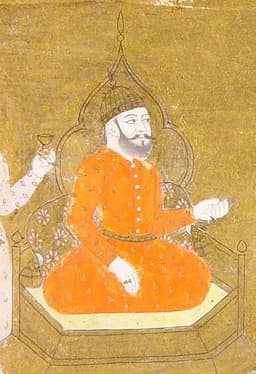
Muhammad bin Tughluq
Emperor · Medieval
48.4Total
Basic Information
Born
1500
1290
Died
1558
1351
Era
Medieval
Medieval
Nationality
Holy Roman Empire
India
Occupation
Emperor
Emperor
Civilization
Western
Indian
Score Comparison
Military (10%)
74.0
20.0
Political (20%)
70.3
40.8
Influence (20%)
71.0
57.2
Legacy (20%)
80.0
47.5
Leadership (15%)
78.0
65.0
Strategy (15%)
68.0
43.3
TOTAL
74.2
48.4
Charles V — Complete Timeline
1519 AD
Elected Holy Roman EmperorPolitical Action
Charles V was elected Holy Roman Emperor, defeating Francis I of France through extensive bribery of the prince-electors. This election united the Habsburg lands in Spain, Austria, the Netherlands, and the Holy Roman Empire under his rule.
ElectionHabsburg EmpireImperial Title
Impact: global
1521 AD
Diet of WormsPolitical Action
Charles V presided over the Diet of Worms, where Martin Luther was summoned to recant his teachings. Luther refused, and Charles issued the Edict of Worms, declaring Luther an outlaw and banning his writings, escalating the Protestant Reformation.
ReformationLutherImperial Diet
Impact: global
1525 AD
Battle of PaviaWar◆ Major
Imperial forces under Charles V defeated and captured Francis I of France at Pavia in Italy. This victory secured Spanish dominance in Italy and forced Francis to sign the Treaty of Madrid, though he later repudiated it.
Italian WarsBattleCapture of Francis I
Impact: regional
1527 AD
Sack of RomeWar◆ Major
Mutinous imperial troops under Charles V sacked Rome, looting the city and besieging Pope Clement VII in Castel Sant'Angelo. This event shocked Europe and forced the Pope to align more closely with Charles, leading to the coronation of Charles as Holy Roman Emperor by the Pope in 1530.
Italian WarsSackPapacy
Impact: regionaldestructive
1556 AD
Abdication and Division of the EmpirePolitical Action
Charles V abdicated his thrones, dividing his empire between his son Philip II (Spain, Netherlands, Italy) and his brother Ferdinand I (Holy Roman Empire). This division reflected the administrative challenges of ruling a vast, multi-ethnic empire.
AbdicationEmpire DivisionHabsburg
Impact: global
Muhammad bin Tughluq — Complete Timeline
1325 AD
Accession to the Delhi SultanatePolitical Action
Muhammad bin Tughluq succeeded his father Ghiyas-ud-din Tughluq as sultan of Delhi. He inherited a vast empire but soon embarked on ambitious and often controversial policies that would define his reign.
Delhi SultanateTughluqSuccession
Impact: regional
1327 AD
Transfer of Capital to DaulatabadPolitical Action◆ Major
Muhammad bin Tughluq ordered the transfer of the capital from Delhi to Daulatabad in the Deccan, forcing the entire population and administration to move. The plan failed due to water scarcity and logistical issues, and the capital was later moved back to Delhi.
Capital TransferDaulatabadFailed Reform
Impact: regionaldestructive
1329 AD
Introduction of Token CurrencyReform◆ Major
Muhammad bin Tughluq introduced a token currency made of copper and brass, intended to replace silver coins. The government failed to prevent counterfeiting, leading to economic chaos and the eventual withdrawal of the currency at great loss.
Token CurrencyEconomic ReformFailure
Impact: regionaldestructive
1330 AD
Campaign in the Deccan and South IndiaWar◆ Major
Muhammad bin Tughluq led military campaigns into the Deccan and southern India, attempting to consolidate control over the region. He faced rebellions from local rulers, including the Hoysala and Kakatiya, and the campaigns drained the treasury.
DeccanSouthern IndiaRebellion
Impact: regional
1335 AD
Revolt of the Nobility and Provincial GovernorsPolitical Action◆ Major
Muhammad bin Tughluq faced multiple revolts from nobles and provincial governors, including in Bengal, Gujarat, and the Deccan. These rebellions weakened the central authority and led to the fragmentation of the Delhi Sultanate, with the rise of independent states like the Bahmani Sultanate.
RevoltNobilityFragmentation
Impact: regionaldestructive
1340 AD
Famine in Northern IndiaOther◆ Major
A severe famine struck northern India during Muhammad bin Tughluq's reign, exacerbated by his failed economic policies and military campaigns. The famine caused widespread suffering and depopulation, further destabilizing the empire.
FamineEconomic CrisisDepopulation
Impact: regionaltragic
Expert Analysis
Origins
Charles V was born in 1500 in Ghent, Flanders, to Philip the Handsome of Burgundy and Joanna of Castile. He inherited a vast network of territories: the Burgundian Netherlands, Spain, Naples, Sicily, and the Spanish holdings in the Americas. His father's early death and his mother's mental instability left him under the regency of his aunt Margaret of Austria. He was educated in the Burgundian court, learning French, Latin, and statecraft. His upbringing emphasized chivalric ideals and the duty of a Christian prince.
Muhammad bin Tughluq was born in 1290 in Delhi, India, to Ghiyas-ud-din Tughluq, a Turkic slave soldier who founded the Tughluq dynasty. Little is known of his early life, but he received a thorough education in Islamic theology, philosophy, medicine, and calligraphy. He was known for his intellectual prowess and memorized the Quran. His father's rise from a humble background to sultan instilled in Muhammad a sense of ambition and a desire to centralize power.
Rise to Power
Charles V's rise was marked by dynastic inheritance and electoral politics. In 1516, upon the death of his grandfather Ferdinand II of Aragon, he became king of Spain (as Charles I). In 1519, he bribed the prince-electors of the Holy Roman Empire to secure his election as Emperor, defeating Francis I of France. This election united the Habsburg lands with the imperial crown, creating a dominion that spanned Europe. His early reign was challenged by the Revolt of the Comuneros in Spain (1520-1521), which he suppressed with military force.
Muhammad bin Tughluq ascended the throne in 1325 after his father's suspicious death—possibly engineered by Muhammad himself. He inherited the Delhi Sultanate, which had been consolidated by his father through campaigns in the Deccan and Bengal. Muhammad's rise was smooth, but he immediately faced the burden of ruling a diverse and restive empire. He began his reign with ambitious plans to expand and reform the state.
Leadership & Governance
Charles V ruled as a peripatetic emperor, constantly traveling between his domains. He governed through viceroys and councils, but often intervened personally in major decisions. His leadership was reactive, shaped by the need to defend Christendom against the Ottomans and to contain the Reformation. He convened the Diet of Worms in 1521, where Martin Luther was outlawed, but he could not enforce the edict due to political constraints. His governance was characterized by pragmatic alliances, such as with the Pope and German princes, but also by reliance on brutal force, as seen in the Sack of Rome in 1527.
Muhammad bin Tughluq was an intellectual and a reformer, but his governance was erratic and often counterproductive. He ordered the transfer of the capital from Delhi to Daulatabad in the Deccan in 1327, forcing the entire population to migrate—a disaster that caused immense suffering and was later reversed. He introduced a token currency made of copper and brass in 1329, but the government failed to prevent counterfeiting, leading to economic chaos. He also attempted to impose heavy taxes on the Doab region, which provoked widespread rebellion. His administrative innovations, while visionary, were poorly implemented and led to the disintegration of the sultanate.
Triumph & Tragedy
Charles V's greatest triumph was the Battle of Pavia in 1525, where his forces captured Francis I of France, securing Spanish dominance in Italy. His empire reached its zenith in the 1530s, with vast territories in Europe and the Americas. However, his greatest tragedy was his inability to unify Christendom. The Protestant Reformation split the Church, and his efforts to suppress it through the Schmalkaldic War (1546-1547) were only temporarily successful. He also faced relentless Ottoman expansion under Suleiman the Magnificent. In 1556, exhausted and disillusioned, he abdicated, dividing his empire between his son Philip II and his brother Ferdinand I.
Muhammad bin Tughluq's military campaigns in the Deccan and South India initially expanded his territory, but they overstretched his resources. He faced numerous rebellions, including in Bengal, Gujarat, and the Deccan, which he suppressed with brutal force. His greatest failure was the token currency experiment, which ruined the economy and eroded trust in the state. He also alienated the nobility and the ulema through his arbitrary decisions. By his death in 1351, the Delhi Sultanate had lost much of its territory and was in decline.
Character & Destiny
Charles V was pragmatic, patient, and devout. He believed in the divine right of kings but was willing to compromise when necessary. His character was shaped by a sense of duty and the burden of his vast inheritance. He often hesitated in decision-making, leading to missed opportunities. Historians note his melancholic disposition and his eventual retreat to a monastery, symbolizing his disillusionment with worldly power.
Muhammad bin Tughluq was brilliant but arrogant and impulsive. He was known for his intellectual curiosity but also for his harsh punishments and vindictiveness. He alienated his allies through suspicion and cruelty. His character led to a cycle of rebellion and repression that undermined his authority. He scored 65.0 in leadership but only 40.8 in political acumen, reflecting his inability to sustain support.
Legacy
Charles V's legacy is complex. He was the last emperor to attempt a universal monarchy in Europe. His division of the empire created the Spanish and Austrian branches of the Habsburgs, shaping European politics for centuries. He sponsored the voyages of Magellan and Cortés, expanding European influence in the Americas. His response to the Reformation set the stage for the religious wars that followed. He scored 80.0 in legacy, the highest among his scores.
Muhammad bin Tughluq is remembered as a failed reformer. His ambitious projects—the capital transfer, token currency, and tax reforms—are cited as examples of poor planning and execution. He weakened the Delhi Sultanate, paving the way for its eventual decline and the rise of regional kingdoms. His legacy score of 47.5 reflects his negative historical assessment. However, his intellectual contributions, such as patronage of scholars, are sometimes noted.
Conclusion
Charles V had a greater impact than Muhammad bin Tughluq. His total score of 74.2 far exceeds Muhammad's 48.4. Charles V shaped the course of European history through his empire, his opposition to the Reformation, and his sponsorship of exploration. Muhammad bin Tughluq's reforms failed and accelerated the decline of the Delhi Sultanate. While both were ambitious, Charles V's achievements were more enduring. His legacy continues to influence modern Europe, whereas Muhammad bin Tughluq is studied as a cautionary tale of overreach.
Rankings
🥇
Charles VLeader
Mil: 74.0Pol: 70.3Inf: 71.0
74.2
🥈
Muhammad bin Tughluq
Mil: 20.0Pol: 40.8Inf: 57.2
48.4
+25.8 behind
How This Comparison Works
Algorithm
Each figure is scored on 6 dimensions (0—100 scale) based on structured historical data: Military (10%), Political (20%), Influence (20%), Legacy (20%), Leadership (15%), Strategy (15%). The weighted total produces the final ranking.
Data Sources
Scores are computed from structured sub-indicators in the database. Scale factors adjust for era (Ancient ×0.85, Modern ×1.0) and civilization size (Eastern ×1.05, Other ×0.80) to account for differences in population and military scale.
Maximum 3 Figures
Comparisons are limited to 2—3 figures to ensure readability and statistical meaningfulness.
Error Margins
±5 points per dimension — Sub-scores are derived from historical records with inherent uncertainty. Two figures within 5 points on a dimension should be considered roughly equivalent in that area.
Total Score Accuracy
±3 points overall — The weighted combination of 6 dimensions produces a total score with approximately ±3 points of uncertainty. Differences of less than 3 points are not statistically significant— the figures are effectively tied.
Known Limitations
- Historical records are incomplete and uneven across civilizations
- Figures from oral-tradition societies may be underrepresented
- Occupation labels can misclassify multi-role figures
- Scores measure capability and impact, not moral character
- Quantitative scoring is a comparison tool, not absolute truth
Capability Radar
Military (10%) — Battles & Warfare
Battles
85
55
Win Rate
70
40
Expansion
90
50
Political (20%) — Governance & Reform
Reform
75
40
Diplomacy
80
35
Economy
70
20
Influence (20%) — Cultural & Global Reach
Cultural
85
30
Global
90
25
Legacy (20%) — Historical Impact
Historical
90
45
Longevity
85
30
Leadership (15%) — Power & Stability
Tenure
85
65
Stability
60
15
Strategy (15%) — Tactics & Innovation
Strategy
85
45
Tactics
75
60
Reform
80
30
Similar Comparisons
Comments & Discussion
No comments yet. Be the first to share your thoughts!