Loading...
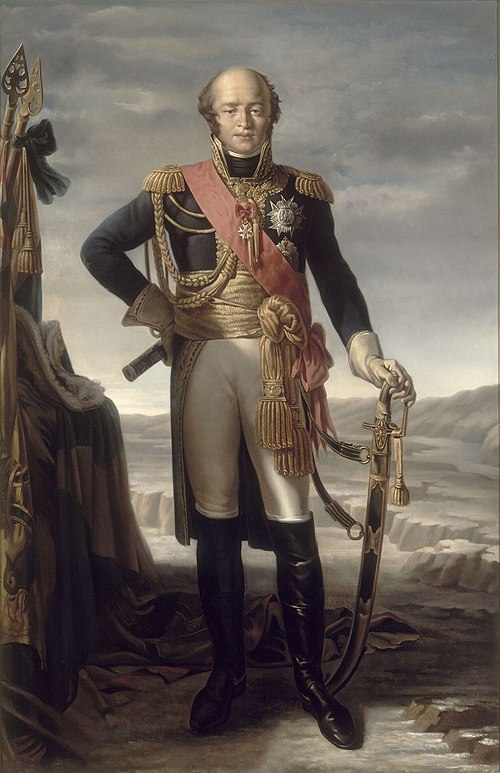
Louis-Nicolas Davout
ModernGeneralFrance1770 — 1823
Napoleon Iron Marshal who never lost a battle.
Compare Louis-Nicolas Davout with another historical figure:
Quick Facts
Born
1770
Died
1823
Country
France
Era
Modern
Occupation
General
Score Overview
Military (10%)65
Political (20%)68
Influence (20%)55
Legacy (20%)72
Leadership (15%)70
Strategy (15%)72
Total Score66.2
Louis-Nicolas Davout — Complete Timeline
1805 AD
Battle of AusterlitzWar
Davout commanded the III Corps on the right flank, holding off the main Austrian-Russian attack while Napoleon crushed the center. His corps marched 120 km in 48 hours to reach the battlefield. This victory destroyed the Third Coalition and established French dominance in Europe.
Napoleonic WarsBattleDecisive Victory
Impact: global
1806 AD
Battle of AuerstedtWar◆ Major
Davout's single corps of 26,000 men defeated the main Prussian army of 63,000 under the Duke of Brunswick. He used aggressive tactics and superior discipline to rout the Prussians. This victory, on the same day as Napoleon's victory at Jena, led to the collapse of Prussia.
Napoleonic WarsBattlePrussian Campaign
Impact: regional
1807 AD
Governor-General of the Duchy of WarsawPolitical Action
Davout was appointed governor-general of the newly created Duchy of Warsaw. He organized the Polish army and administration, implementing French legal and military reforms. His efficient governance helped secure Polish support for Napoleon's campaigns.
AdministrationPolandReform
Impact: regionalconstructive
1812 AD
Battle of BorodinoWar◆ Major
Davout commanded the I Corps in the center of the French line, leading assaults on the Russian fortifications. He was wounded but continued to command. The battle was a tactical draw but a strategic disaster for Napoleon, as the Russians withdrew and later forced the French retreat.
Napoleonic WarsBattleRussian Campaign
Impact: regional
1813 AD
Defended Hamburg during the War of the Sixth CoalitionWar◆ Major
Davout held Hamburg against a Prussian-Russian siege for over a year, using harsh measures including expelling civilians. He surrendered only after Napoleon's abdication. His defense was militarily competent but criticized for its brutality, tarnishing his reputation.
Napoleonic WarsSiegeControversy
Impact: regionaldestructive
1814 AD
Switched allegiance to Louis XVIII after Napoleon's first abdicationPolitical Action
After Napoleon's abdication, Davout submitted to the Bourbon monarchy and was made a peer of France. He did not join Napoleon during the Hundred Days until ordered to do so by the king. This pragmatic decision allowed him to retain his titles and avoid execution.
Political SurvivalBourbon RestorationAllegiance
Impact: national
Detailed Scores
▶View all detailed scores
Military
Strategy
7
Tactics
7
Battles
7
Army Scale
7
War Impact
7
Political
Governance
7
Reform
7
Stability
7
Policy
8
Power
7
Influence
History
9
Global
8
Culture
9
Ideology
9
Legacy
9
People often compare with
See how Louis-Nicolas Davout stacks up against other historical figures
Popular Comparisons
Louis-Nicolas Davout vs Jackie Fisher
vs Jackie Fisher74
Louis-Nicolas Davout vs Napoleon Bonaparte
vs Napoleon Bonaparte71
Louis-Nicolas Davout vs George Marshall
vs George Marshall70
Louis-Nicolas Davout vs Mogami Yoshiaki
vs Mogami Yoshiaki56
Louis-Nicolas Davout vs Ikeda Terumasa
vs Ikeda Terumasa54
Louis-Nicolas Davout vs Mulugeta Yeggazu
vs Mulugeta Yeggazu46