Loading...
Jackie Fisher vs Louis-Nicolas Davout
Jackie Fisher leads by 8.1 pts · 2 figures compared
…

Jackie Fisher
General · Modern
74.3Total
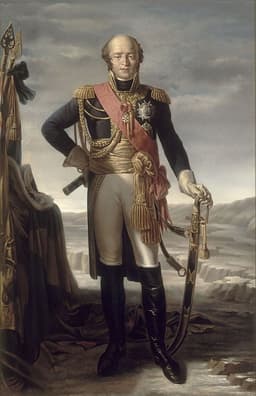
Louis-Nicolas Davout
General · Modern
66.2Total
Basic Information
Born
1841
1770
Died
1920
1823
Era
Modern
Modern
Nationality
United Kingdom
France
Occupation
General
General
Civilization
Western
Western
Score Comparison
Military (10%)
38.3
65.0
Political (20%)
78.0
68.0
Influence (20%)
80.0
55.0
Legacy (20%)
75.0
72.0
Leadership (15%)
80.0
70.0
Strategy (15%)
80.2
72.0
TOTAL
74.3
66.2
Jackie Fisher — Complete Timeline
1904 AD
Naval Reforms (Fisher Reforms)Reform◆ Major
As First Sea Lord, Fisher implemented sweeping reforms of the Royal Navy. He scrapped obsolete ships, concentrated the fleet in home waters, improved training, and introduced new technologies like submarines and destroyers. These reforms modernized the Navy.
Naval ReformModernizationRoyal Navy
Impact: nationalconstructive
1906 AD
Launch of HMS DreadnoughtInvention
As First Sea Lord, Fisher oversaw the design and construction of HMS Dreadnought, a revolutionary battleship with an all-big-gun armament and steam turbine propulsion. This ship rendered all previous battleships obsolete and triggered a global naval arms race.
Naval TechnologyDreadnoughtArms Race
Impact: globalconstructive
1915 AD
Resignation as First Sea Lord (1915)Political Action◆ Major
Fisher resigned as First Sea Lord in protest over the Dardanelles campaign, which he opposed. His resignation caused a political crisis and weakened the government of H.H. Asquith. He was replaced by Henry Jackson.
World War IDardanellesResignation
Impact: nationaldestructive
Louis-Nicolas Davout — Complete Timeline
1805 AD
Battle of AusterlitzWar
Davout commanded the III Corps on the right flank, holding off the main Austrian-Russian attack while Napoleon crushed the center. His corps marched 120 km in 48 hours to reach the battlefield. This victory destroyed the Third Coalition and established French dominance in Europe.
Napoleonic WarsBattleDecisive Victory
Impact: global
1806 AD
Battle of AuerstedtWar◆ Major
Davout's single corps of 26,000 men defeated the main Prussian army of 63,000 under the Duke of Brunswick. He used aggressive tactics and superior discipline to rout the Prussians. This victory, on the same day as Napoleon's victory at Jena, led to the collapse of Prussia.
Napoleonic WarsBattlePrussian Campaign
Impact: regional
1807 AD
Governor-General of the Duchy of WarsawPolitical Action
Davout was appointed governor-general of the newly created Duchy of Warsaw. He organized the Polish army and administration, implementing French legal and military reforms. His efficient governance helped secure Polish support for Napoleon's campaigns.
AdministrationPolandReform
Impact: regionalconstructive
1812 AD
Battle of BorodinoWar◆ Major
Davout commanded the I Corps in the center of the French line, leading assaults on the Russian fortifications. He was wounded but continued to command. The battle was a tactical draw but a strategic disaster for Napoleon, as the Russians withdrew and later forced the French retreat.
Napoleonic WarsBattleRussian Campaign
Impact: regional
1813 AD
Defended Hamburg during the War of the Sixth CoalitionWar◆ Major
Davout held Hamburg against a Prussian-Russian siege for over a year, using harsh measures including expelling civilians. He surrendered only after Napoleon's abdication. His defense was militarily competent but criticized for its brutality, tarnishing his reputation.
Napoleonic WarsSiegeControversy
Impact: regionaldestructive
1814 AD
Switched allegiance to Louis XVIII after Napoleon's first abdicationPolitical Action
After Napoleon's abdication, Davout submitted to the Bourbon monarchy and was made a peer of France. He did not join Napoleon during the Hundred Days until ordered to do so by the king. This pragmatic decision allowed him to retain his titles and avoid execution.
Political SurvivalBourbon RestorationAllegiance
Impact: national
Expert Analysis
Origins
**Jackie Fisher** was born on January 25, 1841, in Ceylon (now Sri Lanka), the son of a British army officer. He entered the Royal Navy at age 13 as a cadet on HMS Victory. Fisher's early career included service in the Crimean War and the Second Opium War, where he gained practical experience. He rose through the ranks by embracing technological change, becoming a torpedo specialist and advocating for steam propulsion and modern gunnery.
**Louis-Nicolas Davout** was born on May 10, 1770, in Annoux, France, into a noble family. He entered the École Royale Militaire in Paris at age 15 and graduated as a sub-lieutenant. Davout served in the French Revolutionary Wars, where he distinguished himself under General Dumouriez. He was imprisoned during the Reign of Terror but later rejoined the army, catching Napoleon's attention for his organizational skills and tactical acumen.
Rise to Power
Fisher's rise was marked by his reformist zeal. As a captain, he commanded the battleship HMS Inflexible and later became Director of Naval Ordnance. His big break came in 1904 when he was appointed First Sea Lord. He immediately pushed for the construction of HMS Dreadnought, launched in 1906, which rendered all existing battleships obsolete. Fisher also centralized the fleet, scrapped hundreds of obsolete vessels, and improved training and gunnery. His reforms faced resistance from conservative admirals, but he prevailed due to support from Prime Minister H. H. Asquith.
Davout rose through merit during the Revolutionary Wars. He became a general of division in 1800 and served under Napoleon in Italy. Napoleon recognized his reliability and appointed him commander of the III Corps in 1805. Davout's reputation soared after the Battle of Austerlitz (1805), where his corps held the right flank against overwhelming odds. His greatest triumph came at Auerstedt (1806), where his single corps of 26,000 defeated the main Prussian army of 63,000. Napoleon made him Duke of Auerstedt and later Prince of Eckmühl.
Leadership & Governance
Fisher was a radical reformer who centralized control and embraced technology. He created the Home Fleet, reduced overseas stations, and introduced the "nuclear option" of concentrating battleships in the North Sea to counter Germany. He also championed the battlecruiser, a fast but lightly armored ship. Fisher's governance style was autocratic and abrasive; he made enemies by bypassing traditional channels. His scores reflect this: Political 78.0, Leadership 80.0.
Davout was a strict disciplinarian who enforced order and efficiency. As governor-general of the Duchy of Warsaw (1807-1809), he organized the Polish army and administration, implementing the Napoleonic Code. His leadership in battle was characterized by precise maneuvers and rapid marches. Davout's corps was known for its high morale and discipline. However, his harshness during the defense of Hamburg (1813-1814) tarnished his reputation, as he expelled civilians and confiscated food. His Leadership score of 70.0 and Political 68.0 reflect his effectiveness but also his rigidity.
Triumph & Tragedy
Fisher's greatest triumph was the Dreadnought revolution, which gave Britain a decisive naval advantage before World War I. He also improved living conditions for sailors and introduced oil fuel. However, his tragedy was the Dardanelles campaign. Fisher opposed the Gallipoli operation but failed to prevent it, leading to his resignation in 1915. This damaged his legacy and highlighted his inability to navigate political waters. His Military score of 38.3 reflects his lack of direct combat command, but his Influence (80.0) and Legacy (75.0) are high.
Davout never lost a battle, a remarkable achievement. His victories at Auerstedt, Austerlitz, and Borodino (where he was wounded) showcased his tactical brilliance. He also successfully defended Hamburg for over a year. However, his tragedy was his unwavering loyalty to Napoleon, which led to his exile after Waterloo. He was stripped of titles and briefly imprisoned. Davout's Military score (65.0) is lower than Fisher's total because his battles were smaller in scale, but his Strategy (72.0) and Leadership (70.0) are solid.
Character & Destiny
Fisher was a visionary with a temper. He was nicknamed "Jacky" and known for his charisma and impatience. His character drove him to modernize the navy but also alienated allies. He once said, "Favoritism is the secret of efficiency." His destiny was to be remembered as the father of the dreadnought, but his resignation overshadowed his later career.
Davout was cold, methodical, and loyal. He was called "the Iron Marshal" for his stern demeanor. His character made him an ideal executor of Napoleon's plans but limited his ability to act independently. After Napoleon's fall, he was the only marshal to refuse to swear allegiance to the Bourbons initially. His destiny was to be a loyal servant, not a kingmaker.
Legacy
Fisher's legacy is the modern Royal Navy. The dreadnought arms race he started shaped naval warfare until the aircraft carrier. His reforms saved money and improved efficiency. Today, he is ranked among the greatest naval administrators. His Legacy score of 75.0 reflects this enduring impact.
Davout's legacy is that of a perfect military executor. He is remembered as one of Napoleon's best marshals, but his name is less known than Ney or Murat. His administrative work in Poland had lasting effects on Polish law and military organization. However, his harshness in Hamburg is a stain. His Legacy score of 72.0 is slightly lower than Fisher's.
Conclusion
Jackie Fisher had greater impact than Louis-Nicolas Davout. Fisher's total score of 74.3 exceeds Davout's 66.2 by 8.1 points. While Davout was a brilliant tactician who never lost a battle, his influence was confined to the Napoleonic Wars. Fisher, on the other hand, revolutionized naval warfare and set the stage for the 20th-century balance of power. His reforms directly influenced World War I and beyond. Davout was a master of execution, but Fisher was a master of transformation. In terms of lasting global impact, Fisher stands higher.
Rankings
🥇
Jackie FisherLeader
Mil: 38.3Pol: 78.0Inf: 80.0
74.3
🥈
Louis-Nicolas Davout
Mil: 65.0Pol: 68.0Inf: 55.0
66.2
+8.1 behind
How This Comparison Works
Algorithm
Each figure is scored on 6 dimensions (0—100 scale) based on structured historical data: Military (10%), Political (20%), Influence (20%), Legacy (20%), Leadership (15%), Strategy (15%). The weighted total produces the final ranking.
Data Sources
Scores are computed from structured sub-indicators in the database. Scale factors adjust for era (Ancient ×0.85, Modern ×1.0) and civilization size (Eastern ×1.05, Other ×0.80) to account for differences in population and military scale.
Maximum 3 Figures
Comparisons are limited to 2—3 figures to ensure readability and statistical meaningfulness.
Error Margins
±5 points per dimension — Sub-scores are derived from historical records with inherent uncertainty. Two figures within 5 points on a dimension should be considered roughly equivalent in that area.
Total Score Accuracy
±3 points overall — The weighted combination of 6 dimensions produces a total score with approximately ±3 points of uncertainty. Differences of less than 3 points are not statistically significant— the figures are effectively tied.
Known Limitations
- Historical records are incomplete and uneven across civilizations
- Figures from oral-tradition societies may be underrepresented
- Occupation labels can misclassify multi-role figures
- Scores measure capability and impact, not moral character
- Quantitative scoring is a comparison tool, not absolute truth
Capability Radar
Military (10%) — Battles & Warfare
Battles
10
85
Win Rate
10
95
Expansion
70
80
Political (20%) — Governance & Reform
Reform
95
55
Diplomacy
75
50
Economy
60
45
Influence (20%) — Cultural & Global Reach
Cultural
75
60
Global
85
60
Legacy (20%) — Historical Impact
Historical
85
75
Longevity
80
65
Leadership (15%) — Power & Stability
Tenure
70
60
Stability
65
55
Strategy (15%) — Tactics & Innovation
Strategy
90
88
Tactics
85
92
Reform
98
75
Similar Comparisons
Comments & Discussion
No comments yet. Be the first to share your thoughts!