Loading...
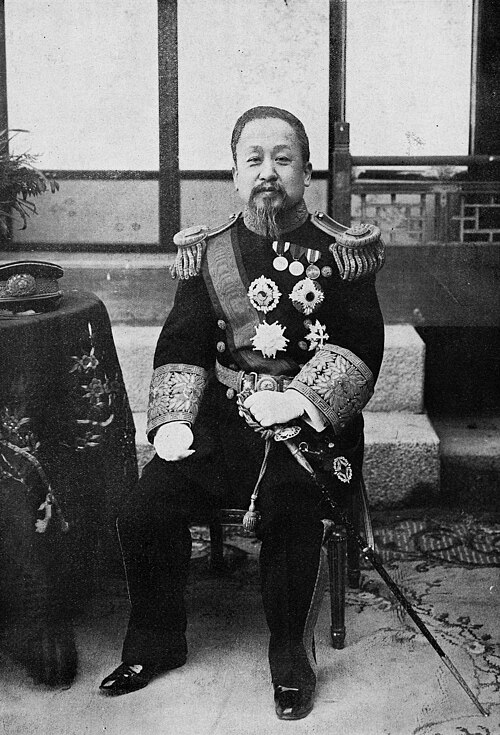
King Gojong of Korea
ModernEmperorKorea1852 — 1919
Last king and first emperor of Korea.
Compare King Gojong of Korea with another historical figure:
Quick Facts
Born
1852
Died
1919
Country
Korea
Era
Modern
Occupation
Emperor
Score Overview
Military (10%)50
Political (20%)68
Influence (20%)56
Legacy (20%)48
Leadership (15%)40
Strategy (15%)55
Total Score52.8
King Gojong of Korea — Complete Timeline
1894 AD
Gabo ReformsReform◆ Major
Gojong's government implemented the Gabo Reforms, a series of modernization measures including the abolition of slavery, reform of the civil service exam, and adoption of a solar calendar. These reforms aimed to strengthen Korea against foreign encroachment.
ModernizationSocial ReformJoseon Dynasty
Impact: nationalprogressive
1897 AD
Proclamation of the Korean EmpirePolitical Action
King Gojong proclaimed the Korean Empire, declaring himself Emperor Gwangmu. This was an attempt to assert Korea's sovereignty and independence from foreign influence, particularly China and Japan, and to modernize the state.
Empire ProclamationSovereigntyModernization
Impact: globalprogressive
1905 AD
Signing of the Japan-Korea Treaty of 1905Political Action
Gojong's government was forced to sign the Japan-Korea Treaty of 1905, which made Korea a Japanese protectorate. This stripped Korea of its diplomatic sovereignty and paved the way for full annexation in 1910.
ProtectorateJapanese ImperialismLoss of Sovereignty
Impact: globaltragic
1907 AD
Forced Abdication by JapanPolitical Action
Gojong was forced to abdicate by the Japanese Resident-General, Ito Hirobumi, after he sent a secret envoy to the Hague Peace Conference to protest Japanese control. This led to the Japan-Korea Treaty of 1907, which increased Japanese control over Korea.
Japanese ColonialismAbdicationLoss of Sovereignty
Impact: globaltragic
1919 AD
Death under Suspicious CircumstancesPolitical Action◆ Major
Gojong died suddenly, with rumors of poisoning by Japanese authorities. His death sparked the March 1st Movement, a nationwide protest against Japanese rule, which became a pivotal event in the Korean independence movement.
DeathIndependence MovementJapanese Colonialism
Impact: nationaltragic
Detailed Scores
▶View all detailed scores
Military
Strategy
7
Tactics
6
Battles
6
Army Scale
6
War Impact
7
Political
Governance
8
Reform
9
Stability
8
Policy
9
Power
9
Influence
History
9
Global
8
Culture
9
Ideology
9
Legacy
8
People often compare with
See how King Gojong of Korea stacks up against other historical figures
Popular Comparisons
King Gojong of Korea vs Nurhaci
vs Nurhaci71
King Gojong of Korea vs Bayinnaung
vs Bayinnaung69
King Gojong of Korea vs Zayed bin Sultan Al Nahyan
vs Zayed bin Sultan Al Nahyan64
King Gojong of Korea vs Ali Pasha of Ioannina
vs Ali Pasha of Ioannina59
King Gojong of Korea vs Guru Hargobind
vs Guru Hargobind57
King Gojong of Korea vs Charles Augustus of Saxe-Weimar
vs Charles Augustus of Saxe-Weimar56