Loading...
King Gojong of Korea vs Zayed bin Sultan Al Nahyan
Zayed bin Sultan Al Nahyan leads by 11.0 pts · 2 figures compared
…
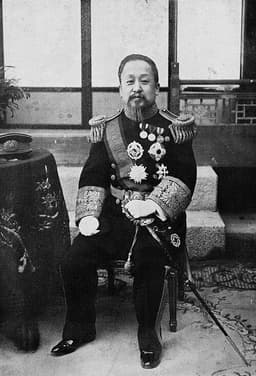
King Gojong of Korea
Emperor · Modern
52.8Total
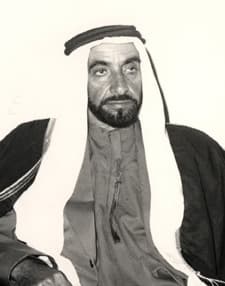
Zayed bin Sultan Al Nahyan
Emperor · Modern
63.8Total
Basic Information
Born
1852
1918
Died
1919
2004
Era
Modern
Modern
Nationality
Korea
UAE
Occupation
Emperor
Emperor
Civilization
Eastern
Middle Eastern
Score Comparison
Military (10%)
50.0
11.3
Political (20%)
68.0
82.0
Influence (20%)
56.4
68.0
Legacy (20%)
48.3
72.0
Leadership (15%)
40.0
85.0
Strategy (15%)
54.6
25.7
TOTAL
52.8
63.8
King Gojong of Korea — Complete Timeline
1894 AD
Gabo ReformsReform◆ Major
Gojong's government implemented the Gabo Reforms, a series of modernization measures including the abolition of slavery, reform of the civil service exam, and adoption of a solar calendar. These reforms aimed to strengthen Korea against foreign encroachment.
ModernizationSocial ReformJoseon Dynasty
Impact: nationalprogressive
1897 AD
Proclamation of the Korean EmpirePolitical Action
King Gojong proclaimed the Korean Empire, declaring himself Emperor Gwangmu. This was an attempt to assert Korea's sovereignty and independence from foreign influence, particularly China and Japan, and to modernize the state.
Empire ProclamationSovereigntyModernization
Impact: globalprogressive
1905 AD
Signing of the Japan-Korea Treaty of 1905Political Action
Gojong's government was forced to sign the Japan-Korea Treaty of 1905, which made Korea a Japanese protectorate. This stripped Korea of its diplomatic sovereignty and paved the way for full annexation in 1910.
ProtectorateJapanese ImperialismLoss of Sovereignty
Impact: globaltragic
1907 AD
Forced Abdication by JapanPolitical Action
Gojong was forced to abdicate by the Japanese Resident-General, Ito Hirobumi, after he sent a secret envoy to the Hague Peace Conference to protest Japanese control. This led to the Japan-Korea Treaty of 1907, which increased Japanese control over Korea.
Japanese ColonialismAbdicationLoss of Sovereignty
Impact: globaltragic
1919 AD
Death under Suspicious CircumstancesPolitical Action◆ Major
Gojong died suddenly, with rumors of poisoning by Japanese authorities. His death sparked the March 1st Movement, a nationwide protest against Japanese rule, which became a pivotal event in the Korean independence movement.
DeathIndependence MovementJapanese Colonialism
Impact: nationaltragic
Zayed bin Sultan Al Nahyan — Complete Timeline
1970 AD
Oil Revenue Investment in InfrastructureReform◆ Major
After the discovery of oil in Abu Dhabi in the 1950s, Zayed directed oil revenues toward building modern infrastructure: roads, hospitals, schools, and housing. This transformed Abu Dhabi from a poor region into a wealthy state.
OilDevelopmentInfrastructure
Impact: nationalconstructive
1971 AD
Formation of the United Arab EmiratesPolitical Action
Zayed bin Sultan Al Nahyan, as ruler of Abu Dhabi, played a key role in uniting seven emirates to form the United Arab Emirates on December 2, 1971. He became the first President, a position he held until his death.
UnificationUAEIndependence
Impact: regionalconstructive
1990 AD
Environmental Conservation InitiativesReform
Zayed established the Zayed International Prize for the Environment and implemented policies to protect wildlife and habitats, including the creation of nature reserves. He was a pioneer in environmentalism in the Gulf region.
EnvironmentConservationAwards
Impact: regionalconstructive
Women's Rights ReformsReform◆ Major
Zayed supported women's education and employment, appointing women to government positions and promoting their participation in the workforce. These reforms were progressive for the region at the time.
Women's RightsEducationReform
Impact: nationalprogressive
2004 AD
Death and LegacyOther◆ Major
Zayed died on November 2, 2004, after a long illness. His funeral drew massive crowds, and he was mourned as the founding father of the UAE. His legacy includes a stable, prosperous federation.
DeathLegacyFounding Father
Impact: nationaltragic
Expert Analysis
King Gojong of Korea vs Zayed bin Sultan Al Nahyan
# The Emperor's Two Fates
On a November morning in 2004, the streets of Abu Dhabi filled with mourners from across the Arab world, their tears falling for a man who had built a nation from sand and ambition. Fifteen years earlier, on a January day in Seoul, a Korean emperor had died under circumstances so suspicious that his people rose in revolt, their grief igniting a movement that would echo for generations. Zayed bin Sultan Al Nahyan and King Gojong of Korea never met, never corresponded, yet their stories form a quiet tragedy of leadership in an age of empires—one who seized his moment, and one who was crushed by it.
Origins
Zayed was born in 1918, deep in the desert of Abu Dhabi, a world of Bedouin tents, pearl diving, and tribal loyalties. His father, Sultan bin Zayed, was ruler of Abu Dhabi, but the young Zayed grew up far from palaces, learning the harsh lessons of survival in the Empty Quarter. He memorized the stars for navigation, the names of desert plants for medicine, and the codes of honor that bound men together in a land without law. This was a childhood of scarcity, where water was more precious than gold and a man's word was his only contract.
Gojong entered the world in 1852, the son of a regent in the hermetic kingdom of Joseon. Korea was the "Hermit Kingdom," a Confucian society that had deliberately closed itself to the outside world for centuries. While Zayed learned to read the desert, Gojong studied the Confucian classics in the shadow of palace walls. His youth was one of ritual and isolation, surrounded by courtiers who whispered of foreign threats from the sea—Japanese ships, Western missionaries, Russian ambitions. The world was pressing in, and Gojong was being groomed to hold it back.
Rise to Power
Zayed became ruler of Abu Dhabi in 1966, not through a dramatic coup but through the quiet consensus of tribal elders who recognized his competence. His predecessor, his brother Shakhbut, had been cautious with oil revenues—too cautious, many felt. Zayed moved swiftly, opening the treasury to build schools, hospitals, and roads. He understood that oil was not a curse but a tool, and he wielded it with the precision of a desert trader.
Gojong ascended the throne in 1864 at age twelve, under the regency of his father, the Daewongun. For years, he was a puppet, his decisions made by others. When he finally took power in 1873, he faced a Korea surrounded by predators. Japan had modernized; China was crumbling; Russia was expanding. Gojong tried to navigate these currents, opening ports to foreign trade while clinging to sovereignty. But he was always reacting, always one step behind, caught between the conservative Confucian court and the relentless pressure of imperial powers.
Leadership & Governance
Zayed's genius lay in his vision of unity. In 1971, he brought together seven emirates—Abu Dhabi, Dubai, Sharjah, Ajman, Umm Al Quwain, Fujairah, and Ras Al Khaimah—to form the United Arab Emirates. It was a fragile union, each emirate jealous of its autonomy, but Zayed used oil wealth as glue. He built a federal system that respected local identities while creating a shared future. "He who does not know his past cannot make the best of his present and future," he once said, and he meant it literally: he funded museums alongside highways.
Gojom's leadership was more desperate. In 1894, he launched the Gabo Reforms, abolishing slavery, reorganizing the government, and modernizing the military. In 1897, he proclaimed the Korean Empire, declaring himself Emperor Gwangmu—a bold assertion of independence. But these reforms came too late and faced too many enemies: Japanese agents, Chinese interference, and internal resistance from Confucian scholars who saw change as betrayal. Gojong was a reformer in a cage, his ambitions constantly thwarted by powers he could not control.
Triumph & Tragedy
Zayed's greatest triumph was the UAE itself. By 2004, what had been a collection of fishing villages and desert camps was a global hub of commerce, education, and diplomacy. He had used oil revenues not for personal luxury but for national transformation: schools for girls, hospitals for the poor, environmental reserves for future generations. His tragedy was the knowledge that oil would not last forever, and he spent his final years diversifying the economy, planting seeds for a post-oil future.
Gojong's triumph was the Korean Empire itself—a fleeting moment when Korea claimed equal status among nations. But his tragedy was devastating. In 1905, Japan forced him to sign the protectorate treaty; in 1907, he sent a secret envoy to the Hague Peace Conference to protest, hoping the world would intervene. Japan responded by forcing his abdication, replacing him with his son, who was a puppet. Korea was annexed in 1910. Gojong died in 1919, officially of natural causes, but rumors of Japanese poison spread instantly. His death sparked the March 1st Movement, a nationwide uprising that was brutally suppressed, killing thousands.
Character & Destiny
Zayed possessed a quiet, unshakeable confidence. He was a man who had survived the desert and knew that patience and consensus could move mountains. He was not a military commander—his military score of 14.6 reflects this—but he was a master of political strategy, with a political score of 82.9. He understood that power in the modern world came not from conquest but from building institutions that people trusted.
Gojong was more tragic figure—a man of genuine intelligence and reformist instincts, but trapped by history. His political score of 84.8 is actually higher than Zayed's, but his strategy score of 30.0 reveals the fatal flaw: he could not outmaneuver the Japanese. He was a chess player facing opponents who were willing to flip the board. His character was shaped by isolation; he trusted the wrong people, sent the wrong envoys, and believed that international law would protect him. It did not.
Legacy
Zayed's legacy is tangible: a nation that works. The UAE today is a testament to his vision, a country where 80% of residents are expatriates drawn by opportunity, where the Burj Khalifa pierces the sky, and where women serve in the cabinet. His name adorns highways, hospitals, and a major prize for environmental work. He is remembered not as a conqueror but as a builder.
Gojong's legacy is more complex. He is honored as a martyr of Korean independence, his death a catalyst for the movement that eventually led to a free Korea. But his reign is also seen as a failure—a missed chance to modernize before it was too late. South Korea today, a vibrant democracy and economic powerhouse, stands as both a fulfillment of his dreams and a painful reminder of what was lost through his inability to act decisively.
Conclusion
One emperor built a country from nothing; the other lost a country that had stood for centuries. The difference was not intelligence or vision—both men had those in abundance. It was timing and circumstance. Zayed came to power when oil gave him leverage and when the British withdrawal from the Gulf created a vacuum he could fill. Gojong ruled when Japan was ascendant and Korea was isolated, when the world's great powers had no interest in protecting a small kingdom. History is not always fair. It rewards those who are lucky enough to be born at the right moment, and it crushes those who are not. And yet, both men remain—one as a founder, one as a martyr—each a mirror of what leadership can achieve, and what it can lose, when the tides of history turn.
Rankings
🥇
Zayed bin Sultan Al NahyanLeader
Mil: 11.3Pol: 82.0Inf: 68.0
63.8
🥈
King Gojong of Korea
Mil: 50.0Pol: 68.0Inf: 56.4
52.8
+11.0 behind
How This Comparison Works
Algorithm
Each figure is scored on 6 dimensions (0—100 scale) based on structured historical data: Military (10%), Political (20%), Influence (20%), Legacy (20%), Leadership (15%), Strategy (15%). The weighted total produces the final ranking.
Data Sources
Scores are computed from structured sub-indicators in the database. Scale factors adjust for era (Ancient ×0.85, Modern ×1.0) and civilization size (Eastern ×1.05, Other ×0.80) to account for differences in population and military scale.
Maximum 3 Figures
Comparisons are limited to 2—3 figures to ensure readability and statistical meaningfulness.
Error Margins
±5 points per dimension — Sub-scores are derived from historical records with inherent uncertainty. Two figures within 5 points on a dimension should be considered roughly equivalent in that area.
Total Score Accuracy
±3 points overall — The weighted combination of 6 dimensions produces a total score with approximately ±3 points of uncertainty. Differences of less than 3 points are not statistically significant— the figures are effectively tied.
Known Limitations
- Historical records are incomplete and uneven across civilizations
- Figures from oral-tradition societies may be underrepresented
- Occupation labels can misclassify multi-role figures
- Scores measure capability and impact, not moral character
- Quantitative scoring is a comparison tool, not absolute truth
Capability Radar
Military (10%) — Battles & Warfare
Battles
5
4
Win Rate
5
9
Expansion
0
12
Political (20%) — Governance & Reform
Reform
40
90
Diplomacy
30
95
Economy
20
90
Influence (20%) — Cultural & Global Reach
Cultural
40
70
Global
30
70
Legacy (20%) — Historical Impact
Historical
50
75
Longevity
40
65
Leadership (15%) — Power & Stability
Tenure
60
85
Stability
15
85
Strategy (15%) — Tactics & Innovation
Strategy
5
16
Tactics
5
16
Reform
10
18
Similar Comparisons
Comments & Discussion
王权叹息6/16/2026
我是古典学者,盯着血统与春秋笔法。高宗的祖上是李成桂,13世纪后改朝换代只靠朱子学撑门面,结果1906年他被日本逼退,连《朝鲜王朝实录》都被篡改出“退位诏书”。扎耶德呢?他爹苏丹被刺后,他23岁就当上阿布扎比代表,血统纯正得让部落长老闭嘴。一个是被史官左右的傀儡,一个是写史书的王。数据不会骗人:高宗执政44年,丧失主权;扎耶德执政33年,创造国家。#|zh|王权叹息|zh|This classic scholar's view contrasts hereditary legitimacy and historical narratives.
历史迷云6/16/2026
我就是个历史狂,死磕细节。扎耶德1918年生在沙漠里,他爸被暗杀那会儿他才7岁,后来靠骆驼部落情感统一7个酋长国。高宗呢?他1864年登基时连门都不出,儒臣摆布了40年,最后死因成谜——日本官方说“脑出血”,但1896年他就试图逃到俄国使馆躲避日本人。两人都面对帝国夹缝,但扎耶
Historian2556/16/2026
As a military historian, I’d say Gojong was a strategic disaster. He trusted Russia to save his throne from Japan in 1905, a move as foolish as betting on a tiger to spare your sheep. The Eulsa Treaty wasn’t just signed under duress—it was signed after Japan had already crushed Korea’s navy at Ganghwa. Zayed, by contrast, built a federation in 1971 with a small army and big oil, aligning with Britain then the US smartly. My verdict: one leader read the geopolitical map, the other got lost in the
SharpWatcher946/16/2026
Let’s talk numbers: Gojong’s Korea had a GDP per capita of roughly $900 in 1900 (adjusted), while Zayed’s UAE hit $30,000 by 2000. But that’s lazy. Gojong faced Japan’s industrial might with a 0.2% literacy rate in 1895; Zayed rode oil—which he nationalized in 1974 after early contracts gave foreign firms 75% of profits. The takeaway? Gojong’s failure wasn’t personal—it was systemic. Zayed didn’t build from sand; he traded black gold for contracts. Data shows context is king.|en|数据铁匠|en|This dat
TheSandstoneSheikh6/16/2026
Zayed’s unification of the Emirates deserves more credit than this score suggests. While Gojong struggled against Japanese imperialism, Zayed built a nation in a generation—oil or not, that’s leadership. The comparison undervalues the harsh desert context.
IronCrescent6/16/2026
I’d argue Gojong’s resistance to modernity is overstated. He embraced Western weapons and diplomacy in secret, but Korea’s geopolitics made it a pawn. Zayed had no such predator next door. Compare them on agency, not outcomes alone.