Loading...
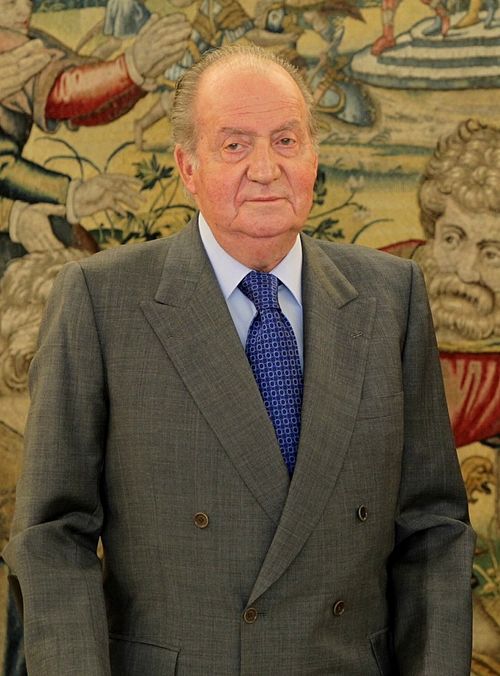
Juan Carlos I of Spain
ModernEmperorSpain1938 — ?
King who led Spain transition to democracy after Franco.
Compare Juan Carlos I of Spain with another historical figure:
Quick Facts
Born
1938
Country
Spain
Era
Modern
Occupation
Emperor
Score Overview
Military (10%)27
Political (20%)75
Influence (20%)55
Legacy (20%)52
Leadership (15%)72
Strategy (15%)56
Total Score57.1
Juan Carlos I of Spain — Complete Timeline
1969 AD
Appointment as Franco's successorPolitical Action
Francisco Franco designated Juan Carlos as his successor, with the title of Prince of Spain. This decision was made to ensure the continuation of the regime after Franco's death, but Juan Carlos secretly worked to transition Spain to democracy.
SuccessionFrancoTransition
Impact: national
1975 AD
Proclamation as King of SpainPolitical Action
Juan Carlos I was proclaimed king two days after Franco's death. He inherited a dictatorial regime but quickly moved to dismantle it, initiating a process of political reform that would lead to democracy.
ProclamationMonarchyReform
Impact: nationalconstructive
1977 AD
Legalization of political partiesReform◆ Major
Under Juan Carlos I's guidance, the Spanish government legalized political parties, including the Communist Party. This was a key step in the transition to democracy, allowing for free elections and the establishment of a pluralistic political system.
DemocracyPolitical ReformLegalization
Impact: nationalprogressive
1978 AD
Approval of the 1978 ConstitutionReform
Juan Carlos I oversaw the drafting and approval of a new democratic constitution. The constitution established a parliamentary monarchy, guaranteed civil rights, and decentralized the state through autonomous communities, ending the Francoist centralization.
ConstitutionDemocracyDecentralization
Impact: nationalconstructive
1981 AD
Role in thwarting the 1981 coup attemptPolitical Action
During an attempted military coup, Juan Carlos I went on national television to denounce the coup and order the military to remain loyal to the democratic government. His decisive action helped defeat the coup and consolidate Spanish democracy.
CoupDemocracyLeadership
Impact: nationalconstructive
2014 AD
Abdication in favor of Felipe VIPolitical Action◆ Major
Juan Carlos I abdicated the throne, citing personal reasons and a desire to rejuvenate the monarchy. His abdication followed a series of scandals that had damaged the monarchy's reputation, and he handed over the crown to his son Felipe VI.
AbdicationSuccessionFelipe VI
Impact: national
Detailed Scores
▶View all detailed scores
Military
Strategy
7
Tactics
7
Battles
7
Army Scale
6
War Impact
7
Political
Governance
8
Reform
8
Stability
8
Policy
8
Power
9
Influence
History
9
Global
8
Culture
9
Ideology
9
Legacy
8
People often compare with
See how Juan Carlos I of Spain stacks up against other historical figures
Popular Comparisons
Juan Carlos I of Spain vs Maria Theresa
vs Maria Theresa68
Juan Carlos I of Spain vs Victor Emmanuel II
vs Victor Emmanuel II61
Juan Carlos I of Spain vs Sobhuza II
vs Sobhuza II53
Juan Carlos I of Spain vs Venkata II
vs Venkata II49
Juan Carlos I of Spain vs Ovonramwen Nogbaisi
vs Ovonramwen Nogbaisi48
Juan Carlos I of Spain vs Karni Singh of Bikaner
vs Karni Singh of Bikaner47