Loading...
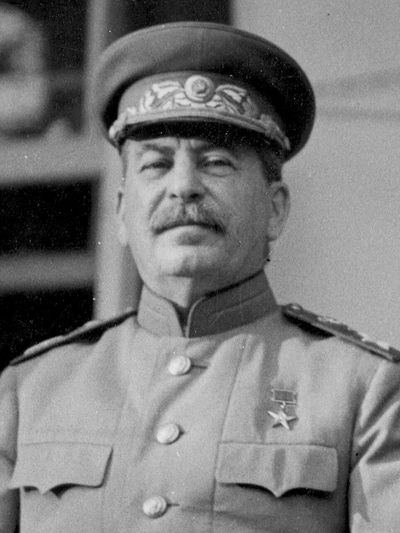
Joseph Stalin
ModernPoliticianRussia1878 — 1953
Soviet leader during WWII, presided over rapid industrialization and purges.
Compare Joseph Stalin with another historical figure:
Quick Facts
Born
1878
Died
1953
Country
Russia
Era
Modern
Occupation
Politician
Score Overview
Military (10%)75
Political (20%)70
Influence (20%)72
Legacy (20%)55
Leadership (15%)80
Strategy (15%)70
Total Score68.8
Joseph Stalin — Complete Timeline
1928 AD
Launched the First Five-Year PlanReform
Stalin initiated a series of centralized economic plans aimed at rapid industrialization and collectivization of agriculture. The First Five-Year Plan set ambitious targets for heavy industry, leading to significant growth but also severe shortages and human cost.
Impact: global
1929 AD
Implemented forced collectivization of agricultureReform
Stalin ordered the consolidation of individual peasant farms into collective farms (kolkhozy). This was met with resistance, leading to the liquidation of kulaks (wealthy peasants) as a class. The policy caused a catastrophic famine, particularly in Ukraine (Holodomor), resulting in millions of deaths.
Impact: nationaldestructive
1937 AD
Conducted the Great Purge (Great Terror)Political Action
Stalin orchestrated a campaign of political repression against alleged enemies of the state. Millions were arrested, executed, or sent to the Gulag labor camps. The purges targeted the Communist Party, military leadership, intellectuals, and ordinary citizens, consolidating Stalin's absolute power.
Impact: nationaldestructive
1945 AD
Led the Soviet Union to victory in World War IIWar
Stalin served as Supreme Commander of the Soviet armed forces. The Soviet Union bore the brunt of the war against Nazi Germany, suffering immense casualties. The Red Army's victory at Stalingrad and the capture of Berlin were key turning points. The war ended with Soviet domination of Eastern Europe.
Impact: global
Established the Eastern Bloc and the Iron CurtainPolitical Action◆ Major
After WWII, Stalin imposed communist governments in Eastern European countries occupied by the Red Army, creating a buffer zone against the West. This division of Europe into Soviet and Western spheres of influence marked the beginning of the Cold War.
Impact: globaldestructive
Detailed Scores
▶View all detailed scores
Military
Strategy
7
Tactics
7
Battles
7
Army Scale
7
War Impact
8
Political
Governance
6
Reform
6
Stability
6
Policy
6
Power
7
Influence
History
7
Global
7
Culture
7
Ideology
8
Legacy
7
People often compare with
See how Joseph Stalin stacks up against other historical figures
Popular Comparisons
Joseph Stalin vs Mustafa Kemal Ataturk
vs Mustafa Kemal Ataturk80
Joseph Stalin vs Mao Zedong
vs Mao Zedong79
Joseph Stalin vs Abraham Lincoln
vs Abraham Lincoln78
Joseph Stalin vs George Washington
vs George Washington77
Joseph Stalin vs Winston Churchill
vs Winston Churchill72
Joseph Stalin vs Franklin D. Roosevelt
vs Franklin D. Roosevelt71