Loading...
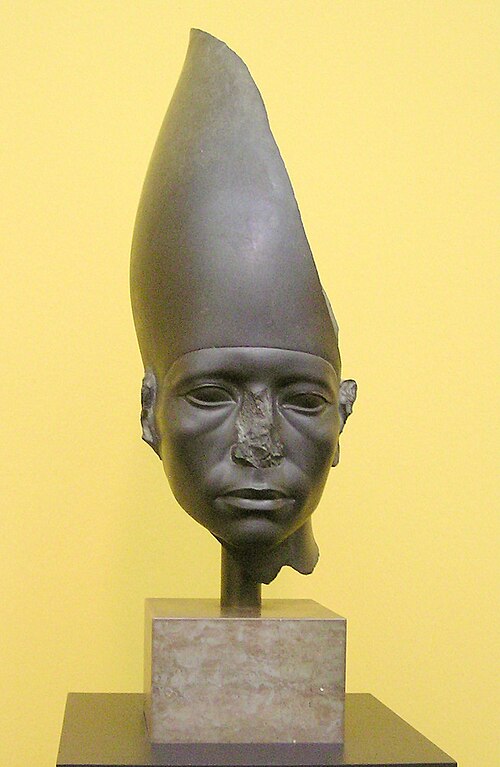
Amenemhat III
AncientEmperorMiddle Kingdom Egypt-1800 — -1755
Golden age pharaoh, pyramids at Dahshur and Hawara.
Compare Amenemhat III with another historical figure:
Quick Facts
Born
1800 BCE
Died
1755 BCE
Country
Middle Kingdom Egypt
Era
Ancient
Occupation
Emperor
Score Overview
Military (10%)26
Political (20%)72
Influence (20%)62
Legacy (20%)58
Leadership (15%)72
Strategy (15%)25
Total Score56.7
Amenemhat III — Complete Timeline
1790 BC
Construction of the Black Pyramid at DahshurCultural◆ Major
Amenemhat III built the Black Pyramid at Dahshur, named for its dark mudbrick core. The pyramid was poorly constructed and suffered from structural issues, leading to its partial collapse in antiquity. It contained a complex burial chamber with a massive quartzite sarcophagus.
PyramidArchitectureDahshur
Impact: national
1785 BC
Construction of the Hawara Pyramid and LabyrinthCultural◆ Major
Amenemhat III built his second pyramid at Hawara, near the Faiyum. Adjacent to it, he constructed a vast mortuary temple complex known to later Greek writers as the Labyrinth, described by Herodotus as surpassing the pyramids in scale. The complex served as an administrative and religious center.
PyramidLabyrinthArchitecture
Impact: nationalconstructive
1780 BC
Completion of Faiyum Land ReclamationReform◆ Major
Amenemhat III completed the large-scale irrigation and land reclamation projects in the Faiyum region begun by his predecessors. By regulating the inflow of Nile water, he expanded arable land significantly, making the Faiyum one of the most productive agricultural areas in Egypt and contributing to the prosperity of his reign.
IrrigationAgricultureFaiyum
Impact: regionalconstructive
1775 BC
Peak of Middle Kingdom ProsperityPolitical Action◆ Major
Under Amenemhat III, Egypt reached the zenith of its Middle Kingdom power and wealth. Extensive mining expeditions to Sinai and the Eastern Desert yielded turquoise and copper. Trade flourished, and the administration was efficient, leading to a period of stability and cultural achievement often regarded as a golden age.
Golden AgeProsperityMiddle Kingdom
Impact: nationalconstructive
Detailed Scores
▶View all detailed scores
Military
Strategy
7
Tactics
7
Battles
7
Army Scale
7
War Impact
7
Political
Governance
6
Reform
7
Stability
6
Policy
7
Power
7
Influence
History
8
Global
7
Culture
8
Ideology
8
Legacy
7
People often compare with
See how Amenemhat III stacks up against other historical figures
Popular Comparisons
Amenemhat III vs Theodosius I
vs Theodosius I76
Amenemhat III vs Shapur II
vs Shapur II65
Amenemhat III vs Kharavela of Kalinga
vs Kharavela of Kalinga56
Amenemhat III vs King Fuchai of Wu
vs King Fuchai of Wu52
Amenemhat III vs Sindae of Goguryeo
vs Sindae of Goguryeo44
Amenemhat III vs Caligula
vs Caligula39