Loading...
Amenemhat III vs Theodosius I
Theodosius I leads by 19.3 pts · 2 figures compared
…
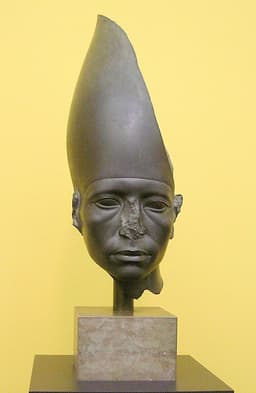
Amenemhat III
Emperor · Ancient
56.7Total

Theodosius I
Emperor · Ancient
76.0Total
Basic Information
Born
-1800
347
Died
-1755
395
Era
Ancient
Ancient
Nationality
Middle Kingdom Egypt
Roman Empire
Occupation
Emperor
Emperor
Civilization
Middle Eastern
Western
Score Comparison
Military (10%)
25.9
72.5
Political (20%)
72.0
65.0
Influence (20%)
62.0
85.0
Legacy (20%)
58.0
90.0
Leadership (15%)
72.0
68.0
Strategy (15%)
25.0
50.0
TOTAL
56.7
76.0
Amenemhat III — Complete Timeline
1790 BC
Construction of the Black Pyramid at DahshurCultural◆ Major
Amenemhat III built the Black Pyramid at Dahshur, named for its dark mudbrick core. The pyramid was poorly constructed and suffered from structural issues, leading to its partial collapse in antiquity. It contained a complex burial chamber with a massive quartzite sarcophagus.
PyramidArchitectureDahshur
Impact: national
1785 BC
Construction of the Hawara Pyramid and LabyrinthCultural◆ Major
Amenemhat III built his second pyramid at Hawara, near the Faiyum. Adjacent to it, he constructed a vast mortuary temple complex known to later Greek writers as the Labyrinth, described by Herodotus as surpassing the pyramids in scale. The complex served as an administrative and religious center.
PyramidLabyrinthArchitecture
Impact: nationalconstructive
1780 BC
Completion of Faiyum Land ReclamationReform◆ Major
Amenemhat III completed the large-scale irrigation and land reclamation projects in the Faiyum region begun by his predecessors. By regulating the inflow of Nile water, he expanded arable land significantly, making the Faiyum one of the most productive agricultural areas in Egypt and contributing to the prosperity of his reign.
IrrigationAgricultureFaiyum
Impact: regionalconstructive
1775 BC
Peak of Middle Kingdom ProsperityPolitical Action◆ Major
Under Amenemhat III, Egypt reached the zenith of its Middle Kingdom power and wealth. Extensive mining expeditions to Sinai and the Eastern Desert yielded turquoise and copper. Trade flourished, and the administration was efficient, leading to a period of stability and cultural achievement often regarded as a golden age.
Golden AgeProsperityMiddle Kingdom
Impact: nationalconstructive
Theodosius I — Complete Timeline
380 AD
Edict of ThessalonicaPolitical Action
Theodosius I issued the Edict of Thessalonica, declaring Nicene Christianity the official state religion of the Roman Empire. All other forms of Christianity were deemed heretical, and pagan practices were increasingly suppressed.
ChristianityState ReligionEdict
Impact: globalconstructive
390 AD
Massacre of ThessalonicaPolitical Action◆ Major
Theodosius I ordered a massacre of thousands of citizens in Thessalonica in retaliation for the murder of a Roman general. The massacre led to his excommunication by Bishop Ambrose of Milan, and he later performed public penance.
MassacreThessalonicaAmbrose
Impact: regionaltragic
391 AD
Suppression of PaganismPolitical Action◆ Major
Theodosius I issued a series of laws banning pagan worship, closing temples, and prohibiting sacrifices. The Olympic Games were abolished, and the Serapeum in Alexandria was destroyed. These actions accelerated the decline of paganism in the empire.
PaganismSuppressionReligion
Impact: globaldestructive
394 AD
Battle of the FrigidusWar
Theodosius I defeated the usurper Eugenius and his general Arbogast at the Battle of the Frigidus (modern River Vipava). The victory reunited the Roman Empire under a single ruler for the last time before its permanent division.
Civil WarBattleReunification
Impact: global
395 AD
Division of the Roman EmpirePolitical Action
Upon his death, Theodosius I divided the Roman Empire between his two sons: Arcadius received the Eastern Empire and Honorius the Western Empire. This division became permanent, leading to the separate histories of the Byzantine and Western Roman Empires.
DivisionSuccessionEast-West
Impact: global
Expert Analysis
Origins
Amenemhat III was born around 1860 BCE, the son of Pharaoh Senusret III, and was raised in the royal court of the Middle Kingdom. He received training in administration and construction, reflecting the dynasty's focus on internal development. His reign (c. 1860-1814 BCE) continued his father's policies of consolidating central authority and expanding irrigation.
Theodosius I was born around 347 CE in Cauca, Hispania, to a senior military officer, Theodosius the Elder. He followed his father into the army, gaining experience in campaigns in Britain and Africa. After his father's execution in 375 CE, Theodosius retired but was recalled to power in 379 CE by Emperor Gratian to confront the Gothic crisis.
Rise to Power
Amenemhat III inherited a stable throne from his father Senusret III. His rise was smooth, with no recorded usurpation attempts. He focused on continuing the Faiyum reclamation project, which his predecessors had started. By controlling the Nile's flow, he expanded arable land and increased royal revenues.
Theodosius I rose through military necessity. In 379 CE, the Eastern Empire was reeling after the Battle of Adrianople (378 CE), where Emperor Valens was killed by Goths. Gratian appointed Theodosius as co-emperor for the East. Theodosius negotiated a settlement with the Goths in 382 CE, allowing them to settle within the empire as foederati, a controversial move that bought peace but sowed future problems.
Leadership & Governance
Amenemhat III governed as a traditional pharaoh, emphasizing stability and prosperity. He completed the Hawara pyramid and its associated labyrinth, a vast mortuary temple complex admired by later Greeks. He also launched mining expeditions to Sinai for turquoise and copper, and to the Eastern Desert for gold. His reign saw no major wars, a testament to his diplomatic and administrative skills. His military score of 25.9 reflects this pacific focus.
Theodosius I ruled during a period of religious and military turmoil. He issued the Edict of Thessalonica (380 CE), making Nicene Christianity the official state religion. He also banned pagan practices, closed temples, and abolished the Olympic Games. His governance was marked by harsh measures, such as the Thessalonica massacre (390 CE), where he ordered the killing of thousands in retaliation for a riot. Bishop Ambrose of Milan excommunicated him until he performed penance. Theodosius's political score is 65.0, reflecting his ability to enforce religious unity but at a cost of civil strife.
Triumph & Tragedy
Amenemhat III's triumphs include the completion of the Faiyum irrigation system, which transformed the region into a breadbasket. His reign marked the peak of Middle Kingdom prosperity, with extensive trade and mining. However, his Black Pyramid at Dahshur suffered structural issues and was never used; he built a second pyramid at Hawara. The labyrinth adjacent to it was a wonder but has since been destroyed. His legacy score of 58.0 reflects limited long-term impact beyond Egypt.
Theodosius I's greatest triumph was enforcing Nicene orthodoxy, which shaped the Christian world for centuries. He also defeated the usurper Eugenius at the Battle of the Frigidus (394 CE), reuniting the empire temporarily. However, his division of the empire between his sons Arcadius and Honorius in 395 CE is often seen as a tragedy that accelerated the Western Empire's decline. The massacre of Thessalonica tarnished his reputation. His influence score of 85.0 and legacy score of 90.0 highlight his profound impact on religion and empire.
Character & Destiny
Amenemhat III was a builder and administrator, not a warrior. His peaceful reign reflected his character: cautious, methodical, and focused on long-term projects. He avoided military adventures, which allowed Egypt to flourish but left no dramatic conquests. His destiny was to be remembered as a golden age ruler, though his pyramids fared poorly.
Theodosius I was a zealous Christian and a firm ruler willing to use force for religious unity. His character combined piety with brutality. The Thessalonica massacre shows a hot temper and willingness to punish civilians. His destiny was to be the emperor who made Christianity supreme but also the one who permanently divided the Roman Empire.
Legacy
Amenemhat III's legacy is primarily archaeological and agricultural. The Faiyum region remained fertile for centuries. His labyrinth inspired Greek and Roman writers. However, his name is less known outside Egyptology. His total score of 56.7 places him as a competent but not transformative leader.
Theodosius I's legacy is immense. He made Christianity the state religion, influencing all of European history. The division of the empire set the stage for the Byzantine Empire and the medieval West. His suppression of paganism ended ancient traditions. He is remembered as a saint in Eastern Orthodoxy but criticized for intolerance. His total score of 76.0 reflects his far-reaching impact.
Conclusion
Theodosius I had a greater impact on world history than Amenemhat III. While Amenemhat III oversaw a prosperous era in Egypt, his influence was regional and temporary. Theodosius I's decisions—making Christianity the state religion and dividing the empire—shaped the course of Western civilization for millennia. His scores in influence (85.0 vs 62.0) and legacy (90.0 vs 58.0) decisively outweigh Amenemhat III's. The score gap of 19.3 points underscores this disparity. Theodosius I is the more consequential figure.
Rankings
🥇
Theodosius ILeader
Mil: 72.5Pol: 65.0Inf: 85.0
76.0
🥈
Amenemhat III
Mil: 25.9Pol: 72.0Inf: 62.0
56.7
+19.3 behind
How This Comparison Works
Algorithm
Each figure is scored on 6 dimensions (0—100 scale) based on structured historical data: Military (10%), Political (20%), Influence (20%), Legacy (20%), Leadership (15%), Strategy (15%). The weighted total produces the final ranking.
Data Sources
Scores are computed from structured sub-indicators in the database. Scale factors adjust for era (Ancient ×0.85, Modern ×1.0) and civilization size (Eastern ×1.05, Other ×0.80) to account for differences in population and military scale.
Maximum 3 Figures
Comparisons are limited to 2—3 figures to ensure readability and statistical meaningfulness.
Error Margins
±5 points per dimension — Sub-scores are derived from historical records with inherent uncertainty. Two figures within 5 points on a dimension should be considered roughly equivalent in that area.
Total Score Accuracy
±3 points overall — The weighted combination of 6 dimensions produces a total score with approximately ±3 points of uncertainty. Differences of less than 3 points are not statistically significant— the figures are effectively tied.
Known Limitations
- Historical records are incomplete and uneven across civilizations
- Figures from oral-tradition societies may be underrepresented
- Occupation labels can misclassify multi-role figures
- Scores measure capability and impact, not moral character
- Quantitative scoring is a comparison tool, not absolute truth
Capability Radar
Military (10%) — Battles & Warfare
Battles
10
65
Win Rate
10
60
Expansion
10
45
Political (20%) — Governance & Reform
Reform
80
85
Diplomacy
70
75
Economy
90
60
Influence (20%) — Cultural & Global Reach
Cultural
70
90
Global
60
90
Legacy (20%) — Historical Impact
Historical
75
95
Longevity
70
95
Leadership (15%) — Power & Stability
Tenure
85
70
Stability
85
55
Strategy (15%) — Tactics & Innovation
Strategy
10
60
Tactics
10
55
Reform
15
50
Similar Comparisons
Comments & Discussion
No comments yet. Be the first to share your thoughts!