Loading...
This comparison has not been analyzed yet.
One-time AI generation (~1 minute). Scores and timeline are already available below.
Amenemhat III vs Shapur II
Shapur II leads by 8.3 pts · 2 figures compared
…
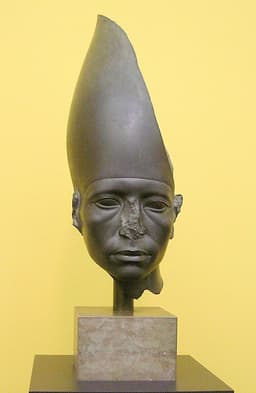
Amenemhat III
Emperor · Ancient
56.7Total

Shapur II
Emperor · Ancient
65.0Total
Basic Information
Born
-1800
309
Died
-1755
379
Era
Ancient
Ancient
Nationality
Middle Kingdom Egypt
Sassanid Empire
Occupation
Emperor
Emperor
Civilization
Middle Eastern
Middle Eastern
Score Comparison
Military (10%)
25.9
78.0
Political (20%)
72.0
55.0
Influence (20%)
62.0
61.0
Legacy (20%)
58.0
58.0
Leadership (15%)
72.0
80.0
Strategy (15%)
25.0
72.0
TOTAL
56.7
65.0
Amenemhat III — Complete Timeline
1790 BC
Construction of the Black Pyramid at DahshurCultural◆ Major
Amenemhat III built the Black Pyramid at Dahshur, named for its dark mudbrick core. The pyramid was poorly constructed and suffered from structural issues, leading to its partial collapse in antiquity. It contained a complex burial chamber with a massive quartzite sarcophagus.
PyramidArchitectureDahshur
Impact: national
1785 BC
Construction of the Hawara Pyramid and LabyrinthCultural◆ Major
Amenemhat III built his second pyramid at Hawara, near the Faiyum. Adjacent to it, he constructed a vast mortuary temple complex known to later Greek writers as the Labyrinth, described by Herodotus as surpassing the pyramids in scale. The complex served as an administrative and religious center.
PyramidLabyrinthArchitecture
Impact: nationalconstructive
1780 BC
Completion of Faiyum Land ReclamationReform◆ Major
Amenemhat III completed the large-scale irrigation and land reclamation projects in the Faiyum region begun by his predecessors. By regulating the inflow of Nile water, he expanded arable land significantly, making the Faiyum one of the most productive agricultural areas in Egypt and contributing to the prosperity of his reign.
IrrigationAgricultureFaiyum
Impact: regionalconstructive
1775 BC
Peak of Middle Kingdom ProsperityPolitical Action◆ Major
Under Amenemhat III, Egypt reached the zenith of its Middle Kingdom power and wealth. Extensive mining expeditions to Sinai and the Eastern Desert yielded turquoise and copper. Trade flourished, and the administration was efficient, leading to a period of stability and cultural achievement often regarded as a golden age.
Golden AgeProsperityMiddle Kingdom
Impact: nationalconstructive
Shapur II — Complete Timeline
337 AD
First Roman-Sassanid WarWar◆ Major
Shapur II launched a major war against the Roman Empire, invading Mesopotamia and Armenia. The war lasted for decades, with Shapur achieving several victories, including the capture of the fortress of Singara. The conflict was marked by sieges, raids, and shifting alliances.
Sassanid EmpireRoman EmpireWar
Impact: regional
340 AD
Persecution of ChristiansPolitical Action◆ Major
Shapur II initiated a systematic persecution of Christians in the Sassanid Empire, accusing them of sympathizing with the Christian Roman Empire. Churches were destroyed, clergy were executed, and Christians were forced to convert to Zoroastrianism. The persecution lasted for decades.
Sassanid EmpirePersecutionChristianity
Impact: regionaldestructive
359 AD
Siege of AmidaWar◆ Major
Shapur II besieged and captured the Roman fortress city of Amida (modern Diyarbakir) after a 73-day siege. The Sassanid forces used siege towers, battering rams, and tunnels to breach the walls. The city was sacked, and its inhabitants were massacred or enslaved.
Sassanid EmpireRoman EmpireSiege
Impact: regionaldestructive
363 AD
Battle of CtesiphonWar◆ Major
Shapur II faced the Roman emperor Julian the Apostate, who invaded Sassanid territory and advanced to the capital Ctesiphon. The Romans won a tactical victory outside the city but failed to capture it. Julian was killed in a skirmish, and his successor Jovian made a humiliating peace.
Sassanid EmpireRoman EmpireBattle
Impact: regional
Treaty of 363Political Action◆ Major
After Julian's death, Shapur II negotiated a peace treaty with the new Roman emperor Jovian. The treaty ceded the Roman provinces of Mesopotamia and Armenia to the Sassanids, including the cities of Nisibis and Singara. This was a major diplomatic victory for Shapur II.
Sassanid EmpireRoman EmpireTreaty
Impact: regionalconstructive
This comparison has not been analyzed yet.
One-time AI generation (~1 minute). Scores and timeline are already available below.
Rankings
🥇
Shapur IILeader
Mil: 78.0Pol: 55.0Inf: 61.0
65.0
🥈
Amenemhat III
Mil: 25.9Pol: 72.0Inf: 62.0
56.7
+8.3 behind
How This Comparison Works
Algorithm
Each figure is scored on 6 dimensions (0—100 scale) based on structured historical data: Military (10%), Political (20%), Influence (20%), Legacy (20%), Leadership (15%), Strategy (15%). The weighted total produces the final ranking.
Data Sources
Scores are computed from structured sub-indicators in the database. Scale factors adjust for era (Ancient ×0.85, Modern ×1.0) and civilization size (Eastern ×1.05, Other ×0.80) to account for differences in population and military scale.
Maximum 3 Figures
Comparisons are limited to 2—3 figures to ensure readability and statistical meaningfulness.
Error Margins
±5 points per dimension — Sub-scores are derived from historical records with inherent uncertainty. Two figures within 5 points on a dimension should be considered roughly equivalent in that area.
Total Score Accuracy
±3 points overall — The weighted combination of 6 dimensions produces a total score with approximately ±3 points of uncertainty. Differences of less than 3 points are not statistically significant— the figures are effectively tied.
Known Limitations
- Historical records are incomplete and uneven across civilizations
- Figures from oral-tradition societies may be underrepresented
- Occupation labels can misclassify multi-role figures
- Scores measure capability and impact, not moral character
- Quantitative scoring is a comparison tool, not absolute truth
Capability Radar
Military (10%) — Battles & Warfare
Battles
10
85
Win Rate
10
80
Expansion
10
85
Political (20%) — Governance & Reform
Reform
80
70
Diplomacy
70
75
Economy
90
70
Influence (20%) — Cultural & Global Reach
Cultural
70
60
Global
60
65
Legacy (20%) — Historical Impact
Historical
75
75
Longevity
70
70
Leadership (15%) — Power & Stability
Tenure
85
95
Stability
85
80
Strategy (15%) — Tactics & Innovation
Strategy
10
90
Tactics
10
85
Reform
15
75
Similar Comparisons
Comments & Discussion
No comments yet. Be the first to share your thoughts!