Loading...
Dumnorix vs Zhou Yu
Zhou Yu leads by 11.7 pts · 2 figures compared
…

Dumnorix
General · Ancient
44.5Total
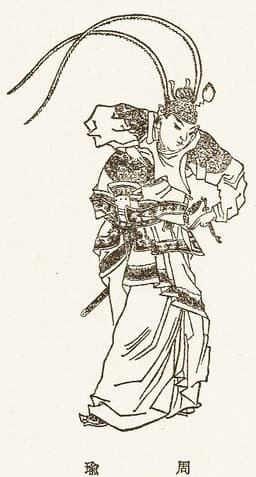
Zhou Yu
General · Ancient
56.2Total
Basic Information
Born
-100
175
Died
-54
210
Era
Ancient
Ancient
Nationality
Gaul
China
Occupation
General
General
Civilization
Western
Eastern
Score Comparison
Military (10%)
45.0
76.0
Political (20%)
35.0
35.1
Influence (20%)
44.8
61.0
Legacy (20%)
36.7
52.0
Leadership (15%)
62.6
54.2
Strategy (15%)
50.0
70.0
TOTAL
44.5
56.2
Dumnorix — Complete Timeline
58 BC
Opposition to Caesar's RecruitmentPolitical Action
Dumnorix, an Aeduan noble, actively opposed Julius Caesar's recruitment of Gallic cavalry for the Roman army. He used his influence to persuade Aeduan leaders to resist Roman demands, viewing Caesar's actions as a threat to Gallic independence.
ResistanceGallic WarsAnti-Roman
Impact: regionaldestructive
54 BC
Killed by Roman CavalryWar◆ Major
Roman cavalry under Caesar's orders pursued and killed Dumnorix as he fled. His death removed a prominent Aeduan opponent of Roman rule and demonstrated Caesar's willingness to eliminate Gallic leaders who resisted his authority.
DeathGallic WarsRoman Repression
Impact: regionaltragic
Attempted Escape from CaesarPolitical Action◆ Major
Dumnorix attempted to flee from Caesar's camp with his cavalry contingent to join the Gallic rebellion. Caesar had ordered him to accompany the Roman army to Britain, but Dumnorix refused and tried to escape.
Escape AttemptGallic WarsDefiance
Impact: regionaldestructive
Zhou Yu — Complete Timeline
208 AD
Battle of Red CliffsWar
Zhou Yu, as commander of Sun Quan's forces, allied with Liu Bei to confront Cao Cao's northern fleet on the Yangtze River. Using fire ships, Zhou Yu's smaller navy destroyed Cao Cao's larger fleet, preventing a southern conquest and securing the Three Kingdoms division.
Three KingdomsNaval battleAlliance
Impact: regional
209 AD
Siege of JianglingWar◆ Major
After Red Cliffs, Zhou Yu led Sun Quan's forces in a year-long siege against Cao Cao's garrison at Jiangling. Zhou Yu was wounded by an arrow during the campaign. The eventual capture of Jiangling expanded Sun Quan's territory into Jing Province.
Three KingdomsSiegeTerritorial expansion
Impact: regional
210 AD
Death of Zhou YuOther◆ Major
Zhou Yu died at age 36 in Yueyang while preparing a campaign against Liu Bei's ally Liu Zhang. His death removed a key strategist from Sun Quan's court and allowed Liu Bei to consolidate control over Jing Province.
Three KingdomsDeathPower shift
Impact: regionaltragic
Expert Analysis
Origins
Dumnorix was born around 100 BC into the Aeduan aristocracy, a powerful Gallic tribe allied with Rome. His family held significant influence among the Aedui, and Dumnorix leveraged this to become a prominent anti-Roman figure. Little is known of his early life, but his actions show a man deeply rooted in Gallic traditions of chieftainship and resistance to foreign domination.
Zhou Yu (175-210 AD) was born into a wealthy and prestigious family in Lujiang, China. His father, Zhou Yi, served as a provincial governor. Zhou Yu received an elite education in military strategy and classical texts. By his twenties, he had befriended Sun Ce, the founder of the Eastern Wu kingdom, and became a key advisor and military commander.
Rise to Power
Dumnorix rose to prominence within the Aeduan tribal council by opposing the pro-Roman faction led by his brother Diviciacus. He gained support among the common Gauls by advocating for independence from Rome. In 58 BC, when Julius Caesar began his Gallic Wars, Dumnorix used his influence to undermine Roman recruitment of cavalry, positioning himself as a leader of the resistance.
Zhou Yu's rise was tied to the Sun family. After Sun Ce's death in 200 AD, Zhou Yu remained loyal to Sun Quan, helping consolidate power in the Jiangdong region. His strategic acumen earned him command of Sun Quan's navy. The turning point came in 208 AD when Cao Cao's massive army threatened the south. Zhou Yu was appointed supreme commander of the allied forces.
Leadership & Governance
Dumnorix's leadership was charismatic but impulsive. He relied on personal influence and tribal loyalty rather than institutional structures. His governance style was typical of Gallic chieftains: he secured loyalty through gifts and alliances, but lacked the discipline of Roman command. His military score of 45.0 reflects limited strategic ability compared to his contemporaries.
Zhou Yu was a disciplined, methodical commander. He combined naval expertise with psychological warfare, as seen at Red Cliffs. His leadership score of 54.2 indicates competence but not exceptional charisma. He governed conquered territories effectively, implementing policies that stabilized the region after the Red Cliffs campaign. His strategy score of 70.0 highlights his superiority in planning and execution.
Triumph & Tragedy
Dumnorix's greatest success was rallying Aeduan opposition to Caesar, forcing the Romans to negotiate. However, his fatal mistake was attempting to flee Caesar's camp in 54 BC with his cavalry. He was pursued and killed by Roman horsemen, his death demonstrating the futility of open defiance against Roman military power. His total score of 44.5 reflects a minor historical footnote.
Zhou Yu's triumph was the Battle of Red Cliffs in 208 AD, where he used fire ships to destroy Cao Cao's fleet, halting northern expansion. This victory secured the Three Kingdoms period. His tragedy came during the Siege of Jiangling (209-210 AD), where he was wounded by an arrow. He died at age 36 while preparing a campaign against Liu Bei's ally Liu Zhang, leaving his ambitions unfulfilled. His total score of 56.2 marks him as a significant but not top-tier strategist.
Character & Destiny
Dumnorix was bold and defiant, but his rashness led to his downfall. He underestimated Caesar's determination and the efficiency of Roman cavalry. His character as a proud Gallic noble sealed his fate—he refused to submit, even when escape was impossible. Historical assessments paint him as a symbol of Gallic resistance, but his tactical naivety ensured his failure.
Zhou Yu was known for his calm demeanor and sharp intellect. He was deeply loyal to Sun Quan, but his ambition sometimes bred jealousy. His early death was a result of his relentless campaigning. Historians like Chen Shou praised his strategic brilliance but noted his intolerance for rivals. His character combined genius with a touch of arrogance, which shaped his destiny as a brilliant but short-lived commander.
Legacy
Dumnorix left little lasting impact. His death did not halt Roman expansion; the Aedui were eventually integrated into the Roman Empire. He is remembered primarily as a minor obstacle in Caesar's campaigns. His influence score of 44.8 and legacy score of 36.7 indicate his limited historical footprint.
Zhou Yu's legacy is far greater. The Red Cliffs victory is celebrated in Chinese history and literature (e.g., "Romance of the Three Kingdoms"). He is remembered as a master of naval warfare and a key architect of the Three Kingdoms era. His influence score of 61.0 and legacy score of 52.0 reflect his enduring fame. Modern Chinese culture still reveres him as a symbol of strategic genius.
Conclusion
Zhou Yu had a significantly greater impact on history than Dumnorix. His total score of 56.2 versus Dumnorix's 44.5 (a gap of 11.7 points) reflects his superior military and strategic abilities. Zhou Yu's victory at Red Cliffs altered the course of Chinese history, preserving southern independence and shaping the Three Kingdoms. Dumnorix, while a figure of Gallic resistance, achieved nothing of lasting consequence. Zhou Yu's legacy endures in Chinese culture, while Dumnorix is a footnote in Roman history. The data supports this: Zhou Yu scored higher in military (76.0 vs 45.0), strategy (70.0 vs 50.0), influence (61.0 vs 44.8), and legacy (52.0 vs 36.7). Therefore, Zhou Yu stands as the more impactful historical figure.
Rankings
🥇
Zhou YuLeader
Mil: 76.0Pol: 35.1Inf: 61.0
56.2
🥈
Dumnorix
Mil: 45.0Pol: 35.0Inf: 44.8
44.5
+11.7 behind
How This Comparison Works
Algorithm
Each figure is scored on 6 dimensions (0—100 scale) based on structured historical data: Military (10%), Political (20%), Influence (20%), Legacy (20%), Leadership (15%), Strategy (15%). The weighted total produces the final ranking.
Data Sources
Scores are computed from structured sub-indicators in the database. Scale factors adjust for era (Ancient ×0.85, Modern ×1.0) and civilization size (Eastern ×1.05, Other ×0.80) to account for differences in population and military scale.
Maximum 3 Figures
Comparisons are limited to 2—3 figures to ensure readability and statistical meaningfulness.
Error Margins
±5 points per dimension — Sub-scores are derived from historical records with inherent uncertainty. Two figures within 5 points on a dimension should be considered roughly equivalent in that area.
Total Score Accuracy
±3 points overall — The weighted combination of 6 dimensions produces a total score with approximately ±3 points of uncertainty. Differences of less than 3 points are not statistically significant— the figures are effectively tied.
Known Limitations
- Historical records are incomplete and uneven across civilizations
- Figures from oral-tradition societies may be underrepresented
- Occupation labels can misclassify multi-role figures
- Scores measure capability and impact, not moral character
- Quantitative scoring is a comparison tool, not absolute truth
Capability Radar
Military (10%) — Battles & Warfare
Battles
15
75
Win Rate
10
70
Expansion
10
55
Political (20%) — Governance & Reform
Reform
10
30
Diplomacy
25
65
Economy
10
40
Influence (20%) — Cultural & Global Reach
Cultural
15
70
Global
10
55
Legacy (20%) — Historical Impact
Historical
20
75
Longevity
10
70
Leadership (15%) — Power & Stability
Tenure
20
45
Stability
10
50
Strategy (15%) — Tactics & Innovation
Strategy
15
80
Tactics
20
85
Reform
5
40
Similar Comparisons
Comments & Discussion
No comments yet. Be the first to share your thoughts!