Loading...
Dou Gu vs Zhou Yu
Zhou Yu leads by 8.9 pts · 2 figures compared
…
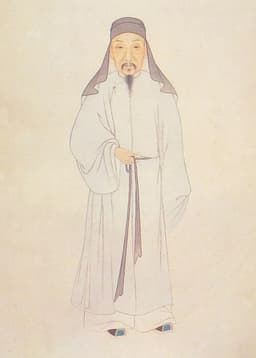
Dou Gu
General · Ancient
47.3Total
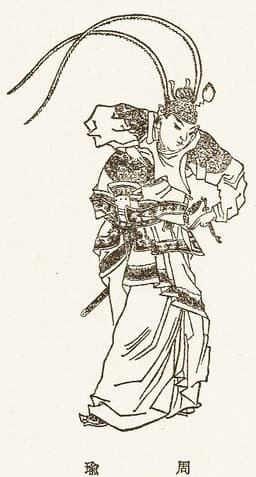
Zhou Yu
General · Ancient
56.2Total
Basic Information
Born
19
175
Died
89
210
Era
Ancient
Ancient
Nationality
China
China
Occupation
General
General
Civilization
Eastern
Eastern
Score Comparison
Military (10%)
61.7
76.0
Political (20%)
35.0
35.1
Influence (20%)
46.3
61.0
Legacy (20%)
40.0
52.0
Leadership (15%)
57.1
54.2
Strategy (15%)
57.5
70.0
TOTAL
47.3
56.2
Dou Gu — Complete Timeline
73 AD
Battle of YiwuluWar◆ Major
Dou Gu led a Han expeditionary force against the Xiongnu at Yiwulu (modern Hami). He defeated the Xiongnu and established a military garrison, securing the strategic gateway to the Western Regions and reopening the Silk Road.
Han DynastyXiongnuSilk Road
Impact: regional
74 AD
Appointed as Protector General of the Western RegionsPolitical Action◆ Major
Dou Gu was appointed Protector General (Duhu) of the Western Regions, overseeing Han interests in Central Asia. He established diplomatic relations with local kingdoms and maintained Han military presence in the region.
Han DynastyWestern RegionsDiplomacy
Impact: regionalconstructive
89 AD
Campaign Against the Northern XiongnuWar
Dou Gu, as a general under Emperor He, launched a major campaign against the Northern Xiongnu. His forces advanced deep into the steppe, defeating the Xiongnu and forcing their remnants to flee westward, ending the Xiongnu threat to Han China.
Han DynastyXiongnuMilitary Campaign
Impact: regional
Death in BattleWar
Dou Gu died in battle during the campaign against the Northern Xiongnu. His death marked the end of a distinguished military career that had secured Han dominance over the northern frontier.
Han DynastyDeathMilitary
Impact: regionaltragic
Zhou Yu — Complete Timeline
208 AD
Battle of Red CliffsWar
Zhou Yu, as commander of Sun Quan's forces, allied with Liu Bei to confront Cao Cao's northern fleet on the Yangtze River. Using fire ships, Zhou Yu's smaller navy destroyed Cao Cao's larger fleet, preventing a southern conquest and securing the Three Kingdoms division.
Three KingdomsNaval battleAlliance
Impact: regional
209 AD
Siege of JianglingWar◆ Major
After Red Cliffs, Zhou Yu led Sun Quan's forces in a year-long siege against Cao Cao's garrison at Jiangling. Zhou Yu was wounded by an arrow during the campaign. The eventual capture of Jiangling expanded Sun Quan's territory into Jing Province.
Three KingdomsSiegeTerritorial expansion
Impact: regional
210 AD
Death of Zhou YuOther◆ Major
Zhou Yu died at age 36 in Yueyang while preparing a campaign against Liu Bei's ally Liu Zhang. His death removed a key strategist from Sun Quan's court and allowed Liu Bei to consolidate control over Jing Province.
Three KingdomsDeathPower shift
Impact: regionaltragic
Expert Analysis
Origins
Dou Gu (birth year uncertain, died 88 CE) was born into the powerful Dou clan, a family with deep ties to the Eastern Han court. His father, Dou Rong, was a general and later a high minister. Dou Gu grew up in a militaristic environment, learning cavalry tactics and frontier warfare from an early age. His clan's influence provided him with opportunities for military command, but also exposed him to political intrigue.
Zhou Yu (175-210 CE) was born into a wealthy and prestigious family in Lujiang (modern Anhui). His father, Zhou Yi, served as a governor. From youth, Zhou Yu was known for his intelligence and musical talent. He befriended Sun Ce, the elder brother of Sun Quan, forming a bond that would shape his career. Unlike Dou Gu, Zhou Yu's early life was marked by the chaos of the late Han dynasty, with warlords vying for control.
Rise to Power
Dou Gu rose to prominence through family connections and military merit. In 73 CE, Emperor Ming appointed him as a general to lead a campaign against the Xiongnu. Dou Gu's first major success was the Battle of Yiwulu in 73 CE, where he defeated the Northern Xiongnu and established a garrison. This victory earned him the appointment as Protector General of the Western Regions in 74 CE, a position that gave him authority over Han interests in Central Asia. His rise was steady but reliant on imperial favor and clan support.
Zhou Yu's rise was more dramatic. He joined Sun Ce in 194 CE, leading troops to conquer territories south of the Yangtze. After Sun Ce's death in 200 CE, Zhou Yu became a key advisor to Sun Quan. His defining moment came in 208 CE at the Battle of Red Cliffs. As commander of Sun Quan's fleet, he allied with Liu Bei and used fire ships to destroy Cao Cao's northern navy. This victory solidified his reputation and made him a pivotal figure in the Three Kingdoms period.
Leadership & Governance
Dou Gu governed the Western Regions with a firm hand, establishing diplomatic ties with local kingdoms and maintaining military garrisons. His approach was pragmatic: he used both force and negotiation to secure Han dominance. He appointed officers to oversee trade routes and collected tribute. However, his governance was limited to frontier administration, and he never held high civil office in the capital.
Zhou Yu's leadership was more multifaceted. As a general, he was decisive and innovative, as shown by his use of fire ships at Red Cliffs. He also served as a civil administrator, governing parts of Sun Quan's territory. Zhou Yu proposed strategies to expand Sun Quan's influence, including plans to seize Liu Bei's territories. His political acumen, however, was less developed; he often clashed with other advisors and was criticized for his ambition.
Triumph & Tragedy
Dou Gu's greatest triumph was securing the Western Regions for the Han dynasty. His campaigns pushed back the Xiongnu and established a buffer zone that protected the Silk Road. He also successfully integrated local elites into the Han system. His tragedy came in 88 CE when he died in battle during a campaign against the Northern Xiongnu. His death ended a career that had stabilized the frontier, but his clan later fell from power due to court intrigue.
Zhou Yu's triumph was the Battle of Red Cliffs, a victory that prevented Cao Cao from unifying China and shaped the Three Kingdoms balance of power. His success at the Siege of Jiangling (209-210 CE) further demonstrated his military skill. However, his tragedy was his early death at age 36, likely from an arrow wound infection. He died while preparing a campaign against Liu Bei's ally, leaving Sun Quan without his best strategist. His death altered the course of the Three Kingdoms, as his rival Lu Xun later achieved similar successes.
Character & Destiny
Dou Gu was a disciplined and loyal general, but his reliance on clan connections made him vulnerable to political shifts. He was cautious in strategy, preferring to secure gains rather than risk overextension. His death in battle reflected his commitment to duty, but also the dangers of frontier warfare. Historians note that his accomplishments were overshadowed by the later fall of the Dou clan.
Zhou Yu was charismatic and confident, known for his strategic brilliance and musical talent. However, he was also prideful and jealous, particularly of Zhuge Liang. His rivalry with Zhuge Liang is legendary, though possibly exaggerated. His early death cut short a career that might have rivaled the greatest generals of the era. His character—bold but temperamental—shaped his destiny, leading to both his greatest victory and his untimely end.
Legacy
Dou Gu's legacy is as a capable frontier commander who expanded Han influence. His campaigns paved the way for later Han control of the Western Regions, but his achievements are often eclipsed by more famous generals like Ban Chao. His military score of 61.7 reflects solid but not exceptional performance. His influence score of 46.3 indicates limited lasting impact.
Zhou Yu's legacy is immense. The Battle of Red Cliffs is one of the most famous battles in Chinese history, and Zhou Yu is celebrated as a brilliant naval strategist. His military score of 76.0 places him among the top generals of the Three Kingdoms. His influence score of 61.0 shows his role in shaping the era. He is remembered in literature and opera, often as a tragic hero. His total score of 56.2 is 8.9 points higher than Dou Gu's 47.3.
Conclusion
Zhou Yu had a greater impact than Dou Gu. While Dou Gu was effective in securing the Han frontier, his achievements were regional and temporary. Zhou Yu's victory at Red Cliffs changed the course of Chinese history, preventing Cao Cao's unification and enabling the Three Kingdoms period. His strategic innovation and leadership in a pivotal battle outweigh Dou Gu's steady but less consequential campaigns. The score gap of 8.9 points reflects this: Zhou Yu's military and strategic scores (76.0 and 70.0) far exceed Dou Gu's (61.7 and 57.5). Zhou Yu's legacy endures in Chinese culture, while Dou Gu is largely forgotten outside specialist circles. Therefore, Zhou Yu is the superior figure.
Rankings
🥇
Zhou YuLeader
Mil: 76.0Pol: 35.1Inf: 61.0
56.2
🥈
Dou Gu
Mil: 61.7Pol: 35.0Inf: 46.3
47.3
+8.9 behind
How This Comparison Works
Algorithm
Each figure is scored on 6 dimensions (0—100 scale) based on structured historical data: Military (10%), Political (20%), Influence (20%), Legacy (20%), Leadership (15%), Strategy (15%). The weighted total produces the final ranking.
Data Sources
Scores are computed from structured sub-indicators in the database. Scale factors adjust for era (Ancient ×0.85, Modern ×1.0) and civilization size (Eastern ×1.05, Other ×0.80) to account for differences in population and military scale.
Maximum 3 Figures
Comparisons are limited to 2—3 figures to ensure readability and statistical meaningfulness.
Error Margins
±5 points per dimension — Sub-scores are derived from historical records with inherent uncertainty. Two figures within 5 points on a dimension should be considered roughly equivalent in that area.
Total Score Accuracy
±3 points overall — The weighted combination of 6 dimensions produces a total score with approximately ±3 points of uncertainty. Differences of less than 3 points are not statistically significant— the figures are effectively tied.
Known Limitations
- Historical records are incomplete and uneven across civilizations
- Figures from oral-tradition societies may be underrepresented
- Occupation labels can misclassify multi-role figures
- Scores measure capability and impact, not moral character
- Quantitative scoring is a comparison tool, not absolute truth
Capability Radar
Military (10%) — Battles & Warfare
Battles
55
75
Win Rate
60
70
Expansion
50
55
Political (20%) — Governance & Reform
Reform
10
30
Diplomacy
40
65
Economy
10
40
Influence (20%) — Cultural & Global Reach
Cultural
20
70
Global
15
55
Legacy (20%) — Historical Impact
Historical
30
75
Longevity
20
70
Leadership (15%) — Power & Stability
Tenure
20
45
Stability
15
50
Strategy (15%) — Tactics & Innovation
Strategy
55
80
Tactics
50
85
Reform
10
40
Similar Comparisons
Comments & Discussion
No comments yet. Be the first to share your thoughts!