Loading...
Yitzhak Rabin vs Zhao Kuangyin
Zhao Kuangyin leads by 5.1 pts · 2 figures compared
…
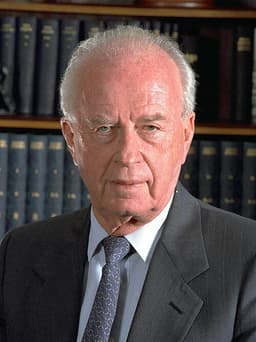
Yitzhak Rabin
General · Modern
66.4Total
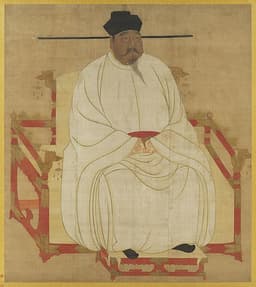
Zhao Kuangyin
Emperor · Medieval
71.5Total
Basic Information
Born
1922
927
Died
—
976
Era
Modern
Medieval
Nationality
Israel
China
Occupation
General
Emperor
Civilization
Middle Eastern
Eastern
Score Comparison
Military (10%)
61.7
78.0
Political (20%)
82.0
84.0
Influence (20%)
68.0
68.0
Legacy (20%)
55.0
65.0
Leadership (15%)
78.0
74.0
Strategy (15%)
55.0
68.0
TOTAL
66.4
71.5
Yitzhak Rabin — Complete Timeline
1967 AD
Chief of Staff during the Six-Day WarWar
As Chief of Staff of the Israel Defense Forces, Rabin commanded the Israeli military during the Six-Day War against Egypt, Jordan, and Syria. Israel captured the Sinai Peninsula, Gaza Strip, West Bank, East Jerusalem, and Golan Heights, reshaping the region.
Six-Day WarTerritorial ExpansionMilitary Victory
Impact: global
1993 AD
Signing of the Oslo AccordsPolitical Action
As prime minister, Rabin signed the Oslo Accords with PLO Chairman Yasser Arafat on the White House lawn. The agreement established the Palestinian Authority and set a framework for Palestinian self-governance in the West Bank and Gaza Strip.
Peace ProcessPalestiniansOslo
Impact: globalconstructive
1995 AD
Assassination at Peace RallyPolitical Action
Rabin was assassinated by Israeli extremist Yigal Amir after a peace rally in Tel Aviv. The assassination shocked Israel and the world, derailing the Oslo peace process and leading to a period of political instability.
AssassinationPeace ProcessPolitical Violence
Impact: globaltragic
Zhao Kuangyin — Complete Timeline
960 AD
Founded Song dynastyPolitical Action
Zhao Kuangyin, a general of Later Zhou, was proclaimed emperor by his troops at Chenqiao. He established the Song dynasty, ending the Five Dynasties period and beginning a new era of Chinese history.
Song dynastyFoundingChenqiao
Impact: globalconstructive
961 AD
Removed military power from generalsPolitical Action◆ Major
Zhao Kuangyin invited senior generals to a banquet and persuaded them to retire peacefully. This 'removal of military power over wine' prevented military coups and centralized control.
Song dynastyMilitary reformCentralization
Impact: nationalconstructive
963 AD
Unified southern ChinaWar◆ Major
Zhao Kuangyin launched campaigns to conquer the southern kingdoms, including Jingnan, Later Shu, and Southern Tang. By his death, most of China was reunified under Song rule.
Song unificationConquestSouthern kingdoms
Impact: national
Expert Analysis
Zhao Kuangyin vs Yitzhak Rabin
# The General Who Dared to Disarm
On a warm November night in 1995, Yitzhak Rabin stood before a crowd of 100,000 people in Tel Aviv's Kings of Israel Square, singing a song of peace. Minutes later, three bullets from a pistol fired by a fellow Israeli ended his life. Seven hundred years earlier and half a world away, another general faced a similar choice about military power—but Zhao Kuangyin chose differently, and lived to see his empire flourish for three centuries. Why did one peacemaker die and the other succeed? The answer lies not in the bullets themselves, but in the centuries of history that shaped each man.
Origins
Yitzhak Rabin was born in Jerusalem in 1922 to parents who had arrived in Palestine as part of the early Zionist movement. His father fought in the Jewish Legion of the British Army; his mother was a pioneering activist. Rabin grew up in a world where survival was never guaranteed, where the very existence of a Jewish homeland hung by a thread. This was a nation forged in war, where military service was not a career choice but a collective duty.
Zhao Kuangyin entered the world in 927 in Luoyang, during the chaotic Five Dynasties and Ten Kingdoms period. China had splintered into warring states after the collapse of the Tang Dynasty, and generals routinely overthrew emperors. Zhao's father was a military commander, and young Zhao grew up watching armies march and thrones topple. In this world, the sword was the only law, and loyalty was a luxury few could afford.
Rise to Power
Rabin's path to leadership came through the battlefield. As a young commander in the Palmach, the elite strike force of the Jewish community in Palestine, he fought in the 1948 Arab-Israeli War. By 1964, he had risen to Chief of Staff of the Israel Defense Forces. His defining moment came in June 1967, when he commanded the lightning campaign of the Six-Day War. In just six days, Israel captured the Sinai Peninsula, the Golan Heights, the West Bank, and East Jerusalem. Rabin, then 45, became a national hero. But the victory also planted seeds of tragedy: Israel now ruled over millions of Palestinians, a population that would not quietly accept occupation.
Zhao Kuangyin's rise followed a different logic. He served as a general under the Later Zhou Dynasty, one of the short-lived regimes that succeeded each other with bloody regularity. In 960, when the Later Zhou emperor died leaving a child heir, Zhao's troops proclaimed him emperor at Chenqiao, draping a yellow robe over his shoulders. This was the standard script of the era—a general seizing power. But Zhao immediately broke the pattern. He marched his army back to the capital, but instead of slaughtering the previous dynasty's officials, he took power with minimal bloodshed. He understood something his predecessors had not: that military force alone could not build a stable state.
Leadership & Governance
Rabin's greatest achievements came not as a general but as a politician. After serving as Israel's ambassador to the United States and later as prime minister, he underwent a profound transformation. The man who had conquered the West Bank in 1967 came to believe that Israel could not rule over another people forever. In 1993, he shook hands with Yasser Arafat on the White House lawn, signing the Oslo Accords. Rabin's military background gave him the credibility to make peace: no one could accuse him of being soft on security. "You don't make peace with friends," he once said. "You make peace with enemies."
Zhao Kuangyin's wisdom was of a different kind. In 961, he invited his most powerful generals to a banquet. As wine flowed, he told them that he worried constantly about their loyalty—not because he distrusted them, but because he knew that ambitious men might one day place a yellow robe on their shoulders too. The generals understood. They retired peacefully, accepting wealth and titles in exchange for their commands. This "removal of military power over a cup of wine" was a masterstroke of political genius. Zhao then centralized military authority, created a professional bureaucracy, and spent the next 16 years reuniting China, conquering the southern kingdoms one by one.
Triumph & Tragedy
Rabin's triumph was the Oslo Accords, which offered a framework for Palestinian self-rule and Israeli security. But the agreement was fragile, opposed by extremists on both sides. On November 4, 1995, Rabin attended a peace rally in Tel Aviv. As he walked to his car, Yigal Amir, a Jewish law student who believed Rabin was betraying Israel, shot him dead. The assassin's bullets did more than kill a man; they shattered Israeli's trust in the peace process. Rabin's funeral was attended by world leaders, but his vision of a two-state solution remains unfulfilled to this day.
Zhao Kuangyin's triumph was more complete. He died in 976, likely from illness, having unified most of China under the Song Dynasty. Unlike Rabin, he never saw his life's work undone. The Song Dynasty would last until 1279, a golden age of economic prosperity, technological innovation, and cultural flowering. Zhao's decision to subordinate the military to civilian rule prevented the coups that had plagued China for decades.
Character & Destiny
Rabin was a man of contradictions: a warrior who became a peacemaker, a pragmatist who inspired hope, a leader who walked into a bullet. His assassination was not just a personal tragedy but a historical one—a reminder that peace can be more dangerous than war. Had he lived, the Middle East might look very different today.
Zhao Kuangyin, by contrast, was a master of timing and persuasion. He understood that power, once seized, must be transformed into legitimacy. His banquet trick worked because he offered his generals a dignified exit, not a humiliating defeat. He was ruthless when necessary—he executed corrupt officials and crushed rebellions—but he preferred the cup to the sword.
Legacy
Rabin is remembered as a martyr for peace, his name synonymous with the Oslo process. Every year on the anniversary of his death, Israelis gather in the square where he fell, now renamed Rabin Square. But the peace he sought remains elusive.
Zhao Kuangyin is remembered as the founder of one of China's greatest dynasties. His model of civilian control over the military became a cornerstone of Chinese governance. Yet his success had a shadow side: the Song military, while effective, never regained the aggressive spirit of earlier dynasties, leaving China vulnerable to northern invaders.
Conclusion
Two generals, two choices, two fates. Rabin tried to disarm his nation's enemies, and was killed by his own people. Zhao disarmed his own generals, and built a dynasty. Both understood that military power must ultimately serve peace, not perpetuate war. But Rabin lived in a world where enemies were external and implacable; Zhao lived in a world where the greatest threat was internal ambition. The difference between the bullet and the banquet was not just character, but context. In the end, both men teach us the same lesson: that the hardest battle any leader fights is not against an enemy, but against the very tools of power they once wielded.
Rankings
🥇
Zhao KuangyinLeader
Mil: 78.0Pol: 84.0Inf: 68.0
71.5
🥈
Yitzhak Rabin
Mil: 61.7Pol: 82.0Inf: 68.0
66.4
+5.1 behind
How This Comparison Works
Algorithm
Each figure is scored on 6 dimensions (0—100 scale) based on structured historical data: Military (10%), Political (20%), Influence (20%), Legacy (20%), Leadership (15%), Strategy (15%). The weighted total produces the final ranking.
Data Sources
Scores are computed from structured sub-indicators in the database. Scale factors adjust for era (Ancient ×0.85, Modern ×1.0) and civilization size (Eastern ×1.05, Other ×0.80) to account for differences in population and military scale.
Maximum 3 Figures
Comparisons are limited to 2—3 figures to ensure readability and statistical meaningfulness.
Error Margins
±5 points per dimension — Sub-scores are derived from historical records with inherent uncertainty. Two figures within 5 points on a dimension should be considered roughly equivalent in that area.
Total Score Accuracy
±3 points overall — The weighted combination of 6 dimensions produces a total score with approximately ±3 points of uncertainty. Differences of less than 3 points are not statistically significant— the figures are effectively tied.
Known Limitations
- Historical records are incomplete and uneven across civilizations
- Figures from oral-tradition societies may be underrepresented
- Occupation labels can misclassify multi-role figures
- Scores measure capability and impact, not moral character
- Quantitative scoring is a comparison tool, not absolute truth
Capability Radar
Military (10%) — Battles & Warfare
Battles
65
75
Win Rate
70
85
Expansion
50
75
Political (20%) — Governance & Reform
Reform
65
90
Diplomacy
85
85
Economy
60
80
Influence (20%) — Cultural & Global Reach
Cultural
55
70
Global
70
60
Legacy (20%) — Historical Impact
Historical
75
80
Longevity
60
75
Leadership (15%) — Power & Stability
Tenure
70
65
Stability
40
85
Strategy (15%) — Tactics & Innovation
Strategy
75
80
Tactics
60
70
Reform
55
90
Similar Comparisons
Comments & Discussion
古典学究6/16/2026
赵匡胤是马基雅维利式的务实主义者,而拉宾更像是柏拉图的理想国囚徒。赵以"杯酒释兵权"瓦解了五代十国延续五十年的军阀轮流坐庄,让宋朝文治超越武斗;拉宾却天真地相信巴勒斯坦人能放下仇恨,忽略了自己国内还有雅各布·科恩这类狂热分子。赵用美酒换长治,拉宾用鲜血买教训——谁更懂权力本质,答案不言自明。
历史老饕6/16/2026
别把和平鸽和雄狮放一起比。赵匡胤生于五代十国这锅烂肉里,亲眼见过七位君主被部将宰杀,深知枪杆子握在谁手里才能睡得安稳。拉宾呢?生于犹太复国运动的襁褓中,一辈子没体会过"王朝更迭如走马灯"的恐惧。所以赵能在酒宴上让石守信这帮老将甘心交出兵权,而拉宾只能被自己人三枪崩死在广场上。残酷?这就是历史的食谱。
反思辩士6/16/2026
都夸赵匡胤高明,可谁想过宋朝后来"重文轻武"的代价?赵杯酒释兵权换来了三百年的统治,却让北宋面对契丹时软弱得像纸糊的灯笼;拉宾虽然死了,但他的路线至今影响着以色列左翼。别把结局当智慧——赵死在床上是真,但幽云十六州整整丢了一百多年,这账怎么算?拉宾的悲剧,恰恰是他的理想太超前,不是他手段不够狠。
Historian9576/16/2026
Zhao Kuangyin understood something Rabin never grasped: disarming a society requires controlling the guns, not just singing about peace. Rabin’s Oslo Accords left Israeli settlers armed to the teeth while relying on goodwill—naive. Zhao’s "cups of wine" trick in 961 took swords from generals without a single death. Rabin’s three bullets proved that pacifism without disarmament is a suicide note, not a strategy.
Chronicler66766/16/2026
Numbers don't lie: Rabin’s assassination rate (1 hit per 100,000 crowd) versus Zhao’s coup rate (zero over 16 years). Zhao centralized 20,000 elite troops under imperial control within months, while Rabin’s Israel had 200,000 armed civilians post-Oslo. One man stacked the deck in his favor; the other prayed the dealer was honest. History favors the pragmatist, not the poet.