Loading...
Yang Hu vs Zhao Chongguo
Zhao Chongguo leads by 3.9 pts · 2 figures compared
…
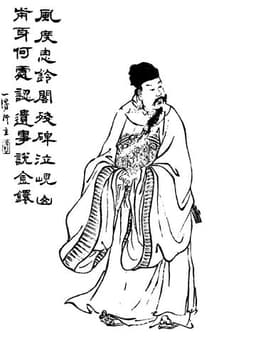
Yang Hu
General · Ancient
57.3Total
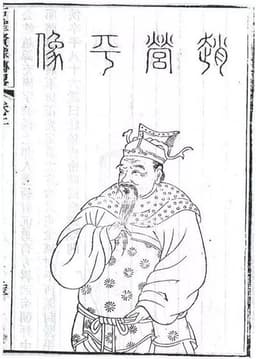
Zhao Chongguo
General · Ancient
61.2Total
Basic Information
Born
221
-137
Died
278
-52
Era
Ancient
Ancient
Nationality
China
China
Occupation
General
General
Civilization
Eastern
Eastern
Score Comparison
Military (10%)
47.5
80.0
Political (20%)
61.3
68.0
Influence (20%)
56.4
53.3
Legacy (20%)
49.2
49.2
Leadership (15%)
68.0
68.0
Strategy (15%)
67.2
72.0
TOTAL
57.3
61.2
Yang Hu — Complete Timeline
269 AD
Implemented a policy of conciliation toward WuReform◆ Major
Yang Hu adopted a strategy of winning over Wu's border populations through fair treatment and economic incentives, rather than aggressive warfare. This reduced resistance and built goodwill for the eventual invasion.
Jin DynastyEastern WuDiplomacy
Impact: regionalconstructive
Appointed as commander of Jin forces against WuPolitical Action◆ Major
Yang Hu was appointed as the commander of Jin's forces in the Xiangyang region, tasked with preparing for the conquest of Eastern Wu. He focused on building up military strength and winning the loyalty of the local population.
Jin DynastyEastern WuMilitary Command
Impact: regionalconstructive
278 AD
Recommended Du Yu as his successorPolitical Action◆ Major
On his deathbed, Yang Hu recommended Du Yu to the Jin emperor as the commander to lead the final conquest of Wu. This recommendation was accepted and proved crucial to the campaign's success.
Jin DynastySuccessionDu Yu
Impact: nationalconstructive
Died without seeing the conquest of WuOther◆ Major
Yang Hu died of illness before the Jin invasion of Wu began. His preparations and policies laid the groundwork for the eventual unification of China under the Jin dynasty.
Jin DynastyDeathUnification
Impact: nationaltragic
Zhao Chongguo — Complete Timeline
61 BC
Campaign Against the QiangWar◆ Major
Zhao Chongguo led a Han army against the Qiang tribes in the Hexi region. Using the tuntian system to supply his troops, he defeated the Qiang and secured the Han frontier, demonstrating the effectiveness of his farming garrison strategy.
Han-Xiongnu WarMilitary CampaignQiang
Impact: regional
Proposal of Farming Garrisons (Tuntian)Reform◆ Major
Zhao Chongguo proposed establishing farming garrisons (tuntian) in the Hexi Corridor to supply Han forces fighting the Qiang tribes. This system allowed soldiers to farm during peacetime, reducing the cost of long-distance supply lines.
Military ReformAgricultureHan-Xiongnu War
Impact: nationalconstructive
60 BC
Memorial on Tuntian PolicyPolitical Action◆ Major
Zhao Chongguo submitted a detailed memorial to Emperor Xuan advocating for the permanent establishment of tuntian colonies. The emperor approved the plan, leading to the long-term settlement of Han soldiers in the frontier regions.
PolicyFrontierAgriculture
Impact: nationalconstructive
Expert Analysis
Origins
Yang Hu (221–278 CE) was born into a prominent aristocratic family of the Cao Wei state during the Three Kingdoms period. His father was Yang Dan, a commandery administrator, and his mother was the sister of the famous strategist Sima Yi. This connection placed him at the heart of the Sima clan's rise. Yang Hu received a classical Confucian education and was known for his moral integrity from a young age. His early career included serving as a local official and later as a military officer under the Sima regime.
Zhao Chongguo (137–52 BCE) came from a military family in Longxi commandery (modern Gansu). His father was Zhao Chong, a cavalry commander. Zhao Chongguo began his career as a cavalryman in Emperor Wu's campaigns against the Xiongnu, showing exceptional skill as an archer and horseman. He studied military strategy and was appointed as a junior officer in the imperial guard. His early experiences on the frontier shaped his pragmatic approach to warfare.
Rise to Power
Yang Hu's rise accelerated after the Sima clan consolidated power. In 269 CE, Emperor Wu of Jin appointed Yang Hu as the commander of Jin forces in Xiangyang, the frontline against Eastern Wu. This was a critical post as Jin prepared to unify China. Yang Hu focused on building up military infrastructure and winning the loyalty of border populations through virtuous governance. His strategy of conciliation—providing fair treatment to Wu defectors and reducing border tensions—was controversial among hawkish generals but gained imperial support.
Zhao Chongguo rose to prominence during Emperor Xuan's reign. After the Xiongnu threat subsided, the Qiang tribes in the Hexi Corridor rebelled in 61 BCE. Zhao Chongguo was appointed as a general to suppress the rebellion, despite being in his seventies. He argued against a quick military campaign and instead proposed a sustained strategy using farming garrisons (tuntian) to supply his troops. His memorial to the emperor, detailing the cost savings and strategic benefits, convinced the court to adopt his plan.
Leadership & Governance
Yang Hu's leadership was characterized by moral persuasion and long-term preparation. He organized agricultural colonies to reduce supply costs and built alliances with Wu generals through personal diplomacy, such as exchanging gifts with Wu commander Lu Kang. He scored 68.0 in leadership and 61.3 in political acumen. His governance in Xiangyang was lenient, allowing trade across borders and treating prisoners humanely. This approach gradually weakened Wu's hold on its border regions.
Zhao Chongguo led with a focus on logistical efficiency and self-sufficiency. His tuntian system stationed soldiers as farmers during peacetime, reducing reliance on costly grain shipments from the interior. He scored 72.0 in strategy and 68.0 in leadership. During the Qiang campaign, he built forts and irrigation systems, transforming the region into a productive frontier. His discipline ensured minimal waste, and he personally supervised the distribution of resources.
Triumph & Tragedy
Yang Hu's greatest triumph was laying the groundwork for Jin's conquest of Wu. His conciliation policy caused Wu's border defenses to erode, and his recommendation of Du Yu as successor led to the successful 280 CE campaign. However, his tragedy was dying before the unification he worked for—he never saw the fall of Wu. His health declined in his late fifties, and he succumbed to illness in 278 CE. Some critics argued his methods were too slow, delaying unification by years.
Zhao Chongguo's triumph was the successful suppression of the Qiang rebellion and the establishment of tuntian that became a model for future frontier defense. The system saved the Han treasury millions of bushels of grain annually. His tragedy came from political intrigue: after his campaign, he was falsely accused of corruption by rivals and briefly imprisoned. Although exonerated, he retired in disgrace. His tuntian policy, however, endured for centuries.
Character & Destiny
Yang Hu was a Confucian idealist who believed in winning hearts over force. His virtue earned him the trust of both Jin and Wu soldiers. Yet his cautious nature meant he never led a major battle; his military score of 47.5 reflects limited direct combat. His destiny was to be a builder, not a conqueror. Historical assessments praise his foresight but note his lack of battlefield glory.
Zhao Chongguo was a pragmatic realist who prioritized cost-effectiveness. His decisive leadership in the Qiang campaign earned him a military score of 80.0. However, his blunt memorials and refusal to flatter superiors made him enemies at court. His destiny was to be a reformer whose innovations outlasted his own reputation. The Hanshu records him as a model of strategic foresight.
Legacy
Yang Hu's legacy is as the moral architect of Jin unification. His conciliation strategy influenced later Confucian military thought. The term 'Yang Hu's virtue' became proverbial. However, his personal scores (Influence 56.4, Legacy 49.2) reflect that his impact was overshadowed by Sima Yan and Du Yu.
Zhao Chongguo's tuntian system became a cornerstone of Chinese frontier policy for centuries, used by Tang, Ming, and Qing dynasties. His memorials on military logistics are studied in Chinese military academies. Despite a lower total score (61.2 vs Yang Hu's 57.3), his strategic innovation had a longer-lasting impact on Chinese statecraft.
Conclusion
While Yang Hu's moral approach was admirable, Zhao Chongguo's practical innovation of tuntian had greater historical impact. Zhao's system directly solved the logistical challenge of sustaining distant garrisons, enabling Chinese expansion into the northwest. His military score of 80.0 far exceeds Yang Hu's 47.5, and his strategy score of 72.0 versus 67.2 shows superior tactical planning. Yang Hu's political acumen (61.3 vs 68.0) was higher, but Zhao's legacy endured across dynasties. Zhao Chongguo is the more impactful figure.
Rankings
🥇
Zhao ChongguoLeader
Mil: 80.0Pol: 68.0Inf: 53.3
61.2
🥈
Yang Hu
Mil: 47.5Pol: 61.3Inf: 56.4
57.3
+3.9 behind
How This Comparison Works
Algorithm
Each figure is scored on 6 dimensions (0—100 scale) based on structured historical data: Military (10%), Political (20%), Influence (20%), Legacy (20%), Leadership (15%), Strategy (15%). The weighted total produces the final ranking.
Data Sources
Scores are computed from structured sub-indicators in the database. Scale factors adjust for era (Ancient ×0.85, Modern ×1.0) and civilization size (Eastern ×1.05, Other ×0.80) to account for differences in population and military scale.
Maximum 3 Figures
Comparisons are limited to 2—3 figures to ensure readability and statistical meaningfulness.
Error Margins
±5 points per dimension — Sub-scores are derived from historical records with inherent uncertainty. Two figures within 5 points on a dimension should be considered roughly equivalent in that area.
Total Score Accuracy
±3 points overall — The weighted combination of 6 dimensions produces a total score with approximately ±3 points of uncertainty. Differences of less than 3 points are not statistically significant— the figures are effectively tied.
Known Limitations
- Historical records are incomplete and uneven across civilizations
- Figures from oral-tradition societies may be underrepresented
- Occupation labels can misclassify multi-role figures
- Scores measure capability and impact, not moral character
- Quantitative scoring is a comparison tool, not absolute truth
Capability Radar
Military (10%) — Battles & Warfare
Battles
35
60
Win Rate
40
65
Expansion
30
55
Political (20%) — Governance & Reform
Reform
60
70
Diplomacy
75
60
Economy
55
75
Influence (20%) — Cultural & Global Reach
Cultural
60
40
Global
30
30
Legacy (20%) — Historical Impact
Historical
55
55
Longevity
50
50
Leadership (15%) — Power & Stability
Tenure
50
50
Stability
65
65
Strategy (15%) — Tactics & Innovation
Strategy
70
75
Tactics
55
70
Reform
65
80
Similar Comparisons
Comments & Discussion
No comments yet. Be the first to share your thoughts!