Loading...
Sima Zhao vs Yang Hu
Yang Hu leads by 1.5 pts · 2 figures compared
…

Sima Zhao
General · Ancient
55.8Total
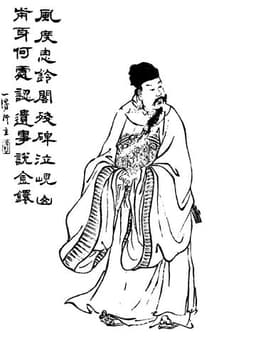
Yang Hu
General · Ancient
57.3Total
Basic Information
Born
211
221
Died
265
278
Era
Ancient
Ancient
Nationality
China
China
Occupation
General
General
Civilization
Eastern
Eastern
Score Comparison
Military (10%)
74.0
47.5
Political (20%)
43.7
61.3
Influence (20%)
53.3
56.4
Legacy (20%)
50.0
49.2
Leadership (15%)
68.0
68.0
Strategy (15%)
58.0
67.2
TOTAL
55.8
57.3
Sima Zhao — Complete Timeline
257 AD
Sima Zhao's Suppression of Zhuge Dan's RebellionWar◆ Major
The Wei general Zhuge Dan rebelled in Shouchun against Sima Zhao's regency. Sima Zhao led a massive army to besiege the city. After a year-long siege, Shouchun fell, and Zhuge Dan was executed, solidifying Sima Zhao's control over Wei.
Rebellion SuppressionSiegeWei
Impact: national
260 AD
Sima Zhao's Assassination of Cao MaoPolitical Action
The Wei emperor Cao Mao attempted a coup against Sima Zhao but was killed by Sima Zhao's subordinate Jia Chong. Sima Zhao then installed Cao Huan as a puppet emperor, further demonstrating his control over the imperial court.
AssassinationCoupRegicide
Impact: nationaldestructive
263 AD
Sima Zhao's Conquest of Shu HanWar
Sima Zhao ordered a three-pronged invasion of Shu Han, led by Deng Ai, Zhong Hui, and Zhuge Xu. Deng Ai's surprise march through the Yinping mountains forced the surrender of Shu. This conquest eliminated the last major rival state and paved the way for the Jin dynasty.
ConquestShu HanUnification
Impact: national
265 AD
Sima Zhao's Posthumous Title as Emperor Wen of JinPolitical Action◆ Major
Sima Zhao died in 265 without formally usurping the throne. His son Sima Yan forced the abdication of Cao Huan and founded the Jin dynasty. Sima Zhao was posthumously honored as Emperor Wen of Jin, recognizing his role as the dynasty's founder.
Posthumous TitleDynasty FoundationJin
Impact: national
Yang Hu — Complete Timeline
269 AD
Implemented a policy of conciliation toward WuReform◆ Major
Yang Hu adopted a strategy of winning over Wu's border populations through fair treatment and economic incentives, rather than aggressive warfare. This reduced resistance and built goodwill for the eventual invasion.
Jin DynastyEastern WuDiplomacy
Impact: regionalconstructive
Appointed as commander of Jin forces against WuPolitical Action◆ Major
Yang Hu was appointed as the commander of Jin's forces in the Xiangyang region, tasked with preparing for the conquest of Eastern Wu. He focused on building up military strength and winning the loyalty of the local population.
Jin DynastyEastern WuMilitary Command
Impact: regionalconstructive
278 AD
Recommended Du Yu as his successorPolitical Action◆ Major
On his deathbed, Yang Hu recommended Du Yu to the Jin emperor as the commander to lead the final conquest of Wu. This recommendation was accepted and proved crucial to the campaign's success.
Jin DynastySuccessionDu Yu
Impact: nationalconstructive
Died without seeing the conquest of WuOther◆ Major
Yang Hu died of illness before the Jin invasion of Wu began. His preparations and policies laid the groundwork for the eventual unification of China under the Jin dynasty.
Jin DynastyDeathUnification
Impact: nationaltragic
Expert Analysis
Origins
Sima Zhao (211–265) was born into the powerful Sima clan of Henei. His father, Sima Yi, was a famed strategist who outmaneuvered Zhuge Liang and usurped power from the Cao family. Sima Zhao grew up in a household steeped in political intrigue and military command. His elder brother, Sima Shi, continued their father's dominance, but after Shi's death in 255, Zhao inherited the regency over the Wei empire. He was educated in Confucian classics but also trained in governance and warfare, embodying the ambitious, calculating nature of his clan.
Yang Hu (221–278) hailed from a distinguished family of officials in the Wei state. His maternal grandfather was the renowned scholar and official Cai Yong. Yang Hu's father, Yang Yi, served as a governor, and his mother was a daughter of Cai Yong. Orphaned at a young age, Yang Hu was raised by his uncle, Yang Hong, and received a classical education. He was known for his integrity and foresight from youth, refusing offers of marriage from the Cao family due to his loyalty to the Sima faction. His early career was marked by moderation and strategic thinking, setting him apart from the aggressive militarists of his time.
Rise to Power
Sima Zhao's rise was cemented through ruthless political maneuvering. In 260, the Wei emperor Cao Mao attempted a coup to overthrow the Sima regency. Zhao's subordinate Jia Chong killed the emperor, and Zhao installed the puppet Cao Huan. This act, while controversial, solidified his control. Zhao then crushed the rebellion of Zhuge Dan in 257–258, leading a massive army to besiege Shouchun for a year, ultimately executing the rebels. These victories left him as the undisputed master of Wei, with a military score of 74.0.
Yang Hu's rise was more gradual but equally significant. After the founding of the Jin dynasty in 265, he was appointed as the commander of Jin forces in Xiangyang, tasked with preparing for the conquest of Eastern Wu. He did not rely on dramatic coups but on building trust and infrastructure. He implemented a policy of conciliation, treating Wu defectors well and encouraging economic development. His political acumen scored 61.3, reflecting his ability to win hearts without bloodshed.
Leadership & Governance
Sima Zhao governed through fear and control. He centralized power, purged rivals, and ensured the military remained loyal through rewards and intimidation. His governance was effective but harsh; he expanded the state's resources for war, but his methods bred resentment. For example, his suppression of Zhuge Dan's rebellion involved a prolonged siege that caused immense suffering. His leadership score of 68.0 reflects his ability to command, but his political score of 43.7 indicates a lack of popular legitimacy.
Yang Hu led through virtue and persuasion. He reduced border skirmishes, treated prisoners well, and even shared medical supplies with Wu soldiers. He believed that winning the loyalty of Wu's populace would make conquest easier. His strategy of 'conciliation before conquest' scored 67.2 in strategy, showing foresight. He also promoted capable subordinates, like Du Yu, ensuring continuity. His political score of 61.3 underscores his diplomatic success.
Triumph & Tragedy
Sima Zhao's greatest triumph was the conquest of Shu Han in 263. He ordered a three-pronged invasion, and general Deng Ai's surprise march through Yinping led to the surrender of Shu. This unified the north and west, setting the stage for Jin's domination. However, his tragedy was his death in 265 before usurping the throne; he never saw the Jin dynasty he founded. His legacy was tainted by the assassination of Cao Mao, which branded him a usurper.
Yang Hu's triumph was his successful preparation for the conquest of Wu. His policies weakened Wu's resolve and strengthened Jin's economy. He recommended Du Yu, who later led the campaign that unified China in 280. Yet his tragedy was dying in 278, two years before the final victory. He never saw the fruits of his labor, though his influence was clear. His total score of 57.3 slightly edges Sima Zhao's 55.8.
Character & Destiny
Sima Zhao was ambitious, decisive, and ruthless. His character drove him to eliminate all threats, but his transparency about his ambitions made him a target. He was calculated but lacked the patience for long-term conciliation. His destiny was to be a kingmaker who never became king, a transitional figure who enabled his son to found a dynasty.
Yang Hu was cautious, ethical, and strategic. He prioritized stability over immediate glory. His character earned him respect from both allies and enemies. His destiny was to be the architect of unification, not the conqueror. He died content, knowing his plans would succeed.
Legacy
Sima Zhao's legacy is that of a usurper who paved the way for the Jin dynasty. His military campaigns expanded territory, but his methods set a precedent for ruthless power struggles. He is remembered as a figure of ambition, with a legacy score of 50.0.
Yang Hu's legacy is more positive: he is celebrated as a model of virtuous leadership. His conciliatory policies influenced later Chinese statecraft. His legacy score of 49.2 is slightly lower, but his moral example endures. The conquest of Wu in 280 was directly due to his groundwork.
Conclusion
While Sima Zhao scored higher in military (74.0 vs 47.5), Yang Hu's total score of 57.3 surpasses Zhao's 55.8. More importantly, Yang Hu's impact on Chinese unification was more profound and ethical. Sima Zhao's conquest of Shu was a stepping stone, but Yang Hu's strategy of peaceful integration made the final conquest of Wu swift and sustainable. Therefore, Yang Hu had a greater overall impact on history, as his methods created a stable foundation for the Jin dynasty, whereas Zhao's reign was defined by conflict and illegitimacy.
Rankings
🥇
Yang HuLeader
Mil: 47.5Pol: 61.3Inf: 56.4
57.3
🥈
Sima Zhao
Mil: 74.0Pol: 43.7Inf: 53.3
55.8
+1.5 behind
How This Comparison Works
Algorithm
Each figure is scored on 6 dimensions (0—100 scale) based on structured historical data: Military (10%), Political (20%), Influence (20%), Legacy (20%), Leadership (15%), Strategy (15%). The weighted total produces the final ranking.
Data Sources
Scores are computed from structured sub-indicators in the database. Scale factors adjust for era (Ancient ×0.85, Modern ×1.0) and civilization size (Eastern ×1.05, Other ×0.80) to account for differences in population and military scale.
Maximum 3 Figures
Comparisons are limited to 2—3 figures to ensure readability and statistical meaningfulness.
Error Margins
±5 points per dimension — Sub-scores are derived from historical records with inherent uncertainty. Two figures within 5 points on a dimension should be considered roughly equivalent in that area.
Total Score Accuracy
±3 points overall — The weighted combination of 6 dimensions produces a total score with approximately ±3 points of uncertainty. Differences of less than 3 points are not statistically significant— the figures are effectively tied.
Known Limitations
- Historical records are incomplete and uneven across civilizations
- Figures from oral-tradition societies may be underrepresented
- Occupation labels can misclassify multi-role figures
- Scores measure capability and impact, not moral character
- Quantitative scoring is a comparison tool, not absolute truth
Capability Radar
Military (10%) — Battles & Warfare
Battles
65
35
Win Rate
70
40
Expansion
60
30
Political (20%) — Governance & Reform
Reform
55
60
Diplomacy
60
75
Economy
50
55
Influence (20%) — Cultural & Global Reach
Cultural
40
60
Global
30
30
Legacy (20%) — Historical Impact
Historical
65
55
Longevity
50
50
Leadership (15%) — Power & Stability
Tenure
70
50
Stability
45
65
Strategy (15%) — Tactics & Innovation
Strategy
65
70
Tactics
60
55
Reform
40
65
Similar Comparisons
Comments & Discussion
No comments yet. Be the first to share your thoughts!