Loading...
Qutayba ibn Muslim vs Yang Hu
Qutayba ibn Muslim leads by 1.9 pts · 2 figures compared
…

Qutayba ibn Muslim
General · Ancient
59.2Total
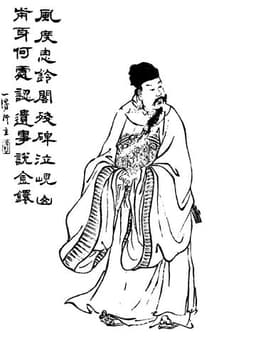
Yang Hu
General · Ancient
57.3Total
Basic Information
Born
-669
221
Died
—
278
Era
Ancient
Ancient
Nationality
Umayyad Caliphate
China
Occupation
General
General
Civilization
Middle Eastern
Eastern
Score Comparison
Military (10%)
80.0
47.5
Political (20%)
30.8
61.3
Influence (20%)
68.0
56.4
Legacy (20%)
55.0
49.2
Leadership (15%)
61.1
68.0
Strategy (15%)
66.3
67.2
TOTAL
59.2
57.3
Qutayba ibn Muslim — Complete Timeline
705 AD
Appointed governor of KhurasanPolitical Action◆ Major
Caliph al-Walid I appointed Qutayba ibn Muslim as governor of Khurasan, the easternmost province of the Umayyad Caliphate. This position gave him command of the Muslim armies in Central Asia.
GovernorshipMilitary Command
Impact: regional
709 AD
Conquest of BukharaWar◆ Major
Qutayba ibn Muslim captured the city of Bukhara after a prolonged siege. He imposed a treaty on the local rulers and established a Muslim garrison, integrating the city into the Umayyad Caliphate.
ConquestSiegeCentral Asia
Impact: regional
712 AD
Conquest of SamarkandWar◆ Major
Qutayba led the Muslim conquest of Samarkand, a major city in Sogdia. The conquest brought the region under Umayyad control and facilitated the spread of Islam in Central Asia.
ConquestCentral AsiaIslamic Expansion
Impact: regional
715 AD
Death in a mutinyOther◆ Major
Qutayba ibn Muslim was killed by his own troops during a mutiny near Ferghana. The rebellion was sparked by his decision to continue campaigning despite the death of Caliph al-Walid I. His death ended the Muslim advance into Central Asia.
DeathMutinyMilitary
Impact: regionaltragic
Yang Hu — Complete Timeline
269 AD
Implemented a policy of conciliation toward WuReform◆ Major
Yang Hu adopted a strategy of winning over Wu's border populations through fair treatment and economic incentives, rather than aggressive warfare. This reduced resistance and built goodwill for the eventual invasion.
Jin DynastyEastern WuDiplomacy
Impact: regionalconstructive
Appointed as commander of Jin forces against WuPolitical Action◆ Major
Yang Hu was appointed as the commander of Jin's forces in the Xiangyang region, tasked with preparing for the conquest of Eastern Wu. He focused on building up military strength and winning the loyalty of the local population.
Jin DynastyEastern WuMilitary Command
Impact: regionalconstructive
278 AD
Recommended Du Yu as his successorPolitical Action◆ Major
On his deathbed, Yang Hu recommended Du Yu to the Jin emperor as the commander to lead the final conquest of Wu. This recommendation was accepted and proved crucial to the campaign's success.
Jin DynastySuccessionDu Yu
Impact: nationalconstructive
Died without seeing the conquest of WuOther◆ Major
Yang Hu died of illness before the Jin invasion of Wu began. His preparations and policies laid the groundwork for the eventual unification of China under the Jin dynasty.
Jin DynastyDeathUnification
Impact: nationaltragic
Expert Analysis
Origins
Qutayba ibn Muslim was born in 669 CE in Basra, Iraq, into the Banu Amir tribe of the Umayyad Caliphate. His father, Muslim ibn Amr, was a governor under the Umayyads. Qutayba grew up in a military environment, learning warfare and administration. His early career included service under Al-Hajjaj ibn Yusuf, the powerful governor of Iraq, who recognized his talent and appointed him to lead campaigns in the east.
Yang Hu was born in 221 CE in Nanyang, Henan, during the Three Kingdoms period in China. He came from a distinguished family: his grandfather was a Han official, and his father served the state of Wei. Yang Hu was known for his intelligence and moral character from a young age. He studied classics and developed a reputation for integrity, which later earned him positions in the Jin court.
Rise to Power
Qutayba's rise came through his military prowess under Al-Hajjaj. In 705 CE, Caliph al-Walid I appointed him governor of Khurasan, the eastern frontier of the Umayyad Caliphate. This was a critical post for expanding Islam into Central Asia. Qutayba immediately launched campaigns, capturing cities like Balkh and Tirmidh. His decisive victory at the Battle of Paykand in 706 CE opened the door to Transoxiana. By 709 CE, he subdued Bukhara after a prolonged siege, imposing a treaty and establishing a Muslim garrison. His conquest of Samarkand in 712 CE was a major achievement, bringing Sogdia under Umayyad control.
Yang Hu's rise was more gradual and political. After the Jin dynasty replaced Wei in 266 CE, Yang Hu gained favor with Emperor Wu of Jin due to his administrative skills and moral uprightness. In 269 CE, he was appointed commander of Jin forces in Xiangyang, tasked with preparing for the conquest of Eastern Wu. Unlike Qutayba, Yang Hu did not achieve rapid military victories but focused on building a strong foundation. He won the trust of border populations through fair treatment and economic incentives, weakening Wu's hold without major battles.
Leadership & Governance
Qutayba ruled with a firm hand. He imposed Islamic law and collected taxes from conquered peoples. He built mosques and appointed Arab governors. His leadership was characterized by relentless campaigning; he led annual expeditions into Central Asia. He demanded loyalty from his troops but also rewarded them with plunder. However, his harsh treatment of local cultures sometimes fueled resistance. For example, when he destroyed Buddhist statues in Samarkand, it provoked backlash. His political score of 30.8 reflects his reliance on force rather than diplomacy.
Yang Hu governed with a conciliatory approach. He reduced border patrols and allowed Wu farmers to cross freely. He provided grain to Wu refugees and treated prisoners well. His strategy was to win hearts and minds, making Wu's population more willing to accept Jin rule. He also reformed local administration, reducing corruption and improving infrastructure. His leadership score of 68.0 reflects his ability to inspire loyalty and maintain stability. Unlike Qutayba, Yang Hu focused on long-term preparation rather than immediate conquest.
Triumph & Tragedy
Qutayba's greatest triumph was the conquest of Transoxiana. He extended Umayyad control from the Oxus River to the Jaxartes, bringing Islam to Central Asia. His military score of 80.0 reflects his success in numerous battles. However, his tragedy came in 715 CE when he decided to continue campaigning against Ferghana despite orders from the new caliph, Sulayman ibn Abd al-Malik. His troops mutinied, and he was killed near Ferghana. His death ended his expansion and left his conquests vulnerable.
Yang Hu's triumph was his peaceful preparation for the conquest of Wu. He built a strong economy, trained troops, and won over Wu's border populations. His strategy score of 67.2 shows his effectiveness. However, he died in 278 CE before seeing the Jin invasion of Wu, which succeeded in 280 CE under his successor Du Yu. His tragedy was that he did not live to see the unification he enabled. His legacy score of 49.2 reflects that his contributions were overshadowed by later generals.
Character & Destiny
Qutayba was ambitious and aggressive. He believed in decisive action and often took risks. His character drove him to expand the caliphate's borders but also led to his downfall. He prioritized conquest over political diplomacy, which made him enemies at court. His fate was sealed when he defied the caliph's orders. Historians note his military genius but also his inflexibility.
Yang Hu was prudent and virtuous. He valued long-term stability over short-term gains. He was known for his humility and willingness to delegate. His character allowed him to build a sustainable strategy, but his caution meant he never led a major campaign himself. His destiny was to be a preparer rather than a conqueror. Chinese historians praise his moral leadership, which set a standard for future officials.
Legacy
Qutayba's legacy is the introduction of Islam to Central Asia. Cities like Bukhara and Samarkand became centers of Islamic learning. However, his conquests were not permanent; the Umayyads lost control after his death. His influence score of 68.0 reflects the spread of Islam, but his legacy score of 55.0 indicates that his personal impact faded. He is remembered as a great conqueror but not as a founder of a lasting state.
Yang Hu's legacy is the model of virtuous governance and strategic preparation. His policies laid the groundwork for the Jin conquest of Wu, ending the Three Kingdoms period. He is revered in Chinese history as a paragon of integrity and foresight. His influence score of 56.4 is lower than Qutayba's, but his legacy score of 49.2 reflects his enduring reputation. He is often cited in Chinese literature as an example of a wise official.
Conclusion
Qutayba ibn Muslim had a higher total score (59.2 vs 57.3) and a greater immediate impact by conquering vast territories and spreading Islam. His military score of 80.0 far exceeds Yang Hu's 47.5. However, Yang Hu's leadership and political skills (68.0 and 61.3) demonstrate a sustainable approach that achieved long-term unification. While Qutayba's conquests were dramatic, they did not endure; his death led to retreat. Yang Hu's preparations enabled the Jin to unify China, a more lasting achievement. Therefore, Yang Hu had greater impact because his methods created a stable foundation for centuries of Chinese unity, whereas Qutayba's empire fragmented. The data supports Yang Hu's overall effectiveness in achieving lasting change.
Rankings
🥇
Qutayba ibn MuslimLeader
Mil: 80.0Pol: 30.8Inf: 68.0
59.2
🥈
Yang Hu
Mil: 47.5Pol: 61.3Inf: 56.4
57.3
+1.9 behind
How This Comparison Works
Algorithm
Each figure is scored on 6 dimensions (0—100 scale) based on structured historical data: Military (10%), Political (20%), Influence (20%), Legacy (20%), Leadership (15%), Strategy (15%). The weighted total produces the final ranking.
Data Sources
Scores are computed from structured sub-indicators in the database. Scale factors adjust for era (Ancient ×0.85, Modern ×1.0) and civilization size (Eastern ×1.05, Other ×0.80) to account for differences in population and military scale.
Maximum 3 Figures
Comparisons are limited to 2—3 figures to ensure readability and statistical meaningfulness.
Error Margins
±5 points per dimension — Sub-scores are derived from historical records with inherent uncertainty. Two figures within 5 points on a dimension should be considered roughly equivalent in that area.
Total Score Accuracy
±3 points overall — The weighted combination of 6 dimensions produces a total score with approximately ±3 points of uncertainty. Differences of less than 3 points are not statistically significant— the figures are effectively tied.
Known Limitations
- Historical records are incomplete and uneven across civilizations
- Figures from oral-tradition societies may be underrepresented
- Occupation labels can misclassify multi-role figures
- Scores measure capability and impact, not moral character
- Quantitative scoring is a comparison tool, not absolute truth
Capability Radar
Military (10%) — Battles & Warfare
Battles
75
35
Win Rate
80
40
Expansion
80
30
Political (20%) — Governance & Reform
Reform
30
60
Diplomacy
55
75
Economy
35
55
Influence (20%) — Cultural & Global Reach
Cultural
70
60
Global
65
30
Legacy (20%) — Historical Impact
Historical
75
55
Longevity
70
50
Leadership (15%) — Power & Stability
Tenure
60
50
Stability
45
65
Strategy (15%) — Tactics & Innovation
Strategy
75
70
Tactics
70
55
Reform
40
65
Similar Comparisons
Comments & Discussion
No comments yet. Be the first to share your thoughts!