Loading...
Alcibiades vs Yang Hu
Yang Hu leads by 1.4 pts · 2 figures compared
…

Alcibiades
General · Ancient
55.9Total
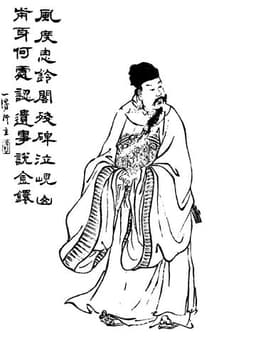
Yang Hu
General · Ancient
57.3Total
Basic Information
Born
-450
221
Died
-404
278
Era
Ancient
Ancient
Nationality
Greece
China
Occupation
General
General
Civilization
Western
Eastern
Score Comparison
Military (10%)
60.0
47.5
Political (20%)
45.1
61.3
Influence (20%)
61.0
56.4
Legacy (20%)
58.0
49.2
Leadership (15%)
43.8
68.0
Strategy (15%)
68.1
67.2
TOTAL
55.9
57.3
Alcibiades — Complete Timeline
415 BC
Sicilian ExpeditionWar
Alcibiades persuaded Athens to launch a massive expedition against Syracuse in Sicily. He was appointed as one of the commanders but was recalled to face charges of sacrilege. He defected to Sparta instead, providing them with strategic advice that contributed to Athens' defeat.
Peloponnesian WarSicilyDefection
Impact: regionaldestructive
Defection to SpartaPolitical Action◆ Major
After being recalled from the Sicilian Expedition, Alcibiades fled to Sparta. He advised the Spartans to fortify Decelea in Attica and to send aid to Syracuse, actions that severely weakened Athens. His defection was a major blow to Athenian strategy.
Peloponnesian WarSpartaTreason
Impact: regionaldestructive
411 BC
Return to Athens and Naval VictoriesWar◆ Major
Alcibiades returned to Athens after being recalled by the democratic faction. He led the Athenian navy to several victories over the Spartans, including at Cyzicus and Abydos, restoring Athenian morale and temporarily reversing the tide of the war.
Peloponnesian WarNaval BattleAthens
Impact: regionalconstructive
404 BC
Second Exile and AssassinationPolitical Action◆ Major
After a naval defeat at Notium, Alcibiades was again exiled from Athens. He fled to Phrygia in Persia, where he was assassinated by Persian agents, likely at the instigation of the Spartan general Lysander. His death ended his turbulent political career.
ExileAssassinationPersia
Impact: regionaltragic
Yang Hu — Complete Timeline
269 AD
Implemented a policy of conciliation toward WuReform◆ Major
Yang Hu adopted a strategy of winning over Wu's border populations through fair treatment and economic incentives, rather than aggressive warfare. This reduced resistance and built goodwill for the eventual invasion.
Jin DynastyEastern WuDiplomacy
Impact: regionalconstructive
Appointed as commander of Jin forces against WuPolitical Action◆ Major
Yang Hu was appointed as the commander of Jin's forces in the Xiangyang region, tasked with preparing for the conquest of Eastern Wu. He focused on building up military strength and winning the loyalty of the local population.
Jin DynastyEastern WuMilitary Command
Impact: regionalconstructive
278 AD
Recommended Du Yu as his successorPolitical Action◆ Major
On his deathbed, Yang Hu recommended Du Yu to the Jin emperor as the commander to lead the final conquest of Wu. This recommendation was accepted and proved crucial to the campaign's success.
Jin DynastySuccessionDu Yu
Impact: nationalconstructive
Died without seeing the conquest of WuOther◆ Major
Yang Hu died of illness before the Jin invasion of Wu began. His preparations and policies laid the groundwork for the eventual unification of China under the Jin dynasty.
Jin DynastyDeathUnification
Impact: nationaltragic
Expert Analysis
Origins
Alcibiades was born in Athens around 450 BCE into the wealthy and influential Alcmaeonid family. His father died in battle, and he was raised by the statesman Pericles. He was known for his beauty, charisma, and ambition from a young age. His education included rhetoric under Socrates, with whom he had a complex relationship.
Yang Hu was born in 221 BCE in the state of Wei during the Three Kingdoms period of China. His family were officials in the state of Wei, and he was known for his filial piety and moral integrity. He served under the Cao Wei regime before the establishment of the Jin dynasty. His early career was marked by his virtuous conduct and administrative skill.
Rise to Power
Alcibiades rose to prominence in Athens through his oratory and aristocratic connections. He became a leading advocate for an aggressive imperial policy. In 415 BCE, he persuaded the Athenian assembly to launch the Sicilian Expedition, a massive naval campaign against Syracuse. He was appointed as a commander but was recalled to face charges of religious desecration. Instead of returning, he defected to Sparta, where he advised Spartan military strategy.
Yang Hu rose through the ranks of the Wei bureaucracy. In 269 CE, he was appointed as the commander of Jin forces in Xiangyang, tasked with preparing for the conquest of the rival state of Eastern Wu. His rise was based on his reputation for honesty and effective administration, not military heroism.
Leadership & Governance
Alcibiades was a charismatic but erratic leader. He could inspire loyalty but also distrust. His leadership style was personal and opportunistic, often shifting alliances for his own benefit. For example, after defecting to Sparta, he advised them to fortify Decelea, which severely damaged Athens. Later, he returned to Athens and led naval victories, but his unstable nature led to his second exile.
Yang Hu's leadership was based on virtue and preparation. He implemented a policy of conciliation toward Wu, winning over border populations through fair treatment and economic incentives rather than force. He focused on building up Jin's military strength and morale. His governance was steady and principled, earning him respect from both sides. His political score of 61.3 reflects this, compared to Alcibiades' 45.1.
Triumph & Tragedy
Alcibiades' greatest success was his role in Athenian naval victories after his return, such as the Battle of Cyzicus in 410 BCE. However, his greatest failure was the Sicilian Expedition, which ended in disaster for Athens. He also failed to maintain trust, leading to his second exile and eventual assassination in 404 BCE in Phrygia.
Yang Hu's greatest success was his strategic preparation for the conquest of Wu. He recommended Du Yu as his successor, who led the successful invasion in 280 CE. Yang Hu's conciliatory policies ensured that Wu's border regions were receptive to Jin rule. His tragedy is that he died of illness in 278 CE before seeing the unification he worked for. His military score of 47.5 is lower than Alcibiades' 60.0, but his strategy score of 67.2 is comparable to Alcibiades' 68.1.
Character & Destiny
Alcibiades was brilliant but self-serving. His charisma and strategic insight were undermined by his lack of loyalty. He scored 43.8 in leadership, reflecting his inability to maintain stable command. His destiny was shaped by his personal ambition and the distrust he sowed.
Yang Hu was virtuous and patient. His leadership score of 68.0 indicates his ability to inspire through moral example. His destiny was to lay the groundwork for unification, dying before the final victory. His character ensured his legacy as a model of Confucian virtue.
Legacy
Alcibiades is remembered as a symbol of Athenian hubris and instability. His actions contributed to Athens' defeat in the Peloponnesian War. His legacy is complex, often studied as a cautionary tale of talent without principle. His influence score of 61.0 reflects his lasting impact on historical narratives.
Yang Hu is revered in Chinese history as a paragon of civil virtue and strategic patience. His methods of psychological warfare and conciliation influenced later Chinese military thought. His legacy is that of a peaceful conqueror. His legacy score of 49.2 is lower, partly because his contributions were overshadowed by the final conquest.
Conclusion
Yang Hu had greater overall impact. While Alcibiades was a more dynamic military figure, his instability and treachery negated his achievements. Yang Hu's methodical preparation and moral leadership led directly to the unification of China under the Jin dynasty. His total score of 57.3 vs. Alcibiades' 55.9 reflects this. Yang Hu's approach was more sustainable and had longer-term positive effects. Alcibiades, despite his brilliance, ultimately failed to secure lasting success for Athens or himself.
Rankings
🥇
Yang HuLeader
Mil: 47.5Pol: 61.3Inf: 56.4
57.3
🥈
Alcibiades
Mil: 60.0Pol: 45.1Inf: 61.0
55.9
+1.4 behind
How This Comparison Works
Algorithm
Each figure is scored on 6 dimensions (0—100 scale) based on structured historical data: Military (10%), Political (20%), Influence (20%), Legacy (20%), Leadership (15%), Strategy (15%). The weighted total produces the final ranking.
Data Sources
Scores are computed from structured sub-indicators in the database. Scale factors adjust for era (Ancient ×0.85, Modern ×1.0) and civilization size (Eastern ×1.05, Other ×0.80) to account for differences in population and military scale.
Maximum 3 Figures
Comparisons are limited to 2—3 figures to ensure readability and statistical meaningfulness.
Error Margins
±5 points per dimension — Sub-scores are derived from historical records with inherent uncertainty. Two figures within 5 points on a dimension should be considered roughly equivalent in that area.
Total Score Accuracy
±3 points overall — The weighted combination of 6 dimensions produces a total score with approximately ±3 points of uncertainty. Differences of less than 3 points are not statistically significant— the figures are effectively tied.
Known Limitations
- Historical records are incomplete and uneven across civilizations
- Figures from oral-tradition societies may be underrepresented
- Occupation labels can misclassify multi-role figures
- Scores measure capability and impact, not moral character
- Quantitative scoring is a comparison tool, not absolute truth
Capability Radar
Military (10%) — Battles & Warfare
Battles
65
35
Win Rate
55
40
Expansion
40
30
Political (20%) — Governance & Reform
Reform
45
60
Diplomacy
85
75
Economy
40
55
Influence (20%) — Cultural & Global Reach
Cultural
60
60
Global
55
30
Legacy (20%) — Historical Impact
Historical
70
55
Longevity
65
50
Leadership (15%) — Power & Stability
Tenure
60
50
Stability
20
65
Strategy (15%) — Tactics & Innovation
Strategy
70
70
Tactics
80
55
Reform
30
65
Similar Comparisons
Comments & Discussion
No comments yet. Be the first to share your thoughts!