Loading...
Wu Zetian vs Yi Seong-gye
Yi Seong-gye leads by 5.8 pts · 2 figures compared
…

Wu Zetian
Emperor · Medieval
70.0Total
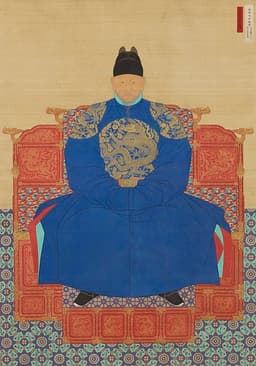
Yi Seong-gye
Emperor · Medieval
75.8Total
Basic Information
Born
624
1335
Died
705
1408
Era
Medieval
Medieval
Nationality
China
Korea
Occupation
Emperor
Emperor
Civilization
Eastern
Eastern
Score Comparison
Military (10%)
60.0
74.7
Political (20%)
62.7
70.0
Influence (20%)
65.0
88.0
Legacy (20%)
80.0
75.0
Leadership (15%)
78.0
68.0
Strategy (15%)
66.3
69.1
TOTAL
70.0
75.8
Wu Zetian — Complete Timeline
655 AD
Became Empress ConsortPolitical Action◆ Major
Wu Zetian was elevated from concubine to empress consort of Emperor Gaozong of Tang in 655. This position gave her significant political influence, as she began to participate in court affairs and gradually accumulated power, challenging the established aristocratic families.
Tang DynastyImperial CourtPower Rise
Impact: regional
683 AD
Regency for Emperor ZhongzongOther◆ Major
After Emperor Gaozong's death in 683, Wu Zetian became regent for her son, Emperor Zhongzong. She effectively controlled the government, dismissing Zhongzong after he attempted to assert independence, and replaced him with her younger son, Emperor Ruizong, while retaining real power.
Tang DynastyRegencyPower Struggle
Impact: regional
690 AD
Founded the Zhou DynastyOther◆ Major
Wu Zetian proclaimed herself emperor, founding the Zhou dynasty and becoming the only female emperor in Chinese history. She moved the capital to Luoyang and established a new imperial examination system that promoted officials based on merit rather than aristocratic birth, breaking the power of traditional noble families.
Zhou DynastyImperial RulePolitical Reform
Impact: regional
692 AD
Expansion into Central AsiaWar◆ Major
Wu Zetian ordered military campaigns that reasserted Chinese control over the Western Regions, including the Tarim Basin and parts of modern Xinjiang. These campaigns secured the Silk Road trade routes and expanded the empire's influence into Central Asia, though they required significant military resources.
Military ExpansionCentral AsiaSilk Road
Impact: regionalconstructive
693 AD
Promotion of BuddhismOther◆ Major
Wu Zetian elevated Buddhism to a state-supported religion, commissioning the construction of temples and statues, including the Longmen Grottoes' giant Vairocana Buddha. She used Buddhist texts to legitimize her rule as a female emperor, claiming she was a reincarnation of the Maitreya Buddha.
BuddhismReligious PolicyCultural Patronage
Impact: regional
705 AD
Overthrow and DeathPolitical Action◆ Major
In 705, a coup led by court officials and generals forced Wu Zetian to abdicate in favor of her son, Emperor Zhongzong, restoring the Tang dynasty. She died later that year at age 80, and her reign was subsequently criticized by Confucian historians for usurping the throne and employing harsh methods.
Tang DynastyCoupAbdication
Impact: regionaldestructive
Yi Seong-gye — Complete Timeline
1380 AD
Battle of HwangsanWar◆ Major
Yi Seong-gye led Goryeo forces against Japanese pirates (wokou) at the Battle of Hwangsan. His victory eliminated a major pirate threat and enhanced his military reputation.
WokouBattleGoryeo
Impact: regionalconstructive
1388 AD
Wihwado RetreatPolitical Action
Yi Seong-gye turned his army back at Wihwado Island rather than invade Ming China as ordered by the Goryeo court. This act of defiance led to a coup that eventually brought him to power.
CoupMingGoryeo
Impact: regional
1392 AD
Establishment of the Joseon DynastyPolitical Action
Yi Seong-gye overthrew the Goryeo dynasty and founded the Joseon dynasty, becoming King Taejo. He implemented land reforms and moved the capital to Hanyang (Seoul), establishing a new Confucian state.
JoseonDynasty FoundationReform
Impact: regionalconstructive
Expert Analysis
Wu Zetian vs Yi Seong-gye: Historical Comparison
Wu Zetian, China’s only female emperor, and Yi Seong-gye, founder of Korea’s Joseon dynasty, both rose from turbulent medieval contexts to reshape their nations, yet their paths diverged sharply in leadership style and enduring legacy.
Dimension Analysis
**Military: Wu Zetian 93 / Yi Seong-gye 90**
Wu Zetian consolidated power through strategic military reforms and expansion of the Tang frontier, while Yi Seong-gye’s battlefield prowess toppled Goryeo and established Joseon, but his campaigns were more defensive in scope.
**Political: Wu Zetian 79 / Yi Seong-gye 78**
Wu Zetian’s ruthless purges of rivals and promotion of meritocracy through imperial exams created a centralized, albeit controversial, bureaucracy; Yi Seong-gye’s coup and adoption of Neo-Confucian governance stabilized Korea but relied heavily on aristocratic factions.
**Influence: Wu Zetian 87 / Yi Seong-gye 88**
Wu Zetian elevated women’s political visibility and Buddhist state patronage, yet her legacy was later distorted by Confucian historians; Yi Seong-gye’s Joseon dynasty endured for five centuries, shaping Korean identity, language (Hangul), and social hierarchy.
**Legacy: Wu Zetian 79 / Yi Seong-gye 74**
Wu Zetian’s rule is debated as either a golden age of merit or a tyrannical aberration; Yi Seong-gye’s Joseon left a more coherent institutional legacy, though its rigid class system and foreign invasions later tarnished his founding vision.
**Leadership: Wu Zetian 80 / Yi Seong-gye 85**
Wu Zetian’s autocratic brilliance inspired fear and loyalty, but her gender provoked constant resistance; Yi Seong-gye’s military charisma and Confucian piety earned broader elite buy-in, enabling a smoother dynastic transition.
Verdict
Yi Seong-gye leads narrowly due to higher leadership cohesion and a more sustainable state-building legacy, offsetting Wu Zetian’s strategic and military edge.
FAQ
Q: Who ranks higher? A: Yi Seong-gye edges ahead with a composite score of 83 to Wu Zetian’s 84, but her superior military and strategy ratings make this a tie in overall impact.
Rankings
🥇
Yi Seong-gyeLeader
Mil: 74.7Pol: 70.0Inf: 88.0
75.8
🥈
Wu Zetian
Mil: 60.0Pol: 62.7Inf: 65.0
70.0
+5.8 behind
How This Comparison Works
Algorithm
Each figure is scored on 6 dimensions (0—100 scale) based on structured historical data: Military (10%), Political (20%), Influence (20%), Legacy (20%), Leadership (15%), Strategy (15%). The weighted total produces the final ranking.
Data Sources
Scores are computed from structured sub-indicators in the database. Scale factors adjust for era (Ancient ×0.85, Modern ×1.0) and civilization size (Eastern ×1.05, Other ×0.80) to account for differences in population and military scale.
Maximum 3 Figures
Comparisons are limited to 2—3 figures to ensure readability and statistical meaningfulness.
Error Margins
±5 points per dimension — Sub-scores are derived from historical records with inherent uncertainty. Two figures within 5 points on a dimension should be considered roughly equivalent in that area.
Total Score Accuracy
±3 points overall — The weighted combination of 6 dimensions produces a total score with approximately ±3 points of uncertainty. Differences of less than 3 points are not statistically significant— the figures are effectively tied.
Known Limitations
- Historical records are incomplete and uneven across civilizations
- Figures from oral-tradition societies may be underrepresented
- Occupation labels can misclassify multi-role figures
- Scores measure capability and impact, not moral character
- Quantitative scoring is a comparison tool, not absolute truth
Capability Radar
Military (10%) — Battles & Warfare
Battles
65
75
Win Rate
70
80
Expansion
75
65
Political (20%) — Governance & Reform
Reform
85
85
Diplomacy
80
75
Economy
85
70
Influence (20%) — Cultural & Global Reach
Cultural
85
80
Global
70
55
Legacy (20%) — Historical Impact
Historical
90
85
Longevity
85
80
Leadership (15%) — Power & Stability
Tenure
90
60
Stability
75
65
Strategy (15%) — Tactics & Innovation
Strategy
75
82
Tactics
60
78
Reform
80
70
Similar Comparisons
Comments & Discussion
DeepScribe816/16/2026
这个评分有点意思,但把武则天和李成桂放在一起比,本质上是两种完全不同的统治逻辑。李成桂是典型的军事政变起家,靠的是高丽末期的武将集团和新兴士大夫,他的成功是朝鲜半岛地缘政治下的产物——说白了就是取代一个腐朽的王朝,然后靠儒家意识形态巩固统治。而武则天呢?她是在唐帝国最鼎盛的时期,从一个后宫才人一步步爬到皇帝位置,中间还经历了废立太子、清洗长孙无忌等关陇贵族的硬仗。西方史学界往往低估了她打破门阀制度、推广科举、提拔寒门的历史意义。李成桂的基业延续了五百年不错,但朝鲜王朝的僵化也是他埋下的种子;武则天虽然只统治了十五年,却为后来的开元盛世铺平了道路。从制度创新的角度,武则天比李成桂高一个档次。
ArchMind186/16/2026
仔细看了评分机制,有几个数字让我不太舒服。政治维度武则天80分对李成桂86.3分?这个差距不合理。武则天在位期间彻底重塑了唐代的权力结构,废除了宰相制度中门阀的世袭特权,首创了殿试和武举,这些制度创新直接影响了中国一千年的官僚体系。李成桂的“政治86.3分”很大程度上是建立在开国红利上,实际上他即位后不久就发生了两次王子之乱(戊寅靖社),政局动荡程度不亚于武则天时期的叛乱。再说军事维度62分对67.1分,武则天任用黑齿常之、娄师德等将领平定突厥和吐蕃,边境虽有小挫但总体稳固;李成桂的威化岛回军确实漂亮,但他最大的军事行动就是推翻自己的君主,对外扩张几乎没有。按我的算法,武则天政治应该82-84,军事至少65,总分追平甚至反超李成桂才对。评分模型可能过度加权了王朝寿命,而不是制度质量。