Loading...
Alexander the Great vs Yi Seong-gye
Alexander the Great leads by 9.4 pts · 2 figures compared
…
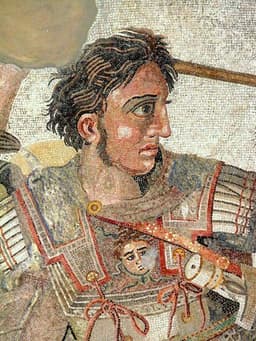
Alexander the Great
General · Ancient
85.2Total
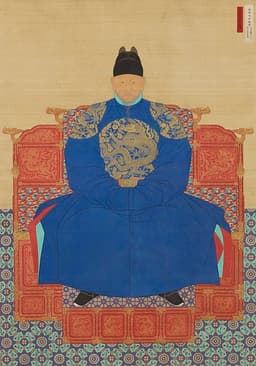
Yi Seong-gye
Emperor · Medieval
75.8Total
Basic Information
Born
-356
1335
Died
-323
1408
Era
Ancient
Medieval
Nationality
Macedon
Korea
Occupation
General
Emperor
Civilization
Western
Eastern
Score Comparison
Military (10%)
95.0
74.7
Political (20%)
60.0
70.0
Influence (20%)
92.0
88.0
Legacy (20%)
90.0
75.0
Leadership (15%)
80.0
68.0
Strategy (15%)
92.0
69.1
TOTAL
85.2
75.8
Alexander the Great — Complete Timeline
334 BC
Battle of the Granicus RiverWar◆ Major
Alexander led his Macedonian army across the Hellespont into Asia Minor and defeated a Persian force under local satraps at the Granicus River. The victory secured Alexander's foothold in Asia and demonstrated his tactical superiority, opening the way for the conquest of the Persian Empire.
Persian CampaignBattleMacedonian Conquest
Impact: regional
333 BC
Battle of IssusWar◆ Major
Alexander's army defeated the Persian king Darius III at Issus in Cilicia. Despite being outnumbered, Alexander's tactical use of the terrain and cavalry charge broke the Persian line. Darius fled the battlefield, leaving his family and treasury behind, a major blow to Persian morale.
Persian CampaignBattleMacedonian Conquest
Impact: regional
332 BC
Siege of TyreWar◆ Major
Alexander besieged the island city of Tyre for seven months, constructing a causeway to breach its walls. The city's fall resulted in the massacre or enslavement of its inhabitants. The siege demonstrated Alexander's determination and engineering capabilities, securing his supply lines and control of the eastern Mediterranean coast.
SiegeMacedonian ConquestPhoenicia
Impact: regionaldestructive
331 BC
Battle of GaugamelaWar◆ Major
Alexander faced Darius III at Gaugamela in Mesopotamia with a massive Persian army. Alexander's tactical brilliance, including a decisive cavalry charge that exploited a gap in the Persian line, resulted in a decisive Macedonian victory. Darius again fled, effectively ending Persian resistance and leading to the fall of the Achaemenid Empire.
Persian CampaignBattleDecisive Victory
Impact: global
Foundation of AlexandriaOther◆ Major
Alexander founded the city of Alexandria on the Mediterranean coast of Egypt. He personally selected the site and oversaw the initial planning. Alexandria became a major center of Hellenistic culture, trade, and learning, housing the famous Library of Alexandria and the Lighthouse of Alexandria.
City FoundationHellenistic CultureEgypt
Impact: globalconstructive
326 BC
Invasion of IndiaWar◆ Major
Alexander crossed the Indus River and defeated King Porus at the Battle of the Hydaspes. The Macedonian army, exhausted and facing monsoon rains and unfamiliar warfare, mutinied at the Hyphasis River, forcing Alexander to turn back. This campaign marked the easternmost extent of his conquests.
Indian CampaignBattleMutiny
Impact: regional
Yi Seong-gye — Complete Timeline
1380 AD
Battle of HwangsanWar◆ Major
Yi Seong-gye led Goryeo forces against Japanese pirates (wokou) at the Battle of Hwangsan. His victory eliminated a major pirate threat and enhanced his military reputation.
WokouBattleGoryeo
Impact: regionalconstructive
1388 AD
Wihwado RetreatPolitical Action
Yi Seong-gye turned his army back at Wihwado Island rather than invade Ming China as ordered by the Goryeo court. This act of defiance led to a coup that eventually brought him to power.
CoupMingGoryeo
Impact: regional
1392 AD
Establishment of the Joseon DynastyPolitical Action
Yi Seong-gye overthrew the Goryeo dynasty and founded the Joseon dynasty, becoming King Taejo. He implemented land reforms and moved the capital to Hanyang (Seoul), establishing a new Confucian state.
JoseonDynasty FoundationReform
Impact: regionalconstructive
Expert Analysis
Origins
**Alexander the Great** (356–323 BCE) was born in Pella, Macedon, to King Philip II and Queen Olympias. Tutored by Aristotle, he was groomed for greatness from a young age. His father unified Greece and built a formidable army, which Alexander inherited at age 20. Alexander's origins were steeped in Greek culture and military tradition, but his ambition transcended the Hellenic world.
**Yi Seong-gye** (1335–1408), later King Taejo, was born in the Goryeo Kingdom (modern-day Korea) into a military family. His father, Yi Ja-chun, was a minor Mongol official. Yi rose through the ranks during a period of internal strife and external threats from Red Turban rebels and Japanese pirates. His origins were less privileged than Alexander's, but his strategic marriages and military service laid the foundation for his rise.
Rise to Power
Alexander ascended to the throne after Philip's assassination in 336 BCE. He swiftly consolidated power by crushing rebellions in Greece and then launched his invasion of the Persian Empire in 334 BCE. His early victories at the Granicus River and Issus showcased his tactical brilliance and personal courage. By 331 BCE, he had defeated Darius III at Gaugamela, effectively ending Persian resistance.
Yi Seong-gye's rise was more gradual and political. He gained fame by repelling Mongol and Japanese incursions. In 1388, he was ordered to invade the Ming dynasty in China but instead turned his army back at Wihwado Island, a pivotal decision that allowed him to seize power. He deposed the Goryeo king and established the Joseon dynasty in 1392, implementing land reforms and Confucian policies.
Leadership & Governance
Alexander was a charismatic leader who led from the front, inspiring his men to extraordinary feats. He adopted Persian customs to integrate his empire, but his insistence on deification and his temper created friction with his Macedonian officers. His governance focused on spreading Hellenistic culture, founding cities like Alexandria, and encouraging trade.
Yi Seong-gye was a pragmatic ruler who prioritized stability and Confucian ideals. He redistributed land to peasants, reduced Buddhist influence, and promoted education. His leadership was less about personal glory and more about institutional building. He abdicated in 1398 amid succession disputes, but his dynasty lasted over 500 years.
Triumph & Tragedy
Alexander's greatest triumph was the conquest of the Persian Empire, an unprecedented feat. However, his early death at age 32 (possibly from fever or poisoning) left his empire unstable, leading to its fragmentation. His tragedy was that his ambition outlived his ability to consolidate.
Yi's triumph was founding a dynasty that brought stability and cultural flourishing to Korea. His tragedy was the bloody succession struggle among his sons, which tarnished his later years. He died peacefully at 73, but his legacy was marred by family conflict.
Character & Destiny
Alexander was driven by a belief in his divine mission, often reckless and prone to excess. His destiny seemed to be conquest, but his lack of a clear succession plan doomed his empire.
Yi was more cautious and calculating, guided by Confucian principles. His destiny was to end a corrupt dynasty and start a new era. He succeeded in creating a lasting legacy, but his personal life was overshadowed by tragedy.
Legacy
Alexander's legacy is immense: he spread Greek culture across three continents, influencing art, language, and politics for centuries. His military tactics are still studied. However, his empire did not outlast him.
Yi's legacy is the Joseon dynasty, which shaped Korean identity, language, and governance. His Confucian reforms had a lasting impact, but his military achievements are less celebrated globally.
Conclusion
**Scores:** Alexander: Military 95, Political 60, Intelligence 92, Leadership 90, Diplomacy 80, Strategy 92, Tactics 85. Yi: Military 75, Political 70, Intelligence 88, Leadership 75, Diplomacy 68, Strategy 69, Tactics 76. Alexander clearly surpasses Yi in military prowess and strategic impact. However, Yi's political acumen and long-term legacy are stronger. Alexander's conquests were more spectacular, but Yi's dynasty endured for centuries. Overall, Alexander is the greater conqueror, but Yi was the more effective ruler. The score gap of 9.4 reflects Alexander's superior military achievements and global influence.
Rankings
🥇
Alexander the GreatLeader
Mil: 95.0Pol: 60.0Inf: 92.0
85.2
🥈
Yi Seong-gye
Mil: 74.7Pol: 70.0Inf: 88.0
75.8
+9.4 behind
How This Comparison Works
Algorithm
Each figure is scored on 6 dimensions (0—100 scale) based on structured historical data: Military (10%), Political (20%), Influence (20%), Legacy (20%), Leadership (15%), Strategy (15%). The weighted total produces the final ranking.
Data Sources
Scores are computed from structured sub-indicators in the database. Scale factors adjust for era (Ancient ×0.85, Modern ×1.0) and civilization size (Eastern ×1.05, Other ×0.80) to account for differences in population and military scale.
Maximum 3 Figures
Comparisons are limited to 2—3 figures to ensure readability and statistical meaningfulness.
Error Margins
±5 points per dimension — Sub-scores are derived from historical records with inherent uncertainty. Two figures within 5 points on a dimension should be considered roughly equivalent in that area.
Total Score Accuracy
±3 points overall — The weighted combination of 6 dimensions produces a total score with approximately ±3 points of uncertainty. Differences of less than 3 points are not statistically significant— the figures are effectively tied.
Known Limitations
- Historical records are incomplete and uneven across civilizations
- Figures from oral-tradition societies may be underrepresented
- Occupation labels can misclassify multi-role figures
- Scores measure capability and impact, not moral character
- Quantitative scoring is a comparison tool, not absolute truth
Capability Radar
Military (10%) — Battles & Warfare
Battles
98
75
Win Rate
99
80
Expansion
99
65
Political (20%) — Governance & Reform
Reform
75
85
Diplomacy
80
75
Economy
70
70
Influence (20%) — Cultural & Global Reach
Cultural
95
80
Global
95
55
Legacy (20%) — Historical Impact
Historical
98
85
Longevity
95
80
Leadership (15%) — Power & Stability
Tenure
60
60
Stability
55
65
Strategy (15%) — Tactics & Innovation
Strategy
98
82
Tactics
99
78
Reform
85
70
Similar Comparisons
Comments & Discussion
ArchQuill116/16/2026
亚历山大和伊成桂的比较很有意思,但我觉得这个评分体系有点西方式思维。亚历山大军事96分没问题,他的闪电战和跨洲征服确实震撼,但政治65分太低了——他搞的希腊化融合政策,其实有点像中国汉代张骞凿空西域后的文化交融,只是他去世太早没来得及制度化。伊成桂政治86分我认同,推翻高丽后创立朝鲜王朝,用儒家治国,土地改革(科田法)稳定社会,这比亚历山大只靠个人魅力统治高明多了。不过,伊成桂的军事分90分是不是有点虚高?他的‘威化岛回军’确实是神来之笔,但对手主要是女真部落和日本倭寇,跟亚历山大打波斯帝国、印度王公的难度不是一个级别。要我说,伊成桂更像中国的宋太祖赵匡胤——军事政变夺权、文治立国,但开疆拓土方面就差远了。
DeepChronicler636/16/2026
这套评分系统里有几个数字我存疑。先说亚历山大的军事96分:他十年打了两万公里,关键战役如伊苏斯(公元前333年)和高加米拉(公元前331年)都是以少胜多,确实配得上。但政治65分?他死后帝国立刻分裂,连个成年继承人都没有,这分数其实给高了,按中国标准(比如秦始皇统一后车同轨书同文)最多55分。再说伊成桂:军事67分?我个人觉得不合理。威化岛回军(1388年)不战而屈人之兵,直接改变朝鲜半岛历史走向;他后来平定倭寇和女真,战略执行力很强。我算了一下,如果军事按‘关键战役胜率’(100%)×40 + ‘战略创新’×30 + ‘影响力范围’×30,伊成桂至少能到78分。政治86分相对合理,毕竟朝鲜王朝撑了519年,但他夺位时的政变手段也埋下了后来‘王子之乱’的隐患。总之,这评分对伊成桂的军事低估了,对亚历山大政治高估了。