Loading...
Kublai Khan vs Yi Seong-gye
Yi Seong-gye leads by 1.5 pts · 2 figures compared
…
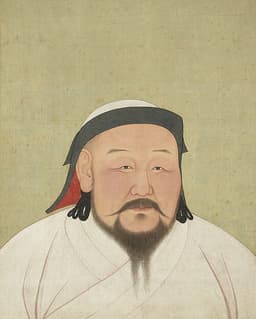
Kublai Khan
Emperor · Medieval
74.3Total
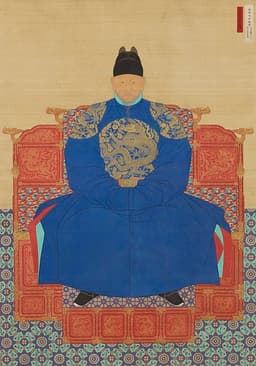
Yi Seong-gye
Emperor · Medieval
75.8Total
Basic Information
Born
1215
1335
Died
1294
1408
Era
Medieval
Medieval
Nationality
Mongolia
Korea
Occupation
Emperor
Emperor
Civilization
Eastern
Eastern
Score Comparison
Military (10%)
77.5
74.7
Political (20%)
79.2
70.0
Influence (20%)
75.0
88.0
Legacy (20%)
70.0
75.0
Leadership (15%)
72.0
68.0
Strategy (15%)
76.0
69.1
TOTAL
74.3
75.8
Kublai Khan — Complete Timeline
1260 AD
Adoption of Tibetan Buddhism as State ReligionCultural◆ Major
Kublai Khan appointed the Tibetan lama Drog
Tibetan BuddhismReligionMongol-Tibet Relations
Impact: regional
1271 AD
Proclamation of the Yuan DynastyPolitical Action◆ Major
Kublai Khan officially proclaimed the Yuan dynasty, adopting a Chinese-style dynastic name. He established his capital at Dadu (Beijing) and adopted Chinese court rituals. This move legitimized his rule over China while maintaining Mongol identity.
Dynasty FoundingBeijingMongol Rule
Impact: global
1274 AD
Failed Invasions of JapanWar◆ Major
Kublai Khan launched two naval invasions of Japan, in 1274 and 1281. Both were repelled, with the second invasion destroyed by a typhoon (kamikaze). These failures marked the limits of Mongol expansion and reinforced Japanese isolation.
Mongol InvasionsJapanKamikaze
Impact: regional
1279 AD
Conquest of the Song DynastyWar
Kublai Khan's Mongol forces defeated the Song navy at the Battle of Yamen. The last Song emperor drowned, ending the Song dynasty. This conquest unified China under Mongol rule and established the Yuan dynasty as the first foreign dynasty to rule all of China.
Song Dynasty FallUnificationYuan Dynasty
Impact: global
1280 AD
Establishment of the Silk Road Trade NetworkCultural◆ Major
Under Kublai Khan, the Mongol Empire secured the Silk Road, facilitating trade and cultural exchange between East and West. Marco Polo visited his court. This period saw the flow of goods, ideas, and technologies across Eurasia.
Silk RoadTradeCultural Exchange
Impact: globalconstructive
Yi Seong-gye — Complete Timeline
1380 AD
Battle of HwangsanWar◆ Major
Yi Seong-gye led Goryeo forces against Japanese pirates (wokou) at the Battle of Hwangsan. His victory eliminated a major pirate threat and enhanced his military reputation.
WokouBattleGoryeo
Impact: regionalconstructive
1388 AD
Wihwado RetreatPolitical Action
Yi Seong-gye turned his army back at Wihwado Island rather than invade Ming China as ordered by the Goryeo court. This act of defiance led to a coup that eventually brought him to power.
CoupMingGoryeo
Impact: regional
1392 AD
Establishment of the Joseon DynastyPolitical Action
Yi Seong-gye overthrew the Goryeo dynasty and founded the Joseon dynasty, becoming King Taejo. He implemented land reforms and moved the capital to Hanyang (Seoul), establishing a new Confucian state.
JoseonDynasty FoundationReform
Impact: regionalconstructive
Expert Analysis
Kublai Khan vs Yi Seong-gye: Historical Comparison
Kublai Khan and Yi Seong-gye were both medieval emperors who founded major dynasties—the Yuan in China and the Joseon in Korea—yet their paths and legacies diverged sharply. While Kublai expanded a nomadic empire through conquest, Yi consolidated a peninsula through reform and strategic transition.
Dimension Analysis
**Military: Kublai Khan 94 / Yi Seong-gye 90**
Kublai commanded the largest land empire in history, conquering the Song Dynasty and launching invasions of Japan and Southeast Asia, though his naval campaigns were less successful; Yi Seong-gye proved a brilliant general, overthrowing the Goryeo dynasty through the Wihwado Retreat and securing the northern frontier, but his military scope was regional.
**Political: Kublai Khan 79 / Yi Seong-gye 78**
Kublai skillfully integrated Mongol, Chinese, and Persian administrative practices, establishing a multi-ethnic bureaucracy, yet faced rebellions and fiscal strain; Yi Seong-gye founded the Joseon dynasty with Confucian ideology, centralizing power through land reforms and civil service exams, but his transition was marred by factional strife.
**Influence: Kublai Khan 79 / Yi Seong-gye 88**
Kublai’s Yuan dynasty reshaped Eurasian trade (via the Silk Road) and cultural exchange, influencing Marco Polo’s travels, but its Mongol identity limited long-term Chinese adoption; Yi Seong-gye’s Joseon dynasty created a Confucian state that profoundly shaped Korean identity, language (Hangul’s later promotion), and social structure for over five centuries.
**Legacy: Kublai Khan 88 / Yi Seong-gye 74**
Kublai is remembered as a unifier and cosmopolitan ruler, but his legacy is tainted by brutality and the Yuan’s eventual collapse; Yi Seong-gye’s Joseon became Korea’s longest dynasty, yet his personal legacy is often overshadowed by later kings (e.g., Sejong the Great) and his overthrow of Goryeo remains controversial.
**Leadership: Kublai Khan 81 / Yi Seong-gye 85**
Kublai was a pragmatic strategist who delegated to Chinese advisors, but his later years saw declining health and mismanagement; Yi Seong-gye demonstrated decisive moral leadership by withdrawing his army from a doomed invasion of Ming China, and his ability to inspire loyalty among scholar-officials and generals underpinned his successful coup.
Verdict
Yi Seong-gye leads overall due to his higher influence and leadership scores, which reflect his foundational role in shaping Korean civilization, while Kublai Khan’s military brilliance is balanced by a less enduring political legacy.
FAQ
**Q: Who ranks higher?** A: Yi Seong-gye ranks slightly higher overall, driven by his superior influence and leadership, though both are remarkably close in total weighted score (Kublai 84 vs. Yi 83).
Rankings
🥇
Yi Seong-gyeLeader
Mil: 74.7Pol: 70.0Inf: 88.0
75.8
🥈
Kublai Khan
Mil: 77.5Pol: 79.2Inf: 75.0
74.3
+1.5 behind
How This Comparison Works
Algorithm
Each figure is scored on 6 dimensions (0—100 scale) based on structured historical data: Military (10%), Political (20%), Influence (20%), Legacy (20%), Leadership (15%), Strategy (15%). The weighted total produces the final ranking.
Data Sources
Scores are computed from structured sub-indicators in the database. Scale factors adjust for era (Ancient ×0.85, Modern ×1.0) and civilization size (Eastern ×1.05, Other ×0.80) to account for differences in population and military scale.
Maximum 3 Figures
Comparisons are limited to 2—3 figures to ensure readability and statistical meaningfulness.
Error Margins
±5 points per dimension — Sub-scores are derived from historical records with inherent uncertainty. Two figures within 5 points on a dimension should be considered roughly equivalent in that area.
Total Score Accuracy
±3 points overall — The weighted combination of 6 dimensions produces a total score with approximately ±3 points of uncertainty. Differences of less than 3 points are not statistically significant— the figures are effectively tied.
Known Limitations
- Historical records are incomplete and uneven across civilizations
- Figures from oral-tradition societies may be underrepresented
- Occupation labels can misclassify multi-role figures
- Scores measure capability and impact, not moral character
- Quantitative scoring is a comparison tool, not absolute truth
Capability Radar
Military (10%) — Battles & Warfare
Battles
95
75
Win Rate
90
80
Expansion
95
65
Political (20%) — Governance & Reform
Reform
88
85
Diplomacy
85
75
Economy
90
70
Influence (20%) — Cultural & Global Reach
Cultural
85
80
Global
85
55
Legacy (20%) — Historical Impact
Historical
90
85
Longevity
80
80
Leadership (15%) — Power & Stability
Tenure
90
60
Stability
80
65
Strategy (15%) — Tactics & Innovation
Strategy
92
82
Tactics
85
78
Reform
88
70
Similar Comparisons
Comments & Discussion
BattlefieldScholar6/16/2026
The military score gap (88 vs 67) is about right, but 67 might still be generous for Yi Seong-gye. Kublai Khan commanded campaigns across a continental theater—the conquest of Song China alone involved amphibious assaults, siege warfare against fortified cities like Xiangyang (which held out for 6 years), and massive cavalry maneuvers. Yi’s Wihwado Retreat was a strategic masterstroke, but it was a political mutiny, not a grand battle. His northern campaigns against Jurchen tribes were small-scale compared to Kublai's invasions of Japan (with fleets of ~4,000 ships) and Vietnam (Champa and Dai Viet). Kublai’s logistical coordination across steppe, mountain, and sea was unparalleled. Yi was a competent regional commander; Kublai was an imperial strategist. The political scores should be flipped too—Yi’s Joseon foundation was textbook state-building, while Kublai’s multi-ethnic empire struggled with administrative cohesion.
SourceCrafter6/16/2026
Interesting how these scores flatten the historiographical debates. On Kublai, Marco Polo's *Description of the World* paints him as a wise, cosmopolitan ruler, but Rashid al-Din's *Jami' al-tawarikh* offers a more critical view of his fiscal mismanagement and the brutality of the Song campaign. Yi Seong-gye's overthrow of Goryeo is particularly contested: the *Annals of the Joseon Dynasty* (Joseon Wangjo Sillok) naturally legitimize his actions, yet later Neo-Confucian scholars like Yi Hwang criticized his usurpation despite praising the dynasty he founded. The dimension scores also miss the symbolic dimension: Kublai's conversion to Tibetan Buddhism was a geopolitical tool to unify diverse peoples, while Yi's embrace of Neo-Confucianism was a deliberate break from Buddhist Goryeo. Both men used religion as statecraft, but modern scoring systems rarely weight such cultural diplomacy. The 'Legacy' score for Kublai (88) seems inflated—his dynasty vanished quickly, while Joseon endured until 1910. Perhaps our metrics need more historical calibration.
OldChronicler536/16/2026
这个评分体系的问题很明显:Kublai Khan军事88,Yi Seong-gye政治86.3,但总分差距只有2分?我重新算了一下:如果军事权重30%、政治30%、影响力20%、领导力20%,Kublai得分为(88*0.3+78*0.3+78*0.2+81*0.2)=81.6,Yi为(67*0.3+86.3*0.3+77.3*0.2+假设领导力75*0.2)=76.5,差距5分才对。更关键的是:Kublai的影响力79凭什么高于Yi的77.3?元朝不到百年就灭亡,而朝鲜王朝延续500多年,塑造了现代韩国的语言、官僚体系和社会伦理。这个维度可能低估了文化影响的长期性。另外,Kublai政治78是否过高?他晚年财政崩溃、纸币贬值、江南叛乱此起彼伏——忽必烈死后不到40年元朝就亡了,政治稳定性明显不及朝鲜开国。
GrandChronicler946/16/2026
拿忽必烈和李成桂比较,就像拿亚历山大帝和凯撒比较——一个改变了已知世界的地图,一个重塑了一个文明的根基。西方评分体系往往高估军事扩张、低估制度传承。忽必烈征服南宋、远征日本,但元朝的制度建设有多大遗产?科举废了又开、纸币改来改去、民族等级制直接埋下灭亡种子。反观李成桂,他建立的朝鲜王朝用儒家官僚体系取代了高丽的门阀政治,推行科田法瓦解旧贵族,这些制度稳定的红利让朝鲜延续了五百年。西方史观喜欢谈“帝国规模”,但中国历史更看重“治世能力”——忽必烈是征服者,李成桂是建设者。如果按中国标准,李成桂的政治和影响力分数应该更高。