Loading...
Wilhelm I vs Yeongjo of Joseon
Wilhelm I leads by 13.3 pts · 2 figures compared
…
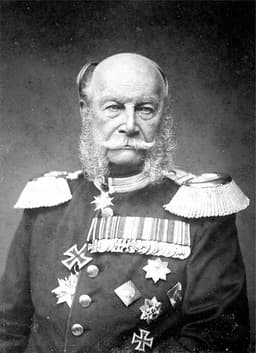
Wilhelm I
Emperor · Modern
71.3Total
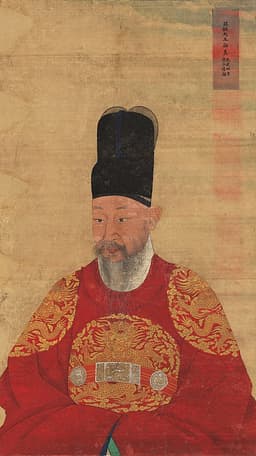
Yeongjo of Joseon
Emperor · Modern
58.0Total
Basic Information
Born
1797
1694
Died
1888
1776
Era
Modern
Modern
Nationality
Germany
Korea
Occupation
Emperor
Emperor
Civilization
Western
Eastern
Score Comparison
Military (10%)
65.0
21.2
Political (20%)
72.0
82.0
Influence (20%)
72.0
61.0
Legacy (20%)
72.0
56.0
Leadership (15%)
80.0
75.0
Strategy (15%)
60.0
30.3
TOTAL
71.3
58.0
Wilhelm I — Complete Timeline
1862 AD
Appointed Otto von Bismarck as Minister President of PrussiaPolitical Action
Wilhelm I appointed Otto von Bismarck as Minister President of Prussia to resolve a constitutional crisis over military reforms. Bismarck's appointment led to a period of conservative dominance and aggressive foreign policy that culminated in German unification.
BismarckPrussiaGerman Unification
Impact: global
1866 AD
Led Prussia in the Austro-Prussian WarWar◆ Major
Wilhelm I, as King of Prussia, led the Prussian army in the Austro-Prussian War. The decisive Prussian victory at K
Austro-Prussian WarGerman UnificationMilitary
Impact: regional
1871 AD
Proclaimed German Emperor at VersaillesPolitical Action
Wilhelm I was proclaimed German Emperor in the Hall of Mirrors at the Palace of Versailles, following the Franco-Prussian War. This event formally unified the German states into the German Empire, with Wilhelm as hereditary emperor and Bismarck as chancellor.
German UnificationEmpireFranco-Prussian War
Impact: globalconstructive
1878 AD
Survived Two Assassination AttemptsOther◆ Major
Wilhelm I survived two assassination attempts in May and June 1878. The first attempt by Max H
Assassination AttemptAnti-Socialist LawsBismarck
Impact: nationaltragic
Yeongjo of Joseon — Complete Timeline
1725 AD
Tangpyeong Policy (Impartiality Policy)Reform◆ Major
Yeongjo implemented the Tangpyeong policy to reduce factional strife by appointing officials from all factions. He banned factional labels and promoted merit-based appointments. This stabilized the court but did not eliminate factionalism entirely.
Political ReformFactionalismAdministration
Impact: nationalconstructive
1750 AD
Tax Reform: Gyunyeokbeop (Equal Service Law)Reform◆ Major
Yeongjo introduced the Gyunyeokbeop, a uniform military tax that replaced various service obligations with a cloth tax. This reduced the burden on commoners and increased state revenue, though it faced opposition from the aristocracy.
Tax ReformMilitaryEconomy
Impact: nationalconstructive
1762 AD
Imprisonment of Crown Prince Sado in a Rice ChestPolitical Action
King Yeongjo ordered his son Crown Prince Sado to be locked inside a rice chest for eight days, leading to his death by starvation. Sado had been accused of mental illness and violent behavior. This event traumatized the court and led to Jeongjo's later reforms.
Royal FamilyTragedySuccession
Impact: nationaltragic
1776 AD
Longest Reign in Joseon HistoryOther◆ Major
Yeongjo reigned for 52 years (1724-1776), the longest of any Joseon king. His reign saw cultural flourishing, economic stability, and political reforms, but also the tragic death of his son. He died at age 81, leaving a mixed legacy.
LongevityLegacyReign
Impact: national
Expert Analysis
Origins
Wilhelm I was born on March 22, 1797, in Berlin, Prussia, the second son of King Frederick William III. As a child, he was overshadowed by his elder brother Frederick William IV and received a military education, serving in the Prussian army against Napoleon. His early experiences in the Wars of Liberation shaped his conservative, militaristic worldview. Wilhelm became King of Prussia in 1861 after his brother's death, inheriting a state with a strong army but political instability.
Yeongjo of Joseon was born in 1694 in Seoul, the second son of King Sukjong. His mother was a concubine of low birth, which made his early life precarious amid intense factional struggles. He was educated in Confucian classics and developed a meticulous, reform-minded character. Yeongjo ascended the throne in 1724 after his half-brother Gyeongjong died under suspicious circumstances, inheriting a kingdom torn by partisan conflict.
Rise to Power
Wilhelm's rise was gradual. As king, he faced a constitutional crisis in 1862 when the Prussian parliament refused to approve military reforms. He considered abdication but instead appointed Otto von Bismarck as Minister President. Bismarck's policy of "blood and iron" resolved the crisis by governing without parliamentary consent. Wilhelm supported Bismarck's wars: the Second Schleswig War (1864) against Denmark, the Austro-Prussian War (1866) which expelled Austria from German affairs, and the Franco-Prussian War (1870-71). After the victory at Sedan, Wilhelm was proclaimed German Emperor at Versailles on January 18, 1871, uniting the German states under Prussian leadership.
Yeongjo's rise was marked by factional violence. After his brother's death, he purged rival factions and implemented the Tangpyeong policy to balance power. He banned factional labels and appointed officials from all backgrounds. His reign from 1724 to 1776 focused on consolidating royal authority and reforming the tax system. His most controversial act was the imprisonment of his son Crown Prince Sado in a rice chest in 1762, allegedly for mental illness and treason, which solidified his control but left a tragic legacy.
Leadership & Governance
Wilhelm I was a constitutional monarch who deferred to Bismarck's political genius. He approved Bismarck's anti-socialist laws and welfare reforms, but his leadership was primarily military. He scored 80.0 in leadership and 60.0 in strategy, reflecting his reliance on his generals. Wilhelm's governance emphasized military strength and Prussian dominance; he personally led troops during the Austro-Prussian and Franco-Prussian wars. His regime established the German Empire as a federal monarchy with Prussia at its core.
Yeongjo scored 82.0 in political skill, higher than Wilhelm's 72.0. He governed through Confucian bureaucracy, issuing detailed edicts and personally reviewing state affairs. His Tangpyeong policy reduced factional strife, and his Gyunyeokbeop tax reform equalized military service obligations, easing burdens on commoners. Yeongjo also promoted agriculture and education, compiling legal codes like the Sokdaejeon. However, his military score of 21.2 reflects his lack of warfare; Joseon enjoyed peace during his reign.
Triumph & Tragedy
Wilhelm's greatest triumph was unifying Germany through three successful wars, creating a major European power. His tragedy was his failure to prevent the growing power of the military-industrial complex, which contributed to later conflicts. He survived two assassination attempts in 1878, which were used to justify anti-socialist laws.
Yeongjo's triumphs include his long reign of 52 years, economic stability, and cultural flourishing (e.g., the development of Silhak, or practical learning). His tragedy is the filicide of Crown Prince Sado, which haunted his legacy and weakened the royal line. Sado's son, later King Jeongjo, rehabilitated his father but the incident exposed the brutality of Joseon court politics.
Character & Destiny
Wilhelm was stubborn and conservative, but pragmatic enough to delegate to Bismarck. His character was shaped by military discipline; he was known for his simple tastes and devotion to duty. His destiny was to be a figurehead for German unification, while Bismarck held real power. Historians assess him as a capable but not brilliant ruler, with a total score of 71.3.
Yeongjo was meticulous, authoritarian, and deeply influenced by Confucian rigor. He was a micromanager who wrote thousands of royal instructions. His character led him to sacrifice his son for political stability, a decision that modern historians condemn. His total score of 58.0 reflects lower military and strategic abilities but high political acumen.
Legacy
Wilhelm I's legacy is the creation of the German Empire, which lasted until 1918. He is remembered as the first German Emperor, with monuments like the Berlin Victory Column. His reign set Germany on a path of militarism that contributed to World War I. In terms of influence and legacy, he scored 72.0 each.
Yeongjo's legacy is more complex. He is praised for reforming Joseon's tax system and reducing factionalism, but his filicide overshadows his achievements. His reign is seen as a golden age of Confucian governance, but his methods were harsh. He scored 61.0 in influence and 56.0 in legacy.
Conclusion
Wilhelm I had greater overall impact due to his role in unifying Germany, a transformation that reshaped European power dynamics. His total score of 71.3 exceeds Yeongjo's 58.0 by 13.3 points. While Yeongjo's domestic reforms were significant, they did not alter the global order. Wilhelm's military and political achievements created a nation that would dominate continental Europe. Therefore, Wilhelm I ranks higher in historical significance.
Rankings
🥇
Wilhelm ILeader
Mil: 65.0Pol: 72.0Inf: 72.0
71.3
🥈
Yeongjo of Joseon
Mil: 21.2Pol: 82.0Inf: 61.0
58.0
+13.3 behind
How This Comparison Works
Algorithm
Each figure is scored on 6 dimensions (0—100 scale) based on structured historical data: Military (10%), Political (20%), Influence (20%), Legacy (20%), Leadership (15%), Strategy (15%). The weighted total produces the final ranking.
Data Sources
Scores are computed from structured sub-indicators in the database. Scale factors adjust for era (Ancient ×0.85, Modern ×1.0) and civilization size (Eastern ×1.05, Other ×0.80) to account for differences in population and military scale.
Maximum 3 Figures
Comparisons are limited to 2—3 figures to ensure readability and statistical meaningfulness.
Error Margins
±5 points per dimension — Sub-scores are derived from historical records with inherent uncertainty. Two figures within 5 points on a dimension should be considered roughly equivalent in that area.
Total Score Accuracy
±3 points overall — The weighted combination of 6 dimensions produces a total score with approximately ±3 points of uncertainty. Differences of less than 3 points are not statistically significant— the figures are effectively tied.
Known Limitations
- Historical records are incomplete and uneven across civilizations
- Figures from oral-tradition societies may be underrepresented
- Occupation labels can misclassify multi-role figures
- Scores measure capability and impact, not moral character
- Quantitative scoring is a comparison tool, not absolute truth
Capability Radar
Military (10%) — Battles & Warfare
Battles
40
10
Win Rate
75
10
Expansion
80
10
Political (20%) — Governance & Reform
Reform
70
85
Diplomacy
65
70
Economy
60
80
Influence (20%) — Cultural & Global Reach
Cultural
50
65
Global
75
40
Legacy (20%) — Historical Impact
Historical
80
70
Longevity
70
60
Leadership (15%) — Power & Stability
Tenure
85
90
Stability
75
75
Strategy (15%) — Tactics & Innovation
Strategy
60
10
Tactics
30
10
Reform
55
20
Similar Comparisons
Comments & Discussion
No comments yet. Be the first to share your thoughts!