Loading...
Charles III of Spain vs Wilhelm I
Wilhelm I leads by 6.5 pts · 2 figures compared
…

Charles III of Spain
Emperor · Modern
64.8Total
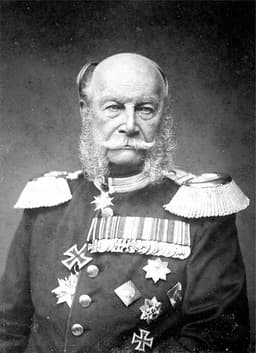
Wilhelm I
Emperor · Modern
71.3Total
Basic Information
Born
1716
1797
Died
1788
1888
Era
Modern
Modern
Nationality
Spain
Germany
Occupation
Emperor
Emperor
Civilization
Western
Western
Score Comparison
Military (10%)
50.0
65.0
Political (20%)
72.0
72.0
Influence (20%)
72.0
72.0
Legacy (20%)
52.0
72.0
Leadership (15%)
80.0
80.0
Strategy (15%)
60.0
60.0
TOTAL
64.8
71.3
Charles III of Spain — Complete Timeline
1752 AD
Established the Royal Academy of Fine Arts of San FernandoCultural
Charles III, while still king of Naples, founded the Royal Academy of Fine Arts of San Fernando in Madrid. The academy promoted neoclassical art and architecture, influencing Spanish cultural development.
ArtsAcademyNeoclassicism
Impact: nationalconstructive
1759 AD
Became King of SpainPolitical Action
Charles III succeeded his half-brother Ferdinand VI as king of Spain, having previously been king of Naples and Sicily. His reign marked the height of Bourbon reforms in Spain, implementing Enlightenment-inspired policies.
SuccessionEnlightenmentBourbon Reforms
Impact: globalconstructive
1760 AD
Modernized Madrid and Other CitiesCultural◆ Major
Charles III undertook major urban renewal projects in Madrid, including the construction of the Prado Museum, the Royal Botanical Garden, and the Alcal
Urban PlanningArchitectureEnlightenment
Impact: nationalconstructive
1767 AD
Expelled the Jesuits from Spain and Its ColoniesPolitical Action◆ Major
Charles III ordered the expulsion of the Society of Jesus (Jesuits) from all Spanish territories, confiscating their properties. This was part of a broader effort to reduce church power and assert royal control over education and missions.
Jesuit ExpulsionChurch-State RelationsEnlightenment
Impact: globaldestructive
1778 AD
Implemented Free Trade ReformsReform◆ Major
Charles III issued the Decree of Free Trade, opening Spanish American ports to trade with each other and with Spain. This reform dismantled the monopoly of C
Free TradeEconomic ReformColonial Policy
Impact: globalconstructive
1779 AD
Supported the American Revolution Against BritainWar◆ Major
Charles III entered the American Revolutionary War on the side of the American colonies and France, declaring war on Britain. Spanish forces recaptured Florida and Minorca, but the war strained Spain's finances.
American RevolutionWarDiplomacy
Impact: global
Wilhelm I — Complete Timeline
1862 AD
Appointed Otto von Bismarck as Minister President of PrussiaPolitical Action
Wilhelm I appointed Otto von Bismarck as Minister President of Prussia to resolve a constitutional crisis over military reforms. Bismarck's appointment led to a period of conservative dominance and aggressive foreign policy that culminated in German unification.
BismarckPrussiaGerman Unification
Impact: global
1866 AD
Led Prussia in the Austro-Prussian WarWar◆ Major
Wilhelm I, as King of Prussia, led the Prussian army in the Austro-Prussian War. The decisive Prussian victory at K
Austro-Prussian WarGerman UnificationMilitary
Impact: regional
1871 AD
Proclaimed German Emperor at VersaillesPolitical Action
Wilhelm I was proclaimed German Emperor in the Hall of Mirrors at the Palace of Versailles, following the Franco-Prussian War. This event formally unified the German states into the German Empire, with Wilhelm as hereditary emperor and Bismarck as chancellor.
German UnificationEmpireFranco-Prussian War
Impact: globalconstructive
1878 AD
Survived Two Assassination AttemptsOther◆ Major
Wilhelm I survived two assassination attempts in May and June 1878. The first attempt by Max H
Assassination AttemptAnti-Socialist LawsBismarck
Impact: nationaltragic
Expert Analysis
Origins
Charles III was born on January 20, 1716, in Madrid, the third son of Philip V and Elisabeth Farnese. As a younger son, he was not expected to inherit the Spanish throne. He became Duke of Parma at 16 and later King of Naples and Sicily in 1734 after the War of the Polish Succession. His upbringing was steeped in French and Italian court culture, and he was influenced by the Enlightenment ideas of his time, particularly through his minister Bernardo Tanucci. His education emphasized governance and military affairs, but his formative years as king of Naples shaped his reformist outlook.
Wilhelm I was born on March 22, 1797, in Berlin, the second son of King Frederick William III and Queen Louise. He grew up during the Napoleonic Wars, witnessing Prussia's humiliation and eventual resurgence. His military education was rigorous; he joined the Prussian army at age 17 and fought in the Battle of Waterloo. Unlike Charles, Wilhelm was not an intellectual but a practical soldier. His early career was marked by conservative values and a deep commitment to the Prussian monarchy.
Rise to Power
Charles III became King of Spain in 1759 upon the death of his half-brother Ferdinand VI, who had no children. He had already proven his capability as king of Naples, where he implemented reforms and built a strong state. His arrival in Spain marked the beginning of a reign that would last until 1788. He quickly surrounded himself with enlightened ministers like the Count of Aranda and José Moñino (later Count of Floridablanca), who pushed forward his agenda.
Wilhelm I's rise was more complex. He became King of Prussia in 1861 after the death of his brother Frederick William IV. He immediately faced a constitutional crisis over military reforms. In 1862, he appointed Otto von Bismarck as Minister President, a decision that would change German history. Bismarck's policies of "blood and iron" led to a series of wars: the Second Schleswig War (1864), the Austro-Prussian War (1866), and the Franco-Prussian War (1870-1871). In 1871, Wilhelm was proclaimed German Emperor at Versailles.
Leadership & Governance
Charles III was an enlightened despot who believed in top-down reform. He centralized the state, improved tax collection, and promoted economic development. His Decree of Free Trade (1778) opened colonial ports to inter-colonial trade, breaking the monopoly of Cádiz. He also expelled the Jesuits in 1767 to reduce church power. In Madrid, he oversaw the construction of the Prado Museum and the Royal Botanical Garden. His political score of 72.0 reflects his effective governance, though his military score of 50.0 shows limited martial ambition.
Wilhelm I was a constitutional monarch who largely deferred to Bismarck. His leadership style was hands-off in policy but firm in military matters. He supported Bismarck's unification wars, and his presence on the battlefield boosted morale. He survived two assassination attempts in 1878, which led to anti-socialist laws. His political score of 72.0 matches Charles, but his military score of 65.0 is higher due to his active role in wars. However, his strategy score of 60.0 is equal to Charles's, indicating similar levels of strategic thinking.
Triumph & Tragedy
Charles III's greatest triumph was modernizing Spain and its empire. His reforms stimulated trade and urbanization, and Spain regained some international prestige. He also supported the American Revolution, recapturing Florida from Britain. His tragedy was that many reforms were reversed after his death; his son Charles IV proved weak, and the French Revolution disrupted Spain. The expulsion of the Jesuits also damaged education in the colonies.
Wilhelm I's triumph was the unification of Germany, a feat that reshaped Europe. His military victories in the Austro-Prussian and Franco-Prussian wars established Prussia as the dominant German power. His tragedy was the creation of a militaristic state that contributed to World War I. The assassination attempts highlighted internal tensions, and his reign ended with the rise of socialism. His total score of 71.3 exceeds Charles's 64.8, indicating broader impact in terms of military and legacy.
Character & Destiny
Charles III was disciplined, methodical, and deeply religious. He rose early, worked long hours, and was known for his personal modesty. His character drove the reforms that modernized Spain, but his cautious nature prevented radical change. He avoided war when possible, focusing on internal development. Historians praise his administrative skills but note that his reforms were not sustainable.
Wilhelm I was stubborn, duty-bound, and conservative. He initially resisted Bismarck's policies but eventually accepted them. His character was shaped by military discipline; he was more comfortable on the parade ground than in the council chamber. His destiny was to be a figurehead for German unity, but his decisions, such as appointing Bismarck, were crucial. Historians see him as a transitional figure, bridging old Prussia and new Germany.
Legacy
Charles III's legacy is mixed. He is remembered as the best of the Spanish Bourbon reformers, but his achievements were undone by later events. The Prado Museum and Madrid's urban layout endure. His free trade reforms influenced later Latin American independence movements. His legacy score of 52.0 reflects this limited lasting impact.
Wilhelm I's legacy is immense. He unified Germany, which became a major power. The German Empire lasted until 1918, and its influence continued through the 20th century. His image as a fatherly figure ("Wilhelm the Great") was promoted by Bismarck. His legacy score of 72.0 is one of the highest, underscoring his role in shaping modern Europe.
Conclusion
Wilhelm I had a greater impact than Charles III. His unification of Germany created a state that dominated European politics for decades, while Charles's reforms, though significant, were temporary and reversed. Wilhelm's total score of 71.3 compared to Charles's 64.8 quantifies this difference. Wilhelm's military achievements and lasting legacy outweigh Charles's administrative successes. In the contest of historical influence, Wilhelm I stands higher.
Rankings
🥇
Wilhelm ILeader
Mil: 65.0Pol: 72.0Inf: 72.0
71.3
🥈
Charles III of Spain
Mil: 50.0Pol: 72.0Inf: 72.0
64.8
+6.5 behind
How This Comparison Works
Algorithm
Each figure is scored on 6 dimensions (0—100 scale) based on structured historical data: Military (10%), Political (20%), Influence (20%), Legacy (20%), Leadership (15%), Strategy (15%). The weighted total produces the final ranking.
Data Sources
Scores are computed from structured sub-indicators in the database. Scale factors adjust for era (Ancient ×0.85, Modern ×1.0) and civilization size (Eastern ×1.05, Other ×0.80) to account for differences in population and military scale.
Maximum 3 Figures
Comparisons are limited to 2—3 figures to ensure readability and statistical meaningfulness.
Error Margins
±5 points per dimension — Sub-scores are derived from historical records with inherent uncertainty. Two figures within 5 points on a dimension should be considered roughly equivalent in that area.
Total Score Accuracy
±3 points overall — The weighted combination of 6 dimensions produces a total score with approximately ±3 points of uncertainty. Differences of less than 3 points are not statistically significant— the figures are effectively tied.
Known Limitations
- Historical records are incomplete and uneven across civilizations
- Figures from oral-tradition societies may be underrepresented
- Occupation labels can misclassify multi-role figures
- Scores measure capability and impact, not moral character
- Quantitative scoring is a comparison tool, not absolute truth
Capability Radar
Military (10%) — Battles & Warfare
Battles
20
40
Win Rate
25
75
Expansion
15
80
Political (20%) — Governance & Reform
Reform
90
70
Diplomacy
75
65
Economy
80
60
Influence (20%) — Cultural & Global Reach
Cultural
60
50
Global
65
75
Legacy (20%) — Historical Impact
Historical
70
80
Longevity
65
70
Leadership (15%) — Power & Stability
Tenure
85
85
Stability
70
75
Strategy (15%) — Tactics & Innovation
Strategy
40
60
Tactics
30
30
Reform
70
55
Similar Comparisons
Comments & Discussion
No comments yet. Be the first to share your thoughts!