Loading...
Joseph Bonaparte vs Yeongjo of Joseon
Yeongjo of Joseon leads by 16.7 pts · 2 figures compared
…

Joseph Bonaparte
Emperor · Modern
41.3Total
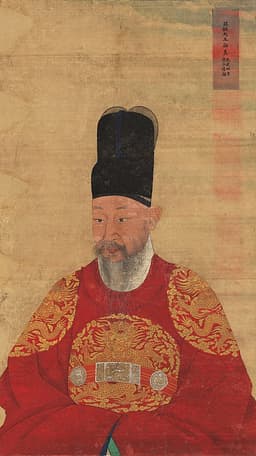
Yeongjo of Joseon
Emperor · Modern
58.0Total
Basic Information
Born
1768
1694
Died
1844
1776
Era
Modern
Modern
Nationality
Spain
Korea
Occupation
Emperor
Emperor
Civilization
Western
Eastern
Score Comparison
Military (10%)
14.9
21.2
Political (20%)
33.6
82.0
Influence (20%)
50.2
61.0
Legacy (20%)
38.3
56.0
Leadership (15%)
48.4
75.0
Strategy (15%)
54.3
30.3
TOTAL
41.3
58.0
Joseph Bonaparte — Complete Timeline
1808 AD
Battle of BailénWar◆ Major
Spanish forces defeated a French army at Bail
Peninsular WarBattleDefeat
Impact: regional
Promulgation of the Bayonne ConstitutionReform◆ Major
Joseph Bonaparte issued the Bayonne Constitution, a liberal charter that introduced reforms such as freedom of the press and abolition of the Inquisition. The constitution was rejected by most Spaniards as imposed by a foreign ruler.
ConstitutionReformNapoleonic Wars
Impact: nationalconstructive
Appointment as King of SpainPolitical Action◆ Major
Napoleon appointed his brother Joseph as King of Spain after the abdication of Charles IV and Ferdinand VII. Joseph's rule was opposed by the Spanish populace and led to the Peninsular War.
Napoleonic WarsMonarchyOccupation
Impact: nationaldestructive
1813 AD
Abdication and exilePolitical Action
After the French defeat at the Battle of Vitoria, Joseph Bonaparte abdicated the Spanish throne and fled to France. He later lived in exile in the United States and Italy, never regaining power.
AbdicationExilePeninsular War
Impact: nationaltragic
Yeongjo of Joseon — Complete Timeline
1725 AD
Tangpyeong Policy (Impartiality Policy)Reform◆ Major
Yeongjo implemented the Tangpyeong policy to reduce factional strife by appointing officials from all factions. He banned factional labels and promoted merit-based appointments. This stabilized the court but did not eliminate factionalism entirely.
Political ReformFactionalismAdministration
Impact: nationalconstructive
1750 AD
Tax Reform: Gyunyeokbeop (Equal Service Law)Reform◆ Major
Yeongjo introduced the Gyunyeokbeop, a uniform military tax that replaced various service obligations with a cloth tax. This reduced the burden on commoners and increased state revenue, though it faced opposition from the aristocracy.
Tax ReformMilitaryEconomy
Impact: nationalconstructive
1762 AD
Imprisonment of Crown Prince Sado in a Rice ChestPolitical Action
King Yeongjo ordered his son Crown Prince Sado to be locked inside a rice chest for eight days, leading to his death by starvation. Sado had been accused of mental illness and violent behavior. This event traumatized the court and led to Jeongjo's later reforms.
Royal FamilyTragedySuccession
Impact: nationaltragic
1776 AD
Longest Reign in Joseon HistoryOther◆ Major
Yeongjo reigned for 52 years (1724-1776), the longest of any Joseon king. His reign saw cultural flourishing, economic stability, and political reforms, but also the tragic death of his son. He died at age 81, leaving a mixed legacy.
LongevityLegacyReign
Impact: national
Expert Analysis
Origins
Joseph Bonaparte was born on January 7, 1768, in Corte, Corsica, to Carlo Bonaparte and Letizia Ramolino. As the elder brother of Napoleon, Joseph studied law in Pisa and initially pursued a diplomatic career. He served as a diplomat for the French Republic, negotiating treaties and representing French interests. His early life was marked by his role as a supportive sibling to Napoleon, but he lacked the military ambition and strategic brilliance that defined his brother.
Yeongjo of Joseon, born on October 31, 1694, in Seoul, was the second son of King Sukjong and Queen Inhyeon. He received a rigorous Confucian education, which shaped his philosophical and political outlook. His early life was fraught with palace intrigue, as his mother was deposed and reinstated multiple times. This environment made him cautious and deeply aware of the dangers of factionalism.
Rise to Power
Joseph Bonaparte's rise was entirely dependent on his brother Napoleon. In 1806, Napoleon made Joseph King of Naples, where he ruled for two years and introduced some reforms. In 1808, after the abdication of Charles IV and Ferdinand VII, Napoleon appointed Joseph as King of Spain. Joseph's claim was contested, sparking the Peninsular War. His arrival in Madrid was met with popular resistance, and he struggled to establish authority.
Yeongjo ascended the throne in 1724 after his half-brother Gyeongjong died without an heir. His succession was smooth due to his political acumen and the support of the Noron faction. Immediately, he faced deep factional divisions that had plagued Joseon for decades. He consolidated power by promoting the Tangpyeong policy, which aimed to balance appointments from rival factions.
Leadership & Governance
Joseph Bonaparte's leadership in Spain was ineffective. He promulgated the Bayonne Constitution in 1808, which introduced liberal reforms like freedom of the press and abolition of the Inquisition. However, these reforms were imposed by a foreign power and widely rejected. Joseph lacked the military strength to enforce his rule; his governance relied on French armies, which were often defeated. His political score of 33.6 reflects his inability to gain legitimacy.
Yeongjo's governance was highly effective, reflected in his political score of 82.0. He implemented the Gyunyeokbeop (Equal Service Law) in 1750, replacing various military service obligations with a uniform cloth tax, reducing burdens on commoners. He also reformed the tax system and promoted education. His Tangpyeong policy reduced factional strife by appointing officials from all factions. His leadership score of 75.0 underscores his ability to maintain stability and reform.
Triumph & Tragedy
Joseph's greatest triumph was briefly ruling as King of Naples, where he abolished feudalism and reformed the legal system. However, his tenure as King of Spain was a disaster. The Battle of Bailén in 1808 was the first major French defeat, forcing him to flee Madrid. His abdication in 1813 after Vitoria marked the end of his reign. He died in exile in Florence in 1844, largely forgotten.
Yeongjo's greatest triumph was his 52-year reign, the longest in Joseon history, marked by economic stability and cultural flourishing. He successfully implemented reforms that benefited the common people. However, his tragedy was the execution of his son, Crown Prince Sado, whom he imprisoned in a rice chest in 1762. This act, driven by Sado's mental illness and Yeongjo's inflexible Confucian principles, remains a dark stain on his legacy.
Character & Destiny
Joseph Bonaparte was a capable administrator but lacked the ruthlessness and ambition needed to rule in turbulent times. He was overshadowed by Napoleon and unable to assert independence. His character as a peacemaker and reformer was ill-suited to the violent realities of the Peninsular War. His destiny was to be a pawn in Napoleon's empire.
Yeongjo was a stern, principled, and meticulous ruler. His Confucian upbringing made him prioritize order and filial piety, yet his decision to kill his son reveals a rigid adherence to duty over emotion. His character shaped a reign of stability but also of personal tragedy. Historians note his political skill but censure his cruelty.
Legacy
Joseph Bonaparte's legacy is minimal. He is remembered as a footnote in the Napoleonic Wars, a king who never truly ruled. His scores reflect this: influence 50.2, legacy 38.3. The Bayonne Constitution influenced later Spanish liberalism, but his reign is mostly a cautionary tale of imposed rule.
Yeongjo's legacy is profound. His reforms modernized Joseon's economy and governance. The Tangpyeong policy and tax reforms set precedents for later kings. He is revered as a sage king in Korea, despite the Sado incident. His scores: influence 61.0, legacy 56.0, total 58.0. His reign is studied as a model of Confucian governance.
Conclusion
Yeongjo of Joseon had a greater impact than Joseph Bonaparte. With a total score of 58.0 versus Joseph's 41.3, Yeongjo's effective governance, long reign, and lasting reforms outweigh Joseph's failed kingship. While Joseph's liberal constitution was progressive, it failed due to lack of support. Yeongjo's policies shaped Korean society for centuries. Therefore, Yeongjo is the more significant historical figure.
Rankings
🥇
Yeongjo of JoseonLeader
Mil: 21.2Pol: 82.0Inf: 61.0
58.0
🥈
Joseph Bonaparte
Mil: 14.9Pol: 33.6Inf: 50.2
41.3
+16.7 behind
How This Comparison Works
Algorithm
Each figure is scored on 6 dimensions (0—100 scale) based on structured historical data: Military (10%), Political (20%), Influence (20%), Legacy (20%), Leadership (15%), Strategy (15%). The weighted total produces the final ranking.
Data Sources
Scores are computed from structured sub-indicators in the database. Scale factors adjust for era (Ancient ×0.85, Modern ×1.0) and civilization size (Eastern ×1.05, Other ×0.80) to account for differences in population and military scale.
Maximum 3 Figures
Comparisons are limited to 2—3 figures to ensure readability and statistical meaningfulness.
Error Margins
±5 points per dimension — Sub-scores are derived from historical records with inherent uncertainty. Two figures within 5 points on a dimension should be considered roughly equivalent in that area.
Total Score Accuracy
±3 points overall — The weighted combination of 6 dimensions produces a total score with approximately ±3 points of uncertainty. Differences of less than 3 points are not statistically significant— the figures are effectively tied.
Known Limitations
- Historical records are incomplete and uneven across civilizations
- Figures from oral-tradition societies may be underrepresented
- Occupation labels can misclassify multi-role figures
- Scores measure capability and impact, not moral character
- Quantitative scoring is a comparison tool, not absolute truth
Capability Radar
Military (10%) — Battles & Warfare
Battles
10
10
Win Rate
5
10
Expansion
5
10
Political (20%) — Governance & Reform
Reform
20
85
Diplomacy
20
70
Economy
15
80
Influence (20%) — Cultural & Global Reach
Cultural
15
65
Global
15
40
Legacy (20%) — Historical Impact
Historical
20
70
Longevity
10
60
Leadership (15%) — Power & Stability
Tenure
30
90
Stability
10
75
Strategy (15%) — Tactics & Innovation
Strategy
5
10
Tactics
5
10
Reform
5
20
Similar Comparisons
Comments & Discussion
No comments yet. Be the first to share your thoughts!