Loading...
Wedem Arad vs Wu Zetian
Wu Zetian leads by 21.5 pts · 2 figures compared
…
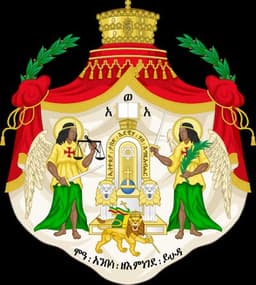
Wedem Arad
Emperor · Medieval
48.5Total

Wu Zetian
Emperor · Medieval
70.0Total
Basic Information
Born
1270
624
Died
1314
705
Era
Medieval
Medieval
Nationality
Ethiopia
China
Occupation
Emperor
Emperor
Civilization
Other
Eastern
Score Comparison
Military (10%)
50.0
60.0
Political (20%)
35.1
62.7
Influence (20%)
58.0
65.0
Legacy (20%)
45.8
80.0
Leadership (15%)
55.3
78.0
Strategy (15%)
39.6
66.3
TOTAL
48.5
70.0
Wedem Arad — Complete Timeline
1306 AD
First Contact with EuropePolitical Action◆ Major
Wedem Arad sent an embassy to Europe, likely to the court of Pope Clement V in Avignon. This was the first recorded diplomatic contact between Ethiopia and a European power since antiquity, establishing a precedent for future Ethiopian-European relations.
Impact: regional
Wu Zetian — Complete Timeline
655 AD
Became Empress ConsortPolitical Action◆ Major
Wu Zetian was elevated from concubine to empress consort of Emperor Gaozong of Tang in 655. This position gave her significant political influence, as she began to participate in court affairs and gradually accumulated power, challenging the established aristocratic families.
Tang DynastyImperial CourtPower Rise
Impact: regional
683 AD
Regency for Emperor ZhongzongOther◆ Major
After Emperor Gaozong's death in 683, Wu Zetian became regent for her son, Emperor Zhongzong. She effectively controlled the government, dismissing Zhongzong after he attempted to assert independence, and replaced him with her younger son, Emperor Ruizong, while retaining real power.
Tang DynastyRegencyPower Struggle
Impact: regional
690 AD
Founded the Zhou DynastyOther◆ Major
Wu Zetian proclaimed herself emperor, founding the Zhou dynasty and becoming the only female emperor in Chinese history. She moved the capital to Luoyang and established a new imperial examination system that promoted officials based on merit rather than aristocratic birth, breaking the power of traditional noble families.
Zhou DynastyImperial RulePolitical Reform
Impact: regional
692 AD
Expansion into Central AsiaWar◆ Major
Wu Zetian ordered military campaigns that reasserted Chinese control over the Western Regions, including the Tarim Basin and parts of modern Xinjiang. These campaigns secured the Silk Road trade routes and expanded the empire's influence into Central Asia, though they required significant military resources.
Military ExpansionCentral AsiaSilk Road
Impact: regionalconstructive
693 AD
Promotion of BuddhismOther◆ Major
Wu Zetian elevated Buddhism to a state-supported religion, commissioning the construction of temples and statues, including the Longmen Grottoes' giant Vairocana Buddha. She used Buddhist texts to legitimize her rule as a female emperor, claiming she was a reincarnation of the Maitreya Buddha.
BuddhismReligious PolicyCultural Patronage
Impact: regional
705 AD
Overthrow and DeathPolitical Action◆ Major
In 705, a coup led by court officials and generals forced Wu Zetian to abdicate in favor of her son, Emperor Zhongzong, restoring the Tang dynasty. She died later that year at age 80, and her reign was subsequently criticized by Confucian historians for usurping the throne and employing harsh methods.
Tang DynastyCoupAbdication
Impact: regionaldestructive
Expert Analysis
Wu Zetian vs Wedem Arad
# The Throne and the Embassy
On a spring morning in 690, a sixty-six-year-old woman ascended a golden platform in Luoyang, China, as tens of thousands of officials and monks prostrated themselves before her. She was Wu Zhao, former concubine of two emperors, and she had just declared herself emperor—the only woman in Chinese history to rule in her own name. Half a world away and six centuries later, in the highlands of Ethiopia, another ruler sat on a stone throne in the ancient city of Lalibela. Wedem Arad, Emperor of Ethiopia, had a different ambition: not to seize power through blood and intrigue, but to reach across the known world and make his kingdom known to distant Europe. One sought to dominate the center of civilization; the other sought to emerge from its edge. Their stories, though separated by time and distance, reveal how power, personality, and opportunity shaped two very different imperial destinies.
Origins
Wu Zetian was born in 624 into a wealthy but politically marginal family. Her father was a timber merchant who had helped the founding Tang emperor, and though the family had money, they lacked aristocratic pedigree. This ambiguity would haunt and fuel her. In the rigid hierarchy of Tang China, a woman's path was narrow: marriage, motherhood, and silence. But Wu Zetian possessed a fierce intellect and an iron will, traits that would prove dangerous in a world that expected women to be ornamental.
Wedem Arad was born around 1270 into the Solomonic dynasty of Ethiopia, a lineage that claimed descent from the biblical King Solomon and the Queen of Sheba. Unlike Wu, he inherited legitimacy. His world was the Ethiopian highlands, a Christian kingdom surrounded by Muslim sultanates and pagan tribes. The Solomonic emperors ruled from rock-hewn churches and mobile courts, their authority rooted in religion and tradition. Wedem Arad's challenge was not to seize power but to preserve and expand it in a region where survival meant isolation—or connection.
Rise to Power
Wu Zetian entered the imperial palace at age fourteen as a low-ranking concubine of Emperor Taizong. For twelve years she served in obscurity, learning the deadly arts of court politics. When Taizong died, she was sent to a Buddhist convent—the fate of childless concubines. But she had already caught the eye of Taizong's son, the new emperor Gaozong. Through a combination of intelligence, ruthlessness, and sheer audacity, she returned to court, bore Gaozong sons, and systematically eliminated her rivals. By 660, she was effectively co-ruler, and after Gaozong's death, she ruled through puppet sons until she finally took the throne herself in 690.
Wedem Arad's rise was quieter. He inherited the throne from his father, Yekuno Amlak, who had restored the Solomonic dynasty. His reign was one of consolidation, not revolution. The key event of his rule came in 1306, when he sent an embassy to Europe. This was the first recorded diplomatic contact between Ethiopia and the West. The embassy traveled to Avignon, France, where Pope Clement V received them. Wedem Arad's letter proposed an alliance against Muslim powers and expressed interest in Christian unity. It was a bold move for a king whose kingdom was virtually unknown in Europe.
Leadership & Governance
Wu Zetian ruled with a combination of terror and meritocracy. She expanded the civil service examination system, allowing talented commoners to rise to high office—a radical break from the aristocratic favoritism of earlier Tang rulers. She promoted Buddhism to legitimize her rule, commissioning grand temples and statues. Yet she also employed a secret police network and executed thousands of opponents, including her own children. Her military campaigns expanded the empire into Central Asia, but her scores in military strategy—65.6—reflect a ruler who relied more on political manipulation than battlefield genius.
Wedem Arad governed a kingdom that was smaller, poorer, and more fragile. His political score of 44.3 and military score of 24.0 suggest a ruler who managed rather than conquered. Ethiopia's strength lay in its geography—mountain fortresses that repelled invaders—and its deep Christian identity. Wedem Arad's embassy was his most significant act of governance: an attempt to break the kingdom's isolation and secure allies. It failed to produce lasting results, but it planted a seed. For the first time, Europe knew Ethiopia existed, and Ethiopia knew Europe was watching.
Triumph & Tragedy
Wu Zetian's greatest triumph was her survival and reign. She ruled for fifteen years as emperor, a feat that defied every expectation of her era. Her greatest tragedy was the emptiness of her victory. She died in 705 at age eighty-one, forced to abdicate after a coup. Her Zhou dynasty was abolished, and the Tang dynasty restored. Her legacy was contested for centuries: some praised her as a brilliant ruler, others condemned her as a usurper and murderer.
Wedem Arad's triumph was the embassy of 1306. It was a diplomatic masterstroke that put Ethiopia on the map of European consciousness. His tragedy was that the embassy bore no immediate fruit. The Pope was preoccupied with the Avignon Papacy and the Crusades; Ethiopia remained isolated. Wedem Arad died in 1314, his kingdom as unknown as before. His legacy score of 57.8 reflects a ruler who opened a door that would not be fully opened for another two centuries.
Character & Destiny
Wu Zetian's character was forged in the crucible of a patriarchal empire. She was ruthless, brilliant, and paranoid. She trusted no one, not even her own children. Her decisions were driven by a will to power that bordered on obsession. She could not afford to be gentle; in her world, mercy was weakness and weakness was death. Her destiny was to break the mold, but the mold shattered her.
Wedem Arad's character is harder to discern. He was likely a man of vision and patience, willing to reach across the world for a future he would not live to see. His embassy was a gamble, a long shot. He did not conquer or reform; he reached out. In a world of empires and violence, his quiet diplomacy seems almost modern. His destiny was to be forgotten by all but historians—until the next Ethiopian emperor, Zara Yaqob, would renew the contact.
Legacy
Wu Zetian's legacy is immense. She is remembered as the only female emperor of China, a figure of both awe and revulsion. Her influence score of 70.9 and legacy score of 85.0 reflect her enduring impact on Chinese history and culture. She proved that a woman could rule, and her meritocratic reforms shaped Chinese governance for centuries. Yet she also embodied the darkness of absolute power.
Wedem Arad's legacy is smaller but significant. His embassy was the first thread in a tapestry that would eventually connect Ethiopia to Europe. It paved the way for later missions and the myth of Prester John, the legendary Christian king. His legacy score of 57.8 reflects a ruler who mattered more for what he started than what he achieved.
Conclusion
Wu Zetian and Wedem Arad ruled in different worlds, faced different challenges, and left different marks. One seized power through blood and cunning; the other sought connection through diplomacy and patience. One shattered a ceiling; the other opened a door. Their stories remind us that leadership is not a single path but a thousand. The empress who climbed the golden platform and the emperor who sent a letter across the world both understood something fundamental: power is not given. It is taken, or it is asked for, but it is never just received. And in the end, history remembers both the conquerors and the messengers.
Rankings
🥇
Wu ZetianLeader
Mil: 60.0Pol: 62.7Inf: 65.0
70.0
🥈
Wedem Arad
Mil: 50.0Pol: 35.1Inf: 58.0
48.5
+21.5 behind
How This Comparison Works
Algorithm
Each figure is scored on 6 dimensions (0—100 scale) based on structured historical data: Military (10%), Political (20%), Influence (20%), Legacy (20%), Leadership (15%), Strategy (15%). The weighted total produces the final ranking.
Data Sources
Scores are computed from structured sub-indicators in the database. Scale factors adjust for era (Ancient ×0.85, Modern ×1.0) and civilization size (Eastern ×1.05, Other ×0.80) to account for differences in population and military scale.
Maximum 3 Figures
Comparisons are limited to 2—3 figures to ensure readability and statistical meaningfulness.
Error Margins
±5 points per dimension — Sub-scores are derived from historical records with inherent uncertainty. Two figures within 5 points on a dimension should be considered roughly equivalent in that area.
Total Score Accuracy
±3 points overall — The weighted combination of 6 dimensions produces a total score with approximately ±3 points of uncertainty. Differences of less than 3 points are not statistically significant— the figures are effectively tied.
Known Limitations
- Historical records are incomplete and uneven across civilizations
- Figures from oral-tradition societies may be underrepresented
- Occupation labels can misclassify multi-role figures
- Scores measure capability and impact, not moral character
- Quantitative scoring is a comparison tool, not absolute truth
Capability Radar
Military (10%) — Battles & Warfare
Battles
15
65
Win Rate
20
70
Expansion
10
75
Political (20%) — Governance & Reform
Reform
20
85
Diplomacy
55
80
Economy
15
85
Influence (20%) — Cultural & Global Reach
Cultural
20
85
Global
40
70
Legacy (20%) — Historical Impact
Historical
35
90
Longevity
30
85
Leadership (15%) — Power & Stability
Tenure
40
90
Stability
30
75
Strategy (15%) — Tactics & Innovation
Strategy
10
75
Tactics
10
60
Reform
5
80
Similar Comparisons
Comments & Discussion
CrimsonScroll6/16/2026
Wu Zetian gets too much credit as some "feminist icon." She was a ruthless tyrant who elevated yes-men like the monk Xue Huaiyi through sycophancy while purging the Confucian scholar-officials. Her "government of talent" was a myth—she just swapped old power for new cronies. Real power comes from institutions, not personality cults.
铁血书院6/16/2026
拿武则天和沃德姆·阿拉德比,简直是关公战秦琼。一个玩的是中原王朝的内卷权谋,靠告密和酷吏维持统治;另一个玩的是非洲高地的小王国生存外交。别扯什么“女性统治”的光环,她那些所谓政绩,比如设立铜匦,说白了就是特务监控,比现在某些国家还狠。
RedDawnRider6/16/2026
Tell me you don't understand Ethiopian history without telling me. Wedem Arad's reign isn't about some noble "emerging from the edge" narrative—it's about praying the Muslims don't sack your kingdom while you're stuck carving churches out of rock. His embassy to Europe? Desperation, not diplomacy. Meanwhile Wu was building a bureaucracy that lasted centuries. Different leagues entirely.
史海钩沉6/16/2026
作为《新唐书》读者,我站武则天。她至少留下了「政启开元,治宏贞观」的遗产,而沃德姆·阿拉德有什么?一个基本没存在感的国王,连他具体的治国制度都查不到。历史记住的是能影响千万人的变革者,不是派了个代表团去欧洲求援的边缘君主。现实点吧,兄弟。