Loading...
Kublai Khan vs Wedem Arad
Kublai Khan leads by 25.8 pts · 2 figures compared
…
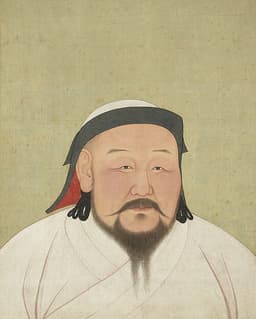
Kublai Khan
Emperor · Medieval
74.3Total
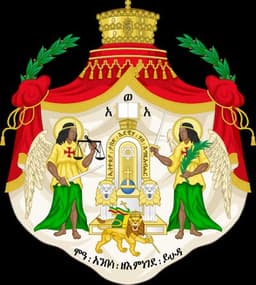
Wedem Arad
Emperor · Medieval
48.5Total
Basic Information
Born
1215
1270
Died
1294
1314
Era
Medieval
Medieval
Nationality
Mongolia
Ethiopia
Occupation
Emperor
Emperor
Civilization
Eastern
Other
Score Comparison
Military (10%)
77.5
50.0
Political (20%)
79.2
35.1
Influence (20%)
75.0
58.0
Legacy (20%)
70.0
45.8
Leadership (15%)
72.0
55.3
Strategy (15%)
76.0
39.6
TOTAL
74.3
48.5
Kublai Khan — Complete Timeline
1260 AD
Adoption of Tibetan Buddhism as State ReligionCultural◆ Major
Kublai Khan appointed the Tibetan lama Drog
Tibetan BuddhismReligionMongol-Tibet Relations
Impact: regional
1271 AD
Proclamation of the Yuan DynastyPolitical Action◆ Major
Kublai Khan officially proclaimed the Yuan dynasty, adopting a Chinese-style dynastic name. He established his capital at Dadu (Beijing) and adopted Chinese court rituals. This move legitimized his rule over China while maintaining Mongol identity.
Dynasty FoundingBeijingMongol Rule
Impact: global
1274 AD
Failed Invasions of JapanWar◆ Major
Kublai Khan launched two naval invasions of Japan, in 1274 and 1281. Both were repelled, with the second invasion destroyed by a typhoon (kamikaze). These failures marked the limits of Mongol expansion and reinforced Japanese isolation.
Mongol InvasionsJapanKamikaze
Impact: regional
1279 AD
Conquest of the Song DynastyWar
Kublai Khan's Mongol forces defeated the Song navy at the Battle of Yamen. The last Song emperor drowned, ending the Song dynasty. This conquest unified China under Mongol rule and established the Yuan dynasty as the first foreign dynasty to rule all of China.
Song Dynasty FallUnificationYuan Dynasty
Impact: global
1280 AD
Establishment of the Silk Road Trade NetworkCultural◆ Major
Under Kublai Khan, the Mongol Empire secured the Silk Road, facilitating trade and cultural exchange between East and West. Marco Polo visited his court. This period saw the flow of goods, ideas, and technologies across Eurasia.
Silk RoadTradeCultural Exchange
Impact: globalconstructive
Wedem Arad — Complete Timeline
1306 AD
First Contact with EuropePolitical Action◆ Major
Wedem Arad sent an embassy to Europe, likely to the court of Pope Clement V in Avignon. This was the first recorded diplomatic contact between Ethiopia and a European power since antiquity, establishing a precedent for future Ethiopian-European relations.
Impact: regional
Expert Analysis
Kublai Khan vs Wedem Arad
# The Emperor and the Envoy: Kublai Khan, Wedem Arad, and the Divergent Paths of Medieval Power
Picture two men, both emperors, both born into worlds of horsemen and ancient faiths, yet separated by half a world and an ocean of difference. In the winter of 1274, Kublai Khan, the Mongol ruler of China, watched his armada of hundreds of ships sail toward the shores of Japan, a fleet so vast it seemed to blot out the horizon. Thirty years later, in 1306, a far smaller vessel carried an Ethiopian embassy across the Mediterranean, bearing letters to a pope in Avignon. One emperor sought to conquer; the other, simply to be known. Their stories, unfolding in the same century, reveal how geography, opportunity, and character can steer a ruler’s legacy toward triumph or obscurity.
Origins
Kublai Khan was born in 1215 into the violent whirlwind of the Mongol conquests. His grandfather, Genghis Khan, had forged an empire from the steppes, and Kublai inherited both the bloodline and the burden of that legacy. Raised among warriors who measured power in horses and arrows, he also absorbed the sophisticated cultures of China, learning to read Chinese texts and appreciate the arts of governance. The Mongol Empire was a machine of war, but Kublai understood early that ruling required more than cavalry.
Wedem Arad, born around 1270, came from a different world. Ethiopia was a Christian kingdom carved into the highlands of East Africa, surrounded by Muslim sultanates and isolated by deserts and seas. His ancestors traced their lineage to the Solomonic dynasty, claiming descent from the biblical King Solomon and the Queen of Sheba. Where Kublai’s inheritance was expansion, Wedem Arad’s was survival. Ethiopia had been a Christian outpost for centuries, often besieged, rarely understood by the outside world.
Rise to Power
Kublai’s path to power was a brutal contest of brothers. After Genghis’s death, the Mongol Empire fractured into rival khanates, and Kublai spent years fighting his younger brother, Ariq Böke, for the title of Great Khan. In 1260, he emerged victorious, but the empire was never again unified. That same year, Kublai made a fateful decision: he adopted Tibetan Buddhism as the state religion, appointing the lama Drogön Chögyal Phagpa as his imperial preceptor. It was a political move, binding Tibet to his rule, but it also signaled a shift from the shamanistic roots of the Mongols toward a more universal faith.
Wedem Arad’s rise is less documented, but it followed the pattern of Ethiopian succession—a struggle among princes, often resolved by the church and the nobility. He became emperor in the late 13th century, inheriting a kingdom that was stable but isolated. His great ambition was not to conquer but to connect.
Leadership & Governance
Kublai Khan was a ruler of grand visions. In 1271, he proclaimed the Yuan Dynasty, adopting a Chinese-style name and moving his capital to what is now Beijing. He built a new city, Dadu, with wide avenues and canals, and he staffed his court with Chinese scholars, Muslim engineers, and Tibetan monks. His military campaigns were staggering: in 1279, his forces crushed the Song Dynasty at the Battle of Yamen, where the last Song emperor drowned. For the first time in centuries, all of China was united under one ruler—but that ruler was a Mongol.
Yet Kublai’s leadership was also flawed. His invasions of Japan in 1274 and 1281 were disasters, the second fleet destroyed by a typhoon—the *kamikaze*, or “divine wind,” as the Japanese called it. He poured resources into campaigns against Vietnam, Burma, and Java, often with little gain. His political wisdom was real but bounded by his Mongol instincts: he trusted his own family above all, and the Yuan Dynasty remained a foreign occupation in Chinese eyes.
Wedem Arad governed on a smaller scale, but with a different kind of shrewdness. Ethiopia’s strength lay in its mountains and its faith. He maintained the kingdom’s independence through diplomacy and careful alliances, avoiding the costly wars that drained Kublai’s treasury. His most notable act was sending an embassy to Europe in 1306, likely to the court of Pope Clement V in Avignon. This was the first recorded diplomatic contact between Ethiopia and Europe—a tentative handshake across a vast divide.
Triumph & Tragedy
Kublai’s greatest triumph was the conquest of the Song, a campaign that required years of siege, naval battles, and the integration of Chinese technology, including gunpowder. His greatest tragedy was the failure of the Japanese invasions, which cost tens of thousands of lives and shattered the myth of Mongol invincibility. The Silk Road trade network he established in 1280 was a triumph of another kind—a corridor of commerce that linked China to Persia and Europe, carrying silk, spices, and ideas. But it also spread the plague.
Wedem Arad’s embassy to Europe was a modest success. It opened a channel of communication that would later be used by Portuguese explorers and missionaries. Yet it also revealed Ethiopia’s vulnerability: the kingdom was so remote that even the pope could not offer meaningful aid. Wedem Arad died in 1314, his reign remembered more for its gesture than its grandeur.
Character & Destiny
Kublai Khan was a man of contradictions. He was a conqueror who loved Chinese poetry, a Mongol who built cities, a Buddhist who tolerated Christians and Muslims. His character was shaped by the tension between his steppe heritage and his imperial ambitions. That tension drove him to overreach—to try to subdue Japan, to rule the world. It also made him a patron of Marco Polo, whose tales of Kublai’s court dazzled Europe.
Wedem Arad was a quieter figure. His decisions were shaped by isolation, not ambition. He reached out to Europe because he needed allies, not because he wanted to dominate. His destiny was to be a footnote in history, a name known only to specialists.
Legacy
Kublai Khan’s legacy is immense. He founded a dynasty that lasted nearly a century, unified China, and left a mark on trade, religion, and culture. He is remembered as both a builder and a destroyer, a figure of awe and ambivalence. The Yuan Dynasty fell in 1368, but the Silk Road he secured changed the world.
Wedem Arad’s legacy is smaller but not insignificant. His embassy paved the way for later Ethiopian-European relations, and his reign is a reminder that history is not only made by conquerors. In a century of empires, he chose to reach out rather than to strike.
Conclusion
Two emperors, two worlds. Kublai Khan rode the crest of Mongol power, building an empire that stretched from Korea to Hungary. Wedem Arad stood at the edge of that world, sending a single ship into the unknown. One is remembered for his armies, the other for his embassy. Their stories remind us that greatness is not always measured in conquest, and that even the smallest gesture can echo across centuries. In the end, both men sought something beyond their borders—one for dominion, the other for connection. History, as always, chose which to remember.
Rankings
🥇
Kublai KhanLeader
Mil: 77.5Pol: 79.2Inf: 75.0
74.3
🥈
Wedem Arad
Mil: 50.0Pol: 35.1Inf: 58.0
48.5
+25.8 behind
How This Comparison Works
Algorithm
Each figure is scored on 6 dimensions (0—100 scale) based on structured historical data: Military (10%), Political (20%), Influence (20%), Legacy (20%), Leadership (15%), Strategy (15%). The weighted total produces the final ranking.
Data Sources
Scores are computed from structured sub-indicators in the database. Scale factors adjust for era (Ancient ×0.85, Modern ×1.0) and civilization size (Eastern ×1.05, Other ×0.80) to account for differences in population and military scale.
Maximum 3 Figures
Comparisons are limited to 2—3 figures to ensure readability and statistical meaningfulness.
Error Margins
±5 points per dimension — Sub-scores are derived from historical records with inherent uncertainty. Two figures within 5 points on a dimension should be considered roughly equivalent in that area.
Total Score Accuracy
±3 points overall — The weighted combination of 6 dimensions produces a total score with approximately ±3 points of uncertainty. Differences of less than 3 points are not statistically significant— the figures are effectively tied.
Known Limitations
- Historical records are incomplete and uneven across civilizations
- Figures from oral-tradition societies may be underrepresented
- Occupation labels can misclassify multi-role figures
- Scores measure capability and impact, not moral character
- Quantitative scoring is a comparison tool, not absolute truth
Capability Radar
Military (10%) — Battles & Warfare
Battles
95
15
Win Rate
90
20
Expansion
95
10
Political (20%) — Governance & Reform
Reform
88
20
Diplomacy
85
55
Economy
90
15
Influence (20%) — Cultural & Global Reach
Cultural
85
20
Global
85
40
Legacy (20%) — Historical Impact
Historical
90
35
Longevity
80
30
Leadership (15%) — Power & Stability
Tenure
90
40
Stability
80
30
Strategy (15%) — Tactics & Innovation
Strategy
92
10
Tactics
85
10
Reform
88
5
Similar Comparisons
Comments & Discussion
Khan's Cost-Benefit Analyst6/16/2026
Kublai Khan launched TWO invasions of Japan, each involving 140,000+ men and 4,000+ ships. That’s overkill for an island whose annual rice harvest couldn't feed a tenth of that army. Meanwhile, Wedem Arad sent 30 diplomats to Europe and got Catholic trade access. Which emperor understood logistics better? Hint: it's not the one who lost half his fleet to a typhoon. Medieval military planners would call Kublai's approach “spectacularly inefficient.”
沙漠之书6/16/2026
说库布烈是“世界征服者”?拜托,他连高棉和缅甸都啃不动。历史课本总吹他打通丝绸之路,但Wedem Arad派出的三十人使团就换来了欧洲地图上第一次出现“埃塞俄比亚”的名字。一个靠血腥骑兵扩张,一个靠文化外交破局。今天谁的名字还印在教科书里?两人都。但谁的故事更聪明?那个不需要登陆日本的人。
Byzantine Data Broker6/16/2026
Let’s talk numbers in context. Kublai’s Yuan dynasty census recorded roughly 60 million subjects; Wedem Arad’s Ethiopia likely had 3-5 million. Per capita, the Ethiopian emperor spent far more on diplomacy relative to GDP—a single embassy to Avignon cost maybe 20,000 gold bezants total, while Kublai’s second Japanese invasion burned through 9 million silver taels. Who got better ROI? The one who didn't bet the treasury on typhoon dice rolls.
埃塞俄比亚守门人6/16/2026
别忘了一个细节:Wedem Arad在1306年派出的使团,随身携带了一份埃塞俄比亚语的《圣经》译本和一座耶路撒冷圣墓教堂的模型。这不是炫耀武力,而是在展示文明的高度。而库布烈呢?他派去罗马的景教徒使者,半路就被人当间谍砍了。两个帝国都想和西方对话,但一个带着礼物,一个带着刀。历史记住了刀,但我选择记住那本手抄圣经。
Eurasian Geography Troll6/16/2026
People keep comparing them as 'emperors,' but they ruled fundamentally different types of states. Kublai governed the largest contiguous land empire in history, connected by steppe highways where you could ride from Karakorum to Kiev. Wedem Arad ruled a highland fortress kingdom walled off by the Ethiopian Escarpment—two weeks to reach the Red Sea coast, on a good day. Kublai's problems were supply lines and rebellions; Wedem Arad's was simply being known to exist. Different games, different goa