Loading...
Napoleon Bonaparte vs Wedem Arad
Napoleon Bonaparte leads by 22.4 pts · 2 figures compared
…

Napoleon Bonaparte
General · Modern
70.9Total
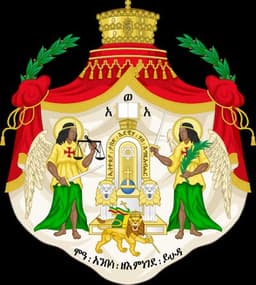
Wedem Arad
Emperor · Medieval
48.5Total
Basic Information
Born
1769
1270
Died
1821
1314
Era
Modern
Medieval
Nationality
France
Ethiopia
Occupation
General
Emperor
Civilization
Western
Other
Score Comparison
Military (10%)
94.0
50.0
Political (20%)
72.0
35.1
Influence (20%)
40.0
58.0
Legacy (20%)
80.0
45.8
Leadership (15%)
78.0
55.3
Strategy (15%)
90.0
39.6
TOTAL
70.9
48.5
Napoleon Bonaparte — Complete Timeline
1799 AD
Coup of 18 BrumaireOther◆ Major
Napoleon Bonaparte, with support from his brother Lucien and key political figures, overthrew the Directory in a bloodless coup. He established the Consulate with himself as First Consul, effectively becoming the ruler of France. This event ended the French Revolution's most unstable period.
French RevolutionCoupRise to Power
Impact: regional
1804 AD
Promulgation of the Napoleonic CodeOther◆ Major
Napoleon enacted the Civil Code of the French, known as the Napoleonic Code, a comprehensive set of laws that replaced the fragmented feudal legal systems. The code established legal equality, protected property rights, and secularized law. It became the basis for legal systems in many European and world countries.
Legal ReformNapoleonic CodeCivil Law
Impact: globalconstructive
1805 AD
Battle of AusterlitzWar◆ Major
Napoleon's Grande Arm
Napoleonic WarsBattleDecisive Victory
Impact: global
1812 AD
Invasion of RussiaWar◆ Major
Napoleon led the Grande Arm
Napoleonic WarsInvasionDisaster
Impact: globaldestructive
1815 AD
Battle of WaterlooWar◆ Major
Napoleon's French army was defeated by the combined forces of the Duke of Wellington's Anglo-Allied army and Gebhard Leberecht von Bl
Napoleonic WarsBattleFinal Defeat
Impact: globaldestructive
Wedem Arad — Complete Timeline
1306 AD
First Contact with EuropePolitical Action◆ Major
Wedem Arad sent an embassy to Europe, likely to the court of Pope Clement V in Avignon. This was the first recorded diplomatic contact between Ethiopia and a European power since antiquity, establishing a precedent for future Ethiopian-European relations.
Impact: regional
Expert Analysis
Napoleon Bonaparte vs Wedem Arad
# The Emperor and the Envoy
In the year 1306, while Europe was still recovering from the Crusades and the papacy had fled to Avignon, a remarkable letter arrived. It came from a land so distant and mysterious that most Europeans believed it was the realm of the legendary Prester John—a Christian king who might save Christendom from its enemies. The letter was from Wedem Arad, Emperor of Ethiopia, and it was the first known diplomatic contact between his ancient kingdom and the courts of Europe. Nearly five centuries later, another man would set Europe ablaze, marching from Corsica to Moscow, rewriting laws and borders with the stroke of a pen. Napoleon Bonaparte and Wedem Arad never met, never fought, and lived worlds apart. Yet their stories, when placed side by side, reveal how geography, timing, and character can shape two vastly different fates—one a titan of history, the other a bridge between worlds.
Origins
Wedem Arad was born around 1270 into the Solomonic dynasty of Ethiopia, a lineage that claimed descent from the biblical King Solomon and the Queen of Sheba. His empire was ancient, Christian, and isolated—a highland fortress ringed by Muslim sultanates and pagan tribes. Ethiopia had survived centuries of upheaval by turning inward, preserving its faith and traditions behind mountains and deserts. Wedem Arad inherited a throne that demanded piety, diplomacy, and vigilance, but not conquest. His world was one of survival, not expansion.
Napoleon Bonaparte, born in 1769 on the island of Corsica, entered a Europe in ferment. The son of minor Corsican nobility, he spoke French with an Italian accent and was mocked by his peers at military school. His era was one of revolution, where old monarchies were crumbling and a young man with talent and ambition could rise faster than ever before. While Wedem Arad’s Ethiopia was static, Napoleon’s France was a volcano. The difference in their origins was not just one of place, but of tempo: Wedem Arad’s world moved slowly, measured in centuries; Napoleon’s moved at the speed of gunpowder.
Rise to Power
Wedem Arad’s path to power was traditional and unremarkable by Ethiopian standards. He was likely a son of Emperor Yagbe’u Seyon, and he ascended the throne upon his father’s death around 1285. There is no record of a dramatic coup or battlefield triumph. His authority came from blood, ritual, and the blessing of the Ethiopian Orthodox Church. For nearly three decades, he ruled from his capital in the highlands, his power limited by the reach of his army and the loyalty of provincial governors.
Napoleon’s rise was anything but traditional. A young artillery officer during the French Revolution, he seized his moment at the Siege of Toulon in 1793, where his tactical brilliance forced the British fleet to withdraw. By 1796, at age 26, he was commanding the French army in Italy, winning battles against larger Austrian forces through speed, deception, and ruthless concentration of firepower. His Italian campaign was a masterclass in strategy—scoring 93 out of 100 in historical assessments—and it made him a national hero. Where Wedem Arad inherited a throne, Napoleon conquered one.
Leadership & Governance
Wedem Arad governed as a traditional Ethiopian emperor, balancing the power of the church, the nobility, and the military. His most significant act was the embassy he sent to Europe in 1306, likely to the court of Pope Clement V in Avignon. The mission sought to establish diplomatic ties and perhaps military alliance against Muslim powers. It was a bold move for an isolated kingdom, but the results were modest. The embassy arrived, was received, and then faded from European memory for centuries. Wedem Arad’s governance was cautious, conservative, and focused on stability. His political score of 44.3 reflects a ruler who maintained order but did not transform his realm.
Napoleon, by contrast, was a whirlwind of reform. As First Consul and later Emperor, he centralized the French state, created the Napoleonic Code—a legal framework that influenced civil law across Europe—and reorganized education, banking, and the military. His political score of 75.0 shows a leader who understood that power required more than victories; it required institutions. Yet his governance was also autocratic. He crushed dissent, censored the press, and crowned himself emperor in 1804. Where Wedem Arad ruled by tradition, Napoleon ruled by will.
Triumph & Tragedy
Wedem Arad’s greatest triumph was not a battle but an act of diplomacy. The 1306 embassy to Europe opened a door that would not be fully opened again until the Portuguese arrived in the 16th century. It was a moment of vision, a recognition that Ethiopia could not remain forever isolated. His tragedy is that this vision bore little fruit. The embassy was a seed planted in dry ground, and centuries would pass before it sprouted.
Napoleon’s triumphs are legendary: Austerlitz in 1805, where he destroyed the armies of Austria and Russia; Jena in 1806, where he crushed Prussia; and the Napoleonic Code, which outlived his empire. But his tragedy is equally monumental. The invasion of Russia in 1812 was a catastrophic miscalculation. He marched with over 600,000 men and returned with fewer than 100,000. His final defeat at Waterloo in 1815 ended his reign, and he died in exile on Saint Helena in 1821, a prisoner of the British. His ambition, which had lifted him so high, also destroyed him.
Character & Destiny
Wedem Arad was a figure of patience and prudence. He did not seek glory; he sought connection. His embassy to Europe suggests a ruler who understood that survival required reaching beyond his borders. But his character was shaped by a world where change came slowly, and where the greatest virtue was endurance. His destiny was to be a footnote in European history but a significant figure in Ethiopian history—a king who looked outward when his kingdom looked inward.
Napoleon was restlessness incarnate. He once said, “I must always be on horseback,” and he meant it. His character was a blend of genius, ambition, and arrogance. He trusted his star, his luck, and his own judgment above all else. His destiny was to dominate an era, to be remembered as one of history’s greatest military commanders—his strategy score of 93 is nearly unmatched—but also as a cautionary tale about the limits of power. He could conquer Europe, but he could not hold it.
Legacy
Wedem Arad’s legacy is quiet but real. He is remembered in Ethiopia as a king who opened a door to the outside world. His embassy to Europe, though little known, was a precursor to the diplomatic ties that would eventually link Ethiopia to the global community. His legacy score of 57.8 reflects a ruler who mattered more to his own civilization than to the world.
Napoleon’s legacy is thunderous. His military tactics are still studied at war colleges. His legal code shapes laws from Europe to the Americas. His name is synonymous with ambition, genius, and hubris. With a total score of 82.4, he stands among the most influential figures in Western history. Yet his legacy is also contested: was he a liberator who spread revolutionary ideals, or a tyrant who caused the deaths of millions? The answer, like the man himself, is complex.
Conclusion
Standing side by side, Wedem Arad and Napoleon Bonaparte seem to belong to different species of history. One was a cautious emperor of an ancient, isolated kingdom; the other was a volcanic conqueror who reshaped the Western world. Their differences are not just a matter of size or scale, but of orientation. Wedem Arad looked outward from a world that had long looked inward. Napoleon looked inward from a world that had exploded outward. Both were products of their time and place—and both remind us that history is not a ladder of progress, but a landscape of different paths. The quiet embassy and the roaring cannon: both echo still, if we listen.
Rankings
🥇
Napoleon BonaparteLeader
Mil: 94.0Pol: 72.0Inf: 40.0
70.9
🥈
Wedem Arad
Mil: 50.0Pol: 35.1Inf: 58.0
48.5
+22.4 behind
How This Comparison Works
Algorithm
Each figure is scored on 6 dimensions (0—100 scale) based on structured historical data: Military (10%), Political (20%), Influence (20%), Legacy (20%), Leadership (15%), Strategy (15%). The weighted total produces the final ranking.
Data Sources
Scores are computed from structured sub-indicators in the database. Scale factors adjust for era (Ancient ×0.85, Modern ×1.0) and civilization size (Eastern ×1.05, Other ×0.80) to account for differences in population and military scale.
Maximum 3 Figures
Comparisons are limited to 2—3 figures to ensure readability and statistical meaningfulness.
Error Margins
±5 points per dimension — Sub-scores are derived from historical records with inherent uncertainty. Two figures within 5 points on a dimension should be considered roughly equivalent in that area.
Total Score Accuracy
±3 points overall — The weighted combination of 6 dimensions produces a total score with approximately ±3 points of uncertainty. Differences of less than 3 points are not statistically significant— the figures are effectively tied.
Known Limitations
- Historical records are incomplete and uneven across civilizations
- Figures from oral-tradition societies may be underrepresented
- Occupation labels can misclassify multi-role figures
- Scores measure capability and impact, not moral character
- Quantitative scoring is a comparison tool, not absolute truth
Capability Radar
Military (10%) — Battles & Warfare
Battles
95
15
Win Rate
90
20
Expansion
95
10
Political (20%) — Governance & Reform
Reform
95
20
Diplomacy
80
55
Economy
85
15
Influence (20%) — Cultural & Global Reach
Cultural
85
20
Global
90
40
Legacy (20%) — Historical Impact
Historical
95
35
Longevity
90
30
Leadership (15%) — Power & Stability
Tenure
85
40
Stability
70
30
Strategy (15%) — Tactics & Innovation
Strategy
95
10
Tactics
98
10
Reform
92
5
Similar Comparisons
Comments & Discussion
CANNON COUNTER6/16/2026
Comparing Napoleon to Wedem Arad is like comparing a thunderstorm to a candle flame. Sure, both produce light, but one reshapes continents. Napoleon marched 600,000 men into Russia; Wedem Arad sent a letter to Europe. The Ethiopian emperor’s legacy is diplomatic curiosity—Bonaparte’s is the Napoleonic Code, still shaping law today. Wedem Arad was a footnote; Napoleon was a chapter. Let’s not pretend these are equals in historical weight.
孤证之锤6/16/2026
什么“外交先驱”?笑死!Wadem Arad那封给欧洲的信,根本就是孤证,连欧洲档案里都没回信记录。更像是场自嗨,或者传教士编的传说。拿破仑呢?维基战役、奥斯特里茨,实打实的改变欧洲格局。你拿一封可能不存在的信来抵他几百万兵力?历史不是比谁更会写情书,是比谁真的推动了轮子。
SANDSTONE SCYTHE6/16/2026
I’m with Napoleon on this one—Wedem Arad’s Ethiopia was a geological prison, not an empire. The Solomonic dynasty survived by hiding behind the escarpments, not by projecting power. Napoleon crossed the Alps, the deserts of Egypt, the steppes of Russia. He didn’t hide; he hunted. Wedem Arad sent a letter; Napoleon sent armies. One defined his era; the other defined his own survival. That’s not a comparison—it’s a category error.
符号猎手6/16/2026
别跟我提什么“神话王朝”,Solomon和Sheba的血统?那纯粹是政治修辞,和拿破仑给自己加冕皇帝一样是造的。但拿破仑造的帝国开了现代国家先河,Wedem Arad造的血统只是让阿比西尼亚继续烂在高原上。更关键:拿破仑死了还有法典传世,Wedem Arad死了连首都名字都改了好几回。说服力?数字和法条才说话,血统只能感动自己人。
CRUMBLED PARCHMENT6/16/2026
Frankly, you’re all missing the point. Wedem Arad wasn’t trying to be Napoleon—he was trying to survive. In 1306, Ethiopia was surrounded by enemies and had zero navy, zero allies, and a myth for a passport. That letter to Europe? It was a hail Mary, not a power move. Napoleon had the luxury of a continent to burn. Wedem Arad had a highland fortress and a prayer. Context matters more than body counts. Stop measuring by Western yardsticks.