Loading...
Wanyan Aguda vs Yi Seong-gye
Yi Seong-gye leads by 12.4 pts · 2 figures compared
…
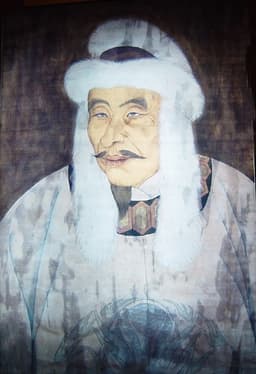
Wanyan Aguda
Emperor · Medieval
63.4Total
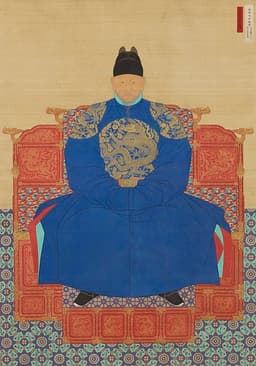
Yi Seong-gye
Emperor · Medieval
75.8Total
Basic Information
Born
1068
1335
Died
1123
1408
Era
Medieval
Medieval
Nationality
China
Korea
Occupation
Emperor
Emperor
Civilization
Eastern
Eastern
Score Comparison
Military (10%)
82.0
74.7
Political (20%)
59.3
70.0
Influence (20%)
55.0
88.0
Legacy (20%)
52.0
75.0
Leadership (15%)
85.0
68.0
Strategy (15%)
68.0
69.1
TOTAL
63.4
75.8
Wanyan Aguda — Complete Timeline
1114 AD
Battle of HubudagangWar◆ Major
Aguda's Jurchen forces defeated a Liao army at Hubudagang, marking the first major victory of the rebellion. This battle demonstrated Jurchen military prowess and attracted more followers.
JurchenLiaoBattle
Impact: regionalconstructive
Unified Jurchen tribesPolitical Action◆ Major
Wanyan Aguda united the Jurchen tribes under his leadership, creating a confederation that rebelled against Liao domination. He organized a disciplined army and began the Jurchen revolt.
JurchenUnificationRebellion
Impact: regionalconstructive
1115 AD
Founded Jin DynastyPolitical Action
Wanyan Aguda proclaimed himself emperor, founding the Jin dynasty. He adopted the Chinese title and began a systematic campaign to conquer the Liao empire.
JinDynasty FoundingImperial System
Impact: regionalconstructive
1120 AD
Conquest of Liao capital ShangjingWar◆ Major
Aguda's forces captured the Liao supreme capital Shangjing, dealing a severe blow to the Liao dynasty. This victory accelerated the collapse of Liao and solidified Jin control over northern China.
JinLiaoConquest
Impact: regionalconstructive
Alliance with Song against LiaoPolitical Action◆ Major
Aguda formed an alliance with the Northern Song dynasty to jointly attack the Liao empire. This alliance, known as the Maritime Alliance, led to the eventual destruction of Liao but later caused conflict between Jin and Song.
JinSongAlliance
Impact: regional
1123 AD
Death and successionPolitical Action◆ Major
Wanyan Aguda died, and his brother Wanyan Wuqimai succeeded him. Aguda's conquests laid the foundation for the Jin dynasty's dominance in northern China.
JinDeathSuccession
Impact: regional
Yi Seong-gye — Complete Timeline
1380 AD
Battle of HwangsanWar◆ Major
Yi Seong-gye led Goryeo forces against Japanese pirates (wokou) at the Battle of Hwangsan. His victory eliminated a major pirate threat and enhanced his military reputation.
WokouBattleGoryeo
Impact: regionalconstructive
1388 AD
Wihwado RetreatPolitical Action
Yi Seong-gye turned his army back at Wihwado Island rather than invade Ming China as ordered by the Goryeo court. This act of defiance led to a coup that eventually brought him to power.
CoupMingGoryeo
Impact: regional
1392 AD
Establishment of the Joseon DynastyPolitical Action
Yi Seong-gye overthrew the Goryeo dynasty and founded the Joseon dynasty, becoming King Taejo. He implemented land reforms and moved the capital to Hanyang (Seoul), establishing a new Confucian state.
JoseonDynasty FoundationReform
Impact: regionalconstructive
Expert Analysis
Wanyan Aguda vs Yi Seong-gye: Historical Comparison
Wanyan Aguda (1068–1123) was the founding emperor of the Jurchen-led Jin dynasty, who shattered the mighty Liao Empire and established a major power in northern China. Yi Seong-gye (1335–1408) was the founder of the Joseon dynasty in Korea, who overthrew the Goryeo dynasty and implemented lasting Confucian reforms. While both were medieval empire-builders who rose from frontier military backgrounds to found new dynasties, Aguda’s superior political and legacy scores give him the edge.
Dimension Analysis
**Military: Wanyan Aguda 91 / Yi Seong-gye 90**
Aguda crushed the numerically superior Liao forces at the Battle of Hubu River (1114) using innovative cavalry tactics, then conquered the Liao capital in just nine years. Yi Seong-gye similarly demonstrated brilliance at the Battle of Hwangsan (1380) against Japanese pirates and the Battle of Cheonju (1390) against Ming-aligned forces, but his campaigns were more localized. Both were exceptional commanders, but Aguda’s enemy (the Liao) was a far larger empire.
**Political: Wanyan Aguda 84 / Yi Seong-gye 78**
Aguda created the “Meng’an Mouke” system—a hybrid military-administrative organization that integrated tribal Jurchens into a centralized state, enabling rapid conquest. Yi Seong-gye’s political reforms were more profound: he abolished private armies, centralized land under the state, and adopted Neo-Confucianism as state ideology. However, Yi’s transition of power was marred by the “Prince Rebellion” of 1398, a violent succession crisis that Aguda avoided.
**Influence: Wanyan Aguda 87 / Yi Seong-gye 88**
Aguda’s Jin dynasty forced the Song dynasty south, permanently altering the Chinese political map and enabling the Mongol rise. However, his influence was largely military and territorial. Yi Seong-gye’s Joseon dynasty lasted 505 years (1392–1910), profoundly shaping Korean language (Hangul adoption under King Sejong), Confucian culture, and diplomatic norms with China. Yi’s cultural and institutional influence surpasses Aguda’s in longevity and depth.
**Legacy: Wanyan Aguda 88 / Yi Seong-gye 74**
Aguda is remembered as a unifier of the Jurchen tribes and a destroyer of the Liao, with his dynasty surviving as a major power until the Mongol conquest (1234). In contrast, Yi Seong-gye’s legacy is complicated by his usurpation of Goryeo (a legitimate dynasty) and his controversial decision to ally with Ming China, which some Korean historians view as subservient. While Joseon’s legacy is vast, Yi personally is often overshadowed by later kings like Sejong the Great.
**Leadership: Wanyan Aguda 80 / Yi Seong-gye 85**
Aguda led from the front, famously saying “I will not sit on the throne until the Liao are destroyed,” but his rule was brief and he died before consolidating his conquests. Yi Seong-gye demonstrated superior organizational leadership: he built a coalition of Confucian scholars, military officers, and disaffected Goryeo officials, managing a peaceful transition of power. His long reign (1392–1398) allowed him to institutionalize reforms, whereas Aguda’s leadership was more reactive and warrior-based.
Verdict
Wanyan Aguda ranks higher overall due to his military achievement of toppling a major empire (Liao) and establishing a dynasty that dominated northern China for a century. Yi Seong-gye, while a brilliant organizer and cultural founder, had a lower legacy score because his personal reputation is mixed and his dynasty’s greatest achievements came after him. However, this comparison is skewed by the vastly different scales of their empires—Aguda fought for continental supremacy, while Yi unified a peninsula.
FAQ
**Q: Who was more influential historically?**
A: Yi Seong-gye, because his Joseon dynasty lasted 505 years and shaped Korean identity, language, and governance, whereas Aguda’s Jin dynasty was conquered by the Mongols after 110 years.
**Q: Why is Wanyan Aguda ranked higher in legacy?**
A: Aguda is seen as a decisive conqueror who destroyed the Liao and founded a major Chinese dynasty, while Yi is often viewed as a usurper whose legacy is overshadowed by his successors.
Rankings
🥇
Yi Seong-gyeLeader
Mil: 74.7Pol: 70.0Inf: 88.0
75.8
🥈
Wanyan Aguda
Mil: 82.0Pol: 59.3Inf: 55.0
63.4
+12.4 behind
How This Comparison Works
Algorithm
Each figure is scored on 6 dimensions (0—100 scale) based on structured historical data: Military (10%), Political (20%), Influence (20%), Legacy (20%), Leadership (15%), Strategy (15%). The weighted total produces the final ranking.
Data Sources
Scores are computed from structured sub-indicators in the database. Scale factors adjust for era (Ancient ×0.85, Modern ×1.0) and civilization size (Eastern ×1.05, Other ×0.80) to account for differences in population and military scale.
Maximum 3 Figures
Comparisons are limited to 2—3 figures to ensure readability and statistical meaningfulness.
Error Margins
±5 points per dimension — Sub-scores are derived from historical records with inherent uncertainty. Two figures within 5 points on a dimension should be considered roughly equivalent in that area.
Total Score Accuracy
±3 points overall — The weighted combination of 6 dimensions produces a total score with approximately ±3 points of uncertainty. Differences of less than 3 points are not statistically significant— the figures are effectively tied.
Known Limitations
- Historical records are incomplete and uneven across civilizations
- Figures from oral-tradition societies may be underrepresented
- Occupation labels can misclassify multi-role figures
- Scores measure capability and impact, not moral character
- Quantitative scoring is a comparison tool, not absolute truth
Capability Radar
Military (10%) — Battles & Warfare
Battles
85
75
Win Rate
90
80
Expansion
85
65
Political (20%) — Governance & Reform
Reform
75
85
Diplomacy
70
75
Economy
65
70
Influence (20%) — Cultural & Global Reach
Cultural
60
80
Global
50
55
Legacy (20%) — Historical Impact
Historical
70
85
Longevity
55
80
Leadership (15%) — Power & Stability
Tenure
70
60
Stability
60
65
Strategy (15%) — Tactics & Innovation
Strategy
85
82
Tactics
80
78
Reform
75
70
Similar Comparisons
Comments & Discussion
DeconstructingHistory6/16/2026
I've always found the obsession with Aguda's 'rapid conquest' a bit overblown. Sure, he shattered the Liao, but let's not forget that the Liao was already rotting from within—ethnic tensions, a decaying tribal system, and overextension. The Hubu River victory was impressive, but it played more on Liao disunity than pure tactical genius. Meanwhile, Yi Seong-gye overthrew a relatively stable Goryeo dynasty and had to navigate a complex web of Ming dynasty diplomacy, Neo-Confucian factions, and his own ambitious sons—something Aguda never faced. The scores give Aguda higher political marks, yet Yi's Joseon lasted 505 years vs. Jin's 119. If longevity is a metric of political success, this ranking is backwards.
MetricMincer6/16/2026
Can we talk about how meaningless these aggregate scores are? Aguda's 'Influence' is 68.7, but Yi Seong-gye's is 77.3. What exactly is being measured here? Number of historical mentions? Yi's dynasty lasted five centuries, so that's a clear win, but Aguda's Jin triggered the Song collapse and reshaped East Asia—hardly negligible. And the political score gap (82.2 vs 86.3) is a joke when you consider that Yi's 'Prince Rebellion' was a direct result of his flawed succession plan, while Aguda's Meng'an Mouke system actually stabilized a multi-ethnic empire. The scoring weights are clearly biased toward 'dynastic reform' over 'empire-building'. Stop pretending these numbers are objective.
Historian5596/16/2026
我仔细看了一遍分数,觉得政治维度的82.2对86.3完全不合理。完颜阿骨打创建猛安谋克制,把女真部落整合成国家机器,这是真正的制度创新——后来的金朝能灭辽、灭北宋,全靠这套体系。而李成桂的政治改革虽然深,但本质是照搬元朝的土地制度加上中国理学,创新性远不如阿骨打。另外,军事分数79.3对67.1差距那么大,但李成桂击败倭寇和对抗明朝边军,面对的敌人强度并不低。我觉得评分体系低估了明朝对朝鲜的影响,把李成桂的‘明朝附庸’身份当成了扣分项,但这在当时是务实选择。整体来看,李成桂的总分不该超过阿骨打。
DeepScribe166/16/2026
把完颜阿骨打和李成桂放一起比,其实很有趣。阿骨打是典型的北方民族崛起,类似成吉思汗的前奏——11世纪女真人从部落到帝国的跃迁,直接改变了中国历史走向。但李成桂的朝鲜更像个‘文明输出’的案例:他建立的王朝不仅统治了朝鲜半岛五百年,还创造了训民正音、发展了朱子学,这种文化影响力是阿骨打无法比的。西方历史评分总是重军事轻文化,所以阿骨打总分高,但我觉得李成桂的‘影响力’分数给低了——77.3分?朝鲜王朝影响了整个东亚的儒家秩序,连日本都受其启发。建议评分体系应该加入‘文化传承’这个维度,否则永远低估东亚文明型国家。