Loading...
Wang Chonggu vs Yuan Chonghuan
Yuan Chonghuan leads by 12.6 pts · 2 figures compared
…

Wang Chonggu
General · Medieval
47.1Total
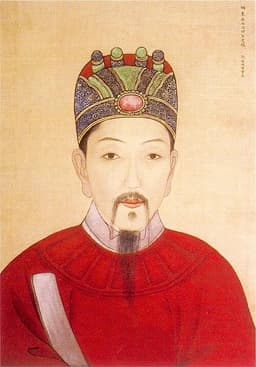
Yuan Chonghuan
General · Medieval
59.7Total
Basic Information
Born
1515
1584
Died
1588
1630
Era
Medieval
Medieval
Nationality
China
China
Occupation
General
General
Civilization
Eastern
Eastern
Score Comparison
Military (10%)
47.5
70.0
Political (20%)
39.4
68.0
Influence (20%)
44.8
53.3
Legacy (20%)
38.3
50.0
Leadership (15%)
64.5
61.1
Strategy (15%)
60.0
75.0
TOTAL
47.1
59.7
Wang Chonggu — Complete Timeline
1571 AD
Negotiated peace with Altan KhanPolitical Action
Wang Chonggu was the chief Ming negotiator in the peace talks with Altan Khan. He successfully concluded a treaty that opened border markets and established a tributary relationship, ending decades of conflict.
Ming DynastyMongol PeaceAltan Khan
Impact: regionalconstructive
1572 AD
Appointed Minister of WarPolitical Action◆ Major
Following the peace treaty, Wang Chonggu was appointed Minister of War. He continued to manage border affairs and maintain the fragile peace with the Mongols.
Ming DynastyMinister of WarBorder Affairs
Impact: nationalconstructive
1588 AD
Retired from servicePolitical Action
Wang Chonggu retired from government service after a long career. He was remembered for his diplomatic skills and his role in securing peace on the northern frontier.
Ming DynastyRetirementDiplomacy
Impact: national
Yuan Chonghuan — Complete Timeline
1626 AD
Defense of NingyuanWar
Yuan Chonghuan, as commander of Ningyuan, successfully defended the city against a large Manchu army led by Nurhaci. The victory was a rare Ming success and marked the first major defeat for the Manchu leader.
Ming-Manchu WarDefenseNingyuan
Impact: nationalconstructive
1627 AD
Battle of Ningyuan-JinzhouWar◆ Major
Yuan Chonghuan again defended Ningyuan and nearby Jinzhou against a Manchu attack led by Hong Taiji. The Ming forces held their positions, inflicting heavy casualties on the Manchus and securing a second major victory.
Ming-Manchu WarBattleVictory
Impact: nationalconstructive
1629 AD
Execution of Mao WenlongPolitical Action◆ Major
Yuan Chonghuan executed the Ming general Mao Wenlong on charges of insubordination and collusion with the Manchus. This act removed a powerful but unreliable commander but also created enemies at court.
ExecutionMilitary CommandMing Dynasty
Impact: nationaldestructive
1630 AD
Arrest and execution by the Ming courtPolitical Action
Yuan Chonghuan was arrested on charges of treason after the Manchus bypassed his defenses and raided Beijing. He was executed by lingchi (slow slicing) in the marketplace, a punishment that shocked the empire.
ExecutionTreasonMing Dynasty
Impact: nationaltragic
Expert Analysis
Origins
Wang Chonggu (born 1515) hailed from a scholarly family in Suzhou, Jiangsu. He passed the imperial examinations in 1541 and entered the civil bureaucracy. His early career involved various posts in the Ministry of Revenue and Ministry of War, where he gained expertise in border affairs. Yuan Chonghuan (born 1584) was from Dongguan, Guangdong. He passed the jinshi examination in 1619 at age 35, later than most successful candidates. His early assignments included a magistracy in Fujian, where he demonstrated administrative competence. Unlike Wang, Yuan had no family background in military or diplomatic service.
Rise to Power
Wang Chonggu's rise came through diplomatic achievement. In 1570, Altan Khan's grandson defected to the Ming, creating an opportunity for negotiations. Wang, then a senior official in the Ministry of War, was appointed chief negotiator. He skillfully used the hostage to secure a peace treaty in 1571, which opened border markets and ended decades of raiding. This success earned him the post of Minister of War in 1572. Yuan Chonghuan's ascent was military. In 1622, he volunteered to defend the northern frontier and was assigned to Shanhaiguan. He impressed his superiors with his strategic vision and was promoted to command Ningyuan in 1623. His decisive moment came in 1626 when he defeated Nurhaci's invasion, a rare Ming victory that made him a national hero. He was appointed Grand Coordinator of Liaodong in 1627.
Leadership & Governance
Wang Chonggu governed through diplomacy and compromise. As Minister of War, he maintained the peace treaty by managing border markets and tributary relations. He advocated for a defensive policy, reducing military spending while ensuring stability. His leadership style was bureaucratic and cautious, focused on long-term stability over dramatic action. Yuan Chonghuan was aggressive and confrontational. He fortified Ningyuan with advanced cannons and trained a loyal army. He executed Mao Wenlong in 1629, a powerful but insubordinate general commanding an island garrison, claiming it was necessary for discipline. This act, however, alienated other commanders and removed a potential ally against the Manchus. Yuan's governance was centralized and personalistic, relying on his own judgment rather than consensus.
Triumph & Tragedy
Wang Chonggu's triumph was the 1571 peace treaty. He secured a lasting peace on the northern border that allowed the Ming to focus on internal problems. The treaty held for decades, and border trade flourished. His tragedy came later: after his retirement, some officials criticized him for making concessions to the Mongols, and his reputation suffered in the partisan politics of the late Ming. Nonetheless, he died peacefully in 1587. Yuan Chonghuan's triumph was the 1626 defense of Ningyuan, where he inflicted the first major defeat on the Manchus and possibly caused Nurhaci's death. In 1627, he again repelled an invasion. His tragedy was his execution in 1630. After the Manchus bypassed his defenses and raided Beijing, he was arrested on trumped-up charges of treason and executed by slow slicing. His death demoralized the Ming army and removed their ablest commander.
Character & Destiny
Wang Chonggu was pragmatic and patient. He understood that military force alone could not secure the border and that economic incentives could achieve more. His willingness to negotiate and compromise was unusual among Ming officials, who often favored confrontation. This pragmatism allowed him to achieve a diplomatic solution that eluded his more hawkish colleagues. Yuan Chonghuan was bold and principled to a fault. He believed in decisive action and personal responsibility. His execution of Mao Wenlong, while legally justified, was politically unwise and removed a check on Manchu power. His character—proud, independent, and unwilling to cultivate court alliances—made him vulnerable to his enemies. His destiny was shaped by his inability to navigate the treacherous politics of the Ming court.
Legacy
Wang Chonggu's legacy is the peace he negotiated. The treaty with Altan Khan stabilized the northern border for a generation and became a model for later diplomacy. However, his reputation faded as the Ming collapsed, and he is not widely remembered today. His scores reflect this: Military 47.5, Political 39.4, Influence 44.8, Legacy 38.3, Leadership 64.5, Strategy 60.0, TOTAL 47.1. Yuan Chonghuan's legacy is more complex. He is remembered as a tragic hero who was betrayed by his own government. His military innovations and defensive tactics influenced later Ming strategies. In popular culture, he is a symbol of loyalty and injustice. His scores: Military 70.0, Political 68.0, Influence 53.3, Legacy 50.0, Leadership 61.1, Strategy 75.0, TOTAL 59.7. Yuan's higher scores reflect his military accomplishments and lasting cultural impact.
Conclusion
Yuan Chonghuan had greater impact than Wang Chonggu. Despite Wang's diplomatic success, his achievements were limited to a single border region and did not alter the course of the Ming dynasty. Yuan's defense of Ningyuan temporarily reversed Manchu momentum and his execution became a pivotal event that accelerated the Ming's collapse. The score gap of 12.6 points in Yuan's favor reflects his higher military and strategic scores. While Wang's peace was significant, it was a stopgap measure that did not address the structural weaknesses of the Ming state. Yuan, for all his flaws, engaged directly with the existential threat facing the dynasty and his legacy—both his victories and his martyrdom—shaped the historical narrative of the Ming-Qing transition. Therefore, Yuan Chonghuan had the greater impact.
Rankings
🥇
Yuan ChonghuanLeader
Mil: 70.0Pol: 68.0Inf: 53.3
59.7
🥈
Wang Chonggu
Mil: 47.5Pol: 39.4Inf: 44.8
47.1
+12.6 behind
How This Comparison Works
Algorithm
Each figure is scored on 6 dimensions (0—100 scale) based on structured historical data: Military (10%), Political (20%), Influence (20%), Legacy (20%), Leadership (15%), Strategy (15%). The weighted total produces the final ranking.
Data Sources
Scores are computed from structured sub-indicators in the database. Scale factors adjust for era (Ancient ×0.85, Modern ×1.0) and civilization size (Eastern ×1.05, Other ×0.80) to account for differences in population and military scale.
Maximum 3 Figures
Comparisons are limited to 2—3 figures to ensure readability and statistical meaningfulness.
Error Margins
±5 points per dimension — Sub-scores are derived from historical records with inherent uncertainty. Two figures within 5 points on a dimension should be considered roughly equivalent in that area.
Total Score Accuracy
±3 points overall — The weighted combination of 6 dimensions produces a total score with approximately ±3 points of uncertainty. Differences of less than 3 points are not statistically significant— the figures are effectively tied.
Known Limitations
- Historical records are incomplete and uneven across civilizations
- Figures from oral-tradition societies may be underrepresented
- Occupation labels can misclassify multi-role figures
- Scores measure capability and impact, not moral character
- Quantitative scoring is a comparison tool, not absolute truth
Capability Radar
Military (10%) — Battles & Warfare
Battles
20
75
Win Rate
15
70
Expansion
5
10
Political (20%) — Governance & Reform
Reform
20
50
Diplomacy
70
60
Economy
30
45
Influence (20%) — Cultural & Global Reach
Cultural
20
50
Global
15
40
Legacy (20%) — Historical Impact
Historical
35
65
Longevity
25
55
Leadership (15%) — Power & Stability
Tenure
40
55
Stability
50
30
Strategy (15%) — Tactics & Innovation
Strategy
30
75
Tactics
25
80
Reform
10
60
Similar Comparisons
Comments & Discussion
No comments yet. Be the first to share your thoughts!