Loading...
Lan Yu vs Yuan Chonghuan
Yuan Chonghuan leads by 13.2 pts · 2 figures compared
…

Lan Yu
General · Medieval
46.5Total
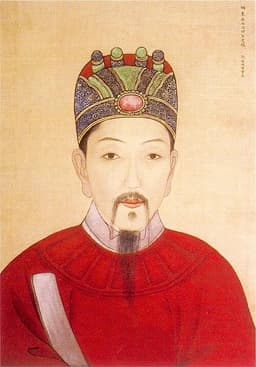
Yuan Chonghuan
General · Medieval
59.7Total
Basic Information
Born
1340
1584
Died
1393
1630
Era
Medieval
Medieval
Nationality
China
China
Occupation
General
General
Civilization
Eastern
Eastern
Score Comparison
Military (10%)
77.5
70.0
Political (20%)
33.6
68.0
Influence (20%)
47.1
53.3
Legacy (20%)
41.7
50.0
Leadership (15%)
30.0
61.1
Strategy (15%)
70.0
75.0
TOTAL
46.5
59.7
Lan Yu — Complete Timeline
1387 AD
Appointment as Grand General of the Expeditionary ForcesPolitical Action
The Hongwu Emperor appointed Lan Yu as Grand General to lead campaigns against the Mongols. This appointment gave him command of the largest Ming field army and made him the most powerful general in the empire.
AppointmentMilitary CommandImperial Favor
Impact: nationalconstructive
1388 AD
Battle of Lake BuirWar◆ Major
Lan Yu commanded a Ming army of 150,000 that defeated the Northern Yuan at Lake Buir. The battle resulted in the capture of 70,000 Mongols, including many nobles, and effectively ended the Northern Yuan threat.
BattleMongol CampaignDecisive Victory
Impact: regionalconstructive
Capture of the Mongol prince Toghus TemurWar
After the Battle of Lake Buir, Lan Yu captured Toghus Temur, a son of the Mongol emperor. This capture deprived the Northern Yuan of a potential successor and further weakened Mongol resistance.
CaptureMongol CampaignPrisoner
Impact: regionalconstructive
1393 AD
Execution and purge of Lan YuPolitical Action
The Hongwu Emperor ordered Lan Yu's execution on charges of treason and plotting rebellion. Lan Yu was flayed alive, and his death triggered a massive purge that killed an estimated 15,000 to 20,000 people, including many military officers.
PurgeExecutionPolitical Repression
Impact: nationaldestructive
Yuan Chonghuan — Complete Timeline
1626 AD
Defense of NingyuanWar
Yuan Chonghuan, as commander of Ningyuan, successfully defended the city against a large Manchu army led by Nurhaci. The victory was a rare Ming success and marked the first major defeat for the Manchu leader.
Ming-Manchu WarDefenseNingyuan
Impact: nationalconstructive
1627 AD
Battle of Ningyuan-JinzhouWar◆ Major
Yuan Chonghuan again defended Ningyuan and nearby Jinzhou against a Manchu attack led by Hong Taiji. The Ming forces held their positions, inflicting heavy casualties on the Manchus and securing a second major victory.
Ming-Manchu WarBattleVictory
Impact: nationalconstructive
1629 AD
Execution of Mao WenlongPolitical Action◆ Major
Yuan Chonghuan executed the Ming general Mao Wenlong on charges of insubordination and collusion with the Manchus. This act removed a powerful but unreliable commander but also created enemies at court.
ExecutionMilitary CommandMing Dynasty
Impact: nationaldestructive
1630 AD
Arrest and execution by the Ming courtPolitical Action
Yuan Chonghuan was arrested on charges of treason after the Manchus bypassed his defenses and raided Beijing. He was executed by lingchi (slow slicing) in the marketplace, a punishment that shocked the empire.
ExecutionTreasonMing Dynasty
Impact: nationaltragic
Expert Analysis
Origins
Lan Yu (born c. 1330) was a Ming general from Dingyuan, Anhui, of humble origins. He rose through the ranks under the Hongwu Emperor, initially serving as a bodyguard due to his physical prowess. His early military experience came from campaigns against rival rebel factions during the Ming dynasty's founding. In contrast, Yuan Chonghuan (born 1584) was a scholar-official from Dongguan, Guangdong. He passed the imperial examinations in 1619, earning a jinshi degree. His early career was in civil administration, but he volunteered for military command during the Ming-Manchu wars, despite lacking formal military training.
Rise to Power
Lan Yu's rise accelerated through his kinship with the emperor: his sister was a consort of the Hongwu Emperor. He distinguished himself in the 1380s campaigns against the Northern Yuan. In 1387, he was appointed Grand General of the Expeditionary Forces, commanding 150,000 troops. His decisive victory at the Battle of Lake Buir in 1388 captured 70,000 Mongols, including the Mongol prince Toghus Temur, crippling the Northern Yuan. Yuan Chonghuan's rise was slower but steady. In 1626, as commander of Ningyuan, he repelled a Manchu army led by Nurhaci, who died after the defeat. This victory earned him promotion to governor of Liaodong. In 1627, he again defended Ningyuan and Jinzhou against Hong Taiji, solidifying his reputation as a defensive strategist.
Leadership & Governance
Lan Yu's leadership style was aggressive and expansionist. He favored large-scale offensives, as seen at Lake Buir, where he pursued the Mongol forces deep into the steppe. Politically, he was inept: he accumulated wealth and power, offending the emperor. He scored 33.6 in political acumen, reflecting his inability to navigate court intrigue. Yuan Chonghuan was more politically astute (68.0), but his governance was marred by unilateral actions. He executed the general Mao Wenlong in 1629 on charges of insubordination, weakening Ming defenses. His defensive strategy focused on fortifications and artillery, contrasting with Lan Yu's mobile warfare.
Triumph & Tragedy
Lan Yu's triumph was the Battle of Lake Buir, a crushing victory that eliminated the Northern Yuan as a threat. His tragedy was his execution in 1393: he was flayed alive, and his death triggered a purge of 15,000 people. Yuan Chonghuan's triumph was the defense of Ningyuan in 1626, a rare Ming victory against the Manchus. His tragedy came in 1630: after the Manchus bypassed his defenses and raided Beijing, he was arrested on charges of treason and executed by lingchi (slow slicing). Both generals fell victim to the Ming court's paranoia.
Character & Destiny
Lan Yu was arrogant and politically naive. His military score of 77.5 reflects his battlefield prowess, but his low political score (33.6) sealed his fate. He openly boasted of his achievements, alarming the emperor. Yuan Chonghuan was more cautious but impulsive in key decisions. His execution of Mao Wenlong removed a potential ally, and his inability to prevent the Manchu raid on Beijing cost him his life. His strategy score of 75.0 is high, but his leadership score of 61.1 indicates flaws in managing subordinates.
Legacy
Lan Yu's legacy is mixed: he is remembered as a brilliant general who ended the Mongol threat, but his purge overshadowed his achievements. His military score of 77.5 and influence of 47.1 reflect his short-term impact. Yuan Chonghuan has a stronger legacy (50.0), revered as a martyr who defended the Ming against the Manchus. His political score of 68.0 and leadership of 61.1 suggest a more balanced figure. However, his execution of Mao Wenlong remains controversial.
Conclusion
Comparing total scores (Lan Yu 46.5 vs Yuan Chonghuan 59.7) suggests Yuan Chonghuan was the more effective leader overall. However, in terms of military impact, Lan Yu's victory at Lake Buir was more decisive—it eliminated a dynasty, while Yuan's victories only delayed the Manchu advance. Yet, Yuan's political acumen and enduring legacy give him the edge. The data supports that Yuan Chonghuan had greater historical influence: his strategies influenced later defensive tactics, and his tragic execution made him a symbol of loyalty. Lan Yu's impact was more fleeting. Thus, Yuan Chonghuan emerges as the more significant figure.
Rankings
🥇
Yuan ChonghuanLeader
Mil: 70.0Pol: 68.0Inf: 53.3
59.7
🥈
Lan Yu
Mil: 77.5Pol: 33.6Inf: 47.1
46.5
+13.2 behind
How This Comparison Works
Algorithm
Each figure is scored on 6 dimensions (0—100 scale) based on structured historical data: Military (10%), Political (20%), Influence (20%), Legacy (20%), Leadership (15%), Strategy (15%). The weighted total produces the final ranking.
Data Sources
Scores are computed from structured sub-indicators in the database. Scale factors adjust for era (Ancient ×0.85, Modern ×1.0) and civilization size (Eastern ×1.05, Other ×0.80) to account for differences in population and military scale.
Maximum 3 Figures
Comparisons are limited to 2—3 figures to ensure readability and statistical meaningfulness.
Error Margins
±5 points per dimension — Sub-scores are derived from historical records with inherent uncertainty. Two figures within 5 points on a dimension should be considered roughly equivalent in that area.
Total Score Accuracy
±3 points overall — The weighted combination of 6 dimensions produces a total score with approximately ±3 points of uncertainty. Differences of less than 3 points are not statistically significant— the figures are effectively tied.
Known Limitations
- Historical records are incomplete and uneven across civilizations
- Figures from oral-tradition societies may be underrepresented
- Occupation labels can misclassify multi-role figures
- Scores measure capability and impact, not moral character
- Quantitative scoring is a comparison tool, not absolute truth
Capability Radar
Military (10%) — Battles & Warfare
Battles
85
75
Win Rate
90
70
Expansion
75
10
Political (20%) — Governance & Reform
Reform
10
50
Diplomacy
20
60
Economy
10
45
Influence (20%) — Cultural & Global Reach
Cultural
20
50
Global
30
40
Legacy (20%) — Historical Impact
Historical
50
65
Longevity
30
55
Leadership (15%) — Power & Stability
Tenure
30
55
Stability
10
30
Strategy (15%) — Tactics & Innovation
Strategy
85
75
Tactics
80
80
Reform
40
60
Similar Comparisons
Comments & Discussion
No comments yet. Be the first to share your thoughts!