Loading...
Charles Martel vs Yuan Chonghuan
Charles Martel leads by 1.2 pts · 2 figures compared
…

Charles Martel
General · Medieval
60.9Total
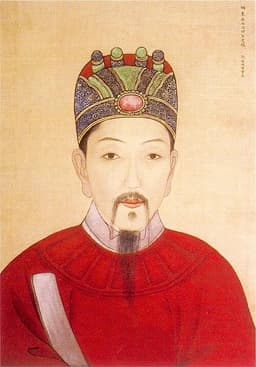
Yuan Chonghuan
General · Medieval
59.7Total
Basic Information
Born
688
1584
Died
741
1630
Era
Medieval
Medieval
Nationality
Frankish Empire
China
Occupation
General
General
Civilization
Western
Eastern
Score Comparison
Military (10%)
82.0
70.0
Political (20%)
68.0
68.0
Influence (20%)
58.3
53.3
Legacy (20%)
52.0
50.0
Leadership (15%)
48.8
61.1
Strategy (15%)
76.0
75.0
TOTAL
60.9
59.7
Charles Martel — Complete Timeline
720 AD
Consolidation of Frankish PowerPolitical Action◆ Major
Charles Martel unified the Frankish kingdoms under his rule, defeating rival nobles and suppressing rebellions. He established himself as the de facto ruler of the Franks, laying the foundation for the Carolingian dynasty.
Carolingian DynastyFrankish KingdomPolitical Unification
Impact: regional
722 AD
Support for Boniface's MissionCultural◆ Major
Charles Martel provided military protection and political support to the Anglo-Saxon missionary Boniface in his efforts to Christianize the Germanic tribes. This strengthened the Frankish Church and ties with the Papacy.
ChristianizationPapacyMissionary
Impact: regionalconstructive
732 AD
Battle of ToursWar
Charles Martel led Frankish forces to defeat an invading Umayyad army near Tours. The battle halted the Muslim advance into Western Europe. Martel's victory is considered a turning point in European history.
Umayyad CaliphateFrankish KingdomIslamic Expansion
Impact: global
737 AD
Battle of the River BerreWar◆ Major
Charles Martel defeated a Muslim army near Narbonne, preventing a second invasion of Gaul. He also destroyed the Muslim fleet at the mouth of the Berre River. This secured Frankish control of southern Gaul.
Umayyad CaliphateFrankish KingdomNaval Battle
Impact: regional
Yuan Chonghuan — Complete Timeline
1626 AD
Defense of NingyuanWar
Yuan Chonghuan, as commander of Ningyuan, successfully defended the city against a large Manchu army led by Nurhaci. The victory was a rare Ming success and marked the first major defeat for the Manchu leader.
Ming-Manchu WarDefenseNingyuan
Impact: nationalconstructive
1627 AD
Battle of Ningyuan-JinzhouWar◆ Major
Yuan Chonghuan again defended Ningyuan and nearby Jinzhou against a Manchu attack led by Hong Taiji. The Ming forces held their positions, inflicting heavy casualties on the Manchus and securing a second major victory.
Ming-Manchu WarBattleVictory
Impact: nationalconstructive
1629 AD
Execution of Mao WenlongPolitical Action◆ Major
Yuan Chonghuan executed the Ming general Mao Wenlong on charges of insubordination and collusion with the Manchus. This act removed a powerful but unreliable commander but also created enemies at court.
ExecutionMilitary CommandMing Dynasty
Impact: nationaldestructive
1630 AD
Arrest and execution by the Ming courtPolitical Action
Yuan Chonghuan was arrested on charges of treason after the Manchus bypassed his defenses and raided Beijing. He was executed by lingchi (slow slicing) in the marketplace, a punishment that shocked the empire.
ExecutionTreasonMing Dynasty
Impact: nationaltragic
Expert Analysis
Origins
Charles Martel, born around 688 in Herstal (modern Belgium), was the illegitimate son of Pepin of Herstal, the Mayor of the Palace of Austrasia. His early life was marked by political turmoil after his father's death in 714, when his stepmother Plectrude imprisoned him. He escaped and rallied support among the Austrasian nobility, beginning his rise. His background was purely Frankish, with no formal education but deep military instincts.
Yuan Chonghuan, born in 1584 in Dongguan, Guangdong province, was a scholar-official of the Ming dynasty. He passed the imperial examinations in 1619, earning a jinshi degree, and served in various civil posts before being assigned to military command on the northern frontier. His background was Confucian literati, not military aristocracy.
Rise to Power
Charles Martel's rise came through military prowess. In 715, he defeated the Neustrian Franks at the Battle of Amblève, and by 718 he had consolidated power over the Frankish kingdoms, becoming the de facto ruler. His key turning point was the Battle of Tours in 732, where he led a Frankish army to repel an Umayyad invasion near Poitiers. This victory solidified his authority and allowed him to suppress rebellions in Burgundy and Aquitaine.
Yuan Chonghuan's rise began in 1622 when he was appointed to the Liaodong frontier. He gained prominence by volunteering to defend the isolated city of Ningyuan, which he fortified. In 1626, he defeated a Manchu army led by Nurhaci at the Battle of Ningyuan, using European-style cannons. This victory made him a national hero and he was promoted to governor of Liaodong. However, his success was fragile due to court intrigue.
Leadership & Governance
Charles Martel ruled as Mayor of the Palace, effectively a king without the title. He reorganized the Frankish military, emphasizing heavy cavalry and granting lands to his vassals in return for military service—a precursor to feudalism. He also supported the Christianization of Germany by protecting missionary Boniface. His governance was pragmatic: he confiscated church lands to reward his followers, which brought him into conflict with the clergy but strengthened his army.
Yuan Chonghuan was a brilliant strategist but a poor politician. He built fortifications and used gunpowder artillery effectively. He executed the unruly general Mao Wenlong in 1629, which removed a potential ally but also alienated other commanders. When the Manchus bypassed his defenses to raid Beijing, he was arrested and executed in 1630 by lingchi (slow slicing) on charges of treason. His leadership was decisive in battle but tactless in court.
Triumph & Tragedy
Charles Martel's greatest triumph was the Battle of Tours (732), scoring 82.0 in military score. He also defeated Muslim forces at the Battle of the River Berre (737). His tragedy was his lack of a royal title; he died in 741 as a mayor, not a king. His sons, Pepin the Short and Carloman, succeeded him, but his legacy was overshadowed by his grandson Charlemagne.
Yuan Chonghuan's triumph was the defense of Ningyuan (1626), where he inflicted the first major defeat on Nurhaci. He also won the Battle of Ningyuan-Jinzhou (1627). His tragedy was his execution by the Ming court in 1630, a victim of paranoia and factionalism. His death weakened Ming defenses, contributing to the dynasty's fall in 1644.
Character & Destiny
Charles Martel was pragmatic, ruthless, and focused on power. He used the church for his ends but also protected it. His character of decisive action and coalition-building allowed him to unify the Franks. His destiny was to lay the foundation for the Carolingian Empire.
Yuan Chonghuan was principled but inflexible. He trusted in his own strategic vision and alienated powerful courtiers. His character—honest but arrogant—led to his fall. His destiny was to be a martyr for a dying dynasty.
Legacy
Charles Martel's legacy is immense: he stopped the Islamic expansion into Western Europe, preserved Christianity as the dominant religion, and set the stage for the Carolingian Renaissance. His military reforms influenced medieval warfare. He scores 52.0 in legacy, but his impact on European history is foundational.
Yuan Chonghuan's legacy is more ambiguous. He is revered as a patriot in China, but his execution was a symptom of Ming dysfunction. His defensive strategies were not continued, and the Ming fell. He scores 50.0 in legacy, but his story remains a cautionary tale.
Conclusion
Charles Martel had a greater impact on world history. His victory at Tours altered the course of Europe, while Yuan Chonghuan's victories were temporary and did not save the Ming. With a total score of 60.9 vs 59.7, Martel's military and strategic scores (82.0 and 76.0) edge out Yuan's (70.0 and 75.0). Martel's actions had lasting structural effects, while Yuan's were contained within a doomed dynasty. Charles Martel is the more consequential figure.
Rankings
🥇
Charles MartelLeader
Mil: 82.0Pol: 68.0Inf: 58.3
60.9
🥈
Yuan Chonghuan
Mil: 70.0Pol: 68.0Inf: 53.3
59.7
+1.2 behind
How This Comparison Works
Algorithm
Each figure is scored on 6 dimensions (0—100 scale) based on structured historical data: Military (10%), Political (20%), Influence (20%), Legacy (20%), Leadership (15%), Strategy (15%). The weighted total produces the final ranking.
Data Sources
Scores are computed from structured sub-indicators in the database. Scale factors adjust for era (Ancient ×0.85, Modern ×1.0) and civilization size (Eastern ×1.05, Other ×0.80) to account for differences in population and military scale.
Maximum 3 Figures
Comparisons are limited to 2—3 figures to ensure readability and statistical meaningfulness.
Error Margins
±5 points per dimension — Sub-scores are derived from historical records with inherent uncertainty. Two figures within 5 points on a dimension should be considered roughly equivalent in that area.
Total Score Accuracy
±3 points overall — The weighted combination of 6 dimensions produces a total score with approximately ±3 points of uncertainty. Differences of less than 3 points are not statistically significant— the figures are effectively tied.
Known Limitations
- Historical records are incomplete and uneven across civilizations
- Figures from oral-tradition societies may be underrepresented
- Occupation labels can misclassify multi-role figures
- Scores measure capability and impact, not moral character
- Quantitative scoring is a comparison tool, not absolute truth
Capability Radar
Military (10%) — Battles & Warfare
Battles
75
75
Win Rate
80
70
Expansion
75
10
Political (20%) — Governance & Reform
Reform
70
50
Diplomacy
60
60
Economy
55
45
Influence (20%) — Cultural & Global Reach
Cultural
70
50
Global
70
40
Legacy (20%) — Historical Impact
Historical
80
65
Longevity
75
55
Leadership (15%) — Power & Stability
Tenure
65
55
Stability
60
30
Strategy (15%) — Tactics & Innovation
Strategy
80
75
Tactics
85
80
Reform
70
60
Similar Comparisons
Comments & Discussion
No comments yet. Be the first to share your thoughts!