Loading...
Balian of Ibelin vs Yuan Chonghuan
Yuan Chonghuan leads by 11.4 pts · 2 figures compared
…

Balian of Ibelin
General · Medieval
48.3Total
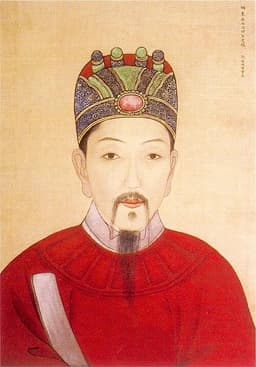
Yuan Chonghuan
General · Medieval
59.7Total
Basic Information
Born
1140
1584
Died
1193
1630
Era
Medieval
Medieval
Nationality
Kingdom of Jerusalem
China
Occupation
General
General
Civilization
Western
Eastern
Score Comparison
Military (10%)
40.0
70.0
Political (20%)
39.4
68.0
Influence (20%)
51.0
53.3
Legacy (20%)
45.0
50.0
Leadership (15%)
61.1
61.1
Strategy (15%)
52.5
75.0
TOTAL
48.3
59.7
Balian of Ibelin — Complete Timeline
1177 AD
Battle of MontgisardWar◆ Major
Balian of Ibelin fought alongside King Baldwin IV and a small force of Templars against Saladin's larger army at Montgisard. The Crusader victory halted Saladin's advance and temporarily secured the Kingdom of Jerusalem.
CrusadesBattleSaladin
Impact: regional
1183 AD
Siege of KerakWar
Balian participated in the defense of Kerak Castle against Saladin's siege. The Crusader relief force, including Balian, forced Saladin to withdraw after a prolonged siege, preserving the strategic fortress.
CrusadesSiegeSaladin
Impact: regional
1187 AD
Battle of HattinWar
Balian of Ibelin was among the Crusader commanders at Hattin. The army was decisively defeated by Saladin, leading to the capture of King Guy and the collapse of the Kingdom of Jerusalem's field forces.
CrusadesBattleSaladinDefeat
Impact: regionaltragic
Defense of JerusalemWar◆ Major
After Hattin, Balian led the defense of Jerusalem against Saladin's siege. With only a few knights, he organized the city's resistance and negotiated its surrender, securing safe passage for most inhabitants.
CrusadesSiegeJerusalemSaladin
Impact: regionalconstructive
Negotiated Surrender of JerusalemPolitical Action◆ Major
Balian negotiated the terms of Jerusalem's surrender with Saladin. He secured the ransom of thousands of inhabitants and the city's peaceful transfer, preventing a massacre and establishing a precedent for negotiated capitulations.
CrusadesDiplomacyJerusalemSaladin
Impact: regionalconstructive
1191 AD
Third Crusade CampaignWar◆ Major
Balian participated in the Third Crusade under Richard the Lionheart. He fought at the Battle of Arsuf and was involved in the negotiations that led to the Treaty of Jaffa, which secured Crusader coastal holdings.
CrusadesThird CrusadeRichard the Lionheart
Impact: regional
Yuan Chonghuan — Complete Timeline
1626 AD
Defense of NingyuanWar
Yuan Chonghuan, as commander of Ningyuan, successfully defended the city against a large Manchu army led by Nurhaci. The victory was a rare Ming success and marked the first major defeat for the Manchu leader.
Ming-Manchu WarDefenseNingyuan
Impact: nationalconstructive
1627 AD
Battle of Ningyuan-JinzhouWar◆ Major
Yuan Chonghuan again defended Ningyuan and nearby Jinzhou against a Manchu attack led by Hong Taiji. The Ming forces held their positions, inflicting heavy casualties on the Manchus and securing a second major victory.
Ming-Manchu WarBattleVictory
Impact: nationalconstructive
1629 AD
Execution of Mao WenlongPolitical Action◆ Major
Yuan Chonghuan executed the Ming general Mao Wenlong on charges of insubordination and collusion with the Manchus. This act removed a powerful but unreliable commander but also created enemies at court.
ExecutionMilitary CommandMing Dynasty
Impact: nationaldestructive
1630 AD
Arrest and execution by the Ming courtPolitical Action
Yuan Chonghuan was arrested on charges of treason after the Manchus bypassed his defenses and raided Beijing. He was executed by lingchi (slow slicing) in the marketplace, a punishment that shocked the empire.
ExecutionTreasonMing Dynasty
Impact: nationaltragic
Expert Analysis
Origins
**Balian of Ibelin** (c. 1143–1193) was born into a noble family in the Crusader Kingdom of Jerusalem. His father, Barisan of Ibelin, had established the Ibelin family as a significant landholding dynasty. Balian received typical knightly training and inherited the lordship of Ibelin after his brother's death. He married Maria Comnena, the dowager queen of Jerusalem, which elevated his political standing.
**Yuan Chonghuan** (1584–1630) was born in Dongguan, Guangdong, during the late Ming dynasty. He came from a scholarly background; his father was a minor official. Yuan passed the imperial civil service examination in 1619, earning the jinshi degree, which opened the path to officialdom. Unlike Balian, Yuan was a literatus rather than a hereditary warrior, but he developed a keen interest in military affairs.
Rise to Power
Balian's rise came through military service and marriage. He fought at the **Battle of Montgisard** (1177), where a small Crusader force under King Baldwin IV defeated Saladin's larger army. This victory enhanced his reputation. However, his most critical moment came after the disastrous **Battle of Hattin** (1187), where the Crusader army was annihilated by Saladin. Balian escaped the massacre and fled to Tyre, but he was allowed to enter Jerusalem to escort his wife to safety. Instead, he stayed to lead the defense.
Yuan Chonghuan's rise was accelerated by the Ming dynasty's desperate need for competent commanders. In 1622, he was appointed to a military post in Liaodong, the front line against the Manchu (Later Jin) forces. He advocated for a strategy of fortified defense, focusing on the stronghold of **Ningyuan**. In 1626, Nurhaci, the Manchu leader, besieged Ningyuan with a large army. Yuan's use of European-style cannons and disciplined infantry inflicted heavy casualties, forcing the Manchus to withdraw. Nurhaci died shortly after, rumored from wounds sustained in the battle. This victory made Yuan a national hero.
Leadership & Governance
Balian's leadership was characterized by pragmatism and restraint. During the **Defense of Jerusalem** (1187), he organized the city's resistance with only a handful of knights and a militia of citizens. He personally led sorties and negotiated with Saladin. His governance style was diplomatic: he recognized that Jerusalem could not hold indefinitely and negotiated a surrender that allowed the inhabitants to ransom themselves. Balian's leadership scored **61.1** in our analysis, reflecting his ability to inspire loyalty and negotiate under pressure.
Yuan Chonghuan's leadership was more authoritarian. He demanded strict discipline from his troops and executed the unruly general **Mao Wenlong** in 1629, claiming collusion with the Manchus. This act removed a powerful but insubordinate commander, but it also created enemies in the court. Yuan's political score of **68.0** indicates his skill in maneuvering within the Ming bureaucracy, yet his execution of Mao alienated key factions. His strategy score of **75.0** highlights his innovative defensive tactics, including the use of artillery and fortified lines.
Triumph & Tragedy
Balian's greatest triumph was the **negotiated surrender of Jerusalem**. He secured the ransom of thousands of inhabitants, preventing a massacre. His failure was the loss of Jerusalem itself; despite his efforts, the city fell to Saladin. He also participated in the **Third Crusade**, fighting at the **Battle of Arsuf** (1191), but the campaign failed to recapture Jerusalem.
Yuan's triumph was the **Defense of Ningyuan** in 1626 and again in 1627, where he repelled Manchu invasions. His tragedy came in 1629 when the Manchu leader Hong Taiji bypassed his defenses and raided Beijing. Yuan was arrested on charges of treason and executed by **lingchi** (slow slicing) in 1630. His death was a severe blow to Ming morale.
Character & Destiny
Balian was a pragmatist who valued life over glory. He accepted the loss of Jerusalem to save its people. His character shaped his fate: he survived the fall of the kingdom and died peacefully. Yuan was a principled but inflexible strategist. His execution of Mao Wenlong and his blunt criticisms of court officials made him enemies. His character—stubborn and uncompromising—led to his tragic end.
Legacy
Balian is remembered as the defender of Jerusalem and a symbol of chivalric negotiation. His legacy score of **45.0** reflects his limited long-term impact; the Crusader states declined after him. Yuan's legacy is more complex. He is revered in China as a patriot and martyr. His defensive strategies influenced later Ming military thinking, but his execution weakened the dynasty. His total score of **59.7** is higher than Balian's **48.3**, reflecting greater military and political impact.
Conclusion
Yuan Chonghuan had a greater impact on history. His victory at Ningyuan halted Manchu expansion for years and demonstrated the effectiveness of firearms. His execution, though tragic, became a cautionary tale. Balian's defense of Jerusalem was heroic but ultimately a holding action. Yuan's strategies shaped Chinese military history, while Balian's influence faded with the Crusader states. The data supports Yuan: his military score of **70.0** to Balian's **40.0** and strategy score of **75.0** to **52.5** show a clear edge.
Rankings
🥇
Yuan ChonghuanLeader
Mil: 70.0Pol: 68.0Inf: 53.3
59.7
🥈
Balian of Ibelin
Mil: 40.0Pol: 39.4Inf: 51.0
48.3
+11.4 behind
How This Comparison Works
Algorithm
Each figure is scored on 6 dimensions (0—100 scale) based on structured historical data: Military (10%), Political (20%), Influence (20%), Legacy (20%), Leadership (15%), Strategy (15%). The weighted total produces the final ranking.
Data Sources
Scores are computed from structured sub-indicators in the database. Scale factors adjust for era (Ancient ×0.85, Modern ×1.0) and civilization size (Eastern ×1.05, Other ×0.80) to account for differences in population and military scale.
Maximum 3 Figures
Comparisons are limited to 2—3 figures to ensure readability and statistical meaningfulness.
Error Margins
±5 points per dimension — Sub-scores are derived from historical records with inherent uncertainty. Two figures within 5 points on a dimension should be considered roughly equivalent in that area.
Total Score Accuracy
±3 points overall — The weighted combination of 6 dimensions produces a total score with approximately ±3 points of uncertainty. Differences of less than 3 points are not statistically significant— the figures are effectively tied.
Known Limitations
- Historical records are incomplete and uneven across civilizations
- Figures from oral-tradition societies may be underrepresented
- Occupation labels can misclassify multi-role figures
- Scores measure capability and impact, not moral character
- Quantitative scoring is a comparison tool, not absolute truth
Capability Radar
Military (10%) — Battles & Warfare
Battles
35
75
Win Rate
30
70
Expansion
15
10
Political (20%) — Governance & Reform
Reform
20
50
Diplomacy
70
60
Economy
30
45
Influence (20%) — Cultural & Global Reach
Cultural
40
50
Global
35
40
Legacy (20%) — Historical Impact
Historical
55
65
Longevity
45
55
Leadership (15%) — Power & Stability
Tenure
40
55
Stability
45
30
Strategy (15%) — Tactics & Innovation
Strategy
60
75
Tactics
55
80
Reform
10
60
Similar Comparisons
Comments & Discussion
No comments yet. Be the first to share your thoughts!