Loading...
Vlad II Dracul vs Yang Guang
Yang Guang leads by 14.8 pts · 2 figures compared
…
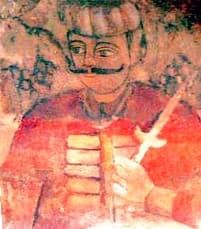
Vlad II Dracul
Emperor · Medieval
42.7Total
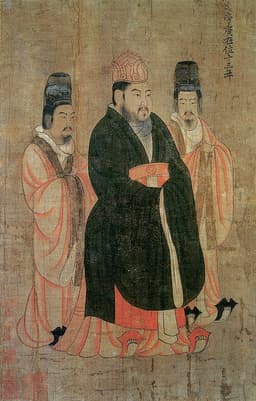
Yang Guang
Emperor · Medieval
57.5Total
Basic Information
Born
1395
569
Died
1447
618
Era
Medieval
Medieval
Nationality
Wallachia
China
Occupation
Emperor
Emperor
Civilization
Western
Eastern
Score Comparison
Military (10%)
50.0
47.5
Political (20%)
29.3
62.7
Influence (20%)
51.0
72.0
Legacy (20%)
44.2
40.0
Leadership (15%)
38.1
62.2
Strategy (15%)
38.3
60.0
TOTAL
42.7
57.5
Vlad II Dracul — Complete Timeline
1436 AD
Accession as Voivode of WallachiaPolitical Action◆ Major
Vlad II Dracul became Voivode of Wallachia after the death of his half-brother Alexander I Aldea. His reign was marked by a precarious balance between the Ottoman Empire and the Kingdom of Hungary.
SuccessionRule
Impact: regional
Alliance with the Ottoman EmpirePolitical Action◆ Major
Vlad II Dracul allied with the Ottoman Sultan Murad II, agreeing to pay tribute and provide military support. This alliance secured his position but made Wallachia a vassal state.
Ottoman AllianceVassalage
Impact: regional
1444 AD
Participation in the Crusade of VarnaWar◆ Major
Vlad II Dracul joined the Christian coalition led by John Hunyadi and King W
CrusadeDefeatVarna
Impact: regionaltragic
1447 AD
AssassinationPolitical Action◆ Major
Vlad II Dracul was assassinated on the orders of John Hunyadi, who suspected him of treachery. His death led to a power struggle in Wallachia and the eventual rise of his son Vlad the Impaler.
AssassinationPower Struggle
Impact: regionaltragic
Yang Guang — Complete Timeline
605 AD
Construction of the Grand CanalReform◆ Major
Emperor Yang Guang ordered the construction of the Grand Canal, linking the Yellow River and Yangtze River. The project mobilized millions of laborers and created a vital waterway for grain transport and trade, but the immense human cost led to widespread resentment and rebellion.
InfrastructureGrand CanalCorvée Labor
Impact: national
612 AD
Three Expeditions against GoguryeoWar◆ Major
Yang Guang launched three massive military campaigns against the Korean kingdom of Goguryeo. The first invasion in 612 ended in catastrophic defeat at the Battle of Salsu, with hundreds of thousands of Chinese soldiers killed. The repeated failures drained the treasury and sparked widespread revolts.
Goguryeo-Sui WarMilitary DisasterOverextension
Impact: regionaldestructive
613 AD
Rebellion of Yang XuanganWar◆ Major
While Yang Guang was campaigning against Goguryeo, the noble Yang Xuangan launched a major rebellion in the rear. The revolt was suppressed, but it exposed the fragility of Sui rule and encouraged further uprisings across the empire.
RebellionSui Dynasty Decline
Impact: nationaldestructive
618 AD
Assassination of Yang GuangPolitical Action
As rebellions engulfed the empire, Yang Guang was strangled to death in Jiangdu by his own guards led by Yuwen Huaji. His death marked the effective end of the Sui dynasty, which collapsed shortly after, leading to the rise of the Tang dynasty.
AssassinationSui CollapseDynastic Transition
Impact: nationaltragic
Expert Analysis
Origins
Vlad II Dracul was born around 1390 in Wallachia, a principality caught between the Kingdom of Hungary and the Ottoman Empire. He was the son of Mircea I of Wallachia and belonged to the House of Basarab. His early life included hostage experiences at the Ottoman court, shaping his diplomatic skills. Yang Guang, born in 569 AD in Chang'an, China, was the second son of Emperor Wen of Sui. His upbringing in the imperial palace was marked by a rigorous Confucian education and military training. Unlike Vlad, Yang Guang was groomed from youth for high command, leading campaigns against the Chen dynasty.
Rise to Power
Vlad II Dracul ascended as Voivode of Wallachia in 1436 after the death of his half-brother Alexander I Aldea. His rise was facilitated by Ottoman support; he secured the throne by pledging tribute and military aid to Sultan Murad II. In contrast, Yang Guang orchestrated the assassination of his brother, the crown prince, and later forced his father's abdication in 604 AD. He became Emperor Yang of Sui, inheriting a unified China. While Vlad relied on external patronage, Yang used internal intrigue and existing imperial structures.
Leadership & Governance
Vlad II Dracul's leadership was characterized by a precarious balancing act. He paid tribute to the Ottomans (scoring 29.3 in political) but also joined the Christian Crusade of Varna in 1444, leading to his excommunication by both sides. His governance focused on maintaining Wallachian autonomy through tribute and hostages, including his son Vlad III (the Impaler). Yang Guang, with a political score of 62.7, launched massive state projects. He ordered the Grand Canal's construction (605-609 AD), mobilizing 5 million laborers, linking north and south China. He also rebuilt the Great Wall and expanded the examination system. However, his heavy taxation and conscription fueled widespread rebellion.
Triumph & Tragedy
Vlad II's greatest success was surviving as voivode for 11 years amid Hungarian-Ottoman rivalry. His major failure was the disastrous Crusade of Varna (1444), where the Christian army was annihilated. He was assassinated in 1447 on orders of John Hunyadi, who suspected treachery. Yang Guang's triumph was the Grand Canal, which boosted economic integration for centuries. His tragedy was the three invasions of Goguryeo (612-614 AD), costing 300,000+ lives and ending in defeat. The rebellion of Yang Xuangan (613 AD) exposed regime weakness, and Yang was assassinated in 618 AD by his own guards, ending the Sui dynasty.
Character & Destiny
Vlad II was pragmatic and cautious, often seen as treacherous by contemporaries. His willingness to switch allegiances kept him in power but earned distrust. Yang Guang was ambitious and visionary but arrogant and reckless. He ignored warnings about overextension, forcing millions into labor. Historians note his cruelty, executing critics like the minister Gao Jiong. Both met violent ends: Vlad by political rivals, Yang by mutinous troops. Their character flaws—Vlad's duplicity and Yang's hubris—directly led to downfalls.
Legacy
Vlad II's legacy is overshadowed by his son, Vlad the Impaler, and his own political maneuvering. However, his alliance with the Ottomans set a precedent for Wallachia's vassalage. He scored 44.2 in legacy. Yang Guang's legacy is mixed: the Grand Canal remains a UNESCO World Heritage site, but his dynasty collapsed shortly after his death. His military score of 47.5 reflects failed campaigns, while his influence score of 72.0 is high due to the canal's impact. Both are remembered as flawed rulers; Yang's projects outlasted him, while Vlad's influence was more immediate and limited.
Conclusion
Yang Guang had a greater impact on history despite his lower legacy score (40.0 vs Vlad's 44.2). His Grand Canal transformed China's economy and political geography for over 1,400 years. Vlad II Dracul's reign was a footnote in regional power struggles, with no enduring infrastructure or systemic change. Yang's total score of 57.5 versus Vlad's 42.7 reflects his broader influence. While both suffered from poor military decisions, Yang's state-building achievements outweigh Vlad's survival tactics. The clear position is that Yang Guang, with a 14.8-point lead, had a more significant historical footprint.
Rankings
🥇
Yang GuangLeader
Mil: 47.5Pol: 62.7Inf: 72.0
57.5
🥈
Vlad II Dracul
Mil: 50.0Pol: 29.3Inf: 51.0
42.7
+14.8 behind
How This Comparison Works
Algorithm
Each figure is scored on 6 dimensions (0—100 scale) based on structured historical data: Military (10%), Political (20%), Influence (20%), Legacy (20%), Leadership (15%), Strategy (15%). The weighted total produces the final ranking.
Data Sources
Scores are computed from structured sub-indicators in the database. Scale factors adjust for era (Ancient ×0.85, Modern ×1.0) and civilization size (Eastern ×1.05, Other ×0.80) to account for differences in population and military scale.
Maximum 3 Figures
Comparisons are limited to 2—3 figures to ensure readability and statistical meaningfulness.
Error Margins
±5 points per dimension — Sub-scores are derived from historical records with inherent uncertainty. Two figures within 5 points on a dimension should be considered roughly equivalent in that area.
Total Score Accuracy
±3 points overall — The weighted combination of 6 dimensions produces a total score with approximately ±3 points of uncertainty. Differences of less than 3 points are not statistically significant— the figures are effectively tied.
Known Limitations
- Historical records are incomplete and uneven across civilizations
- Figures from oral-tradition societies may be underrepresented
- Occupation labels can misclassify multi-role figures
- Scores measure capability and impact, not moral character
- Quantitative scoring is a comparison tool, not absolute truth
Capability Radar
Military (10%) — Battles & Warfare
Battles
20
55
Win Rate
25
40
Expansion
15
60
Political (20%) — Governance & Reform
Reform
15
75
Diplomacy
35
40
Economy
20
70
Influence (20%) — Cultural & Global Reach
Cultural
20
70
Global
15
65
Legacy (20%) — Historical Impact
Historical
35
75
Longevity
30
80
Leadership (15%) — Power & Stability
Tenure
30
60
Stability
15
20
Strategy (15%) — Tactics & Innovation
Strategy
25
50
Tactics
30
45
Reform
10
30
Similar Comparisons
Comments & Discussion
No comments yet. Be the first to share your thoughts!