Loading...
Al-Mutamid vs Vlad II Dracul
Vlad II Dracul leads by 3.5 pts · 2 figures compared
…
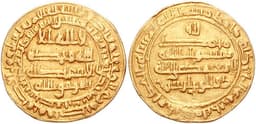
Al-Mutamid
Emperor · Medieval
39.2Total
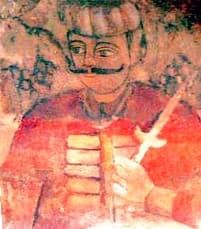
Vlad II Dracul
Emperor · Medieval
42.7Total
Basic Information
Born
844
1395
Died
892
1447
Era
Medieval
Medieval
Nationality
Abbasid Caliphate
Wallachia
Occupation
Emperor
Emperor
Civilization
Middle Eastern
Western
Score Comparison
Military (10%)
21.2
50.0
Political (20%)
25.0
29.3
Influence (20%)
51.0
51.0
Legacy (20%)
41.7
44.2
Leadership (15%)
41.5
38.1
Strategy (15%)
39.6
38.3
TOTAL
39.2
42.7
Al-Mutamid — Complete Timeline
869 AD
Zanj RebellionWar◆ Major
A major slave revolt began in the marshlands of southern Iraq, led by Ali ibn Muhammad. Al-Mutamid's caliphate struggled to suppress the rebellion for over a decade, draining resources and weakening Abbasid authority.
Zanj RebellionSlave RevoltAbbasid Decline
Impact: regionaldestructive
871 AD
Battle of BasraWar◆ Major
Zanj rebels captured and sacked the city of Basra, massacring its inhabitants. This event demonstrated the inability of Al-Mutamid's forces to protect major urban centers, further eroding caliphal prestige.
Zanj RebellionBattleBasra
Impact: regionaltragic
892 AD
Death of Al-MutamidPolitical Action◆ Major
Al-Mutamid died, possibly poisoned by his brother and successor Al-Mutadid. His death ended a reign marked by the devastating Zanj Rebellion and the continued fragmentation of Abbasid power.
DeathSuccessionAbbasid
Impact: nationaltragic
Vlad II Dracul — Complete Timeline
1436 AD
Accession as Voivode of WallachiaPolitical Action◆ Major
Vlad II Dracul became Voivode of Wallachia after the death of his half-brother Alexander I Aldea. His reign was marked by a precarious balance between the Ottoman Empire and the Kingdom of Hungary.
SuccessionRule
Impact: regional
Alliance with the Ottoman EmpirePolitical Action◆ Major
Vlad II Dracul allied with the Ottoman Sultan Murad II, agreeing to pay tribute and provide military support. This alliance secured his position but made Wallachia a vassal state.
Ottoman AllianceVassalage
Impact: regional
1444 AD
Participation in the Crusade of VarnaWar◆ Major
Vlad II Dracul joined the Christian coalition led by John Hunyadi and King W
CrusadeDefeatVarna
Impact: regionaltragic
1447 AD
AssassinationPolitical Action◆ Major
Vlad II Dracul was assassinated on the orders of John Hunyadi, who suspected him of treachery. His death led to a power struggle in Wallachia and the eventual rise of his son Vlad the Impaler.
AssassinationPower Struggle
Impact: regionaltragic
Expert Analysis
Origins
Al-Mutamid was born in 842 AD into the Abbasid Caliphate, the son of Caliph al-Mutawakkil. He grew up in a court riven by factionalism and assassination; his father was killed by Turkish guards in 861. Al-Mutamid's early life was marked by the decline of centralized Abbasid power, as provincial governors grew autonomous. He was appointed caliph in 870 after the death of his brother al-Muhtadi, but real power rested with his brother al-Muwaffaq, who served as regent and commander.
Vlad II Dracul was born around 1395 in Wallachia, a principality between Hungary and the Ottoman Empire. He was the son of Mircea the Elder, a respected voivode. Vlad's early years were shaped by the Ottoman threat and internal dynastic struggles. He spent time as a hostage at the Ottoman court, learning Turkish and military tactics. He adopted the surname "Dracul" (meaning "dragon") after being inducted into the Order of the Dragon, a Christian knighthood dedicated to fighting the Ottomans.
Rise to Power
Al-Mutamid became caliph in 870, but his reign was overshadowed by his brother al-Muwaffaq, who led the military campaigns and administered the state. Al-Mutamid's authority was further undermined by the Zanj Rebellion, which began in 869 under Ali ibn Muhammad. The rebellion grew rapidly, attracting slaves and disaffected groups. By 871, the Zanj captured Basra, massacring tens of thousands. Al-Mutamid's forces were unable to contain the revolt, and it took al-Muwaffaq's leadership to eventually suppress it by 883.
Vlad II Dracul ascended to the Wallachian throne in 1436 after the death of his half-brother Alexander I Aldea. His position was precarious: Wallachia was a buffer state between Hungary and the Ottoman Empire. To secure his rule, Vlad II allied with the Ottoman sultan Murad II in 1437, agreeing to pay tribute and provide military support. This alliance allowed him to fend off Hungarian encroachment, but it also made him a vassal of the Ottomans.
Leadership & Governance
Al-Mutamid's governance was passive; he delegated authority to his brother al-Muwaffaq and the Turkish military elite. He focused on courtly life and poetry, leaving the administration to others. His lack of direct control contributed to the chaos of the Zanj Rebellion, which devastated southern Iraq. Al-Mutamid's political score of 25.0 reflects his inability to assert authority or implement reforms.
Vlad II Dracul's leadership was pragmatic and survival-oriented. He balanced between Hungary and the Ottomans, shifting alliances as needed. In 1444, he participated in the Crusade of Varna alongside John Hunyadi, but after the Christian defeat, he reaffirmed his Ottoman vassalage. His political score of 29.3 indicates a slightly better, though still limited, ability to navigate complex geopolitics. He maintained Wallachia's autonomy during his reign, but his policies were reactive.
Triumph & Tragedy
Al-Mutamid's greatest success was surviving a tumultuous era and eventually seeing the end of the Zanj Rebellion, though largely due to his brother's efforts. His greatest failure was the rebellion itself, which exposed the caliphate's weakness. The Zanj Rebellion resulted in hundreds of thousands of deaths and the sacking of Basra, permanently damaging the Abbasid economy and prestige. Al-Mutamid's military score of 21.2 underscores his helplessness.
Vlad II Dracul's triumph was securing his throne for a decade (1436-1447) in a volatile region. He managed to keep Wallachia independent despite pressure from both Hungary and the Ottomans. His tragedy was his assassination in 1447 on the orders of John Hunyadi, who suspected him of treachery. This led to a power vacuum and the eventual rise of his son, Vlad the Impaler. Vlad II's military score of 50.0 reflects his ability to lead troops, but his political missteps cost him his life.
Character & Destiny
Al-Mutamid was known as a patron of culture and poetry, but he was indecisive and relied heavily on his brother. His character—more poet than ruler—shaped a fate where he was a figurehead during a catastrophic rebellion. Historical assessments note that he was a victim of the system, not a shaper of it. His total score of 39.2 reflects a largely ineffective reign.
Vlad II Dracul was cunning and adaptable, but his double-dealing earned him enemies. He was willing to collaborate with the Ottomans to survive, which later led to accusations of treason. His assassination was a direct result of his shifting loyalties. He had a strategy score of 38.3, indicating moderate strategic thinking, but his decisions ultimately led to his downfall.
Legacy
Al-Mutamid's legacy is tied to the Zanj Rebellion, one of the most destructive slave revolts in history. His reign marked the further decline of the Abbasid Caliphate, which never recovered its former power. He scored 41.7 in legacy, mainly due to the historical significance of the rebellion. However, his personal impact was minimal.
Vlad II Dracul's legacy is overshadowed by his son, Vlad the Impaler, but he is remembered as a voivode who maintained Wallachian autonomy. He scored 44.2 in legacy, slightly higher than Al-Mutamid, because his actions set the stage for his son's more famous reign. The Order of the Dragon, which he belonged to, also contributes to his historical footprint.
Conclusion
Vlad II Dracul had a greater impact on history than Al-Mutamid, despite a modest total score difference of 3.5 points (42.7 vs 39.2). Vlad II's reign directly influenced the trajectory of Wallachia and the rise of his son, while Al-Mutamid's caliphate was a passive backdrop to the Zanj Rebellion. Vlad II's military and political actions, though flawed, were more decisive in shaping events. Al-Mutamid's legacy is primarily negative—a symbol of decline. Thus, Vlad II Dracul emerges as the more consequential figure.
Rankings
🥇
Vlad II DraculLeader
Mil: 50.0Pol: 29.3Inf: 51.0
42.7
🥈
Al-Mutamid
Mil: 21.2Pol: 25.0Inf: 51.0
39.2
+3.5 behind
How This Comparison Works
Algorithm
Each figure is scored on 6 dimensions (0—100 scale) based on structured historical data: Military (10%), Political (20%), Influence (20%), Legacy (20%), Leadership (15%), Strategy (15%). The weighted total produces the final ranking.
Data Sources
Scores are computed from structured sub-indicators in the database. Scale factors adjust for era (Ancient ×0.85, Modern ×1.0) and civilization size (Eastern ×1.05, Other ×0.80) to account for differences in population and military scale.
Maximum 3 Figures
Comparisons are limited to 2—3 figures to ensure readability and statistical meaningfulness.
Error Margins
±5 points per dimension — Sub-scores are derived from historical records with inherent uncertainty. Two figures within 5 points on a dimension should be considered roughly equivalent in that area.
Total Score Accuracy
±3 points overall — The weighted combination of 6 dimensions produces a total score with approximately ±3 points of uncertainty. Differences of less than 3 points are not statistically significant— the figures are effectively tied.
Known Limitations
- Historical records are incomplete and uneven across civilizations
- Figures from oral-tradition societies may be underrepresented
- Occupation labels can misclassify multi-role figures
- Scores measure capability and impact, not moral character
- Quantitative scoring is a comparison tool, not absolute truth
Capability Radar
Military (10%) — Battles & Warfare
Battles
15
20
Win Rate
10
25
Expansion
5
15
Political (20%) — Governance & Reform
Reform
20
15
Diplomacy
20
35
Economy
15
20
Influence (20%) — Cultural & Global Reach
Cultural
25
20
Global
20
15
Legacy (20%) — Historical Impact
Historical
30
35
Longevity
20
30
Leadership (15%) — Power & Stability
Tenure
40
30
Stability
10
15
Strategy (15%) — Tactics & Innovation
Strategy
10
25
Tactics
10
30
Reform
5
10
Similar Comparisons
Comments & Discussion
No comments yet. Be the first to share your thoughts!