Loading...
Vladimir Monomakh vs Yang Guang
Vladimir Monomakh leads by 1.9 pts · 2 figures compared
…
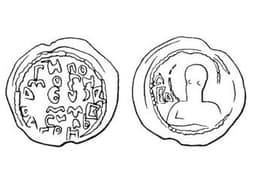
Vladimir Monomakh
Emperor · Medieval
59.4Total
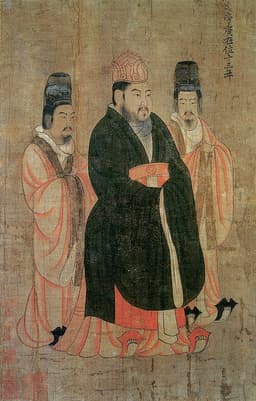
Yang Guang
Emperor · Medieval
57.5Total
Basic Information
Born
1053
569
Died
1125
618
Era
Medieval
Medieval
Nationality
Kievan Rus
China
Occupation
Emperor
Emperor
Civilization
Western
Eastern
Score Comparison
Military (10%)
60.0
47.5
Political (20%)
62.7
62.7
Influence (20%)
61.0
72.0
Legacy (20%)
52.0
40.0
Leadership (15%)
68.0
62.2
Strategy (15%)
55.0
60.0
TOTAL
59.4
57.5
Vladimir Monomakh — Complete Timeline
1093 AD
Battle of the Stugna RiverWar
Vladimir Monomakh, then Prince of Chernigov, fought alongside his brother against the Cumans at the Stugna River. The Rus forces were defeated, and his brother drowned during the retreat. This defeat highlighted the Cuman threat.
Cuman WarDefeatBrother's Death
Impact: regionaltragic
1097 AD
Congress of LyubechPolitical Action◆ Major
Vladimir Monomakh participated in the Congress of Lyubech, where Rus princes agreed to end internal strife and each rule their own patrimonies. The agreement temporarily halted civil wars but did not prevent future conflicts.
Peace ConferencePrincely AgreementCivil War
Impact: nationalconstructive
1103 AD
Campaigns Against the CumansWar◆ Major
Vladimir Monomakh led a series of successful campaigns against the Cumans (Polovtsy), culminating in a major victory at the Battle of the Suten River in 1103. These campaigns reduced Cuman raids and secured Rus borders.
Cuman WarMilitary VictoryBorder Security
Impact: regionalconstructive
1113 AD
Reign as Grand Prince of KievPolitical Action
Vladimir Monomakh became Grand Prince of Kiev after a popular uprising. He introduced legal reforms to limit usury and protect the poor, as recorded in the expanded Russkaya Pravda. His reign was a period of stability and unity.
AccessionLegal ReformStability
Impact: nationalconstructive
1117 AD
Writing of the Instruction (Pouchenie)Cultural◆ Major
Vladimir Monomakh wrote the 'Instruction' (Pouchenie) for his sons, a literary work combining autobiography, moral advice, and political guidance. It is one of the earliest surviving works of Old Russian literature.
LiteratureMoral InstructionAutobiography
Impact: nationalconstructive
Yang Guang — Complete Timeline
605 AD
Construction of the Grand CanalReform◆ Major
Emperor Yang Guang ordered the construction of the Grand Canal, linking the Yellow River and Yangtze River. The project mobilized millions of laborers and created a vital waterway for grain transport and trade, but the immense human cost led to widespread resentment and rebellion.
InfrastructureGrand CanalCorvée Labor
Impact: national
612 AD
Three Expeditions against GoguryeoWar◆ Major
Yang Guang launched three massive military campaigns against the Korean kingdom of Goguryeo. The first invasion in 612 ended in catastrophic defeat at the Battle of Salsu, with hundreds of thousands of Chinese soldiers killed. The repeated failures drained the treasury and sparked widespread revolts.
Goguryeo-Sui WarMilitary DisasterOverextension
Impact: regionaldestructive
613 AD
Rebellion of Yang XuanganWar◆ Major
While Yang Guang was campaigning against Goguryeo, the noble Yang Xuangan launched a major rebellion in the rear. The revolt was suppressed, but it exposed the fragility of Sui rule and encouraged further uprisings across the empire.
RebellionSui Dynasty Decline
Impact: nationaldestructive
618 AD
Assassination of Yang GuangPolitical Action
As rebellions engulfed the empire, Yang Guang was strangled to death in Jiangdu by his own guards led by Yuwen Huaji. His death marked the effective end of the Sui dynasty, which collapsed shortly after, leading to the rise of the Tang dynasty.
AssassinationSui CollapseDynastic Transition
Impact: nationaltragic
Expert Analysis
Origins
Vladimir Monomakh was born in 1053 into the ruling Rurikid dynasty of Kievan Rus. His father was Vsevolod I of Kiev, and his mother was a Byzantine princess from the Monomakh family, giving him ties to both Rus and Byzantine nobility. He grew up in Chernigov, learning statecraft and military command from an early age. By contrast, Yang Guang was born in 569 during the Northern Zhou dynasty, the second son of Yang Jian (later Emperor Wen of Sui). His family was part of the northwestern military aristocracy. Yang Guang was educated in Confucian classics and Buddhist texts, and he served as governor of Yangzhou, where he cultivated southern cultural tastes. These backgrounds shaped their later approaches: Monomakh was a warrior-prince, Yang Guang a bureaucratic emperor.
Rise to Power
Monomakh's rise came through military prowess and diplomacy. He became Prince of Chernigov in 1076 and later Prince of Pereyaslavl, leading campaigns against the Cumans. In 1097, he participated in the Congress of Lyubech, which attempted to end princely civil wars by dividing Rus into hereditary patrimonies. Monomakh gained popularity by defending Rus against nomadic raids. In 1113, after a popular uprising in Kiev, the city's elite invited him to become Grand Prince, bypassing traditional succession. He accepted and ruled until 1125. Yang Guang's rise was more calculated. He conspired with his mother and the powerful minister Yang Su to secure the crown prince position, slandering his elder brother Yang Yong. After his father's death in 604 (rumored to be assassination), Yang Guang became emperor. He immediately ordered a massive building program, including the Grand Canal, and moved the capital to Luoyang.
Leadership & Governance
Monomakh's governance focused on stability and legal reform. He introduced the "Instruction" (Pouchenie), a literary work advising his sons on justice, piety, and military duty. He also enacted laws to limit usury, protecting the poor from high-interest loans. His military leadership scored 60.0, reflecting his defensive campaigns against the Cumans. Yang Guang's governance was ambitious but overreaching. He centralized power, reformed the examination system, and built the Grand Canal (a massive infrastructure project that linked north and south). However, his forced labor policies mobilized millions, causing widespread suffering. His military score of 47.5 reflects his failed campaigns against Goguryeo, which drained resources and sparked rebellions.
Triumph & Tragedy
Monomakh's greatest triumph was his victory over the Cumans at the Battle of the Suten River in 1103, which secured Rus borders for a generation. He also temporarily united the Rus princes. His tragedy was the continued internal fragmentation; despite his efforts, Kievan Rus declined after his death. He scored 52.0 in legacy. Yang Guang's triumph was the Grand Canal, which became a vital economic artery for centuries. His tragedy was the collapse of the Sui dynasty. His three invasions of Goguryeo (612-614) ended in disaster, with the first campaign losing over 300,000 men. The resulting rebellions led to his assassination in 618. His legacy score of 40.0 reflects his mixed impact.
Character & Destiny
Monomakh was pragmatic and pious, known for his wisdom and moderation. He wrote extensively, urging his sons to avoid civil war. His character fostered loyalty but could not overcome the structural weaknesses of Rus. Yang Guang was ambitious and extravagant, obsessed with grand projects and personal glory. His character combined intelligence with arrogance; he dismissed criticism and overestimated his resources. This hubris led to his downfall. Historical assessments contrast Monomakh's prudent leadership (68.0) with Yang Guang's reckless ambition (leadership 62.2).
Legacy
Monomakh's legacy is mixed: he is remembered as a unifier and reformer, but his dynasty fragmented. The "Instruction" remains a key literary text. Yang Guang's Grand Canal endured, but his dynasty was short-lived. The Tang dynasty that followed learned from his failures. Monomakh's total score is 59.4, Yang Guang's 57.5, a narrow gap.
Conclusion
While Yang Guang's Grand Canal had a more enduring physical impact, Monomakh's leadership and stability provided a model for governance. Monomakh scored higher in leadership (68.0 vs 62.2) and legacy (52.0 vs 40.0). Given his successful defense of Rus and legal reforms, Monomakh had a greater overall impact on his civilization's trajectory. Yang Guang's overambition led to collapse, whereas Monomakh's prudence preserved Rus for a time. Therefore, Vladimir Monomakh is the more effective ruler.
Rankings
🥇
Vladimir MonomakhLeader
Mil: 60.0Pol: 62.7Inf: 61.0
59.4
🥈
Yang Guang
Mil: 47.5Pol: 62.7Inf: 72.0
57.5
+1.9 behind
How This Comparison Works
Algorithm
Each figure is scored on 6 dimensions (0—100 scale) based on structured historical data: Military (10%), Political (20%), Influence (20%), Legacy (20%), Leadership (15%), Strategy (15%). The weighted total produces the final ranking.
Data Sources
Scores are computed from structured sub-indicators in the database. Scale factors adjust for era (Ancient ×0.85, Modern ×1.0) and civilization size (Eastern ×1.05, Other ×0.80) to account for differences in population and military scale.
Maximum 3 Figures
Comparisons are limited to 2—3 figures to ensure readability and statistical meaningfulness.
Error Margins
±5 points per dimension — Sub-scores are derived from historical records with inherent uncertainty. Two figures within 5 points on a dimension should be considered roughly equivalent in that area.
Total Score Accuracy
±3 points overall — The weighted combination of 6 dimensions produces a total score with approximately ±3 points of uncertainty. Differences of less than 3 points are not statistically significant— the figures are effectively tied.
Known Limitations
- Historical records are incomplete and uneven across civilizations
- Figures from oral-tradition societies may be underrepresented
- Occupation labels can misclassify multi-role figures
- Scores measure capability and impact, not moral character
- Quantitative scoring is a comparison tool, not absolute truth
Capability Radar
Military (10%) — Battles & Warfare
Battles
55
55
Win Rate
60
40
Expansion
55
60
Political (20%) — Governance & Reform
Reform
60
75
Diplomacy
70
40
Economy
55
70
Influence (20%) — Cultural & Global Reach
Cultural
55
70
Global
40
65
Legacy (20%) — Historical Impact
Historical
60
75
Longevity
50
80
Leadership (15%) — Power & Stability
Tenure
65
60
Stability
60
20
Strategy (15%) — Tactics & Innovation
Strategy
70
50
Tactics
65
45
Reform
50
30
Similar Comparisons
Comments & Discussion
No comments yet. Be the first to share your thoughts!