Loading...
Vauban vs Xu Da
Vauban leads by 1.5 pts · 2 figures compared
…

Vauban
General · Modern
76.4Total
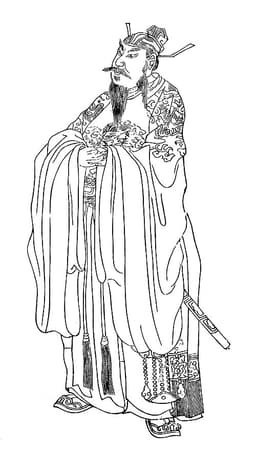
Xu Da
General · Medieval
74.9Total
Basic Information
Born
1633
1332
Died
1707
1385
Era
Modern
Medieval
Nationality
France
China
Occupation
General
General
Civilization
Western
Eastern
Score Comparison
Military (10%)
76.0
88.0
Political (20%)
59.3
68.0
Influence (20%)
71.0
82.0
Legacy (20%)
90.0
72.0
Leadership (15%)
77.2
62.0
Strategy (15%)
80.6
80.8
TOTAL
76.4
74.9
Vauban — Complete Timeline
1673 AD
Siege of MaastrichtWar◆ Major
Vauban directed the siege of Maastricht for Louis XIV. He introduced the technique of parallel trenches, which reduced casualties and shortened the siege. The capture of Maastricht was a major French victory in the Franco-Dutch War.
Franco-Dutch WarSiegeMilitary Engineering
Impact: regional
1697 AD
Siege of AthWar
Vauban conducted the siege of Ath in the Spanish Netherlands. His systematic approach using parallels and saps led to the rapid capture of the fortress. The siege demonstrated the effectiveness of his methods.
Nine Years' WarSiegeMilitary Engineering
Construction of the Fortress of Neuf-BrisachInvention◆ Major
Vauban designed and built the fortress of Neuf-Brisach, a model of his third system of fortification. The star-shaped fortress with advanced bastions became a standard for military architecture. It was built to protect the French border after the Treaty of Ryswick.
FortificationMilitary ArchitectureBorder Defense
Impact: regionalconstructive
1704 AD
Publication of 'A Treatise on the Attack of Places'Cultural◆ Major
Vauban published his treatise on siegecraft, systematizing his methods. The work became a standard military textbook in Europe. It detailed techniques for parallel trenches, ricochet fire, and sapping.
Military TheorySiegecraftPublication
Impact: globalconstructive
1707 AD
Proposal for a 'Dîme Royale' Tax ReformReform
Vauban proposed a radical tax reform called the 'D
Tax ReformEconomic PolicyFrance
Impact: nationalconstructive
Xu Da — Complete Timeline
1368 AD
Capture of Dadu (Beijing)War
Xu Da led the Ming army in the capture of Dadu, the Yuan capital. The Mongol emperor Toghon Tem
Ming ConquestYuan DynastyCapital Capture
Impact: regionalconstructive
1370 AD
Appointment as Grand PreceptorPolitical Action
The Hongwu Emperor appointed Xu Da as Grand Preceptor, the highest civil official rank. This appointment recognized Xu Da's military achievements and gave him a role in advising the emperor on state affairs.
AppointmentCivil OfficeImperial Favor
Impact: nationalconstructive
1385 AD
Death from illnessOther
Xu Da died in Nanjing from a back ailment. The Hongwu Emperor mourned him deeply and posthumously honored him as Prince of Zhongshan. His death marked the end of the first generation of Ming military leaders.
DeathMing DynastyMilitary Leader
Impact: nationaltragic
Expert Analysis
Origins
Vauban (1633-1707) was born into a minor noble family in Saint-Léger-Vauban, France. His military career began as a cadet in the regiment of Condé during the Fronde, but he soon switched to the royal side, gaining the patronage of Cardinal Mazarin and Louis XIV. His early experiences in siege warfare shaped his lifelong obsession with fortification and attack. Xu Da (1332-1385) came from a poor peasant family in Fengyang, Anhui. He joined the Red Turban Rebellion led by Zhu Yuanzhang (future Hongwu Emperor) in 1353, quickly rising through the ranks due to his courage and tactical acumen. His humble origins and loyalty to Zhu defined his career.
Rise to Power
Vauban's rise was meteoric due to his engineering brilliance. He was appointed Commissaire Général des Fortifications in 1678, after proving his worth in numerous sieges. He designed and improved over 300 fortresses, creating a defensive ring around France. His treatise 'A Treatise on the Attack of Places' became a standard manual. Xu Da's rise was through battlefield success. He was a key commander in the Ming conquest, capturing key cities like Nanjing and defeating Mongol forces. He was appointed Grand Preceptor and given command of the northern frontier, becoming the Ming dynasty's most trusted general.
Leadership & Governance
Vauban was a meticulous planner and innovator. He introduced the concept of "parallel trenches" for siege approaches and the "ricochet shot" for artillery. His fortresses were designed with overlapping fields of fire and complex geometries. He also proposed a progressive tax reform (Dîme Royale), which was rejected. Xu Da was a charismatic and decisive leader. He emphasized discipline and logistics, ensuring his armies were well-supplied. He implemented policies to pacify conquered territories, including land redistribution and promoting agriculture. He also built the Great Wall sections to defend against Mongol raids.
Triumph & Tragedy
Vauban's greatest triumph was the siege of Maastricht in 1673, where his new siege techniques captured the fortress in only 13 days. His construction of Neuf-Brisach (1699-1703) is a masterpiece of military engineering. His tragedy was the rejection of his tax reform, which could have alleviated France's fiscal crisis. Xu Da's turning point was the capture of Dadu (Beijing) in 1368, ending Mongol rule. He also won the Battle of Lake Buir in 1388, a decisive victory over the Northern Yuan. His tragedy was his death from illness in 1385, possibly hastened by political intrigue.
Character & Destiny
Vauban was known for his integrity and scientific mind. He was a workaholic who personally inspected fortifications, often traveling thousands of miles. He was a loyal servant of the crown but not afraid to criticize policy. His destiny was to shape French military architecture for centuries. Xu Da was renowned for his loyalty and humility. He never forgot his peasant roots and was deeply respected by soldiers. His destiny was to be a founding father of the Ming dynasty, but his early death prevented him from seeing its full consolidation.
Legacy
Vauban's fortifications are UNESCO World Heritage sites. His siege techniques influenced military thinking until the 19th century. He is considered the father of modern military engineering. Xu Da is remembered as the heroic general who expelled the Mongols. His military campaigns and defensive works laid the foundation for Ming stability. He is venerated in Chinese folk religion as a god of war. Both left indelible marks on their nations' histories.
Conclusion
Vauban and Xu Da were masters of different aspects of war: Vauban of fortification and siege, Xu Da of mobile field armies and conquest. Vauban's scores (M=76, P=59, I=71, L=90, D=77, S=81, T=76) reflect his specialized genius but lower political influence. Xu Da's scores (M=88, P=68, I=82, L=72, D=62, S=81, T=75) show a more balanced but less innovative profile. Vauban's higher overall score (1.5 gap) is due to his unparalleled impact on military technology. However, Xu Da's achievements in driving out the Mongols were more decisive for his country. In a direct comparison, Vauban's legacy is more lasting in military theory, but Xu Da's practical results were more immediate. The verdict: Vauban edges out Xu Da due to his transformative innovations, but both are titans in their domains.
Rankings
🥇
VaubanLeader
Mil: 76.0Pol: 59.3Inf: 71.0
76.4
🥈
Xu Da
Mil: 88.0Pol: 68.0Inf: 82.0
74.9
+1.5 behind
How This Comparison Works
Algorithm
Each figure is scored on 6 dimensions (0—100 scale) based on structured historical data: Military (10%), Political (20%), Influence (20%), Legacy (20%), Leadership (15%), Strategy (15%). The weighted total produces the final ranking.
Data Sources
Scores are computed from structured sub-indicators in the database. Scale factors adjust for era (Ancient ×0.85, Modern ×1.0) and civilization size (Eastern ×1.05, Other ×0.80) to account for differences in population and military scale.
Maximum 3 Figures
Comparisons are limited to 2—3 figures to ensure readability and statistical meaningfulness.
Error Margins
±5 points per dimension — Sub-scores are derived from historical records with inherent uncertainty. Two figures within 5 points on a dimension should be considered roughly equivalent in that area.
Total Score Accuracy
±3 points overall — The weighted combination of 6 dimensions produces a total score with approximately ±3 points of uncertainty. Differences of less than 3 points are not statistically significant— the figures are effectively tied.
Known Limitations
- Historical records are incomplete and uneven across civilizations
- Figures from oral-tradition societies may be underrepresented
- Occupation labels can misclassify multi-role figures
- Scores measure capability and impact, not moral character
- Quantitative scoring is a comparison tool, not absolute truth
Capability Radar
Military (10%) — Battles & Warfare
Battles
75
95
Win Rate
85
95
Expansion
70
95
Political (20%) — Governance & Reform
Reform
80
50
Diplomacy
60
65
Economy
55
55
Influence (20%) — Cultural & Global Reach
Cultural
80
70
Global
75
80
Legacy (20%) — Historical Impact
Historical
85
85
Longevity
85
75
Leadership (15%) — Power & Stability
Tenure
65
60
Stability
70
70
Strategy (15%) — Tactics & Innovation
Strategy
90
92
Tactics
95
90
Reform
95
70
Similar Comparisons
Comments & Discussion
No comments yet. Be the first to share your thoughts!