Loading...
Vasili III vs Yaroslav the Wise
Yaroslav the Wise leads by 0.3 pts · 2 figures compared
…

Vasili III
Emperor · Medieval
60.0Total
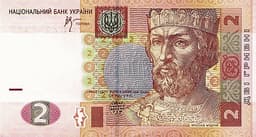
Yaroslav the Wise
Emperor · Medieval
60.3Total
Basic Information
Born
1479
978
Died
1533
1054
Era
Medieval
Medieval
Nationality
Russia
Kievan Rus
Occupation
Emperor
Emperor
Civilization
Western
Western
Score Comparison
Military (10%)
52.5
72.5
Political (20%)
68.0
70.0
Influence (20%)
59.0
55.0
Legacy (20%)
52.0
52.0
Leadership (15%)
72.0
72.0
Strategy (15%)
60.0
50.0
TOTAL
60.0
60.3
Vasili III — Complete Timeline
1510 AD
Annexation of PskovWar◆ Major
Vasili III annexed the Pskov Republic, abolishing its veche and deporting leading families to central Russia. This completed the absorption of the last independent Russian city-state into Moscow.
PskovAnnexationMoscow
Impact: regional
1514 AD
Annexation of SmolenskWar◆ Major
Vasili III captured Smolensk from the Grand Duchy of Lithuania after a long siege. The city remained under Russian control despite a failed Lithuanian counterattack later that year.
SmolenskLithuaniaSiege
Impact: regional
1521 AD
Annexation of RyazanWar◆ Major
Vasili III annexed the Grand Principality of Ryazan, the last semi-independent Russian principality. The Ryazan prince Ivan Ivanovich was forced to flee to Lithuania, ending Ryazan's autonomy.
RyazanAnnexationUnification
Impact: regional
1526 AD
Divorce and Remarriage to Elena GlinskayaPolitical Action
Vasili III divorced his barren wife Solomonia Saburova and married Elena Glinskaya. This marriage produced Ivan IV, but the divorce caused controversy with the Orthodox Church and some clergy.
MarriageSuccessionChurch
Impact: national
Yaroslav the Wise — Complete Timeline
1016 AD
Promulgation of the Russkaya PravdaReform
Yaroslav issued the Russkaya Pravda (Rus' Justice), the first written legal code in Kievan Rus. It codified laws on crime, property, and inheritance, replacing customary law and establishing a unified legal system.
Legal CodeLawGovernance
Impact: nationalconstructive
1036 AD
Defeat of the PechenegsWar◆ Major
Yaroslav led the Kievan army to a decisive victory over the Pechenegs near Kiev. The defeat ended Pecheneg raids on Rus territory and secured the southern borders, allowing for a period of peace and prosperity.
Military VictoryBorder SecurityPechenegs
Impact: regionalconstructive
1037 AD
Construction of Saint Sophia Cathedral, KievCultural◆ Major
Yaroslav commissioned the Saint Sophia Cathedral in Kiev, modeled on the Hagia Sophia in Constantinople. The cathedral became the spiritual and cultural center of Kievan Rus, housing a library and scriptorium.
ArchitectureCathedralCultural Center
Impact: nationalconstructive
1043 AD
Marriage Alliances with European RoyaltyPolitical Action◆ Major
Yaroslav arranged marriages for his children with European royal families: his daughters married kings of France, Norway, and Hungary, and his sons married Byzantine and Polish princesses. This integrated Kievan Rus into European dynastic networks.
DiplomacyMarriage AlliancesEuropean Integration
Impact: regionalconstructive
Expert Analysis
Origins
Vasili III (born 1479) was the son of Ivan III and Sophia Palaiologina, niece of the last Byzantine emperor. Raised in the Kremlin, he inherited a growing centralized state. Yaroslav the Wise (born c. 978) was the son of Vladimir the Great, who Christianized Kievan Rus. Yaroslav grew up in Novgorod, learning governance amid dynastic struggles.
Rise to Power
Vasili III ascended in 1505 after his father's death, facing no serious rivals. He continued Ivan III's policy of absorbing remaining independent principalities. Yaroslav rose through conflict: he fought his brother Sviatopolk, who murdered three other brothers. Yaroslav defeated Sviatopolk in 1019 with Varangian and Novgorodian support, becoming Grand Prince of Kiev.
Leadership & Governance
Vasili III ruled autocratically, centralizing power. He annexed Pskov (1510), Smolensk (1514), and Ryazan (1521), abolishing local veches and deporting elites. His governance focused on territorial consolidation and limiting boyar influence. Yaroslav the Wise ruled through law and culture. He promulgated the Russkaya Pravda, a legal code blending Slavic and Byzantine traditions. He built Saint Sophia Cathedral in Kiev, patronized learning, and established a dynasty through strategic marriages: his daughters married kings of France, Norway, and Hungary. Yaroslav's political score of 70.0 reflects his diplomatic acumen, while Vasili's 68.0 shows effective but less innovative governance.
Triumph & Tragedy
Vasili's greatest triumph was completing the unification of Russian lands, ending centuries of fragmentation. His capture of Smolensk from Lithuania was a strategic victory. His tragedy was the controversial divorce from Solomonia Saburova to marry Elena Glinskaya, which produced Ivan the Terrible but caused ecclesiastical scandal. Yaroslav's triumph was the defeat of the Pechenegs in 1036, securing Kiev's southern border. His legal code and cathedral symbolized a golden age. His tragedy was the succession crisis: after his death in 1054, his sons divided the realm, leading to decline. Yaroslav scored 72.5 in military, higher than Vasili's 52.5, reflecting his battlefield success.
Character & Destiny
Vasili III was methodical and relentless, focused on state-building. His character shaped a unified Russia but also sowed seeds of autocracy. Yaroslav was a builder and diplomat, earning the epithet 'Wise' for his cultural contributions. His destiny was to create a golden age that crumbled due to his succession system. Historians note that Vasili's legacy was more durable: Muscovy endured, while Yaroslav's Kievan Rus fragmented.
Legacy
Vasili III's legacy is the territorial foundation of modern Russia. His annexations made Moscow the dominant power. Yaroslav's legacy is cultural: the Russkaya Pravda influenced later Russian law, and Saint Sophia Cathedral remains a symbol. However, Yaroslav's political system failed, whereas Vasili's centralized state survived. Yaroslav scores 52.0 in legacy, tied with Vasili's 52.0, but Vasili's influence on state-building is more tangible.
Conclusion
Yaroslav the Wise had a higher total score (60.3 vs 60.0), but Vasili III had greater lasting impact. Yaroslav's golden age was brilliant but brief; his realm fractured within decades. Vasili's unification created a stable core for the Russian state that endured for centuries. Therefore, Vasili III's impact on history is more significant, as he built the foundation for a lasting empire.
Rankings
🥇
Yaroslav the WiseLeader
Mil: 72.5Pol: 70.0Inf: 55.0
60.3
🥈
Vasili III
Mil: 52.5Pol: 68.0Inf: 59.0
60.0
+0.3 behind
How This Comparison Works
Algorithm
Each figure is scored on 6 dimensions (0—100 scale) based on structured historical data: Military (10%), Political (20%), Influence (20%), Legacy (20%), Leadership (15%), Strategy (15%). The weighted total produces the final ranking.
Data Sources
Scores are computed from structured sub-indicators in the database. Scale factors adjust for era (Ancient ×0.85, Modern ×1.0) and civilization size (Eastern ×1.05, Other ×0.80) to account for differences in population and military scale.
Maximum 3 Figures
Comparisons are limited to 2—3 figures to ensure readability and statistical meaningfulness.
Error Margins
±5 points per dimension — Sub-scores are derived from historical records with inherent uncertainty. Two figures within 5 points on a dimension should be considered roughly equivalent in that area.
Total Score Accuracy
±3 points overall — The weighted combination of 6 dimensions produces a total score with approximately ±3 points of uncertainty. Differences of less than 3 points are not statistically significant— the figures are effectively tied.
Known Limitations
- Historical records are incomplete and uneven across civilizations
- Figures from oral-tradition societies may be underrepresented
- Occupation labels can misclassify multi-role figures
- Scores measure capability and impact, not moral character
- Quantitative scoring is a comparison tool, not absolute truth
Capability Radar
Military (10%) — Battles & Warfare
Battles
45
60
Win Rate
55
65
Expansion
65
55
Political (20%) — Governance & Reform
Reform
60
85
Diplomacy
55
80
Economy
50
70
Influence (20%) — Cultural & Global Reach
Cultural
45
65
Global
40
55
Legacy (20%) — Historical Impact
Historical
60
70
Longevity
50
60
Leadership (15%) — Power & Stability
Tenure
70
75
Stability
55
70
Strategy (15%) — Tactics & Innovation
Strategy
60
60
Tactics
40
55
Reform
35
50
Similar Comparisons
Comments & Discussion
No comments yet. Be the first to share your thoughts!