Loading...
Henry IV of HRE vs Yaroslav the Wise
Henry IV of HRE leads by 5.0 pts · 2 figures compared
…
Henry IV of HRE
Emperor · Medieval
65.3Total
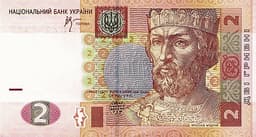
Yaroslav the Wise
Emperor · Medieval
60.3Total
Basic Information
Born
1050
978
Died
1106
1054
Era
Medieval
Medieval
Nationality
Holy Roman Empire
Kievan Rus
Occupation
Emperor
Emperor
Civilization
Western
Western
Score Comparison
Military (10%)
50.0
72.5
Political (20%)
54.7
70.0
Influence (20%)
72.0
55.0
Legacy (20%)
72.0
52.0
Leadership (15%)
67.0
72.0
Strategy (15%)
60.0
50.0
TOTAL
65.3
60.3
Henry IV of HRE — Complete Timeline
1075 AD
Battle of LangensalzaWar◆ Major
Henry IV defeated Saxon rebels at Langensalza in Thuringia. The victory temporarily ended the Saxon Rebellion, but the conflict resumed later. The battle demonstrated Henry's military capability early in his reign.
Saxon RebellionBattle
Impact: regional
1076 AD
Excommunication by Pope Gregory VIIPolitical Action◆ Major
Pope Gregory VII excommunicated Henry IV after Henry attempted to depose the Pope. The excommunication freed Henry's subjects from their oaths of loyalty, leading to a rebellion by German princes. This forced Henry to seek reconciliation at Canossa.
Investiture ControversyPapacyRebellion
Impact: globaldestructive
1077 AD
Walk to CanossaPolitical Action
Henry IV traveled to Canossa Castle in northern Italy to seek absolution from Pope Gregory VII. He stood barefoot in the snow for three days before the Pope lifted his excommunication. This event symbolized the power struggle between secular and religious authority.
Investiture ControversyPapacyPenance
Impact: global
1084 AD
Siege of RomeWar◆ Major
Henry IV besieged Rome and captured the city. He was crowned Holy Roman Emperor by Antipope Clement III. Pope Gregory VII took refuge in the Castel Sant'Angelo and was rescued by Norman forces under Robert Guiscard, who sacked Rome.
Investiture ControversyRomeCrowning
Impact: regionaldestructive
Yaroslav the Wise — Complete Timeline
1016 AD
Promulgation of the Russkaya PravdaReform
Yaroslav issued the Russkaya Pravda (Rus' Justice), the first written legal code in Kievan Rus. It codified laws on crime, property, and inheritance, replacing customary law and establishing a unified legal system.
Legal CodeLawGovernance
Impact: nationalconstructive
1036 AD
Defeat of the PechenegsWar◆ Major
Yaroslav led the Kievan army to a decisive victory over the Pechenegs near Kiev. The defeat ended Pecheneg raids on Rus territory and secured the southern borders, allowing for a period of peace and prosperity.
Military VictoryBorder SecurityPechenegs
Impact: regionalconstructive
1037 AD
Construction of Saint Sophia Cathedral, KievCultural◆ Major
Yaroslav commissioned the Saint Sophia Cathedral in Kiev, modeled on the Hagia Sophia in Constantinople. The cathedral became the spiritual and cultural center of Kievan Rus, housing a library and scriptorium.
ArchitectureCathedralCultural Center
Impact: nationalconstructive
1043 AD
Marriage Alliances with European RoyaltyPolitical Action◆ Major
Yaroslav arranged marriages for his children with European royal families: his daughters married kings of France, Norway, and Hungary, and his sons married Byzantine and Polish princesses. This integrated Kievan Rus into European dynastic networks.
DiplomacyMarriage AlliancesEuropean Integration
Impact: regionalconstructive
Expert Analysis
Origins
Henry IV of the Holy Roman Empire was born in 1050, the son of Emperor Henry III and Agnes of Poitou. Raised in a tumultuous political landscape, he inherited the throne at age six under the regency of his mother and later Archbishop Anno II of Cologne. His early life was marked by the kidnapping of his person by conspirators in 1062, an event that shaped his distrust of nobility.
Yaroslav the Wise, born around 978, was the son of Vladimir the Great and Rogneda of Polotsk. He grew up in the newly Christianized Kievan Rus, receiving education in Slavic and Byzantine literature. His father appointed him prince of Rostov and later Novgorod, where he gained administrative experience. The death of Vladimir in 1015 triggered a succession crisis that defined Yaroslav's early career.
Rise to Power
Henry IV's rise was contested from the start. In 1069, he began personal rule, facing a powerful Saxon rebellion. He crushed the Saxons at the Battle of Langensalza in 1075, scoring a military victory (Military score 50.0) that temporarily stabilized his rule. However, his conflict with Pope Gregory VII escalated: Henry's attempt to depose the pope in 1076 led to his excommunication, freeing his subjects from loyalty. The turning point came in 1077 with the Walk to Canossa, where Henry stood barefoot in the snow for three days seeking absolution. This political maneuver (Political score 54.7) regained his crown but weakened imperial authority.
Yaroslav's path to power was brutal. After Vladimir's death, his brother Svyatopolk murdered three of Yaroslav's brothers. Yaroslav, prince of Novgorod, raised an army and defeated Svyatopolk at the Battle of Lyubech in 1016. Further conflicts with his brother Mstislav led to a division of the realm until Mstislav's death in 1036, after which Yaroslav became sole ruler. His military campaigns (Military score 72.5) against the Pechenegs culminated in a decisive victory near Kiev in 1036, securing the southern frontier.
Leadership & Governance
Henry IV's governance was characterized by conflict with the papacy and German princes. He relied on ministeriales (unfree knights) to administer his lands, bypassing the nobility. His appointment of bishops as administrative tools brought him into direct conflict with the Gregorian Reform. The Investiture Controversy dominated his reign: Henry insisted on his right to appoint church officials, leading to repeated excommunications. His leadership style (Leadership score 67.0) was confrontational, often alienating allies.
Yaroslav the Wise focused on internal consolidation and legal codification. His greatest achievement was the Russkaya Pravda ('Rus' Justice'), a written legal code that standardized penalties and rights across his realm. It covered homicide, theft, property, and inheritance, reducing feudal violence. Yaroslav also promoted Christianity through building projects like Saint Sophia Cathedral in Kiev (modeled on Hagia Sophia) and establishing monasteries. His governance (Political score 70.0) emphasized diplomacy: he arranged marriages for his daughters to European kings (France, Norway, Hungary) and his sons to Byzantine princesses, creating a network of alliances.
Triumph & Tragedy
Henry IV's triumphs included surviving the Saxon Rebellion and the Canossa humiliation to reclaim power. He besieged Rome in 1084, installed Antipope Clement III, and received the imperial crown. However, his tragedies were manifold: his excommunication emboldened his son Henry V to rebel, leading to his abdication in 1105. He died in 1106, isolated and defeated. His failure to resolve the Investiture Controversy left the empire weakened.
Yaroslav's triumph was the stabilization and cultural flowering of Kievan Rus. He defeated the Pechenegs permanently and built the Golden Gate in Kiev. His legal code influenced Eastern European law for centuries. However, his tragedy was the division of his realm among his sons, ignoring the principle of primogeniture. This led to internecine warfare after his death in 1054, fragmenting the Rus state. His legacy score (52.0) reflects this fragmentation.
Character & Destiny
Henry IV was stubborn and impulsive, traits that fueled his conflict with the papacy. His willingness to walk barefoot at Canossa showed political pragmatism but also desperation. His inability to compromise cost him the support of his sons and nobles. Historians assess him as a capable but tragic figure whose character exacerbated the Investiture Controversy.
Yaroslav was calculating and visionary. He prioritized legal order and cultural development over military expansion. His strategic marriages (Strategy score 50.0) reflected long-term thinking. However, his failure to secure a unified succession undid his achievements. He is remembered as 'the Wise' for his legal and cultural contributions.
Legacy
Henry IV's legacy is tied to the Investiture Controversy, which ultimately weakened imperial power vis-à-vis the papacy. The Concordat of Worms (1122) settled the dispute, but the empire never regained its early medieval dominance. His actions accelerated the rise of territorial princes within Germany. His total impact score of 65.3 reflects his lasting influence on church-state relations.
Yaroslav's legacy is more concrete: the Russkaya Pravda served as a foundation for Russian law until the 15th century. Saint Sophia Cathedral remains a symbol of Kiev's heritage. His marriage alliances connected Rus to European dynasties. However, the political fragmentation he allowed prevented the emergence of a strong centralized state, contributing to the Mongol conquest in the 13th century. His total score of 60.3 is slightly lower.
Conclusion
Henry IV and Yaroslav the Wise represent different paths to influence: one through conflict and survival, the other through law and culture. While Henry's confrontation with the papacy reshaped medieval Europe's power structure, Yaroslav's legal code had a longer practical impact on Eastern Europe. The data suggests Henry has a higher total score (65.3 vs 60.3), but Yaroslav's contributions to governance were more enduring. However, taking a clear position: Henry IV's role in the Investiture Controversy fundamentally altered the relationship between church and state, a shift that echoed for centuries. Yaroslav's achievements were significant but ultimately contained within a region that declined after his death. Henry IV's impact, though fraught with tragedy, was more consequential for European history.
Rankings
🥇
Henry IV of HRELeader
Mil: 50.0Pol: 54.7Inf: 72.0
65.3
🥈
Yaroslav the Wise
Mil: 72.5Pol: 70.0Inf: 55.0
60.3
+5.0 behind
How This Comparison Works
Algorithm
Each figure is scored on 6 dimensions (0—100 scale) based on structured historical data: Military (10%), Political (20%), Influence (20%), Legacy (20%), Leadership (15%), Strategy (15%). The weighted total produces the final ranking.
Data Sources
Scores are computed from structured sub-indicators in the database. Scale factors adjust for era (Ancient ×0.85, Modern ×1.0) and civilization size (Eastern ×1.05, Other ×0.80) to account for differences in population and military scale.
Maximum 3 Figures
Comparisons are limited to 2—3 figures to ensure readability and statistical meaningfulness.
Error Margins
±5 points per dimension — Sub-scores are derived from historical records with inherent uncertainty. Two figures within 5 points on a dimension should be considered roughly equivalent in that area.
Total Score Accuracy
±3 points overall — The weighted combination of 6 dimensions produces a total score with approximately ±3 points of uncertainty. Differences of less than 3 points are not statistically significant— the figures are effectively tied.
Known Limitations
- Historical records are incomplete and uneven across civilizations
- Figures from oral-tradition societies may be underrepresented
- Occupation labels can misclassify multi-role figures
- Scores measure capability and impact, not moral character
- Quantitative scoring is a comparison tool, not absolute truth
Capability Radar
Military (10%) — Battles & Warfare
Battles
55
60
Win Rate
50
65
Expansion
35
55
Political (20%) — Governance & Reform
Reform
40
85
Diplomacy
70
80
Economy
30
70
Influence (20%) — Cultural & Global Reach
Cultural
60
65
Global
55
55
Legacy (20%) — Historical Impact
Historical
75
70
Longevity
65
60
Leadership (15%) — Power & Stability
Tenure
65
75
Stability
25
70
Strategy (15%) — Tactics & Innovation
Strategy
45
60
Tactics
40
55
Reform
30
50
Similar Comparisons
Comments & Discussion
No comments yet. Be the first to share your thoughts!