Loading...
Emperor Go-Daigo vs Yaroslav the Wise
Yaroslav the Wise leads by 3.9 pts · 2 figures compared
…
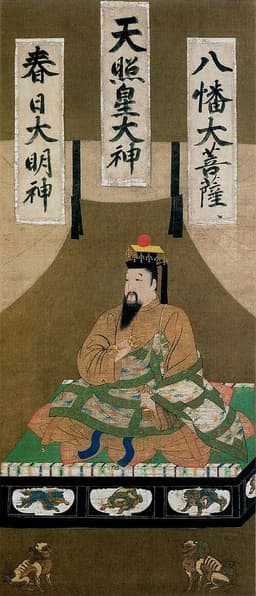
Emperor Go-Daigo
Emperor · Medieval
56.4Total
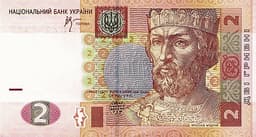
Yaroslav the Wise
Emperor · Medieval
60.3Total
Basic Information
Born
1288
978
Died
1339
1054
Era
Medieval
Medieval
Nationality
Japan
Kievan Rus
Occupation
Emperor
Emperor
Civilization
Eastern
Western
Score Comparison
Military (10%)
35.0
72.5
Political (20%)
68.0
70.0
Influence (20%)
58.0
55.0
Legacy (20%)
56.0
52.0
Leadership (15%)
65.7
72.0
Strategy (15%)
43.3
50.0
TOTAL
56.4
60.3
Emperor Go-Daigo — Complete Timeline
1331 AD
Exile to Oki IslandPolitical Action◆ Major
The Kamakura shogunate exiled Go-Daigo to Oki Island after his first attempt to overthrow them failed. He escaped two years later, rallying support from disaffected samurai and monks to renew his rebellion.
ExileRebellionKamakura Shogunate
Impact: nationaltragic
1333 AD
Kenmu RestorationPolitical Action
Go-Daigo overthrew the Kamakura shogunate and restored direct imperial rule. He issued the Kenmu Code, attempting to reassert imperial authority, but his policies alienated the samurai class, leading to rebellion.
RestorationImperial RuleJapan
Impact: national
1336 AD
Establishment of the Southern CourtPolitical Action
After Ashikaga Takauji turned against him, Go-Daigo fled to Yoshino and established the Southern Court. This created a split in the imperial line, leading to the Nanboku-cho period of rival courts lasting until 1392.
Civil WarImperial SplitNanboku-cho
Impact: national
Yaroslav the Wise — Complete Timeline
1016 AD
Promulgation of the Russkaya PravdaReform
Yaroslav issued the Russkaya Pravda (Rus' Justice), the first written legal code in Kievan Rus. It codified laws on crime, property, and inheritance, replacing customary law and establishing a unified legal system.
Legal CodeLawGovernance
Impact: nationalconstructive
1036 AD
Defeat of the PechenegsWar◆ Major
Yaroslav led the Kievan army to a decisive victory over the Pechenegs near Kiev. The defeat ended Pecheneg raids on Rus territory and secured the southern borders, allowing for a period of peace and prosperity.
Military VictoryBorder SecurityPechenegs
Impact: regionalconstructive
1037 AD
Construction of Saint Sophia Cathedral, KievCultural◆ Major
Yaroslav commissioned the Saint Sophia Cathedral in Kiev, modeled on the Hagia Sophia in Constantinople. The cathedral became the spiritual and cultural center of Kievan Rus, housing a library and scriptorium.
ArchitectureCathedralCultural Center
Impact: nationalconstructive
1043 AD
Marriage Alliances with European RoyaltyPolitical Action◆ Major
Yaroslav arranged marriages for his children with European royal families: his daughters married kings of France, Norway, and Hungary, and his sons married Byzantine and Polish princesses. This integrated Kievan Rus into European dynastic networks.
DiplomacyMarriage AlliancesEuropean Integration
Impact: regionalconstructive
Expert Analysis
Origins
Emperor Go-Daigo (1288–1339) was the 96th emperor of Japan, born into the Daikakuji line of the imperial family. His father, Emperor Go-Uda, and his predecessors had seen imperial authority eroded by the Kamakura shogunate, which held de facto power. Go-Daigo was educated in classical Chinese and Japanese texts, and he developed a strong conviction that the emperor should rule directly, not as a figurehead. His early reign from 1318 was marked by a growing tension with the shogunate, leading to his first failed rebellion in 1324 and subsequent exile.
Yaroslav the Wise (c. 978–1054) was the son of Vladimir the Great, who Christianized Kievan Rus. Born into the Rurikid dynasty, Yaroslav spent his early years as prince of Novgorod, where he gained administrative and military experience. He had to fight his brothers for control after his father's death, eventually emerging as Grand Prince of Kiev in 1019. His education, likely including Old Church Slavonic and Byzantine texts, prepared him for the role of a lawgiver and patron of culture.
Rise to Power
Go-Daigo's rise came through a persistent challenge to the Kamakura shogunate. After his first coup attempt in 1324 failed, he was exiled to Oki Island in 1331. He escaped in 1333 with the help of local supporters and rallied a coalition of disaffected samurai, including Ashikaga Takauji and Nitta Yoshisada. This coalition successfully overthrew the shogunate in 1333, and Go-Daigo returned to Kyoto to initiate the Kenmu Restoration, aiming to restore direct imperial rule.
Yaroslav the Wise rose to power through a series of brutal conflicts with his brothers. After Vladimir's death in 1015, Yaroslav fought against Sviatopolk I, who murdered three of their brothers. With help from Novgorod and Varangian mercenaries, Yaroslav defeated Sviatopolk in 1019 and became Grand Prince of Kiev. He later fought his brother Mstislav, and they agreed to divide the realm until Mstislav's death in 1036, after which Yaroslav ruled alone.
Leadership & Governance
Go-Daigo's leadership style was autocratic and idealistic. He issued the Kenmu Code in 1334, which sought to reassert imperial authority by confiscating lands from samurai and rewarding his courtiers. However, he alienated key allies like Ashikaga Takauji, who expected rewards for their military support. His governance lacked pragmatism; he failed to adapt to the feudal realities of Japan, where samurai held real power. This led to widespread discontent, and by 1335, Takauji rebelled, forcing Go-Daigo to flee to Yoshino and establish the Southern Court, splitting the imperial line.
Yaroslav the Wise governed with a combination of legal codification and cultural patronage. He promulgated the Russkaya Pravda, the first written legal code in Kievan Rus, which standardized laws on crime, property, and inheritance, reducing reliance on customary law. He also commissioned the Saint Sophia Cathedral in Kiev, modeled on Hagia Sophia, making Kiev a cultural rival to Constantinople. His marriage alliances with European royalty—daughters married kings of France, Norway, and Hungary—integrated Kievan Rus into European diplomacy. This strategic approach secured stability and prosperity.
Triumph & Tragedy
Go-Daigo's greatest triumph was the overthrow of the Kamakura shogunate in 1333, a feat that briefly restored imperial rule. However, his tragedy was the failure of the Kenmu Restoration. Within three years, his policies provoked a rebellion that led to the establishment of the Ashikaga shogunate and the Nanboku-chō period of divided courts. His insistence on direct rule, without securing samurai loyalty, resulted in a weakened imperial position for centuries.
Yaroslav the Wise's triumphs include the defeat of the Pechenegs in 1036, which secured Kiev's southern borders, and the codification of law that shaped Russian legal tradition. His patronage of architecture and learning marked a golden age. His tragedy lies in the succession crisis after his death. He divided his realm among his sons, leading to internecine warfare that fragmented Kievan Rus and left it vulnerable to Mongol invasion in the 13th century. His legacy of unity was undone by his own succession plan.
Character & Destiny
Go-Daigo was a determined but inflexible ruler. His obsession with restoring imperial authority blinded him to the need for compromise. He scored 35.0 in military capability, reflecting his reliance on samurai commanders rather than personal martial skill. His political score of 68.0 indicates some skill in rallying support, but his governance score of 65.7 was undermined by poor strategic choices (43.3). His character—idealistic and stubborn—led to his downfall.
Yaroslav the Wise was pragmatic and diplomatic, with a military score of 72.5 and political score of 70.0. His leadership score of 72.0 reflects his ability to consolidate power and build institutions. His strategic score of 50.0 suggests a mixed record, with the succession plan being a major flaw. His character—ambitious yet cautious—allowed him to build a stable realm, but his failure to ensure unity after his death proved costly.
Legacy
Go-Daigo's legacy is mixed. He is remembered as a symbol of imperial ambition, but his actions led to the Nanboku-chō period, which divided the imperial family for 60 years. The Southern Court he established eventually lost, and the Ashikaga shogunate continued. His attempt at restoration influenced later movements, such as the Meiji Restoration, but his direct impact was limited. He scores 56.0 in legacy and 58.0 in influence.
Yaroslav the Wise's legacy is more enduring. The Russkaya Pravda influenced Russian law for centuries, and Saint Sophia Cathedral remains a landmark. His marriage alliances connected Kievan Rus to Europe, and his reign is seen as a golden age. However, the fragmentation he inadvertently caused led to decline. He scores 52.0 in legacy and 55.0 in influence, but his total score of 60.3 reflects a balanced impact.
Conclusion
While both rulers faced challenges, Yaroslav the Wise had a greater impact. His legal code and cultural achievements left a tangible legacy that shaped Eastern Europe, whereas Go-Daigo's restoration failed and weakened the imperial institution. Yaroslav's total score of 60.3 surpasses Go-Daigo's 56.4, and his military and political scores are higher. Despite his flawed succession, Yaroslav's contributions to law, culture, and diplomacy outweigh Go-Daigo's brief restoration. Go-Daigo's story is one of noble failure, but Yaroslav's is one of concrete achievement. History favors the lawgiver over the failed restorer.
Rankings
🥇
Yaroslav the WiseLeader
Mil: 72.5Pol: 70.0Inf: 55.0
60.3
🥈
Emperor Go-Daigo
Mil: 35.0Pol: 68.0Inf: 58.0
56.4
+3.9 behind
How This Comparison Works
Algorithm
Each figure is scored on 6 dimensions (0—100 scale) based on structured historical data: Military (10%), Political (20%), Influence (20%), Legacy (20%), Leadership (15%), Strategy (15%). The weighted total produces the final ranking.
Data Sources
Scores are computed from structured sub-indicators in the database. Scale factors adjust for era (Ancient ×0.85, Modern ×1.0) and civilization size (Eastern ×1.05, Other ×0.80) to account for differences in population and military scale.
Maximum 3 Figures
Comparisons are limited to 2—3 figures to ensure readability and statistical meaningfulness.
Error Margins
±5 points per dimension — Sub-scores are derived from historical records with inherent uncertainty. Two figures within 5 points on a dimension should be considered roughly equivalent in that area.
Total Score Accuracy
±3 points overall — The weighted combination of 6 dimensions produces a total score with approximately ±3 points of uncertainty. Differences of less than 3 points are not statistically significant— the figures are effectively tied.
Known Limitations
- Historical records are incomplete and uneven across civilizations
- Figures from oral-tradition societies may be underrepresented
- Occupation labels can misclassify multi-role figures
- Scores measure capability and impact, not moral character
- Quantitative scoring is a comparison tool, not absolute truth
Capability Radar
Military (10%) — Battles & Warfare
Battles
35
60
Win Rate
30
65
Expansion
15
55
Political (20%) — Governance & Reform
Reform
70
85
Diplomacy
55
80
Economy
30
70
Influence (20%) — Cultural & Global Reach
Cultural
50
65
Global
30
55
Legacy (20%) — Historical Impact
Historical
65
70
Longevity
55
60
Leadership (15%) — Power & Stability
Tenure
60
75
Stability
25
70
Strategy (15%) — Tactics & Innovation
Strategy
45
60
Tactics
40
55
Reform
20
50
Similar Comparisons
Comments & Discussion
No comments yet. Be the first to share your thoughts!