Loading...
Berke vs Vasili III
Berke leads by 8.4 pts · 2 figures compared
…
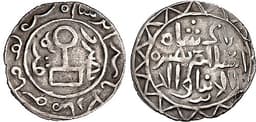
Berke
Emperor · Medieval
68.4Total

Vasili III
Emperor · Medieval
60.0Total
Basic Information
Born
1209
1479
Died
1266
1533
Era
Medieval
Medieval
Nationality
Golden Horde
Russia
Occupation
Emperor
Emperor
Civilization
Eastern
Western
Score Comparison
Military (10%)
74.7
52.5
Political (20%)
57.0
68.0
Influence (20%)
68.0
59.0
Legacy (20%)
72.0
52.0
Leadership (15%)
72.0
72.0
Strategy (15%)
66.3
60.0
TOTAL
68.4
60.0
Berke — Complete Timeline
1257 AD
Conversion to IslamCultural
Berke converted to Islam, becoming the first Mongol ruler to adopt the faith. This decision created a religious divide within the Mongol Empire, aligning Berke with the Mamluk Sultanate and against the Ilkhanate, which remained Buddhist and Christian.
ReligionMongol EmpireIslam
Impact: regionalconstructive
1259 AD
Raid on Poland and HungaryWar
Under Berke's command, the Golden Horde launched a major raid into Poland and Hungary, led by general Burundai. The Mongols sacked Sandomierz and Krak
Mongol InvasionEastern EuropeRaid
Impact: regionaldestructive
1261 AD
Alliance with the MamluksPolitical Action◆ Major
Berke formed a diplomatic and military alliance with the Mamluk Sultan Baibars against the Ilkhanate. This alliance included trade agreements and joint military planning, and it helped the Mamluks resist Mongol invasions of Syria.
DiplomacyMamluk SultanateAnti-Ilkhanate
Impact: regionalconstructive
1262 AD
Berke–Hulagu WarWar◆ Major
Berke initiated war against his cousin Hulagu, ruler of the Ilkhanate, after Hulagu's sack of Baghdad and the execution of the Abbasid caliph. Berke allied with the Mamluks, leading to battles in the Caucasus that weakened both Mongol states.
Mongol Civil WarCaucasusMamluk Alliance
Impact: regionaldestructive
Vasili III — Complete Timeline
1510 AD
Annexation of PskovWar◆ Major
Vasili III annexed the Pskov Republic, abolishing its veche and deporting leading families to central Russia. This completed the absorption of the last independent Russian city-state into Moscow.
PskovAnnexationMoscow
Impact: regional
1514 AD
Annexation of SmolenskWar◆ Major
Vasili III captured Smolensk from the Grand Duchy of Lithuania after a long siege. The city remained under Russian control despite a failed Lithuanian counterattack later that year.
SmolenskLithuaniaSiege
Impact: regional
1521 AD
Annexation of RyazanWar◆ Major
Vasili III annexed the Grand Principality of Ryazan, the last semi-independent Russian principality. The Ryazan prince Ivan Ivanovich was forced to flee to Lithuania, ending Ryazan's autonomy.
RyazanAnnexationUnification
Impact: regional
1526 AD
Divorce and Remarriage to Elena GlinskayaPolitical Action
Vasili III divorced his barren wife Solomonia Saburova and married Elena Glinskaya. This marriage produced Ivan IV, but the divorce caused controversy with the Orthodox Church and some clergy.
MarriageSuccessionChurch
Impact: national
Expert Analysis
Origins
Berke (c. 1208–1266) was a grandson of Genghis Khan, born into the Mongol imperial family. His father Jochi, the eldest son of Genghis, had been granted the westernmost ulus of the empire, which became the Golden Horde. Berke grew up in the nomadic traditions of the steppe, but his exposure to different cultures—especially through trade and proximity to Muslim territories—shaped his later religious conversion. He was a younger son, not initially destined for leadership, but his military competence and political acumen allowed him to rise.
Vasili III (1479–1533) was the son of Ivan III, the Grand Prince of Moscow who had thrown off Mongol rule and begun centralizing Russian lands. Born into the Rurik dynasty, Vasili was raised in the Kremlin, educated in Orthodox Christian doctrines, and trained in governance. His mother, Sophia Paleologue, was a Byzantine princess, which gave him ties to the fallen empire. Unlike Berke, Vasili inherited a stable, growing state and focused on consolidating power.
Rise to Power
Berke came to power in 1257 after the death of his brother Batu, the founder of the Golden Horde. Initially, he served as a commander under Batu, participating in campaigns in Europe. His conversion to Islam around 1252 was a turning point; it set him apart from other Mongol leaders and aligned him with Muslim merchants and scholars. When he became khan, he faced opposition from his cousin Hulagu, who ruled the Ilkhanate and was allied with Christian factions. Berke’s religious identity became a political tool, rallying support among Muslims in his realm.
Vasili III became Grand Prince of Moscow in 1505 upon his father’s death. He had already been co-ruler for several years, managing affairs. His rise was straightforward: he was the eldest surviving son and faced no serious rivals. His main challenge was to complete the unification of Russian lands, a task his father had begun. He annexed Pskov in 1510, Smolensk in 1514, and Ryazan in 1521, each through a combination of military pressure and diplomatic maneuvering.
Leadership & Governance
Berke’s leadership was defined by his religious conversion and its geopolitical consequences. He was the first Mongol ruler to adopt Islam, which scored him 68.0 in influence for creating a lasting religious identity for the Golden Horde. He governed through traditional Mongol structures but integrated Muslim advisors. His alliance with the Mamluk Sultanate against the Ilkhanate was a strategic masterstroke, isolating his enemy. However, his governance was less focused on internal administration; he spent much of his reign warring with Hulagu.
Vasili III scored 72.0 in leadership, reflecting his methodical consolidation of power. He centralized authority by abolishing local veches (assemblies) in annexed cities, deporting elite families, and appointing Moscow-appointed governors. He also reformed the legal system and promoted the Orthodox Church. His governance was autocratic but effective: he doubled the size of Moscow’s territory. However, his divorce to marry Elena Glinskaya caused a scandal and weakened his moral authority.
Triumph & Tragedy
Berke’s greatest triumph was his war against Hulagu (1262–1266), which checked Ilkhanate expansion and protected the Golden Horde’s borders. His alliance with the Mamluks helped preserve Muslim rule in Egypt and Syria. His tragedy was that his religious zeal deepened the Mongol civil war, fracturing the empire irreparably. He also failed to capture Hulagu or permanently defeat the Ilkhanate.
Vasili III’s triumph was the annexation of Smolensk, a key fortress that had been under Lithuanian control. He also successfully integrated Pskov and Ryazan, completing the unification of Russian lands. His tragedy was his failure to produce an heir until late in life; his son Ivan IV (the Terrible) was only three when Vasili died, leading to a regency that destabilized Russia.
Character & Destiny
Berke was decisive and religiously motivated. His conversion was not just personal but strategic: it gave him a cause against Hulagu, who was aligned with Christians. However, his inflexibility in pursuing war with the Ilkhanate drained resources. Historians note that Berke’s military score (74.7) reflects his competence, but his political score (57.0) shows he failed to unify the Mongol world. His destiny was to be a pivotal figure in the Islamization of the Golden Horde.
Vasili III was cautious and methodical, with a political score of 68.0. He avoided risky wars, preferring diplomacy and gradual pressure. His character was shaped by his father’s example: he saw himself as a consolidator, not a conqueror. His destiny was to set the stage for his son Ivan IV, but his premature death left a power vacuum.
Legacy
Berke’s legacy is profound: he made Islam the state religion of the Golden Horde, which persisted for centuries. His alliance with the Mamluks influenced trade and geopolitics in the Middle East. He is remembered as a defender of Islam, and his conversion opened the way for later Mongol khanates to adopt the faith. His military score of 74.7 and legacy score of 72.0 reflect this impact.
Vasili III’s legacy is more limited: he completed what his father started. His annexations ensured that Moscow dominated Russia, but his administrative reforms were overshadowed by Ivan IV’s later terror. His legacy score is 52.0, lower than Berke’s, because his achievements were incremental rather than transformative.
Conclusion
Berke had greater impact than Vasili III. His conversion to Islam reshaped the Golden Horde and influenced the Islamic world, while Vasili merely finished his father’s work. Berke’s total score of 68.4 versus Vasili’s 60.0 reflects this difference. Berke’s actions had consequences that lasted centuries, while Vasili’s were soon eclipsed by his son. In terms of historical significance, Berke stands as a more influential figure.
Rankings
🥇
BerkeLeader
Mil: 74.7Pol: 57.0Inf: 68.0
68.4
🥈
Vasili III
Mil: 52.5Pol: 68.0Inf: 59.0
60.0
+8.4 behind
How This Comparison Works
Algorithm
Each figure is scored on 6 dimensions (0—100 scale) based on structured historical data: Military (10%), Political (20%), Influence (20%), Legacy (20%), Leadership (15%), Strategy (15%). The weighted total produces the final ranking.
Data Sources
Scores are computed from structured sub-indicators in the database. Scale factors adjust for era (Ancient ×0.85, Modern ×1.0) and civilization size (Eastern ×1.05, Other ×0.80) to account for differences in population and military scale.
Maximum 3 Figures
Comparisons are limited to 2—3 figures to ensure readability and statistical meaningfulness.
Error Margins
±5 points per dimension — Sub-scores are derived from historical records with inherent uncertainty. Two figures within 5 points on a dimension should be considered roughly equivalent in that area.
Total Score Accuracy
±3 points overall — The weighted combination of 6 dimensions produces a total score with approximately ±3 points of uncertainty. Differences of less than 3 points are not statistically significant— the figures are effectively tied.
Known Limitations
- Historical records are incomplete and uneven across civilizations
- Figures from oral-tradition societies may be underrepresented
- Occupation labels can misclassify multi-role figures
- Scores measure capability and impact, not moral character
- Quantitative scoring is a comparison tool, not absolute truth
Capability Radar
Military (10%) — Battles & Warfare
Battles
75
45
Win Rate
70
55
Expansion
75
65
Political (20%) — Governance & Reform
Reform
68
60
Diplomacy
80
55
Economy
65
50
Influence (20%) — Cultural & Global Reach
Cultural
65
45
Global
65
40
Legacy (20%) — Historical Impact
Historical
70
60
Longevity
60
50
Leadership (15%) — Power & Stability
Tenure
70
70
Stability
60
55
Strategy (15%) — Tactics & Innovation
Strategy
78
60
Tactics
72
40
Reform
65
35
Similar Comparisons
Comments & Discussion
No comments yet. Be the first to share your thoughts!