Loading...
Valentinian I vs Vespasian
Vespasian leads by 10.4 pts · 2 figures compared
…
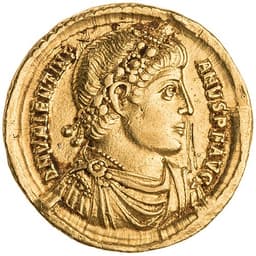
Valentinian I
Emperor · Ancient
57.9Total
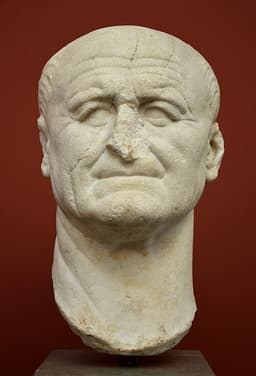
Vespasian
Emperor · Ancient
68.3Total
Basic Information
Born
321
9
Died
375
79
Era
Ancient
Ancient
Nationality
Roman Empire
Roman Empire
Occupation
Emperor
Emperor
Civilization
Western
Western
Score Comparison
Military (10%)
60.0
82.0
Political (20%)
68.0
72.0
Influence (20%)
53.3
68.0
Legacy (20%)
45.8
55.0
Leadership (15%)
74.0
79.8
Strategy (15%)
58.0
65.4
TOTAL
57.9
68.3
Valentinian I — Complete Timeline
364 AD
Election as Roman EmperorPolitical Action◆ Major
After the sudden death of Jovian, the Roman army elected Valentinian I as emperor at Nicaea. Valentinian was a capable military officer from Pannonia. He immediately appointed his brother Valens as co-emperor for the East, dividing the empire.
Imperial ElectionDivision of EmpireRoman Empire
Impact: regionalconstructive
365 AD
Campaigns against the AlamanniWar◆ Major
Valentinian I launched a series of campaigns against the Alamanni tribes who had invaded Gaul. He crossed the Rhine River and defeated them at the Battle of Solicinium (modern Rottenburg am Neckar). These campaigns secured the Rhine frontier for a decade.
Germanic WarsBattleRoman Empire
Impact: regionalconstructive
369 AD
Fortification of the Rhine and Danube frontiersReform◆ Major
Valentinian I ordered an extensive program of fortification along the Rhine and Danube borders. He built new forts, repaired existing walls, and established a system of watchtowers. This defensive strategy strengthened Roman control and deterred barbarian raids.
Military ReformFrontier DefenseRoman Empire
Impact: regionalconstructive
375 AD
Death from apoplexy during a diplomatic meetingOther◆ Major
While receiving a delegation of Quadi barbarians at Brigetio on the Danube, Valentinian I became enraged at their insolent demeanor. He suffered a stroke (apoplexy) and died shortly after. His sudden death left the Western Empire in the hands of his young sons Gratian and Valentinian II.
DeathDiplomacyRoman Empire
Impact: regionaltragic
Vespasian — Complete Timeline
69 AD
Accession as EmperorPolitical Action
Vespasian was proclaimed emperor by his troops in Egypt and later recognized by the Senate after the death of Vitellius. He founded the Flavian dynasty, ending the Year of the Four Emperors.
SuccessionFlavian DynastyCivil War
Impact: global
70 AD
Siege of Jerusalem and Destruction of the TempleWar
Vespasian's son Titus captured Jerusalem after a siege, destroying the Second Temple. The victory ended the First Jewish-Roman War and established the Flavian reputation.
Jewish WarSiegeTemple Destruction
Impact: regionaldestructive
Financial Reforms and Tax on UrineReform◆ Major
Vespasian restored the empire's finances by increasing taxes, including a tax on urine collected from public latrines for use in fulling cloth. He also revalued the currency and reduced spending.
TaxationFinanceReform
Impact: nationalconstructive
72 AD
Construction of the Colosseum BeginsCultural◆ Major
Vespasian began construction of the Flavian Amphitheatre (Colosseum) on the site of Nero's Domus Aurea. The project used spoils from the Jewish War and provided public entertainment.
ArchitecturePublic WorksEntertainment
Impact: globalconstructive
79 AD
Death and DeificationOther◆ Major
Vespasian died of natural causes at age 69, the first Roman emperor to die in office since Vespasian. He was deified by the Senate, and his sons Titus and Domitian succeeded him.
DeathDeificationSuccession
Impact: national
Expert Analysis
Origins
Valentinian I was born in 321 AD in Cibalae, Pannonia (modern Croatia), into a military family. His father, Gratian the Elder, rose from humble origins to become a senior officer under Constantine. Valentinian joined the army and served under Emperors Constantius II and Julian, gaining experience in frontier defense.
Vespasian was born in 9 AD in Falacrina, Italy, to a family of equestrian rank. His father, Titus Flavius Sabinus, was a tax collector and banker. Vespasian initially pursued a senatorial career, serving as a military tribune in Thrace, quaestor in Crete, and praetor under Caligula. His early career was marked by modest success.
Rise to Power
Valentinian I was elected emperor by the army at Nicaea in 364 AD after Jovian's sudden death. He was a capable officer, and the army valued his experience. He immediately appointed his brother Valens as co-emperor for the East, dividing the empire. Valentinian focused on the Western frontier, combating the Alamanni and other Germanic tribes.
Vespasian's rise was more gradual. He gained military fame as a commander in the Roman invasion of Britain in 43 AD, where he subdued the southwest. Later, he served as governor of Africa and was a consul. In 66 AD, Nero appointed him to suppress the Jewish Revolt. During the Year of the Four Emperors (69 AD), Vespasian was proclaimed emperor by his troops in Egypt and Judea. After Vitellius's death, the Senate recognized him, founding the Flavian dynasty.
Leadership & Governance
Valentinian I was a hands-on military commander who personally led campaigns against the Alamanni, Quadi, and Sarmatians. He scored 74.0 in leadership but only 58.0 in strategy. His governance focused on frontier defense: he fortified the Rhine and Danube borders, building new forts and repairing existing ones. He was ruthless against corruption and suppressed religious dissent, enforcing orthodox Christianity while tolerating pagans.
Vespasian, scoring 79.8 in leadership, was a pragmatic administrator. He restored Rome's finances after Nero's extravagance and the civil wars. He introduced new taxes, including a tax on urine collected from public latrines (used in cloth production). He began construction of the Colosseum on the site of Nero's Domus Aurea, symbolizing a return of public space to the people. Vespasian also reformed the Senate and army, stabilizing the empire.
Triumph & Tragedy
Valentinian I's greatest success was his effective defense of the Western Roman frontiers. His fortification program secured the Rhine and Danube lines for decades. He also won major victories over the Alamanni at the Battle of Solicinium (368 AD). However, his temper led to his downfall: in 375 AD, during a meeting with Quadi envoys at Brigetio, he became enraged at their insolence and suffered a stroke (apoplexy), dying on the spot. His sudden death left the West vulnerable.
Vespasian's triumphs include ending the Jewish War with the destruction of Jerusalem in 70 AD by his son Titus, and stabilizing the empire after the chaos of 69 AD. He established the Flavian dynasty, ensuring a peaceful succession to his sons. His financial reforms left the treasury solvent. However, his reputation was tarnished by heavy taxation and the brutal suppression of the Jewish revolt. He also faced a conspiracy led by Gaius Julius Civilis in Gaul, which was suppressed.
Character & Destiny
Valentinian I was known for his harshness and violent temper. He was personally brave but inflexible. His death from rage is a testament to his character: he could not control his anger even when facing barbarian envoys. Historical assessments note that while he was a competent soldier, his lack of political finesse and his brutal methods alienated many.
Vespasian was shrewd, humorous, and pragmatic. He was known for his wit, reportedly telling his son Titus to "avoid war" and famously saying, "I think I am becoming a god" on his deathbed. He was less concerned with personal glory than with effective administration. His character allowed him to navigate the treacherous politics of the empire and die of natural causes at 69.
Legacy
Valentinian I's military fortifications along the Rhine and Danube influenced later Roman and medieval defensive strategies. However, his reign is often seen as a last gasp of Western Roman strength before the barbarian invasions. His score of 45.8 in legacy reflects his limited long-term impact.
Vespasian's legacy is far more enduring. The Colosseum remains a symbol of Rome. The Flavian dynasty stabilized the empire, and his fiscal policies set precedents. He scored 55.0 in legacy. His son Titus and Domitian continued his work, though Domitian's tyranny later undermined the dynasty.
Conclusion
Vespasian clearly had greater impact than Valentinian I, with a total score of 68.3 to 57.9. Vespasian's reforms stabilized the Roman Empire after a period of crisis, while Valentinian's achievements were more localized and temporary. Vespasian's legacy includes iconic structures and a stable succession, whereas Valentinian's death from rage symbolizes the fragility of late Roman leadership. In the long view, Vespasian's pragmatic governance and dynasty-building had more lasting influence on Roman history.
Rankings
🥇
VespasianLeader
Mil: 82.0Pol: 72.0Inf: 68.0
68.3
🥈
Valentinian I
Mil: 60.0Pol: 68.0Inf: 53.3
57.9
+10.4 behind
How This Comparison Works
Algorithm
Each figure is scored on 6 dimensions (0—100 scale) based on structured historical data: Military (10%), Political (20%), Influence (20%), Legacy (20%), Leadership (15%), Strategy (15%). The weighted total produces the final ranking.
Data Sources
Scores are computed from structured sub-indicators in the database. Scale factors adjust for era (Ancient ×0.85, Modern ×1.0) and civilization size (Eastern ×1.05, Other ×0.80) to account for differences in population and military scale.
Maximum 3 Figures
Comparisons are limited to 2—3 figures to ensure readability and statistical meaningfulness.
Error Margins
±5 points per dimension — Sub-scores are derived from historical records with inherent uncertainty. Two figures within 5 points on a dimension should be considered roughly equivalent in that area.
Total Score Accuracy
±3 points overall — The weighted combination of 6 dimensions produces a total score with approximately ±3 points of uncertainty. Differences of less than 3 points are not statistically significant— the figures are effectively tied.
Known Limitations
- Historical records are incomplete and uneven across civilizations
- Figures from oral-tradition societies may be underrepresented
- Occupation labels can misclassify multi-role figures
- Scores measure capability and impact, not moral character
- Quantitative scoring is a comparison tool, not absolute truth
Capability Radar
Military (10%) — Battles & Warfare
Battles
75
75
Win Rate
70
80
Expansion
55
60
Political (20%) — Governance & Reform
Reform
65
75
Diplomacy
55
80
Economy
60
85
Influence (20%) — Cultural & Global Reach
Cultural
45
75
Global
35
70
Legacy (20%) — Historical Impact
Historical
55
80
Longevity
40
75
Leadership (15%) — Power & Stability
Tenure
60
70
Stability
50
80
Strategy (15%) — Tactics & Innovation
Strategy
70
75
Tactics
65
70
Reform
60
65
Similar Comparisons
Comments & Discussion
No comments yet. Be the first to share your thoughts!