Loading...
Emperor Taiwu of Northern Wei vs Valentinian I
Emperor Taiwu of Northern Wei leads by 6.6 pts · 2 figures compared
…

Emperor Taiwu of Northern Wei
Emperor · Ancient
64.5Total
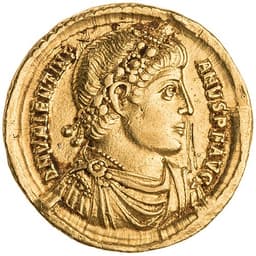
Valentinian I
Emperor · Ancient
57.9Total
Basic Information
Born
408
321
Died
452
375
Era
Ancient
Ancient
Nationality
China
Roman Empire
Occupation
Emperor
Emperor
Civilization
Eastern
Western
Score Comparison
Military (10%)
80.0
60.0
Political (20%)
72.0
68.0
Influence (20%)
56.7
53.3
Legacy (20%)
52.0
45.8
Leadership (15%)
78.0
74.0
Strategy (15%)
68.0
58.0
TOTAL
64.5
57.9
Emperor Taiwu of Northern Wei — Complete Timeline
431 AD
Conquest of XiaWar◆ Major
Taiwu's forces conquered the Xia state, a Xiongnu-led kingdom in the Ordos region. This victory eliminated a major rival and secured Northern Wei's western frontier.
ConquestExpansion
Impact: regionalconstructive
436 AD
Conquest of Northern YanWar◆ Major
Taiwu's army conquered the Northern Yan state in Liaoning, extending Northern Wei's control into the northeast. This further consolidated his unification of the north.
ConquestExpansion
Impact: regionalconstructive
439 AD
Unification of Northern ChinaWar
Emperor Taiwu of Northern Wei conquered the Northern Liang state, completing the unification of northern China under the Northern Wei dynasty. This ended the Sixteen Kingdoms period and established Northern Wei as the dominant power in the north.
UnificationConquest
Impact: regionalconstructive
446 AD
Suppression of BuddhismPolitical Action◆ Major
Emperor Taiwu issued an edict suppressing Buddhism, ordering the destruction of monasteries, scriptures, and images. This was part of his promotion of Daoism and consolidation of state control, and it severely weakened Buddhism in northern China for a time.
Religious PersecutionReform
Impact: regionaldestructive
452 AD
Assassination of Emperor TaiwuPolitical Action◆ Major
Emperor Taiwu was assassinated by the eunuch Zong Ai, who then placed Taiwu's son on the throne. This event caused a brief succession crisis and highlighted the power struggles within the Northern Wei court.
AssassinationSuccession Crisis
Impact: nationaltragic
Valentinian I — Complete Timeline
364 AD
Election as Roman EmperorPolitical Action◆ Major
After the sudden death of Jovian, the Roman army elected Valentinian I as emperor at Nicaea. Valentinian was a capable military officer from Pannonia. He immediately appointed his brother Valens as co-emperor for the East, dividing the empire.
Imperial ElectionDivision of EmpireRoman Empire
Impact: regionalconstructive
365 AD
Campaigns against the AlamanniWar◆ Major
Valentinian I launched a series of campaigns against the Alamanni tribes who had invaded Gaul. He crossed the Rhine River and defeated them at the Battle of Solicinium (modern Rottenburg am Neckar). These campaigns secured the Rhine frontier for a decade.
Germanic WarsBattleRoman Empire
Impact: regionalconstructive
369 AD
Fortification of the Rhine and Danube frontiersReform◆ Major
Valentinian I ordered an extensive program of fortification along the Rhine and Danube borders. He built new forts, repaired existing walls, and established a system of watchtowers. This defensive strategy strengthened Roman control and deterred barbarian raids.
Military ReformFrontier DefenseRoman Empire
Impact: regionalconstructive
375 AD
Death from apoplexy during a diplomatic meetingOther◆ Major
While receiving a delegation of Quadi barbarians at Brigetio on the Danube, Valentinian I became enraged at their insolent demeanor. He suffered a stroke (apoplexy) and died shortly after. His sudden death left the Western Empire in the hands of his young sons Gratian and Valentinian II.
DeathDiplomacyRoman Empire
Impact: regionaltragic
Expert Analysis
Origins
Emperor Taiwu of Northern Wei, born Tuoba Tao in 408 CE, was the grandson of the founder of the Northern Wei dynasty. He grew up in a militarized Tuoba elite, learning horseback archery and command from a young age. His father, Emperor Mingyuan, died when Taiwu was 15, thrusting him into power early. He was educated in both Chinese administrative traditions and Xianbei martial culture, shaping his dual approach to governance.
Valentinian I was born in 321 CE in Cibalae, Pannonia (modern Croatia), into a military family. His father, Gratianus, rose to high rank in the Roman army. Valentinian served as a staff officer under emperors Constantius II and Julian, gaining experience in frontier defense. He was a Christian but tolerant of pagans, reflecting the religious complexity of the late Roman Empire. His brother Valens would later rule the East.
Rise to Power
Taiwu ascended the throne at age 15 in 423 CE after his father's death. He faced immediate threats from the Rouran Khaganate to the north and the rival states of Xia, Northern Liang, and Northern Yan. His first major campaign was against the Rouran in 424 CE, securing his northern border. In 427 CE, he conquered the Xia state, capturing their capital Tongwan. By 436 CE, he defeated Northern Yan, and in 439 CE, he conquered Northern Liang, unifying northern China. His military scores of 80.0 reflect these conquests.
Valentinian I was elected emperor by the army in 364 CE after Jovian's sudden death. He was a known military commander, having served in Gaul and Africa. He immediately appointed his brother Valens as co-emperor for the East, while he took the West. His rise was not through conquest but through military reputation and political maneuvering. He faced Alemanni invasions in Gaul and launched campaigns in 365-368 CE, defeating them at the Battle of Solicinium in 368 CE.
Leadership & Governance
Taiwu ruled with absolute authority, centralizing power under the Northern Wei. He implemented Chinese-style bureaucratic reforms, including a civil service examination system and land redistribution. However, he also suppressed Buddhism in 446 CE, destroying monasteries and executing monks, favoring Daoism and Confucianism. This suppression was a major political move to reduce foreign influence and consolidate state control. His political score of 72.0 reflects his effective but harsh governance.
Valentinian I focused on military administration and frontier defense. He fortified the Rhine and Danube borders with new forts and watchtowers, and improved the army's logistics. He was known for his strict justice, executing corrupt officials. However, he neglected the Eastern Empire, leaving it to Valens. His governance was pragmatic, but his temper led to poor diplomatic decisions. His political score of 68.0 indicates competent but not transformative rule.
Triumph & Tragedy
Taiwu's greatest triumph was unifying northern China, ending the Sixteen Kingdoms period. He expanded Northern Wei's territory to its largest extent. His tragedy was his persecution of Buddhism, which alienated many subjects and damaged religious harmony. He was assassinated in 452 CE by his eunuch Zong Ai, plunging the dynasty into crisis. His death was a direct result of his harsh rule and paranoia.
Valentinian's greatest success was stabilizing the western frontier through fortifications and campaigns, preventing major barbarian incursions during his reign. His tragedy was his death from apoplexy in 375 CE during a fit of rage at Quadi envoys. This event highlighted his lack of self-control, which undermined his diplomatic efforts. He left a fragile peace that collapsed after his death.
Character & Destiny
Taiwu was decisive and ruthless, traits that enabled his conquests but also led to his downfall. His suppression of Buddhism showed his willingness to enforce ideological conformity. His assassination by a trusted eunuch reflects the court intrigues common in Chinese dynasties. Historians note his strategic brilliance but also his cruelty.
Valentinian was energetic and focused on military matters, but his choleric temperament was his fatal flaw. He was known for his fairness but also his harsh punishments. His death by rage symbolizes the instability of the late Roman Empire, where personal failings could have state-wide consequences.
Legacy
Taiwu's unification laid the foundation for the Northern Wei's dominance in northern China, influencing the Sui and Tang dynasties. His Buddhist persecution was reversed by later emperors, but his administrative reforms endured. He scored 56.7 in influence and 52.0 in legacy, reflecting his role as a unifier but also a controversial figure.
Valentinian's fortifications delayed barbarian invasions but did not prevent the eventual fall of the Western Empire. His reign is seen as a last gasp of strong military leadership in the West. He scored 53.3 in influence and 45.8 in legacy, indicating his limited long-term impact.
Conclusion
Emperor Taiwu had greater impact due to his lasting unification of northern China, which shaped Chinese history for centuries. His military score of 80.0 exceeds Valentinian's 60.0, and his political reforms were more transformative. While Valentinian defended the Roman frontier, he did not fundamentally alter the empire's trajectory. Taiwu's total score of 64.5 versus Valentinian's 57.9 reflects this greater historical significance.
Rankings
🥇
Emperor Taiwu of Northern WeiLeader
Mil: 80.0Pol: 72.0Inf: 56.7
64.5
🥈
Valentinian I
Mil: 60.0Pol: 68.0Inf: 53.3
57.9
+6.6 behind
How This Comparison Works
Algorithm
Each figure is scored on 6 dimensions (0—100 scale) based on structured historical data: Military (10%), Political (20%), Influence (20%), Legacy (20%), Leadership (15%), Strategy (15%). The weighted total produces the final ranking.
Data Sources
Scores are computed from structured sub-indicators in the database. Scale factors adjust for era (Ancient ×0.85, Modern ×1.0) and civilization size (Eastern ×1.05, Other ×0.80) to account for differences in population and military scale.
Maximum 3 Figures
Comparisons are limited to 2—3 figures to ensure readability and statistical meaningfulness.
Error Margins
±5 points per dimension — Sub-scores are derived from historical records with inherent uncertainty. Two figures within 5 points on a dimension should be considered roughly equivalent in that area.
Total Score Accuracy
±3 points overall — The weighted combination of 6 dimensions produces a total score with approximately ±3 points of uncertainty. Differences of less than 3 points are not statistically significant— the figures are effectively tied.
Known Limitations
- Historical records are incomplete and uneven across civilizations
- Figures from oral-tradition societies may be underrepresented
- Occupation labels can misclassify multi-role figures
- Scores measure capability and impact, not moral character
- Quantitative scoring is a comparison tool, not absolute truth
Capability Radar
Military (10%) — Battles & Warfare
Battles
85
75
Win Rate
88
70
Expansion
90
55
Political (20%) — Governance & Reform
Reform
80
65
Diplomacy
75
55
Economy
70
60
Influence (20%) — Cultural & Global Reach
Cultural
65
45
Global
60
35
Legacy (20%) — Historical Impact
Historical
75
55
Longevity
70
40
Leadership (15%) — Power & Stability
Tenure
85
60
Stability
70
50
Strategy (15%) — Tactics & Innovation
Strategy
85
70
Tactics
80
65
Reform
75
60
Similar Comparisons
Comments & Discussion
No comments yet. Be the first to share your thoughts!