Loading...
Munmu of Silla vs Vespasian
Vespasian leads by 5.4 pts · 2 figures compared
…
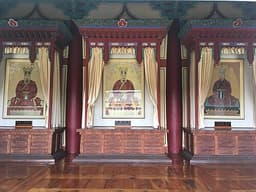
Munmu of Silla
Emperor · Ancient
62.9Total
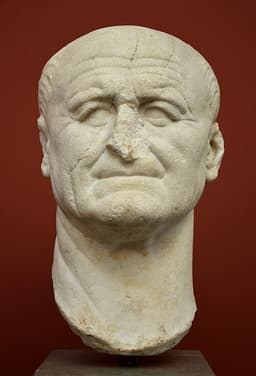
Vespasian
Emperor · Ancient
68.3Total
Basic Information
Born
-626
9
Died
—
79
Era
Ancient
Ancient
Nationality
Korea
Roman Empire
Occupation
Emperor
Emperor
Civilization
Eastern
Western
Score Comparison
Military (10%)
72.0
82.0
Political (20%)
72.0
72.0
Influence (20%)
60.0
68.0
Legacy (20%)
52.0
55.0
Leadership (15%)
72.0
79.8
Strategy (15%)
61.2
65.4
TOTAL
62.9
68.3
Munmu of Silla — Complete Timeline
668 AD
Conquest of GoguryeoWar
King Munmu led Silla forces, in alliance with Tang China, to conquer Goguryeo. The fall of Goguryeo's capital, Pyongyang, ended the kingdom's 700-year history and completed the unification of the Korean Peninsula under Silla control.
ConquestGoguryeoUnification
Impact: regionaldestructive
670 AD
Construction of Gameunsa TempleCultural
Munmu ordered the construction of Gameunsa Temple near Gyeongju, dedicated to the protection of the unified kingdom. The temple was built with the hope of ensuring peace and prosperity, and it became a symbol of Silla's Buddhist faith and royal authority.
TempleBuddhismSilla
Impact: nationalconstructive
676 AD
Expulsion of Tang forces from KoreaWar◆ Major
After the conquest of Goguryeo, Tang China attempted to establish control over the peninsula. Munmu led Silla forces in a war to expel the Tang armies, culminating in the Battle of Maeso. This victory secured Silla's independence and unified Korea under native rule.
WarTang ChinaSilla
Impact: regionaldestructive
Establishment of the Unified Silla kingdomPolitical Action
Munmu formally established the Unified Silla kingdom, consolidating the former territories of Baekje, Goguryeo, and Silla under a single government. This unification ended the Three Kingdoms period and initiated a new era of Korean history.
UnificationState FormationSilla
Impact: regionalconstructive
681 AD
Death and burial at seaOther
Munmu died and was cremated, with his ashes scattered in the East Sea near Gyeongju. His burial at sea was a unique act, reflecting his wish to become a dragon protecting the kingdom. This practice was unprecedented in Korean royal tradition.
DeathBurialSilla
Impact: national
Vespasian — Complete Timeline
69 AD
Accession as EmperorPolitical Action
Vespasian was proclaimed emperor by his troops in Egypt and later recognized by the Senate after the death of Vitellius. He founded the Flavian dynasty, ending the Year of the Four Emperors.
SuccessionFlavian DynastyCivil War
Impact: global
70 AD
Siege of Jerusalem and Destruction of the TempleWar
Vespasian's son Titus captured Jerusalem after a siege, destroying the Second Temple. The victory ended the First Jewish-Roman War and established the Flavian reputation.
Jewish WarSiegeTemple Destruction
Impact: regionaldestructive
Financial Reforms and Tax on UrineReform◆ Major
Vespasian restored the empire's finances by increasing taxes, including a tax on urine collected from public latrines for use in fulling cloth. He also revalued the currency and reduced spending.
TaxationFinanceReform
Impact: nationalconstructive
72 AD
Construction of the Colosseum BeginsCultural◆ Major
Vespasian began construction of the Flavian Amphitheatre (Colosseum) on the site of Nero's Domus Aurea. The project used spoils from the Jewish War and provided public entertainment.
ArchitecturePublic WorksEntertainment
Impact: globalconstructive
79 AD
Death and DeificationOther◆ Major
Vespasian died of natural causes at age 69, the first Roman emperor to die in office since Vespasian. He was deified by the Senate, and his sons Titus and Domitian succeeded him.
DeathDeificationSuccession
Impact: national
Expert Analysis
Origins
Munmu of Silla (r. 661–681) was born in 626 as the son of King Muyeol and Queen Munmyeong. He was the first Silla king to hold the title of King of Silla after the unification, but his path was shaped by the geopolitical turmoil of the Korean peninsula. His grandfather, King Jinpyeong, had laid the groundwork for centralization, and Munmu grew up in a court that prized Confucian learning and military prowess. He was educated in the Hwarang warrior youth groups, which emphasized loyalty and martial skill. His early experiences included participating in campaigns against Baekje, where he learned the art of war under his father's command.
Vespasian (r. 69–79) was born in 9 AD to a Roman equestrian family in Falacrinae. His father, Titus Flavius Sabinus, was a tax collector, and his mother, Vespasia Polla, came from a senatorial family. Vespasian rose through the ranks of Roman public service, serving as a military tribune in Thrace, a quaestor in Crete and Cyrene, and a praetor. His early career was marked by competence rather than brilliance, but he gained Nero's favor through his successful campaign in Britain under Claudius. He married Flavia Domitilla, with whom he had three children: Titus, Domitian, and Domitilla.
Rise to Power
Munmu became crown prince in 650 and ascended the throne in 661 after his father's death. His rise was tied to the Silla-Tang alliance that had already destroyed Baekje (660). Munmu continued the campaign against Goguryeo, leading Silla forces in coordination with Tang armies. In 668, the fall of Pyongyang ended Goguryeo's 700-year history. However, Tang China then sought to impose direct rule over the peninsula, establishing the Protectorate General to Pacify the East. Munmu defied Tang, mobilizing a guerrilla war that expelled Tang forces by 676. This victory secured Silla's dominance and established the Unified Silla state, with its capital at Gyeongju.
Vespasian's rise came amid the chaos of the Year of the Four Emperors (69 AD). After Nero's death, he was appointed by Galba to command the legions in Judaea, tasked with suppressing the Jewish revolt. When Galba was murdered and Otho and Vitellius fought for power, Vespasian initially remained neutral. However, after Otho's suicide, Vitellius became emperor. In July 69, Vespasian was proclaimed emperor by the legions of Egypt and later by those in Syria and Judaea. He left his son Titus to continue the siege of Jerusalem while he secured control of the empire. Vitellius was defeated in December 69, and the Senate recognized Vespasian as emperor. He founded the Flavian dynasty.
Leadership & Governance
Munmu ruled Unified Silla with a focus on consolidation. He adopted Tang administrative models, centralizing power through a bureaucratic system based on Confucian principles. He divided the kingdom into nine provinces and five secondary capitals, improving governance. He also promoted Buddhism as a state religion, commissioning temples like Gameunsa and Sachonwangsa to ensure divine protection. His leadership style was pragmatic: he balanced the power of the Silla aristocracy by granting them positions in the new bureaucracy while keeping real authority in the royal court. However, his reliance on the military aristocracy sowed seeds of later factionalism.
Vespasian restored Roman stability after civil war. He reformed the Senate, appointing loyal supporters from the Italian and provincial elites. He restored the treasury through austerity and new taxes, including the infamous tax on urine collected from public latrines (used in fulling cloth). He began construction of the Colosseum, using spoils from the Jewish War, as a symbol of Flavian generosity. He also reformed the army, stationing legions in vulnerable provinces and reducing the praetorian guard's power. His leadership was characterized by a dry wit and common sense; he famously said, "I am not afraid of anything, except that I might become a god."
Triumph & Tragedy
Munmu's greatest triumph was the unification of the Three Kingdoms, a feat that shaped Korean history for centuries. His expulsion of Tang forces in 676 preserved Korean independence. He also fostered a cultural golden age, with Buddhist art and architecture flourishing. However, his legacy includes the suppression of the Baekje and Goguryeo aristocracies, leading to revolts like the Sabeol uprising (681). His centralization also created tensions between the royal family and the aristocracy, which later contributed to Silla's decline. His unique burial at sea, with his ashes scattered in the East Sea, reflected his wish to become a dragon protecting the kingdom, but it also symbolized a break from tradition.
Vespasian's triumph was the restoration of the Roman Empire after the crisis of 68-69. He stabilized the currency, built the Colosseum, and established the Flavian dynasty. His military success in Judaea, though completed by Titus, provided immense prestige and wealth. His financial reforms left the empire with a surplus. However, he faced tragedy in the loss of his wife and daughter early in his reign. His tax policies, while effective, were unpopular; the urine tax was particularly mocked. He also failed to secure a smooth succession: his son Titus reigned only two years and was succeeded by the tyrannical Domitian, whose assassination ended the Flavian dynasty.
Character & Destiny
Munmu was determined and strategic, willing to ally with Tang to defeat Goguryeo and then turn against Tang when necessary. His decision to be buried at sea, rather than in a traditional tomb, showed a visionary and self-sacrificing character. However, his reliance on military force and aristocratic alliances limited his ability to create lasting institutions. He scored 72.0 in political leadership, reflecting his effective but fragile state-building. His military score of 72.0 and strategy of 61.2 indicate a capable but not exceptional commander, relying more on alliances and attrition than battlefield brilliance.
Vespasian was pragmatic, shrewd, and humorous. He restored order after chaos, proving that an emperor could come from outside the Julio-Claudian line. His leadership score of 79.8 reflects his ability to inspire loyalty and govern effectively. His military score of 82.0 is higher than Munmu's, reflecting his successful campaigns in Britain and Judaea. However, his strategy score of 65.4 is only slightly above Munmu's, as his military successes were often delegated to subordinates like Titus. His character was marked by a lack of cruelty; he was the first emperor since Augustus to die of natural causes, but his dynasty ended with Domitian's tyranny.
Legacy
Munmu's legacy is profound: he is credited with creating the first unified state in Korean history. The Unified Silla period (676-935) established a model of centralized government, Buddhism, and Confucian bureaucracy that influenced later Korean dynasties. His burial site, Daewangam Rock, remains a tourist attraction. However, his unification was incomplete, as Goguryeo's northern territories were lost to Balhae, and Silla's later decline was partly due to aristocratic factionalism. His influence score of 60.0 reflects his regional impact, while his legacy score of 52.0 is lower due to the eventual fall of Silla.
Vespasian's legacy is global. The Colosseum, still standing, is a symbol of Roman engineering and entertainment. His financial reforms stabilized the empire for decades. He founded the Flavian dynasty, which included his sons Titus and Domitian, but the dynasty's end with Domitian's assassination limited his long-term influence. He was deified, and his memory was honored by later emperors. His scores: influence 68.0, legacy 55.0, reflecting his lasting impact on Roman architecture, governance, and imperial ideology.
Conclusion
Vespasian had greater overall impact, with a total score of 68.3 vs. Munmu's 62.9. While Munmu unified Korea and preserved its independence, his achievements were regional and his state-building had structural weaknesses that led to Silla's decline. Vespasian restored the Roman Empire, built a monument that still defines Rome, and reformed finances that enabled decades of stability. His military and leadership scores are higher, and his influence extended across Europe, North Africa, and the Middle East. Munmu's unification was a pivotal moment in Korean history, but Vespasian's impact on the Mediterranean world and Western civilization was broader and more enduring. Therefore, Vespasian edges out Munmu as the more consequential figure.
Rankings
🥇
VespasianLeader
Mil: 82.0Pol: 72.0Inf: 68.0
68.3
🥈
Munmu of Silla
Mil: 72.0Pol: 72.0Inf: 60.0
62.9
+5.4 behind
How This Comparison Works
Algorithm
Each figure is scored on 6 dimensions (0—100 scale) based on structured historical data: Military (10%), Political (20%), Influence (20%), Legacy (20%), Leadership (15%), Strategy (15%). The weighted total produces the final ranking.
Data Sources
Scores are computed from structured sub-indicators in the database. Scale factors adjust for era (Ancient ×0.85, Modern ×1.0) and civilization size (Eastern ×1.05, Other ×0.80) to account for differences in population and military scale.
Maximum 3 Figures
Comparisons are limited to 2—3 figures to ensure readability and statistical meaningfulness.
Error Margins
±5 points per dimension — Sub-scores are derived from historical records with inherent uncertainty. Two figures within 5 points on a dimension should be considered roughly equivalent in that area.
Total Score Accuracy
±3 points overall — The weighted combination of 6 dimensions produces a total score with approximately ±3 points of uncertainty. Differences of less than 3 points are not statistically significant— the figures are effectively tied.
Known Limitations
- Historical records are incomplete and uneven across civilizations
- Figures from oral-tradition societies may be underrepresented
- Occupation labels can misclassify multi-role figures
- Scores measure capability and impact, not moral character
- Quantitative scoring is a comparison tool, not absolute truth
Capability Radar
Military (10%) — Battles & Warfare
Battles
75
75
Win Rate
80
80
Expansion
85
60
Political (20%) — Governance & Reform
Reform
65
75
Diplomacy
80
80
Economy
60
85
Influence (20%) — Cultural & Global Reach
Cultural
65
75
Global
55
70
Legacy (20%) — Historical Impact
Historical
80
80
Longevity
70
75
Leadership (15%) — Power & Stability
Tenure
70
70
Stability
70
80
Strategy (15%) — Tactics & Innovation
Strategy
75
75
Tactics
70
70
Reform
60
65
Similar Comparisons
Comments & Discussion
No comments yet. Be the first to share your thoughts!