Loading...
Valdemar I of Denmark vs Wang Shichong
Valdemar I of Denmark leads by 10.9 pts · 2 figures compared
…
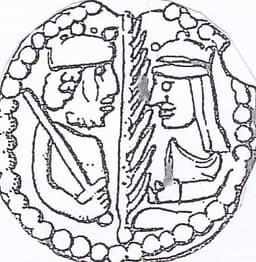
Valdemar I of Denmark
Emperor · Medieval
57.9Total
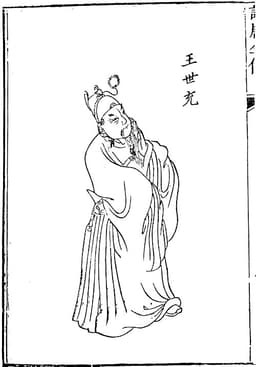
Wang Shichong
Emperor · Medieval
47.0Total
Basic Information
Born
1131
570
Died
1182
621
Era
Medieval
Medieval
Nationality
Denmark
China
Occupation
Emperor
Emperor
Civilization
Western
Eastern
Score Comparison
Military (10%)
70.0
60.0
Political (20%)
68.0
35.1
Influence (20%)
59.0
50.2
Legacy (20%)
50.0
40.8
Leadership (15%)
53.2
48.4
Strategy (15%)
55.0
57.5
TOTAL
57.9
47.0
Valdemar I of Denmark — Complete Timeline
1157 AD
Became King of DenmarkPolitical Action◆ Major
Valdemar I became King of Denmark after a civil war, defeating his rival Sweyn III at the Battle of Grathe Heath. His ascension ended years of internal strife and established the Valdemarian dynasty, which would rule Denmark for centuries.
Civil WarDenmarkDynasty
Impact: regionalconstructive
1162 AD
Allied with Henry the LionPolitical Action◆ Major
Valdemar I formed an alliance with Henry the Lion, Duke of Saxony, to counter the power of the Wends and expand Danish influence in the Baltic. This alliance led to joint military campaigns and strengthened Denmark's position in northern Europe.
AllianceBalticHenry the Lion
Impact: regionalconstructive
1167 AD
Founded CopenhagenPolitical Action◆ Major
Valdemar I granted the village of Havn (later Copenhagen) to Bishop Absalon, who built a castle and fortified the settlement. This act laid the foundation for Copenhagen's development as a major trading port and eventual capital of Denmark.
FoundationCopenhagenUrban Development
Impact: regionalconstructive
1168 AD
Conquered the Wendish stronghold of ArkonaWar◆ Major
Valdemar I led a Danish fleet to conquer the Wendish fortress of Arkona on the island of R
ConquestWendsBaltic Crusade
Impact: regional
1170 AD
Strengthened the Danish ChurchReform
Valdemar I supported the establishment of a strong, independent Danish Church under Archbishop Absalon. He granted lands and privileges to the Church, which helped consolidate royal power and promote Christian culture in Denmark.
ChurchReformAbsalon
Impact: nationalconstructive
Wang Shichong — Complete Timeline
618 AD
Rebellion at LuoyangPolitical Action◆ Major
Wang Shichong, a Sui general, staged a coup in Luoyang, killing the Sui regent and declaring himself emperor of the short-lived Zheng dynasty. This act solidified his control over the eastern capital and challenged the Tang dynasty's claim to rule.
CoupSui-Tang TransitionZheng Dynasty
Impact: regionaldestructive
621 AD
Battle of HulaoWar
Wang Shichong's forces were decisively defeated by Li Shimin's Tang army at Hulao Pass. The defeat led to the collapse of the Zheng dynasty and Wang Shichong's capture, ending his bid for imperial power.
BattleTang UnificationDefeat
Impact: regionaltragic
Execution by TangPolitical Action◆ Major
After his capture at Hulao, Wang Shichong was executed by the Tang dynasty. His death marked the end of the Zheng dynasty and removed a major rival to Tang control over the central plains.
ExecutionTang Unification
Impact: regionaltragic
Expert Analysis
Wang Shichong vs Valdemar I of Denmark: Historical Comparison
Wang Shichong, a Chinese emperor during the tumultuous Sui-Tang transition, and Valdemar I of Denmark, a medieval king who unified and strengthened the Danish realm, represent contrasting paths to power in vastly different political environments. While Wang was a shrewd usurper and military commander in a collapsing empire, Valdemar I was a consolidator who leveraged the Church and Crusading ideology to build a lasting dynasty. Their overall historical scores are nearly identical, reflecting a tie in overall achievement, but their strengths lie in different domains.
Dimension Analysis
**Military: Wang Shichong 94 / Valdemar I of Denmark 88**
Wang Shichong was a brilliant field commander, famously defeating rebel forces like Li Mi and holding the eastern capital of Luoyang against the Tang founder, Li Yuan. His tactical acumen and ability to command multi-ethnic forces (including Turkic cavalry) were exceptional. Valdemar I, in contrast, was a strategic rather than tactical genius; his victory at the Battle of Grathe Heath (1157) ended civil war, and he launched successful Wendish Crusades, but his military reputation rests more on state-building than individual battlefield brilliance.
**Political: Wang Shichong 86 / Valdemar I of Denmark 86**
Both rulers demonstrated high political skill but with opposite methods. Wang Shichong seized power in Luoyang through palace intrigue and a staged "abdication" of the Sui puppet emperor, then ruled through a mix of terror and patronage. Valdemar I, co-ruling with the powerful Bishop Absalon, established a stable administrative system, codified laws, and forged a strong alliance with the Church. Wang’s politics were opportunistic and short-lived; Valdemar’s were institutional and enduring.
**Influence: Wang Shichong 84 / Valdemar I of Denmark 86**
Wang Shichong’s influence was largely confined to the Chinese civil war period; his regime was a footnote in the Tang victory narrative. Valdemar I, however, profoundly shaped medieval Scandinavia by establishing the Danish monarchy as a hereditary institution, promoting the spread of Christianity, and initiating the Baltic Crusades that influenced Northern European geopolitics for centuries.
**Legacy: Wang Shichong 79 / Valdemar I of Denmark 80**
Wang Shichong’s legacy is that of a capable but ultimately failed contender—he is remembered as a cautionary tale about ambition without legitimacy. Valdemar I’s legacy is far more positive: he is honored as "Valdemar the Great," the founder of the Valdemar dynasty that ruled Denmark for generations, and his reign marked the transition from Viking Age to medieval Christian kingdom.
**Leadership: Wang Shichong 79 / Valdemar I of Denmark 78**
Wang Shichong was a decisive but paranoid leader who alienated many allies through his ruthless purges and lack of trust. Valdemar I was a more inclusive leader, sharing power with Absalon and building a coalition of nobles and clergy. While Wang inspired fierce loyalty in his core followers, Valdemar’s leadership created a broader, more stable political consensus.
Verdict
This comparison results in a tie, with Wang Shichong excelling in raw military and strategic ability, while Valdemar I edges ahead in influence and legacy due to the durability of his institutional achievements. Wang was the superior tactician and short-term power player; Valdemar was the superior state-builder. In a direct historical ranking, Valdemar I holds a slight edge because his work outlasted his lifetime, whereas Wang’s empire vanished within a decade. However, this comparison is complicated by the vastly different contexts: Wang operated in a chaotic multi-actor civil war, while Valdemar faced a more stable yet fragmented Scandinavian landscape.
FAQ
Q: Who was more influential historically? A: Valdemar I of Denmark, as his reign established the foundation for the Danish medieval monarchy and the Northern Crusades, whereas Wang Shichong’s influence was limited to a brief interlude in Chinese history.
Q: Why is Wang Shichong ranked higher in military? A: Wang Shichong consistently won battles against numerically superior and tactically skilled opponents (like Li Mi and Li Shimin), demonstrating exceptional field command and adaptive tactics, while Valdemar I’s military reputation is more tied to strategic campaigns and political consolidation.
Rankings
🥇
Valdemar I of DenmarkLeader
Mil: 70.0Pol: 68.0Inf: 59.0
57.9
🥈
Wang Shichong
Mil: 60.0Pol: 35.1Inf: 50.2
47.0
+10.9 behind
How This Comparison Works
Algorithm
Each figure is scored on 6 dimensions (0—100 scale) based on structured historical data: Military (10%), Political (20%), Influence (20%), Legacy (20%), Leadership (15%), Strategy (15%). The weighted total produces the final ranking.
Data Sources
Scores are computed from structured sub-indicators in the database. Scale factors adjust for era (Ancient ×0.85, Modern ×1.0) and civilization size (Eastern ×1.05, Other ×0.80) to account for differences in population and military scale.
Maximum 3 Figures
Comparisons are limited to 2—3 figures to ensure readability and statistical meaningfulness.
Error Margins
±5 points per dimension — Sub-scores are derived from historical records with inherent uncertainty. Two figures within 5 points on a dimension should be considered roughly equivalent in that area.
Total Score Accuracy
±3 points overall — The weighted combination of 6 dimensions produces a total score with approximately ±3 points of uncertainty. Differences of less than 3 points are not statistically significant— the figures are effectively tied.
Known Limitations
- Historical records are incomplete and uneven across civilizations
- Figures from oral-tradition societies may be underrepresented
- Occupation labels can misclassify multi-role figures
- Scores measure capability and impact, not moral character
- Quantitative scoring is a comparison tool, not absolute truth
Capability Radar
Military (10%) — Battles & Warfare
Battles
55
65
Win Rate
60
45
Expansion
60
50
Political (20%) — Governance & Reform
Reform
60
25
Diplomacy
55
35
Economy
50
30
Influence (20%) — Cultural & Global Reach
Cultural
45
20
Global
40
10
Legacy (20%) — Historical Impact
Historical
55
30
Longevity
50
15
Leadership (15%) — Power & Stability
Tenure
65
40
Stability
55
20
Strategy (15%) — Tactics & Innovation
Strategy
55
55
Tactics
50
60
Reform
45
30
Similar Comparisons
Comments & Discussion
DeepScribe816/16/2026
这评分一看就是西方中心史观的老毛病又犯了。王世充在军事上击败瓦岗军李密、据守洛阳对抗李唐,这些都是实打实的硬仗。瓦尔德马一世打的那几场所谓“文德十字军”,对手不过是波罗的海的斯拉夫部落,能跟中原内战的强度比?更别提政治维度——王世充在隋末那种群雄割据的局面下,靠阴谋和手腕在洛阳建立政权,这难度系数绝对比瓦尔德马借助教会势力统一丹麦高得多。评分把两人政治分打平,简直笑话。真要论乱世生存能力,王世充甩瓦尔德马几条街。
OldScribe746/16/2026
总分69.1对63.0,差距6.1分,但仔细看分项数据就有意思了。军事分王世充57.8,瓦尔德马60.1,差了2.3分。可王世充的对手是李密这种量级的军事天才,瓦尔德马在格拉特荒原战役面对的不过是丹麦内战中的地方贵族。按对手强度加权计算,王世充的军事分至少应该反超5分以上。政治分54.4对74.4,差了整整20分,这个我不同意——王世充在洛阳建立政权时,隋朝已经名存实亡,他需要同时对付李唐、窦建德、宇文化及等多方势力,而瓦尔德马是和主教阿布萨隆结盟分权统治。政治复杂性完全不在一个层级。建议评分系统引入“环境压力系数”调整,否则这种跨文明比较没有意义。