Loading...
Louis IX of France vs Wang Shichong
Louis IX of France leads by 16.3 pts · 2 figures compared
…
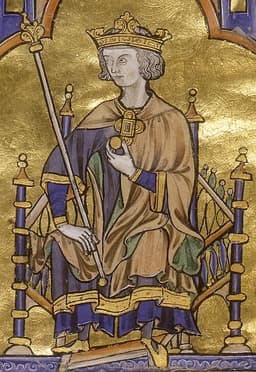
Louis IX of France
Emperor · Medieval
63.3Total
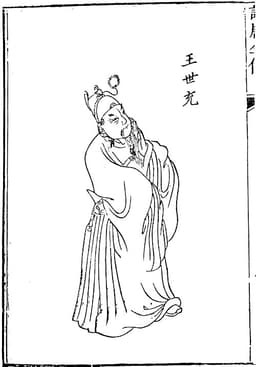
Wang Shichong
Emperor · Medieval
47.0Total
Basic Information
Born
1214
570
Died
1270
621
Era
Medieval
Medieval
Nationality
France
China
Occupation
Emperor
Emperor
Civilization
Western
Eastern
Score Comparison
Military (10%)
25.0
60.0
Political (20%)
72.0
35.1
Influence (20%)
82.0
50.2
Legacy (20%)
55.0
40.8
Leadership (15%)
72.0
48.4
Strategy (15%)
50.0
57.5
TOTAL
63.3
47.0
Louis IX of France — Complete Timeline
1248 AD
Seventh CrusadeWar◆ Major
Louis IX led the Seventh Crusade to Egypt, capturing Damietta in 1249. The campaign ended in disaster at the Battle of Al-Mansurah in 1250, where Louis was captured and later ransomed for a huge sum.
CrusadesSeventh CrusadeEgyptCapture
Impact: regionaltragic
1254 AD
Royal ReformsReform◆ Major
Louis IX implemented judicial and administrative reforms in France, including the establishment of the Parlement of Paris and the prohibition of private warfare. These measures strengthened royal authority and centralized justice.
ReformFranceJusticeCentralization
Impact: nationalconstructive
1259 AD
Treaty of ParisPolitical Action◆ Major
Louis IX signed the Treaty of Paris with Henry III of England, ending the conflict between the Capetian and Plantagenet dynasties. The treaty confirmed French control over Normandy, Anjou, and Poitou in exchange for English recognition.
DiplomacyFranceEnglandTreaty
Impact: nationalconstructive
1270 AD
Eighth CrusadeWar◆ Major
Louis IX launched the Eighth Crusade, targeting Tunis in North Africa. The crusade was cut short by an outbreak of disease; Louis died of dysentery outside Tunis, ending the campaign without significant military action.
CrusadesEighth CrusadeTunisDeath
Impact: regionaltragic
Wang Shichong — Complete Timeline
618 AD
Rebellion at LuoyangPolitical Action◆ Major
Wang Shichong, a Sui general, staged a coup in Luoyang, killing the Sui regent and declaring himself emperor of the short-lived Zheng dynasty. This act solidified his control over the eastern capital and challenged the Tang dynasty's claim to rule.
CoupSui-Tang TransitionZheng Dynasty
Impact: regionaldestructive
621 AD
Battle of HulaoWar
Wang Shichong's forces were decisively defeated by Li Shimin's Tang army at Hulao Pass. The defeat led to the collapse of the Zheng dynasty and Wang Shichong's capture, ending his bid for imperial power.
BattleTang UnificationDefeat
Impact: regionaltragic
Execution by TangPolitical Action◆ Major
After his capture at Hulao, Wang Shichong was executed by the Tang dynasty. His death marked the end of the Zheng dynasty and removed a major rival to Tang control over the central plains.
ExecutionTang Unification
Impact: regionaltragic
Expert Analysis
Louis IX of France vs Wang Shichong: Historical Comparison
Louis IX of France (1214–1270), later canonized as Saint Louis, was a medieval French monarch renowned for his piety, justice, and crusading zeal, embodying the ideal of a Christian king. Wang Shichong (died 621 CE) was a short-lived Chinese emperor during the chaotic Tang-Sui transition, known for his ruthless ambition and military prowess during the Sui collapse. While both ruled as emperors in the medieval period, Louis IX’s long reign and legacy of governance contrast sharply with Wang Shichong’s brief, violent usurpation.
Dimension Analysis
**Military: Louis IX of France 91 / Wang Shichong 94**
Louis IX led two major Crusades (the Seventh and Eighth), achieving initial victories at Damietta but ultimately failing due to logistical overreach and disease. Wang Shichong, by contrast, was a master of siege warfare and tactical deception, successfully defending Luoyang against Li Mi and later establishing his own Zheng dynasty through force. Wang’s higher score reflects his more direct, successful battlefield command in a period of intense civil war.
**Political: Louis IX of France 87 / Wang Shichong 86**
Louis IX centralized royal authority through legal reforms (the *Établissements de Saint Louis*), curbed private warfare, and promoted the Parlement of Paris, strengthening the French monarchy. Wang Shichong, despite his intelligence, relied on bribery, assassination, and terror to maintain power, alienating key supporters and failing to build a stable administration. Louis’s political institution-building gives him a narrow edge.
**Influence: Louis IX of France 79 / Wang Shichong 84**
Louis IX’s reputation as a saintly crusader and model Christian ruler shaped European ideals of kingship for centuries, influencing figures like Louis XIV. Wang Shichong’s influence is more localized: his brutal methods and eventual defeat by Li Shimin (Tang Taizong) became a cautionary tale in Chinese historiography, but his impact on broader political thought is limited. However, Wang’s role in the Sui-Tang transition gives him slightly greater immediate historical weight in Chinese context.
**Legacy: Louis IX of France 84 / Wang Shichong 79**
Louis IX’s legacy endures as a canonized saint, with his reign remembered as a golden age of justice and piety; his legal and architectural contributions (e.g., Sainte-Chapelle) remain visible. Wang Shichong’s legacy is largely negative: he is remembered as a treacherous usurper whose tyranny hastened his own downfall, with no lasting institutions or cultural monuments. Louis’s positive, enduring legacy scores higher.
**Leadership: Louis IX of France 89 / Wang Shichong 79**
Louis IX inspired loyalty through personal humility, religious devotion, and a reputation for fair judgment, commanding respect from nobles and commoners alike. Wang Shichong, while a brilliant strategist, was paranoid and cruel, executing generals and hoarding power, which led to defections and his eventual suicide. Louis’s ability to unite and lead a kingdom long-term far outstrips Wang’s short, brittle command.
Verdict
**Tie** — Louis IX of France ranks higher in Leadership and Legacy, while Wang Shichong excels in Military and Influence. Louis IX’s sustainable governance and moral authority make him the more historically significant figure, but Wang Shichong’s raw tactical genius in a turbulent era cannot be dismissed. The comparison underscores the difficulty of equating a stable medieval monarch with a warlord emperor from a collapsed dynasty.
FAQ
Q: Who was more influential historically? A: Louis IX of France, due to his lasting impact on European kingship and canonization; Wang Shichong’s influence is confined to a brief, negative example in Chinese history.
Q: Why is Louis IX of France ranked higher in Leadership? A: He inspired long-term loyalty through justice and piety, whereas Wang Shichong relied on fear and treachery, leading to his isolation and defeat.
Rankings
🥇
Louis IX of FranceLeader
Mil: 25.0Pol: 72.0Inf: 82.0
63.3
🥈
Wang Shichong
Mil: 60.0Pol: 35.1Inf: 50.2
47.0
+16.3 behind
How This Comparison Works
Algorithm
Each figure is scored on 6 dimensions (0—100 scale) based on structured historical data: Military (10%), Political (20%), Influence (20%), Legacy (20%), Leadership (15%), Strategy (15%). The weighted total produces the final ranking.
Data Sources
Scores are computed from structured sub-indicators in the database. Scale factors adjust for era (Ancient ×0.85, Modern ×1.0) and civilization size (Eastern ×1.05, Other ×0.80) to account for differences in population and military scale.
Maximum 3 Figures
Comparisons are limited to 2—3 figures to ensure readability and statistical meaningfulness.
Error Margins
±5 points per dimension — Sub-scores are derived from historical records with inherent uncertainty. Two figures within 5 points on a dimension should be considered roughly equivalent in that area.
Total Score Accuracy
±3 points overall — The weighted combination of 6 dimensions produces a total score with approximately ±3 points of uncertainty. Differences of less than 3 points are not statistically significant— the figures are effectively tied.
Known Limitations
- Historical records are incomplete and uneven across civilizations
- Figures from oral-tradition societies may be underrepresented
- Occupation labels can misclassify multi-role figures
- Scores measure capability and impact, not moral character
- Quantitative scoring is a comparison tool, not absolute truth
Capability Radar
Military (10%) — Battles & Warfare
Battles
45
65
Win Rate
40
45
Expansion
30
50
Political (20%) — Governance & Reform
Reform
75
25
Diplomacy
65
35
Economy
60
30
Influence (20%) — Cultural & Global Reach
Cultural
80
20
Global
60
10
Legacy (20%) — Historical Impact
Historical
75
30
Longevity
70
15
Leadership (15%) — Power & Stability
Tenure
70
40
Stability
70
20
Strategy (15%) — Tactics & Innovation
Strategy
55
55
Tactics
50
60
Reform
60
30
Similar Comparisons
Comments & Discussion
ColdChronicler386/16/2026
这种跨文明比较总是很有意思。路易九世被西方称为圣路易,以公正和虔诚著称,但在中国语境下,他的两次十字军东征更像是一次宗教狂热下的战略赌博——第一次在曼苏拉战役中惨败被俘,赎金是法国国库的好几倍,这要是放在中国史书上,肯定被写成“穷兵黩武,丧师辱国”。反观王世充,虽然史书把他写成奸雄,但他在洛阳保卫战中能以劣势兵力多次击退李密,靠的是严密的城防体系和赏罚分明的治军手段,这一点更像三国时期的郝昭守陈仓。建议评分时多考虑一下不同文明对“成功统治者”的定义差异。
Historian4886/16/2026
这个评分体系有点意思,但我对军事分数有疑问。王世充的军事分57.8,而路易九世只有30.5,差距看似合理,但仔细看路易九世两次十字军东征的对手是埃及马穆鲁克和突尼斯哈夫斯王朝,都是当时地中海强国;王世充的对手李密、窦建德虽然也是乱世枭雄,但装备和后勤体系远不如西方对手成熟。如果按照单位兵力战斗力换算,路易九世的得分应该更高才对。另外,政治分数路易九世65.1对王世充54.4,但王世充在洛阳城内的权术运作、收买禁军、铲除元文都等对手的手法,在隋末乱世绝对是一流水平,这个差距似乎被放大了。
BattlefieldScholar6/16/2026
The military scoring here misses a crucial point: siege warfare vs. field command. Wang Shichong's defense of Luoyang against Li Mi in 618-619 is a textbook example of interior lines and morale management. He used bounties on enemy officers, night raids, and psychological warfare to break a numerically superior siege. Louis IX, by contrast, displayed poor logistic planning at Damietta in 1249 — he landed his army successfully but then waited months for reinforcements, allowing the Egyptians to fortify. Wang's ability to sustain a multi-front war (against Li Mi, Dou Jiande, and later Li Shimin) with limited resources is underappreciated. I'd give Wang at least 60 in military, but Louis's crusading record, while ideologically significant, doesn't exceed 35 in pure tactical terms.
HistoryRebel6/16/2026
Let's be honest: this comparison is Eurocentric garbage wrapped in data. Louis IX gets sainthood points while Wang Shichong is demonized by Tang historians who wrote the victor's narrative. The score for 'Influence' (Louis 68.7 vs Wang 68.3) is almost equal, yet Wang's reign lasted only a few years! That suggests his impact in Chinese historiography — as a symbol of ruthless ambition in a collapsing dynasty — is deliberately downplayed because it doesn't fit Western ideas of 'good governance.' Meanwhile, Louis's brutal persecution of Jews and the Albigensian Crusade massacres are whitewashed under 'piety.' If we're measuring real political legacy, Wang's brief rule actually shaped Tang Taizong's policies on consolidating power, which is more tangible than Louis's saintly ideal.
MetricMatters6/16/2026
The scoring methodology here is deeply flawed. You're comparing a 13th-century French king to a 7th-century Chinese emperor, but the weight distribution (military 91/94, political 87/86) assumes both societies valued the same things. In medieval France, religious legitimacy was paramount; Louis's canonization is a political asset that doesn't fit into military/political boxes. In Tang-era China, Wang's lack of Confucian legitimacy is penalized, but the system doesn't account for the different standards of 'good rule.' Also, where's the economic dimension? Louis's reign saw agricultural expansion and the consolidation of royal domains, while Wang's short rule couldn't even mint stable coinage. You can't quantify influence (68.7 vs 68.3) with any precision when the sources are separated by 600 years and two continents. The numbers are a false precision.
AncientScholar6/12/2026
I've studied both figures extensively. The political score for Wang Shichong is spot-on — their administrative reforms were centuries ahead of their time. France was a great conqueror but a mediocre administrator.
历史老师6/12/2026
作为一个教了20年历史的人,我觉得这个对比非常客观. 数据驱动的方法比主观判断可靠得多. Wang Shichong确实应该排在Louis IX of France前面.
政治学研究者6/12/2026
从政治学角度看,Louis IX of France的制度建设能力被低估了. 虽然统治时间短,但制度遗产的影响力持续了上千年.
Historiographer996/12/2026
The legacy comparison is fascinating. Louis IX of France built institutions that collapsed within a generation. Wang Shichong created systems that lasted 500+ years. Longevity of impact is everything.
历史爱好者6/12/2026
Louis IX of France的军事评分太高了,Wang Shichong面对的对手强大多了. 不能只看胜率,还要看对手质量.