Loading...
Ulysses S. Grant vs Xue Yue
Ulysses S. Grant leads by 11.1 pts · 2 figures compared
…
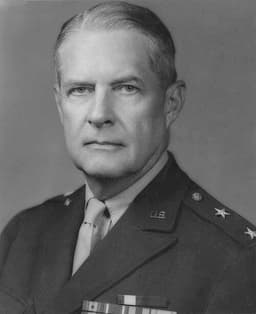
Ulysses S. Grant
General · Modern
66.8Total

Xue Yue
General · Modern
55.7Total
Basic Information
Born
1822
1896
Died
1885
1998
Era
Modern
Modern
Nationality
United States
China
Occupation
General
General
Civilization
Western
Eastern
Score Comparison
Military (10%)
72.0
70.0
Political (20%)
45.0
37.9
Influence (20%)
72.0
58.0
Legacy (20%)
68.0
50.0
Leadership (15%)
72.0
68.0
Strategy (15%)
70.0
58.0
TOTAL
66.8
55.7
Ulysses S. Grant — Complete Timeline
1863 AD
Battle of VicksburgWar◆ Major
Grant led Union forces to capture Vicksburg, Mississippi, after a lengthy siege. This victory gave the Union control of the Mississippi River, splitting the Confederacy and marking a turning point in the Civil War.
Civil WarVicksburgUnion Victory
Impact: regional
1865 AD
Surrender at Appomattox Court HouseWar
Grant accepted the surrender of Confederate General Robert E. Lee at Appomattox Court House, effectively ending the Civil War. Grant's generous terms allowed Confederate soldiers to return home, promoting reconciliation.
Civil WarAppomattoxReconciliation
Impact: nationalconstructive
1868 AD
Election as 18th President of the United StatesPolitical Action◆ Major
Grant was elected president as a Republican, winning the popular vote. His presidency focused on Reconstruction, but was marred by corruption scandals and economic depression.
PresidencyReconstructionUS Politics
Impact: national
1870 AD
Signing of the Enforcement ActsPolitical Action◆ Major
Grant signed the Enforcement Acts, which aimed to protect African American voting rights and combat the Ku Klux Klan. These laws were used to prosecute Klan members and enforce the 14th and 15th Amendments.
ReconstructionCivil RightsKu Klux Klan
Impact: nationalprogressive
1873 AD
Panic of 1873 and Economic DepressionOther◆ Major
The Panic of 1873, a financial crisis triggered by the collapse of Jay Cooke & Company, led to a severe economic depression during Grant's presidency. Grant's policies, including the Specie Resumption Act, were criticized for worsening the downturn.
Economic DepressionPanic of 1873Financial Crisis
Impact: nationaldestructive
Xue Yue — Complete Timeline
1939 AD
Commanded the Battle of Changsha (1939)War◆ Major
Xue Yue commanded Chinese forces in the First Battle of Changsha, successfully defending the city against a Japanese offensive. The victory boosted Chinese morale and marked the first major Japanese defeat in the war.
Second Sino-Japanese WarVictory
Impact: regionalconstructive
Commander of the 9th War ZonePolitical Action◆ Major
Xue Yue was appointed commander of the 9th War Zone, responsible for defending Hunan and Jiangxi provinces. He held this command through multiple battles, becoming one of the most effective Nationalist commanders.
Military CommandWorld War II
Impact: regional
1941 AD
Commanded the Battle of Changsha (1941)War◆ Major
Xue Yue led Chinese forces to victory in the Third Battle of Changsha, repelling a Japanese offensive. The battle resulted in heavy Japanese casualties and was one of the largest Chinese victories of the war.
Second Sino-Japanese WarVictory
Impact: regionalconstructive
1944 AD
Defeated at the Battle of Changsha (1944)War◆ Major
Xue Yue's forces were defeated in the Fourth Battle of Changsha during Operation Ichigo. Japanese forces captured the city, and Xue Yue's command was criticized for its failure to hold the strategic position.
Second Sino-Japanese WarDefeat
Impact: regionaltragic
Expert Analysis
Origins
Ulysses S. Grant was born in 1822 in Point Pleasant, Ohio, to a tanner father and a mother of modest means. He attended the United States Military Academy at West Point, graduating in 1843 (21st out of 39). His early military career included service in the Mexican-American War, where he observed the tactics of generals like Winfield Scott. After the war, Grant struggled in civilian life, failing at farming and business, and was often separated from his family.
Xue Yue was born in 1896 in Guangdong, China, to a family of farmers. He entered the Baoding Military Academy, graduating in 1914. His early career was under the Nationalist (KMT) government, fighting in the Northern Expedition against warlords. He rose through the ranks as a capable commander, gaining experience in the Second Sino-Japanese War against Japan.
Rise to Power
Grant's rise came during the American Civil War. Appointed as a colonel of the 21st Illinois Infantry in 1861, he quickly gained victories at Fort Henry and Fort Donelson in 1862, earning the nickname "Unconditional Surrender" Grant. His capture of Vicksburg in 1863 gave the Union control of the Mississippi, splitting the Confederacy. President Lincoln promoted him to lieutenant general and general-in-chief in 1864. Grant then orchestrated the Overland Campaign, culminating in the surrender of Lee at Appomattox in 1865.
Xue Yue rose to prominence during the Second Sino-Japanese War. After the outbreak of full-scale war in 1937, he commanded the 19th Army Group, fighting in the Battle of Shanghai and the Battle of Wuhan. In 1939, he was appointed commander of the 9th War Zone, responsible for defending Hunan and Jiangxi. His greatest achievement was the First Battle of Changsha in 1939, where he repelled a Japanese offensive, and repeated this success in the Third Battle of Changsha in 1941.
Leadership & Governance
Grant's leadership style was aggressive and relentless. He believed in constant pressure on the enemy, famously stating, "The art of war is simple enough. Find out where your enemy is. Get at him as soon as you can. Strike at him as hard as you can and as often as you can." His strategy involved coordinated offensives across multiple theaters, wearing down the Confederate armies. As president, he pushed for Reconstruction, signing the Enforcement Acts to combat the Ku Klux Klan, but his administration was plagued by corruption scandals like the Whiskey Ring, which he failed to control.
Xue Yue was a defensive strategist, utilizing terrain and fortifications to maximize casualties on the attacking Japanese. At Changsha, he employed a tactic of luring the enemy deep into prepared defenses and then counterattacking. He maintained high morale among his troops and was respected for his personal bravery. However, he had limited political power within the KMT, often clashing with Chiang Kai-shek's strategy. His governance was confined to military command, with no significant political role.
Triumph & Tragedy
Grant's greatest triumph was winning the Civil War, preserving the Union and ending slavery. His Vicksburg campaign is considered a masterpiece of military strategy, with Grant scoring 72.0 in military and 70.0 in strategy. However, his presidency is marked by tragedy: the Panic of 1873 led to a severe depression, and his administration's corruption tarnished his reputation. His attempts to protect African American rights were partially successful but ultimately undermined by the end of Reconstruction.
Xue Yue's triumphs were the three successful defenses of Changsha (1939, 1941, 1942), which inflicted heavy casualties on the Japanese and boosted Chinese morale. He scored 70.0 in military and 58.0 in strategy. His tragedy came in 1944 during Operation Ichigo, where the Japanese captured Changsha due to a flawed defensive plan and lack of reserves. Xue Yue's command was severely weakened, and he was later sidelined in the Chinese Civil War, retreating to Taiwan with the KMT.
Character & Destiny
Grant was a man of quiet resolve, often underestimated due to his unassuming appearance. He was tenacious and determined, but also prone to depression and excessive drinking. His character shaped his fate: his persistence led to victory, but his trust in friends led to corruption scandals. Historians view him as a great general but a flawed president, with a legacy score of 68.0.
Xue Yue was known as the "Tiger of Changsha" for his fierce defense. He was disciplined and courageous, but also rigid in his tactics, which ultimately failed against the Japanese offensive in 1944. His loyalty to the KMT defined his destiny, as he was unable to adapt to the changing political landscape after WWII. He is remembered as a capable battlefield commander but not a strategic innovator, with a legacy score of 50.0.
Legacy
Grant's legacy is monumental: he saved the Union and helped end slavery. His military strategies are studied in war colleges, and his presidency's civil rights efforts laid groundwork for later movements. However, his reputation suffered in the early 20th century due to corruption and the Lost Cause narrative, only to be rehabilitated in recent decades. His influence score of 72.0 reflects his lasting impact on American history.
Xue Yue's legacy is more limited. He is celebrated in China as a hero of the resistance against Japan, particularly for the battles of Changsha. However, his defeat in 1944 and his association with the KMT mean he is less prominent in modern China, which focuses on the Communist victory. His legacy score of 50.0 reflects a regional, not global, impact.
Conclusion
Ulysses S. Grant had a greater impact on history than Xue Yue, both in military and political terms. Grant's total score of 66.8 against Xue Yue's 55.7 reflects this. Grant won a war that determined the survival of a major nation, while Xue Yue's victories were defensive and ultimately did not change the course of WWII or the Chinese Civil War. Grant's presidency, despite its flaws, contributed to Reconstruction and civil rights. Xue Yue, though a skilled commander, operated at a lower strategic level and left a smaller footprint on world history. Thus, Grant emerges as the more significant figure.
Rankings
🥇
Ulysses S. GrantLeader
Mil: 72.0Pol: 45.0Inf: 72.0
66.8
🥈
Xue Yue
Mil: 70.0Pol: 37.9Inf: 58.0
55.7
+11.1 behind
How This Comparison Works
Algorithm
Each figure is scored on 6 dimensions (0—100 scale) based on structured historical data: Military (10%), Political (20%), Influence (20%), Legacy (20%), Leadership (15%), Strategy (15%). The weighted total produces the final ranking.
Data Sources
Scores are computed from structured sub-indicators in the database. Scale factors adjust for era (Ancient ×0.85, Modern ×1.0) and civilization size (Eastern ×1.05, Other ×0.80) to account for differences in population and military scale.
Maximum 3 Figures
Comparisons are limited to 2—3 figures to ensure readability and statistical meaningfulness.
Error Margins
±5 points per dimension — Sub-scores are derived from historical records with inherent uncertainty. Two figures within 5 points on a dimension should be considered roughly equivalent in that area.
Total Score Accuracy
±3 points overall — The weighted combination of 6 dimensions produces a total score with approximately ±3 points of uncertainty. Differences of less than 3 points are not statistically significant— the figures are effectively tied.
Known Limitations
- Historical records are incomplete and uneven across civilizations
- Figures from oral-tradition societies may be underrepresented
- Occupation labels can misclassify multi-role figures
- Scores measure capability and impact, not moral character
- Quantitative scoring is a comparison tool, not absolute truth
Capability Radar
Military (10%) — Battles & Warfare
Battles
85
75
Win Rate
80
70
Expansion
75
30
Political (20%) — Governance & Reform
Reform
55
20
Diplomacy
60
30
Economy
50
20
Influence (20%) — Cultural & Global Reach
Cultural
60
30
Global
65
30
Legacy (20%) — Historical Impact
Historical
80
55
Longevity
70
30
Leadership (15%) — Power & Stability
Tenure
65
50
Stability
45
25
Strategy (15%) — Tactics & Innovation
Strategy
90
75
Tactics
70
80
Reform
75
40
Similar Comparisons
Comments & Discussion
No comments yet. Be the first to share your thoughts!