Loading...
Ulysses S. Grant vs Walter Model
Ulysses S. Grant leads by 13.8 pts · 2 figures compared
…
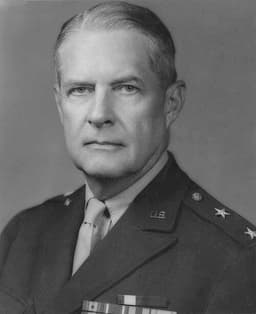
Ulysses S. Grant
General · Modern
66.8Total
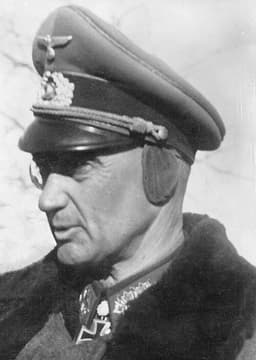
Walter Model
General · Modern
53.0Total
Basic Information
Born
1822
1891
Died
1885
1945
Era
Modern
Modern
Nationality
United States
Germany
Occupation
General
General
Civilization
Western
Western
Score Comparison
Military (10%)
72.0
78.0
Political (20%)
45.0
27.9
Influence (20%)
72.0
58.0
Legacy (20%)
68.0
54.0
Leadership (15%)
72.0
36.9
Strategy (15%)
70.0
75.0
TOTAL
66.8
53.0
Ulysses S. Grant — Complete Timeline
1863 AD
Battle of VicksburgWar◆ Major
Grant led Union forces to capture Vicksburg, Mississippi, after a lengthy siege. This victory gave the Union control of the Mississippi River, splitting the Confederacy and marking a turning point in the Civil War.
Civil WarVicksburgUnion Victory
Impact: regional
1865 AD
Surrender at Appomattox Court HouseWar
Grant accepted the surrender of Confederate General Robert E. Lee at Appomattox Court House, effectively ending the Civil War. Grant's generous terms allowed Confederate soldiers to return home, promoting reconciliation.
Civil WarAppomattoxReconciliation
Impact: nationalconstructive
1868 AD
Election as 18th President of the United StatesPolitical Action◆ Major
Grant was elected president as a Republican, winning the popular vote. His presidency focused on Reconstruction, but was marred by corruption scandals and economic depression.
PresidencyReconstructionUS Politics
Impact: national
1870 AD
Signing of the Enforcement ActsPolitical Action◆ Major
Grant signed the Enforcement Acts, which aimed to protect African American voting rights and combat the Ku Klux Klan. These laws were used to prosecute Klan members and enforce the 14th and 15th Amendments.
ReconstructionCivil RightsKu Klux Klan
Impact: nationalprogressive
1873 AD
Panic of 1873 and Economic DepressionOther◆ Major
The Panic of 1873, a financial crisis triggered by the collapse of Jay Cooke & Company, led to a severe economic depression during Grant's presidency. Grant's policies, including the Specie Resumption Act, were criticized for worsening the downturn.
Economic DepressionPanic of 1873Financial Crisis
Impact: nationaldestructive
Walter Model — Complete Timeline
1941 AD
Commanded 9th Army in Operation BarbarossaWar◆ Major
Model commanded the 3rd Panzer Division and later the 9th Army during the invasion of the Soviet Union. He participated in the encirclement battles at Bialystok and Minsk, and later in the advance on Moscow. His aggressive tactics earned him a reputation as a defensive specialist.
World War IIOperation BarbarossaEastern Front
Impact: regionaldestructive
1942 AD
Defensive Victory at the Rzhev SalientWar◆ Major
Model commanded the 9th Army in the Rzhev salient, where he conducted a successful defensive battle against Soviet offensives. He used counterattacks and elastic defense to inflict heavy casualties on the Red Army, stabilizing the German line despite being outnumbered.
World War IIEastern FrontRzhev
Impact: regionaldestructive
1944 AD
Commanded Army Group B in Normandy and the Ruhr PocketWar
Model was transferred to the Western Front to command Army Group B after the Allied invasion of Normandy. He failed to stop the Allied breakout and was later encircled in the Ruhr Pocket in April 1945. Facing capture, he shot himself on April 21, 1945.
World War IIWestern FrontRuhr PocketSuicide
Impact: globaltragic
Appointed Commander of Army Group NorthPolitical Action◆ Major
Model was appointed commander of Army Group North in January 1944 after the Soviet Leningrad-Novgorod Offensive. He stabilized the front and prevented a complete collapse, earning Hitler's trust as a 'fireman' who could salvage desperate situations.
World War IIEastern FrontArmy Group North
Impact: regional
Expert Analysis
Origins
Ulysses S. Grant was born on April 27, 1822, in Point Pleasant, Ohio, to Jesse Root Grant, a tanner, and Hannah Simpson Grant. He attended the United States Military Academy at West Point, graduating in 1843, ranked 21st out of 39. His early military career included service in the Mexican-American War, where he observed the tactics of Generals Zachary Taylor and Winfield Scott. After the war, he struggled with civilian life and alcohol, resigning from the army in 1854 to avoid a court-martial.
Walter Model was born on January 24, 1891, in Genthin, Prussia, to a middle-class family. He entered the Prussian Army in 1909 and served as a junior officer in World War I, where he was wounded and awarded the Iron Cross. After the war, he remained in the Reichswehr, rising through the ranks due to his tactical acumen and loyalty to the Nazi regime. He became known for his aggressive defensive style and close association with Hitler.
Rise to Power
Grant's rise began with the Civil War. After initial command of a volunteer regiment, he won victories at Fort Donelson (February 1862), earning the nickname "Unconditional Surrender" Grant. His capture of Vicksburg in July 1863, after a six-week siege, cut the Confederacy in two and gave the Union control of the Mississippi River. This success led to his appointment as General-in-Chief of the Union Army in March 1864, where he devised a strategy of simultaneous offensives against the Confederacy. His relentless pressure on Robert E. Lee's Army of Northern Virginia culminated in the surrender at Appomattox Court House on April 9, 1865.
Model's rise came through his performance on the Eastern Front during World War II. Commanding the 3rd Panzer Division in Operation Barbarossa (1941), he distinguished himself in the encirclement battles of Minsk and Smolensk. Promoted to command the 9th Army in 1942, he conducted a successful defense at the Rzhev salient, using counterattacks to blunt Soviet offensives. His reputation as a "fireman" grew as he was repeatedly sent to stabilize collapsing fronts, such as Army Group North in January 1944 after the Soviet Leningrad-Novgorod Offensive. Hitler valued his tenacity and promoted him to Field Marshal in March 1944.
Leadership & Governance
Grant's leadership style was characterized by determination and strategic vision. He coordinated multiple armies to press the Confederacy simultaneously, leveraging the Union's industrial and numerical advantages. Politically, as president (1869-1877), he signed the Enforcement Acts to combat the Ku Klux Klan and protect African American voting rights, but his administration was plagued by corruption scandals (e.g., the Whiskey Ring). His governance score of 45.0 reflects mixed results; he lacked political experience and often trusted unworthy advisors.
Model's leadership was hands-on and aggressive. He frequently visited front-line units and demanded maximum effort from his troops. His defensive tactics emphasized strongpoints, immediate counterattacks, and flexible command. However, his close relationship with Hitler led him to execute orders that were strategically unsound, such as the failed Ardennes Offensive (Battle of the Bulge) in December 1944. His political score of 27.9 indicates his subservience to Nazi ideology and inability to influence high-level strategy.
Triumph & Tragedy
Grant's greatest triumph was the capture of Vicksburg (military score 72.0) and the surrender at Appomattox, which ended the Civil War. His generous surrender terms helped heal national divisions. His tragedy was his presidency: the Panic of 1873 triggered a severe depression, and his administration's corruption tarnished his reputation. He also failed to fully enforce Reconstruction, leading to the eventual rollback of African American rights.
Model's greatest triumph was his defensive victory at the Rzhev salient in 1942-1943, where he inflicted heavy casualties on Soviet forces while preserving his own army. His tragedy came on the Western Front: after the Allied invasion of Normandy, he failed to contain the breakout, and his command of Army Group B ended with the encirclement in the Ruhr Pocket in April 1945. Rather than surrender, he shot himself on April 21, 1945, scoring a legacy of 54.0 due to his association with Nazi crimes and ultimate defeat.
Character & Destiny
Grant was persistent and pragmatic, but struggled with alcohol and depression. His character shaped his fate: his doggedness won the war, but his naivety as president led to scandals. He scored 72.0 in leadership, reflecting his ability to inspire troops and coordinate strategy.
Model was ruthless and loyal to Hitler, which brought him rapid advancement but also tied his fate to the Nazi regime. His tactical brilliance (strategy score 75.0) could not overcome strategic blunders imposed by Hitler. His low leadership score (36.9) reflects his inability to question orders or adapt to the war's changing realities.
Legacy
Grant's legacy is complex. As a general, he is remembered for winning the Civil War and his magnanimous terms at Appomattox. His presidency is viewed as corrupt and ineffective, though recent historians have highlighted his civil rights efforts. He scored 68.0 in legacy, with his military achievements overshadowing his political failures. His memoirs, written while dying of cancer, are considered a classic of military literature.
Model's legacy is that of a capable but ultimately failed commander. His defensive tactics are studied in military academies, but his association with Nazism and his suicide taint his reputation. He scored 54.0 in legacy, reflecting his niche importance in World War II history. The German military's post-war narrative often scapegoated him for Hitler's strategic errors.
Conclusion
Who had greater impact? Ulysses S. Grant, with a total score of 66.8 compared to Model's 53.0, had a far greater and more positive impact on history. Grant's military victories preserved the United States and ended slavery, while his presidency, though flawed, attempted to secure civil rights. Model's tactical successes were on behalf of a genocidal regime, and his ultimate failure contributed to the Nazi defeat. Grant's influence extends to the present day as a symbol of Union victory and reconciliation, while Model is remembered as a footnote in a lost cause. The 13.8-point score gap accurately reflects this disparity.
Rankings
🥇
Ulysses S. GrantLeader
Mil: 72.0Pol: 45.0Inf: 72.0
66.8
🥈
Walter Model
Mil: 78.0Pol: 27.9Inf: 58.0
53.0
+13.8 behind
How This Comparison Works
Algorithm
Each figure is scored on 6 dimensions (0—100 scale) based on structured historical data: Military (10%), Political (20%), Influence (20%), Legacy (20%), Leadership (15%), Strategy (15%). The weighted total produces the final ranking.
Data Sources
Scores are computed from structured sub-indicators in the database. Scale factors adjust for era (Ancient ×0.85, Modern ×1.0) and civilization size (Eastern ×1.05, Other ×0.80) to account for differences in population and military scale.
Maximum 3 Figures
Comparisons are limited to 2—3 figures to ensure readability and statistical meaningfulness.
Error Margins
±5 points per dimension — Sub-scores are derived from historical records with inherent uncertainty. Two figures within 5 points on a dimension should be considered roughly equivalent in that area.
Total Score Accuracy
±3 points overall — The weighted combination of 6 dimensions produces a total score with approximately ±3 points of uncertainty. Differences of less than 3 points are not statistically significant— the figures are effectively tied.
Known Limitations
- Historical records are incomplete and uneven across civilizations
- Figures from oral-tradition societies may be underrepresented
- Occupation labels can misclassify multi-role figures
- Scores measure capability and impact, not moral character
- Quantitative scoring is a comparison tool, not absolute truth
Capability Radar
Military (10%) — Battles & Warfare
Battles
85
85
Win Rate
80
80
Expansion
75
60
Political (20%) — Governance & Reform
Reform
55
10
Diplomacy
60
15
Economy
50
10
Influence (20%) — Cultural & Global Reach
Cultural
60
30
Global
65
50
Legacy (20%) — Historical Impact
Historical
80
65
Longevity
70
40
Leadership (15%) — Power & Stability
Tenure
65
20
Stability
45
10
Strategy (15%) — Tactics & Innovation
Strategy
90
85
Tactics
70
90
Reform
75
70
Similar Comparisons
Comments & Discussion
No comments yet. Be the first to share your thoughts!