Loading...
Oboi vs Ulysses S. Grant
Ulysses S. Grant leads by 7.3 pts · 2 figures compared
…

Oboi
General · Modern
59.5Total
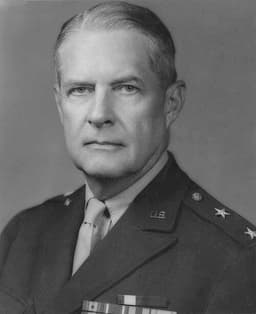
Ulysses S. Grant
General · Modern
66.8Total
Basic Information
Born
1610
1822
Died
1669
1885
Era
Modern
Modern
Nationality
China
United States
Occupation
General
General
Civilization
Eastern
Western
Score Comparison
Military (10%)
61.7
72.0
Political (20%)
68.0
45.0
Influence (20%)
54.9
72.0
Legacy (20%)
50.0
68.0
Leadership (15%)
72.0
72.0
Strategy (15%)
60.7
70.0
TOTAL
59.5
66.8
Oboi — Complete Timeline
1661 AD
Appointed as one of four regents for Kangxi EmperorPolitical Action◆ Major
Upon the death of the Shunzhi Emperor, Oboi was appointed as one of four regents for the young Kangxi Emperor. This positioned him as a key power holder in the Qing court during the emperor's minority.
RegencyQing DynastyPower Transition
Impact: national
1667 AD
Consolidated power and purged rival regentsPolitical Action◆ Major
Oboi eliminated his co-regent Suksaha and marginalized others, concentrating authority in his own hands. This power grab created factional strife and weakened the regency council's collective governance.
Power StrugglePurgeFactionalism
Impact: nationaldestructive
1669 AD
Arrested and imprisoned by Kangxi EmperorPolitical Action
The Kangxi Emperor, having reached adulthood, ordered Oboi's arrest on charges of corruption and abuse of power. Oboi was stripped of his titles and imprisoned, ending his regency and restoring imperial authority.
ArrestImperial AuthorityEnd of Regency
Impact: national
Ulysses S. Grant — Complete Timeline
1863 AD
Battle of VicksburgWar◆ Major
Grant led Union forces to capture Vicksburg, Mississippi, after a lengthy siege. This victory gave the Union control of the Mississippi River, splitting the Confederacy and marking a turning point in the Civil War.
Civil WarVicksburgUnion Victory
Impact: regional
1865 AD
Surrender at Appomattox Court HouseWar
Grant accepted the surrender of Confederate General Robert E. Lee at Appomattox Court House, effectively ending the Civil War. Grant's generous terms allowed Confederate soldiers to return home, promoting reconciliation.
Civil WarAppomattoxReconciliation
Impact: nationalconstructive
1868 AD
Election as 18th President of the United StatesPolitical Action◆ Major
Grant was elected president as a Republican, winning the popular vote. His presidency focused on Reconstruction, but was marred by corruption scandals and economic depression.
PresidencyReconstructionUS Politics
Impact: national
1870 AD
Signing of the Enforcement ActsPolitical Action◆ Major
Grant signed the Enforcement Acts, which aimed to protect African American voting rights and combat the Ku Klux Klan. These laws were used to prosecute Klan members and enforce the 14th and 15th Amendments.
ReconstructionCivil RightsKu Klux Klan
Impact: nationalprogressive
1873 AD
Panic of 1873 and Economic DepressionOther◆ Major
The Panic of 1873, a financial crisis triggered by the collapse of Jay Cooke & Company, led to a severe economic depression during Grant's presidency. Grant's policies, including the Specie Resumption Act, were criticized for worsening the downturn.
Economic DepressionPanic of 1873Financial Crisis
Impact: nationaldestructive
Expert Analysis
Origins
Oboi (c. 1610–1669) was a Manchu nobleman of the Bordered Yellow Banner, one of the Eight Banners of the Qing dynasty. His early life was shaped by the Manchu conquest of China; he distinguished himself as a military commander under Hong Taiji and the Shunzhi Emperor. Oboi's family background was aristocratic, and he rose through the ranks due to his combat prowess and loyalty to the imperial clan.
Ulysses S. Grant (1822–1885) was born in Point Pleasant, Ohio, to a tanner and businessman. He attended the United States Military Academy at West Point, graduating 21st in a class of 39. Grant served in the Mexican-American War, where he observed the tactics of generals like Zachary Taylor and Winfield Scott. After the war, he struggled in civilian life, working as a farmer and real estate agent before the Civil War brought him back to military service.
Rise to Power
Oboi's rise began during the Shunzhi Emperor's reign, where he gained favor for his military successes against Ming loyalists and rebel forces. Upon Shunzhi's death in 1661, Oboi was appointed one of four regents for the 6-year-old Kangxi Emperor. He quickly consolidated power: in 1667, he purged co-regent Suksaha, and marginalized the other two, Sonin and Ebilun. By 1669, Oboi effectively controlled the Qing government, ruling as de facto dictator.
Grant's rise came during the American Civil War. He was appointed colonel of the 21st Illinois Infantry in 1861, then brigadier general after minor victories. His capture of Forts Henry and Donelson in 1862 brought him national attention; he demanded "unconditional surrender," earning the nickname "Unconditional Surrender" Grant. After the costly Battle of Shiloh, he faced criticism but retained President Lincoln's trust. Grant's capture of Vicksburg in July 1863, splitting the Confederacy, was a major turning point. Lincoln promoted him to lieutenant general and commander of all Union armies in 1864. Grant then orchestrated the Overland Campaign, grinding down Lee's army, and accepted Lee's surrender at Appomattox in April 1865.
Leadership & Governance
Oboi ruled as an autocrat, centralizing power and suppressing dissent. He purged officials who opposed him, including the scholar-official Songgotu. His governance was marked by corruption and nepotism; he awarded land confiscated from rivals to his own supporters. Oboi's military background influenced his approach: he favored Manchu traditions and resisted Sinicization. His leadership score of 72.0 reflects his ability to command loyalty from the Banners but his political score of 68.0 is tempered by his failure to secure long-term stability.
Grant's leadership was pragmatic and decisive. As general, he coordinated multiple armies, delegating to subordinates like Sherman and Sheridan. His strategy of total war—targeting Confederate infrastructure and resources—was effective. As president (1869–1877), Grant pursued Reconstruction, signing the Enforcement Acts (1870–1871) to combat the Ku Klux Klan and protect African American voting rights. However, his administration was plagued by corruption scandals (e.g., the Whiskey Ring), and his political score of 45.0 reflects his naivety in managing patronage. Grant's military score of 72.0 and strategy score of 70.0 underscore his tactical acumen.
Triumph & Tragedy
Oboi's triumph was his consolidation of power during Kangxi's minority, maintaining Qing control. However, his tragedy was his overreach: when Kangxi reached adulthood, he ordered Oboi's arrest in 1669 on charges of corruption and abuse of power. Oboi died in prison, stripped of titles. His legacy score of 50.0 reflects his eventual vilification as a power-hungry regent.
Grant's triumph was winning the Civil War and preserving the Union. His generous surrender terms at Appomattox facilitated national reconciliation. His tragedy was his presidency: while he supported civil rights, the Panic of 1873 triggered a depression, and scandals tarnished his reputation. Despite his influence score of 72.0, his political failures lowered his total to 66.8.
Character & Destiny
Oboi was ruthless and ambitious, but lacked political finesse. His Manchu pride made him underestimate the young Kangxi. His destiny was sealed when he failed to return power voluntarily, leading to his downfall. Historians view him as a capable military leader but a flawed politician.
Grant was tenacious and humble, but trusting to a fault. His determination on the battlefield contrasted with his gullibility in politics. His destiny was to be a war hero overshadowed by presidential scandals. Later assessments have rehabilitated his reputation, emphasizing his commitment to civil rights.
Legacy
Oboi's legacy is minimal: he is remembered as a cautionary tale of regal overreach. The Kangxi Emperor used his purge to assert imperial authority, strengthening the monarchy. Oboi's actions inadvertently contributed to Qing centralization.
Grant's legacy is immense: his military strategies are studied in war colleges, and his presidency's civil rights efforts laid groundwork for the 14th and 15th Amendments. The Enforcement Acts were precursors to federal enforcement of voting rights. Grant's total score of 66.8 exceeds Oboi's 59.5 by 7.3 points, reflecting his broader impact.
Conclusion
Ulysses S. Grant had greater impact than Oboi. Grant's military victory preserved the United States and ended slavery, while his presidency advanced Reconstruction. Oboi's influence was temporary and ultimately negative, as his power grab weakened the regency and led to his own downfall. Grant's scores—72.0 in military, 72.0 in influence, and 68.0 in legacy—outweigh Oboi's highest score of 72.0 in leadership. Grant's legacy endures in American history and military doctrine; Oboi's is a footnote in Qing annals.
Rankings
🥇
Ulysses S. GrantLeader
Mil: 72.0Pol: 45.0Inf: 72.0
66.8
🥈
Oboi
Mil: 61.7Pol: 68.0Inf: 54.9
59.5
+7.3 behind
How This Comparison Works
Algorithm
Each figure is scored on 6 dimensions (0—100 scale) based on structured historical data: Military (10%), Political (20%), Influence (20%), Legacy (20%), Leadership (15%), Strategy (15%). The weighted total produces the final ranking.
Data Sources
Scores are computed from structured sub-indicators in the database. Scale factors adjust for era (Ancient ×0.85, Modern ×1.0) and civilization size (Eastern ×1.05, Other ×0.80) to account for differences in population and military scale.
Maximum 3 Figures
Comparisons are limited to 2—3 figures to ensure readability and statistical meaningfulness.
Error Margins
±5 points per dimension — Sub-scores are derived from historical records with inherent uncertainty. Two figures within 5 points on a dimension should be considered roughly equivalent in that area.
Total Score Accuracy
±3 points overall — The weighted combination of 6 dimensions produces a total score with approximately ±3 points of uncertainty. Differences of less than 3 points are not statistically significant— the figures are effectively tied.
Known Limitations
- Historical records are incomplete and uneven across civilizations
- Figures from oral-tradition societies may be underrepresented
- Occupation labels can misclassify multi-role figures
- Scores measure capability and impact, not moral character
- Quantitative scoring is a comparison tool, not absolute truth
Capability Radar
Military (10%) — Battles & Warfare
Battles
65
85
Win Rate
70
80
Expansion
60
75
Political (20%) — Governance & Reform
Reform
50
55
Diplomacy
55
60
Economy
45
50
Influence (20%) — Cultural & Global Reach
Cultural
30
60
Global
30
65
Legacy (20%) — Historical Impact
Historical
55
80
Longevity
40
70
Leadership (15%) — Power & Stability
Tenure
70
65
Stability
40
45
Strategy (15%) — Tactics & Innovation
Strategy
65
90
Tactics
60
70
Reform
55
75
Similar Comparisons
Comments & Discussion
No comments yet. Be the first to share your thoughts!