Loading...
Chaim Herzog vs Ulysses S. Grant
Ulysses S. Grant leads by 10.8 pts · 2 figures compared
…

Chaim Herzog
General · Modern
56.0Total
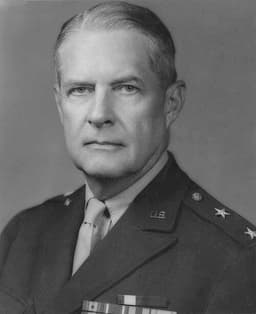
Ulysses S. Grant
General · Modern
66.8Total
Basic Information
Born
1918
1822
Died
1997
1885
Era
Modern
Modern
Nationality
Israel
United States
Occupation
General
General
Civilization
Middle Eastern
Western
Score Comparison
Military (10%)
35.0
72.0
Political (20%)
68.0
45.0
Influence (20%)
62.0
72.0
Legacy (20%)
50.0
68.0
Leadership (15%)
72.0
72.0
Strategy (15%)
35.0
70.0
TOTAL
56.0
66.8
Chaim Herzog — Complete Timeline
1962 AD
Appointed Director of Military IntelligencePolitical Action◆ Major
Herzog was appointed Director of Military Intelligence for the Israel Defense Forces. He served in this role until 1965, overseeing intelligence operations during a period of regional tension.
Military IntelligenceIDFIsrael
Impact: national
1975 AD
Served as Israeli Ambassador to the United NationsPolitical Action◆ Major
Herzog served as Israel's ambassador to the UN from 1975 to 1978. He famously tore up UN Resolution 3379 equating Zionism with racism, defending Israel's legitimacy on the international stage.
UNDiplomacyZionism
Impact: globalconstructive
Authored 'The War of Atonement'Cultural
Herzog published 'The War of Atonement', a detailed analysis of the 1973 Yom Kippur War. The book became a key historical account of the conflict, examining military and political decisions.
Yom Kippur WarHistoryPublication
Impact: national
1983 AD
Elected President of IsraelPolitical Action◆ Major
Herzog was elected as the sixth President of Israel by the Knesset. He served two five-year terms until 1993, acting as a unifying figure and representing Israel abroad.
PresidencyIsraelLeadership
Impact: nationalconstructive
Ulysses S. Grant — Complete Timeline
1863 AD
Battle of VicksburgWar◆ Major
Grant led Union forces to capture Vicksburg, Mississippi, after a lengthy siege. This victory gave the Union control of the Mississippi River, splitting the Confederacy and marking a turning point in the Civil War.
Civil WarVicksburgUnion Victory
Impact: regional
1865 AD
Surrender at Appomattox Court HouseWar
Grant accepted the surrender of Confederate General Robert E. Lee at Appomattox Court House, effectively ending the Civil War. Grant's generous terms allowed Confederate soldiers to return home, promoting reconciliation.
Civil WarAppomattoxReconciliation
Impact: nationalconstructive
1868 AD
Election as 18th President of the United StatesPolitical Action◆ Major
Grant was elected president as a Republican, winning the popular vote. His presidency focused on Reconstruction, but was marred by corruption scandals and economic depression.
PresidencyReconstructionUS Politics
Impact: national
1870 AD
Signing of the Enforcement ActsPolitical Action◆ Major
Grant signed the Enforcement Acts, which aimed to protect African American voting rights and combat the Ku Klux Klan. These laws were used to prosecute Klan members and enforce the 14th and 15th Amendments.
ReconstructionCivil RightsKu Klux Klan
Impact: nationalprogressive
1873 AD
Panic of 1873 and Economic DepressionOther◆ Major
The Panic of 1873, a financial crisis triggered by the collapse of Jay Cooke & Company, led to a severe economic depression during Grant's presidency. Grant's policies, including the Specie Resumption Act, were criticized for worsening the downturn.
Economic DepressionPanic of 1873Financial Crisis
Impact: nationaldestructive
Expert Analysis
Origins
**Chaim Herzog** was born in 1918 in Belfast, Ireland, to a Jewish family steeped in religious and political leadership. His father, Isaac Herzog, was a prominent rabbi and later the chief rabbi of Ireland and then Israel. The family moved to Palestine in 1935, where Chaim studied at the Hebrew University of Jerusalem and then at Cambridge University, earning a law degree. He also joined the Haganah, the Jewish paramilitary organization, during the Arab revolt.
**Ulysses S. Grant** was born in 1822 in Point Pleasant, Ohio, to a family of modest means. His father, Jesse Root Grant, was a tanner and businessman. Grant attended the United States Military Academy at West Point, graduating in 1843—though he was an average student. He served in the Mexican-American War (1846–1848) under General Zachary Taylor, where he learned military tactics and leadership. After the war, he struggled in civilian life and resigned from the army in 1854 amid rumors of drinking.
Rise to Power
Herzog's rise began with his service in the British Army during World War II, where he was involved in intelligence operations and the liberation of concentration camps. Returning to Palestine, he joined the Israel Defense Forces (IDF) and became the Director of Military Intelligence from 1948 to 1950 and again from 1959 to 1962. In this role, he helped establish the intelligence community and provided strategic assessments during the 1948 Arab-Israeli War. His diplomatic career began with his appointment as Israel's Ambassador to the United Nations in 1975. There, he famously tore up UN Resolution 3379 equating Zionism with racism, a bold act that solidified his reputation as a defender of Israel.
Grant's rise came through the crucible of the American Civil War. When the war began in 1861, he re-enlisted and, through a series of victories, caught President Lincoln's attention. After capturing Forts Henry and Donelson in early 1862, he earned the nickname "Unconditional Surrender" Grant. His victory at Vicksburg in July 1863 gave the Union control of the Mississippi River, a turning point. In 1864, Lincoln appointed Grant General-in-Chief of the Union Army. He then orchestrated the final campaigns against Lee, culminating in Lee's surrender at Appomattox Court House on April 9, 1865.
Leadership & Governance
Herzog's leadership style was diplomatic and unifying. As President of Israel (1983–1993), he was a ceremonial head of state, but he used his moral authority to mediate political crises. For example, during the 1984 government deadlock, he helped broker a national unity government. He also met with leaders across the political spectrum, including Palestinian figures, to promote peace. His governance approach was inclusive, focusing on healing divisions after the 1982 Lebanon War. He scored 72.0 in leadership, reflecting his ability to unite a fractious society.
Grant's leadership was more direct and strategic. As a general, he was known for his relentless attacks and willingness to accept high casualties to achieve objectives—earning criticism for his costly Overland Campaign in 1864. As president, he pushed for Reconstruction, signing the Enforcement Acts (1870–1871) to protect African American voters and combat the Ku Klux Klan. However, his administration was plagued by scandals (e.g., the Whiskey Ring), and his economic policies failed to prevent the Panic of 1873, which caused a severe depression. His political score of 45.0 reflects these struggles.
Triumph & Tragedy
For Herzog, his greatest triumph was his tenure as UN ambassador, particularly his dramatic opposition to Resolution 3379, which resonated globally. His presidency also saw him as a respected elder statesman, fostering national unity. His tragedy was the failure of his peace initiatives—notably, he could not prevent the First Intifada (1987–1993) or achieve a breakthrough with Palestinians. He also faced criticism for not speaking out more against Israeli settlements.
Grant's greatest triumph was winning the Civil War and preserving the Union. His generous terms at Appomattox helped heal the nation. As president, his support for African American rights was commendable. His tragedy was the corruption in his administration, which tarnished his legacy, and the economic depression that worsened under his watch. He also failed to fully protect freedmen from violence, as Reconstruction collapsed after his presidency.
Character & Destiny
Herzog was pragmatic, eloquent, and principled. His background as an intelligence officer gave him a cautious, analytical mindset. He used diplomacy as a tool, but his destiny was shaped by Israel's security challenges and the need for a unifying figure. His character allowed him to navigate both military and political spheres effectively.
Grant was tenacious, humble, and blunt. He was a master of logistics and strategy, but he was also trusting to a fault, which led to corruption among his appointees. His fate was tied to the war and Reconstruction; his inability to manage peace and politics mirrored his strengths in war.
Legacy
Herzog's legacy is as a defender of Israel's legitimacy and a symbol of Israeli statesmanship. His book "The War of Atonement" remains a key text on the Yom Kippur War. He is remembered as a president who brought dignity to the office. However, his policy impact was limited by the ceremonial nature of the presidency.
Grant's legacy is more complex. He is celebrated as a military genius who saved the Union, but his presidency is often ranked low. Recent scholarship has revived his reputation for civil rights, noting his efforts to suppress the Klan and support the 15th Amendment. His military score of 72.0 and influence score of 72.0 reflect his enduring impact on American history.
Conclusion
Taking a clear stance, Ulysses S. Grant had a greater impact than Chaim Herzog. Grant's total score of 66.8 versus Herzog's 56.0 reflects his decisive role in a pivotal conflict that shaped the world's most powerful nation. While Herzog was a capable diplomat and president, his influence was confined to Israel and the UN, whereas Grant's actions ended slavery and preserved the United States, with global repercussions. Grant's failures in governance do not overshadow his military achievements and his fight for racial equality, which resonate today. Thus, Grant stands as the more consequential figure.
Rankings
🥇
Ulysses S. GrantLeader
Mil: 72.0Pol: 45.0Inf: 72.0
66.8
🥈
Chaim Herzog
Mil: 35.0Pol: 68.0Inf: 62.0
56.0
+10.8 behind
How This Comparison Works
Algorithm
Each figure is scored on 6 dimensions (0—100 scale) based on structured historical data: Military (10%), Political (20%), Influence (20%), Legacy (20%), Leadership (15%), Strategy (15%). The weighted total produces the final ranking.
Data Sources
Scores are computed from structured sub-indicators in the database. Scale factors adjust for era (Ancient ×0.85, Modern ×1.0) and civilization size (Eastern ×1.05, Other ×0.80) to account for differences in population and military scale.
Maximum 3 Figures
Comparisons are limited to 2—3 figures to ensure readability and statistical meaningfulness.
Error Margins
±5 points per dimension — Sub-scores are derived from historical records with inherent uncertainty. Two figures within 5 points on a dimension should be considered roughly equivalent in that area.
Total Score Accuracy
±3 points overall — The weighted combination of 6 dimensions produces a total score with approximately ±3 points of uncertainty. Differences of less than 3 points are not statistically significant— the figures are effectively tied.
Known Limitations
- Historical records are incomplete and uneven across civilizations
- Figures from oral-tradition societies may be underrepresented
- Occupation labels can misclassify multi-role figures
- Scores measure capability and impact, not moral character
- Quantitative scoring is a comparison tool, not absolute truth
Capability Radar
Military (10%) — Battles & Warfare
Battles
30
85
Win Rate
30
80
Expansion
10
75
Political (20%) — Governance & Reform
Reform
40
55
Diplomacy
60
60
Economy
30
50
Influence (20%) — Cultural & Global Reach
Cultural
40
60
Global
40
65
Legacy (20%) — Historical Impact
Historical
50
80
Longevity
40
70
Leadership (15%) — Power & Stability
Tenure
60
65
Stability
60
45
Strategy (15%) — Tactics & Innovation
Strategy
40
90
Tactics
40
70
Reform
20
75
Similar Comparisons
Comments & Discussion
No comments yet. Be the first to share your thoughts!