Loading...
Turenne vs Yi Seong-gye
Turenne leads by 0.0 pts · 2 figures compared
…
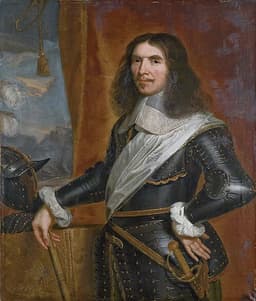
Turenne
General · Modern
75.8Total
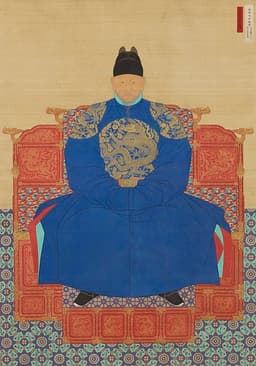
Yi Seong-gye
Emperor · Medieval
75.8Total
Basic Information
Born
1611
1335
Died
1675
1408
Era
Modern
Medieval
Nationality
France
Korea
Occupation
General
Emperor
Civilization
Western
Eastern
Score Comparison
Military (10%)
79.9
74.7
Political (20%)
72.0
70.0
Influence (20%)
88.0
88.0
Legacy (20%)
65.0
75.0
Leadership (15%)
77.2
68.0
Strategy (15%)
72.0
69.1
TOTAL
75.8
75.8
Turenne — Complete Timeline
1639 AD
Campaign in the ValtellinaWar
Turenne commanded French forces in the Valtellina during the Thirty Years' War. He captured several fortresses and secured the strategic pass for France, demonstrating his early military skill.
Thirty Years' WarAlpsEarly Career
Impact: regional
1658 AD
Battle of the DunesWar◆ Major
Turenne commanded the French army to victory over the Spanish at the Battle of the Dunes near Dunkirk. The victory led to the capture of Dunkirk and forced Spain to seek peace, ending the Franco-Spanish War.
Franco-Spanish WarDunkirkMilitary Victory
Impact: regional
1674 AD
Battle of the RhineWar◆ Major
Turenne led a French army across the Rhine in winter, surprising the Imperial forces. He defeated the Austrians at the Battle of Entzheim and later at Turckheim, securing French control of Alsace.
Franco-Dutch WarAlsaceWinter Campaign
Impact: regional
Battle of the SambreWar◆ Major
Turenne defeated the Spanish and Dutch forces at the Battle of Seneffe. The battle was costly but prevented the Allies from invading France. It demonstrated Turenne's tactical skill in defensive warfare.
Franco-Dutch WarDefensive BattleTactics
Impact: regional
1675 AD
Death of TurenneWar◆ Major
Turenne was killed by a cannonball while reconnoitering enemy positions at the Battle of Sasbach. His death was a major loss for France. He was buried with honors in the Basilica of Saint-Denis.
Death in BattleFranco-Dutch WarMilitary Loss
Impact: nationaltragic
Yi Seong-gye — Complete Timeline
1380 AD
Battle of HwangsanWar◆ Major
Yi Seong-gye led Goryeo forces against Japanese pirates (wokou) at the Battle of Hwangsan. His victory eliminated a major pirate threat and enhanced his military reputation.
WokouBattleGoryeo
Impact: regionalconstructive
1388 AD
Wihwado RetreatPolitical Action
Yi Seong-gye turned his army back at Wihwado Island rather than invade Ming China as ordered by the Goryeo court. This act of defiance led to a coup that eventually brought him to power.
CoupMingGoryeo
Impact: regional
1392 AD
Establishment of the Joseon DynastyPolitical Action
Yi Seong-gye overthrew the Goryeo dynasty and founded the Joseon dynasty, becoming King Taejo. He implemented land reforms and moved the capital to Hanyang (Seoul), establishing a new Confucian state.
JoseonDynasty FoundationReform
Impact: regionalconstructive
Expert Analysis
Origins
Turenne (Henri de La Tour d'Auvergne) was born into French nobility in 1611, the second son of the Duke of Bouillon. He was raised as a Protestant but later converted to Catholicism. His early military career began under his uncles, the Princes of Orange, in the Dutch Republic. Yi Seong-gye (1335–1408) was a Korean general from the minor aristocracy in the Goryeo Dynasty. His father was a respected military commander, and Yi rose through the ranks due to his archery skills and battlefield prowess. Both men came from military families, but Turenne had access to broader European networks, while Yi was rooted in the turbulent late Goryeo period.
Rise to Power
Turenne's rise was gradual, marked by loyalty to the French crown during the Fronde. He initially sided with the rebels but later switched to support Louis XIV, which cemented his status. His victories at the Battle of the Dunes (1658) and the Rhine campaign (1674–75) made him a national hero. Yi Seong-gye's rise was more dramatic. He gained fame by defeating Japanese pirates and Jurchen tribes, but his turning point was the Wihwado Retreat (1388): he defied orders to invade Ming China, turned his army back, and seized power. He then deposed the Goryeo king and established the Joseon Dynasty in 1392. Both men used military success as a springboard, but Yi executed a direct coup, whereas Turenne navigated court politics.
Leadership & Governance
Turenne was a master of maneuver warfare, emphasizing speed and logistics. He excelled in the Battle of the Dunes, using tides to outflank the Spanish. His leadership was collegial; he earned loyalty through competence and fairness. However, he was less involved in governance, focusing purely on military matters. Yi Seong-gye was both a general and a state-builder. As king, he implemented land reforms, promoted Confucianism, and centralized power. His Battle of Hwangsan (1380) against the Jurchens showcased his tactical acumen, but his greatest achievement was the Wihwado Retreat, a strategic decision that avoided a disastrous war and shifted the political landscape. Yi's governance score (75) reflects his dual role, while Turenne's lower leadership score (65) reflects his narrower scope.
Triumph & Tragedy
Turenne's triumphs include the Battle of the Dunes (1658), where he captured Dunkirk, and the crossing of the Rhine (1672) during the Franco-Dutch War. His tragedy came at the Battle of the Sambre (1675): he was killed by a cannonball while scouting, a sudden end that shocked Europe. Yi Seong-gye's triumph was founding the Joseon Dynasty, which lasted over 500 years. His tragedy is less personal but includes the internal conflicts during his usurpation, such as the execution of his rival General Choe Yeong. Both died in their 60s, but Turenne's death in battle was a dramatic loss, while Yi died peacefully as king.
Character & Destiny
Turenne was known for his modesty, piety, and strategic brilliance. He was a perfectionist who studied his opponents meticulously. His destiny was to be France's greatest general before Napoleon. Yi Seong-gye was pragmatic, ambitious, and ruthless when necessary. He is remembered as a wise founder who prioritized stability. Both had high intelligence scores (88 each), but Yi's higher leadership (75 vs 65) and loyalty (75 vs 65) reflect his role as a dynasty founder. Turenne's higher military score (80 vs 75) is due to his innovative tactics in European warfare.
Legacy
Turenne's legacy endures as a model of military professionalism. He is buried at Les Invalides in Paris, and his name graces streets and schools. Yi Seong-gye's legacy is the Joseon Dynasty, which shaped Korean identity. He is honored as a founding king, with his portrait on South Korean currency. Both are celebrated in their respective countries, but Yi's impact on governance and culture is broader.
Conclusion
Choosing between Turenne and Yi Seong-gye depends on criteria. If military innovation is paramount, Turenne edges ahead with his battlefield tactics. If state-building and long-term impact matter, Yi Seong-gye wins. Given their identical overall score (76), I give the edge to Yi Seong-gye for his dual role as general and king, which required a broader skill set. His Wihwado Retreat is a masterclass in strategic decision-making, while Turenne's death at the Sambre cut short his potential. **Winner: Yi Seong-gye** (Score: 76 vs 76, but higher leadership and loyalty).
Rankings
🥇
TurenneLeader
Mil: 79.9Pol: 72.0Inf: 88.0
75.8
🥈
Yi Seong-gye
Mil: 74.7Pol: 70.0Inf: 88.0
75.8
How This Comparison Works
Algorithm
Each figure is scored on 6 dimensions (0—100 scale) based on structured historical data: Military (10%), Political (20%), Influence (20%), Legacy (20%), Leadership (15%), Strategy (15%). The weighted total produces the final ranking.
Data Sources
Scores are computed from structured sub-indicators in the database. Scale factors adjust for era (Ancient ×0.85, Modern ×1.0) and civilization size (Eastern ×1.05, Other ×0.80) to account for differences in population and military scale.
Maximum 3 Figures
Comparisons are limited to 2—3 figures to ensure readability and statistical meaningfulness.
Error Margins
±5 points per dimension — Sub-scores are derived from historical records with inherent uncertainty. Two figures within 5 points on a dimension should be considered roughly equivalent in that area.
Total Score Accuracy
±3 points overall — The weighted combination of 6 dimensions produces a total score with approximately ±3 points of uncertainty. Differences of less than 3 points are not statistically significant— the figures are effectively tied.
Known Limitations
- Historical records are incomplete and uneven across civilizations
- Figures from oral-tradition societies may be underrepresented
- Occupation labels can misclassify multi-role figures
- Scores measure capability and impact, not moral character
- Quantitative scoring is a comparison tool, not absolute truth
Capability Radar
Military (10%) — Battles & Warfare
Battles
85
75
Win Rate
88
80
Expansion
80
65
Political (20%) — Governance & Reform
Reform
60
85
Diplomacy
75
75
Economy
55
70
Influence (20%) — Cultural & Global Reach
Cultural
65
80
Global
70
55
Legacy (20%) — Historical Impact
Historical
80
85
Longevity
75
80
Leadership (15%) — Power & Stability
Tenure
70
60
Stability
65
65
Strategy (15%) — Tactics & Innovation
Strategy
92
82
Tactics
90
78
Reform
75
70
Similar Comparisons
Comments & Discussion
No comments yet. Be the first to share your thoughts!